

Building a successful podcast today isn’t only about recording good conversations. It’s also about creating a steady income stream while growing loyal fans who want deeper connections with your work.
That’s where Supercast vs Patreon comes in.
Both platforms help creators turn audiences into paying members, but they work in different ways depending on your goals, audience size, and content style.
If you’re ready to monetize, I’ll walk you through key features and the main difference between how you’ll earn on these platforms.
Discover which is better for you, based on the audience you serve and your revenue goals.
Comparison of Supercast vs Patreon (Overview)
Choosing between Supercast and Patreon can feel like choosing between two different business models for your brand. One focuses heavily on premium audio subscriptions for serious podcasters, while the other supports broader creator communities with memberships and fan support.
Both platforms help creators build recurring revenue, but the tools, workflows, and audience experience are very different. The table below breaks down the major differences to help you decide faster.
| Feature | Supercast | Patreon |
|---|---|---|
| Core focus | Podcast subscriptions | Memberships for all creators |
| Fees | $0.59/month per subscribers + Stripe fees, custom pricing available | 10% platform fee, plus payment processing, conversions, and taxes |
| Payout options | Direct via Stripe | Stripe, PayPal, direct deposit |
| Ease of use | Built for audio, simple private feed setup | More features, but steeper learning curve |
| Audience engagement | Private feed, exclusive podcast content, Ask Me Anything | Posts, ask me anything, community |
| RSS feed support | Yes, existing RSS feed migration | Yes, but generalized |
| Analytics | Listener-focused | Broader membership analytics |
| Multi-show support | Yes | Possible but not native |
The good news is that both are compatible for monetizing the interviews you recorded with the help of Talks. Whether you land a guest spot to grow your audience or host your own show, you can send fans to either platform and start earning recurring revenue without rebuilding your workflow from scratch.
Supercast vs Patreon feature comparison
Platform features shape how you build your relationship with audiences. You can create exclusive content for subscribers to unlock or establish a strong community.
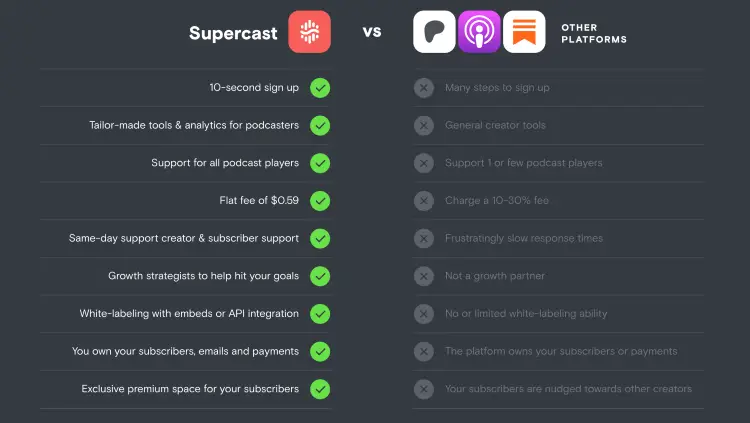
Supercast is a dedicated podcast subscription platform designed to help audio creators provide exclusive content and deliver it through a private feed. Podcasters can share ad-free versions of their shows and monetize their premium episodes.
Key features:
- A branded podcast player that keeps the experience on your domain.
- Easy integration with your existing RSS feed so your listener doesn’t need to switch podcast apps.
- Dedicated subscriber landing page.
- Support for YouTube feeds.
- Includes subscriber analytics and reporting dashboards.
- Unlimited number of subscriber plans with different types (monthly, annual, lifetime, etc).
- Widen your reach to major platforms like Spotify, Apple Podcasts, and Google Podcasts.
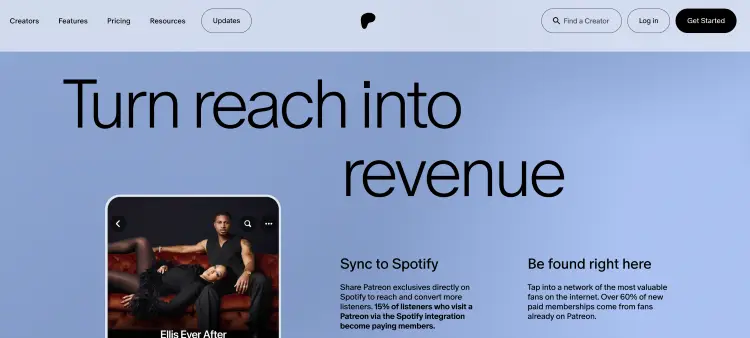
Patreon is a membership platform that helps almost any type of creator build a subscriber community. Unlike Supercast, Patreon focuses more on fan engagement than podcast delivery alone.
Key features:
- Allows creators to build multiple membership tier options.
- Supports videos, writing, courses, livestreams, and podcasts.
- Includes direct messaging and community posting.
- Supports Ask Me Anything sessions and member chats.
- Helps creators offer access to exclusive posts and downloads.
- Offers creator tools for marketing and promotion.
- Allows creators to reward loyal subscribers with perks.
Supercast vs Patreon pricing comparison
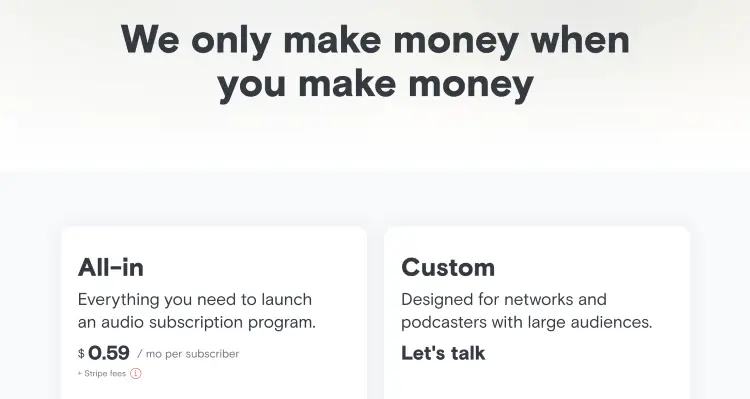
Pricing affects how much revenue you actually get to keep. A platform with lower upfront fees may still cost more later if transaction fees and platform cuts become too high.
| Pricing factor | Supercast | Patreon |
|---|---|---|
| Platform cost | Monthly subscription fee | Percentage-based fee |
| Revenue share | Flat rate subscription | Pay only when you earn |
| Additional fees | 29% transaction fee of 2.9% + $0.30 (for USD transactions) on each successful payment, plus 0.7% billing for recurring subscription payments | 10% platform cut for new creators, plus 2.9% + $0.30 processing, currency conversion (2.5%), and up to 30% Apple tax on iOS |
| Free plan | None | Free to start |
| Best for | Established podcasters | Different types of content creators |
| Subscriber tools | Podcast-focused | Community-focused |
For creators with larger audiences, Supercast can be a better choice since the platform won’t take as much from your growing subscription revenue. Meanwhile, Patreon can feel easier for beginners because you can monetize your podcast without committing to a monthly bill.
Whichever platform you pick, you can integrate Talks into your workflow by creating a free profile. Signing up connects you with shows that need guests, which helps you grow your audience before you ever sell a subscription.
Supercast vs Patreon similarities and differences
At a high level, both platforms help creators build recurring memberships. They also help audiences support creators directly instead of relying only on ads or sponsors.
Similarities:
- Both help creators generate recurring income.
- Both support paid memberships and subscriber access.
- Both can deliver premium exclusive content.
- Both support podcast monetization strategies.
- Both work with Stripe for payments.
- Both can help creators reduce reliance on ad revenue.
- Both help creators build a loyal subscriber base.
Differences:
- Supercast focuses mainly on audio and premium podcasts.
- Supercast offers stronger RSS feed management.
- Supercast is better for private audio delivery.
- Supercast works more like a premium podcast app experience.
- Patreon supports many creator types beyond podcasting.
- Patreon offers stronger community tools and discussions.
- Patreon is better for fan engagement and memberships.
- Patreon works more like a creator membership platform.
Many creators searching for an alternative to Patreon choose Supercast because of its straightforward podcast workflow. Others still prefer Patreon because it helps them combine podcasts, videos, newsletters, and coaching offers in one place.
Supercast vs Patreon pros and cons
Every platform has trade-offs. Some creators care more about audience engagement, while others prioritize smoother subscription delivery and higher margins.
| Platform | Pros | Cons |
|---|---|---|
| Supercast | Strong option for podcasters Better audio experience Supports premium feeds Lower revenue cuts for bigger creators | Limited community features Less flexible for non-audio creators |
| Patreon | Strong fan community tools Flexible for different creator content types Easier setup for beginners Supports one-time memberships | Higher platform percentage fees Less streamlined podcast tools Can feel crowded for podcasters |
That said, Supercast is better for creators who focus heavily on subscriber-only podcast episodes. But Patreon works better for creators who mix podcasts with newsletters, coaching, videos, or livestream communities.
Consider these factors when comparing the two:
- Content type: A serious podcaster focused on ad-free episodes and premium listening may prefer Supercast, while educators and consultants building communities may prefer Patreon.
- Audience size: Creators with a large audience may prefer Supercast because it can improve margins over time. Smaller creators testing memberships may find Patreon less risky.
- Technical comfort: Patreon feels simpler for beginners, while Supercast requires more podcast-focused setup and integrations.
No matter which platform you choose, Talks helps complete your podcasting toolkit by helping you grow your reach, book interviews, and connect with more audiences.
This guide on how podcasts make money also explains how creators combine subscriptions, sponsorships, and visibility strategies.
What Is Supercast?
Supercast is one of the best monetization platforms specifically for podcasters. It helps creators deliver ad-free episodes, bonus content, and subscriber-only feeds directly into major listening apps.
In a Reddit thread comparing Supercast vs Patreon vs Ko-Fi, users mention how Supercast matches podcasting needs. User lime-link says, “I would go with Supercast as it’s built directly for podcasters and has great features, I believe it’s cheaper too.”
Carrey Green from Podcast Fast Track also shared his thoughts. He appreciates that you can set goals and motivate yourself as a creator.
What Is Patreon?
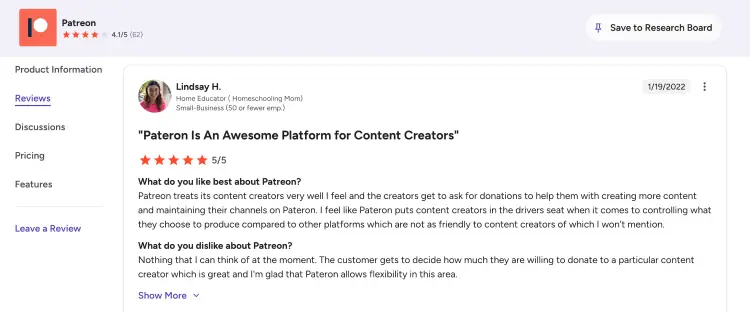
Patreon is the membership platform that turned millions of casual fans into monthly supporters across every creative industry imaginable. It gives any creator the power to build tiered subscription plans, offer perks, and manage ad revenue-free relationships directly with their community.
General feedback from users love how easy it is to set up multiple tier levels and automate rewards. But others mention that podcast creators sometimes feel like an afterthought because the interface favors visual artists and video makers.
- Lindsay H. says, “Patreon treats its content creators very well I feel and the creators get to ask for donations to help them with creating more content and maintaining their channels on Patreon.”
- Brittany W. shares, “Patreon is an awesome way to connect with your customers and make them feel like they’re part of a special community. We’ve done so many great things through Patreon: book clubs, special Zoom events, discount codes.”
- Tamarah B. notes, “I like how I am offering exclusive content. I like how you are able to set different tiers and prices based on your business.”
Is Patreon better than YouTube?
YouTube is typically the first place new creators think of when they imagine online success, but monetization there follows a completely different rulebook. Let’s look at how the two compare for creators serious about owning their income.
- YouTube monetization depends on ad revenue. You need subscribers and views to earn, and the platform controls which brands appear next to your content.
- Patreon lets you bypass the algorithm entirely by asking fans to support you directly. Instead of chasing ad revenue, you can just focus on creating valuable content for subscribers.
For coaches, speakers, and consultants who value their message and authenticity, Patreon wins. You don’t need to please millions. You just need a small group of loyal listeners willing to support what you do.
Patreon vs Ko-Fi
If you’re looking for other monetization options, Ko-Fi lets you ask for one-time donations. It’s a simple way to accept support without thinking about tiered subscription plans. It feels more like a tip jar that leads to bonus content.
Here’s how it compares to Patreon:
- Ko-Fi setup is fast, and the fees are lower, which makes it attractive for hobbyists or anyone testing the waters.
- Patreon is still a stronger option when you need serious infrastructure for recurring revenue, community management, and automated reward delivery.
The key difference is commitment: Patreon asks fans to join your creator journey, while Ko-Fi just asks them to provide a bit of support or buy you a coffee.
Which One Is Better For Content Creators: Patreon or Supercast?
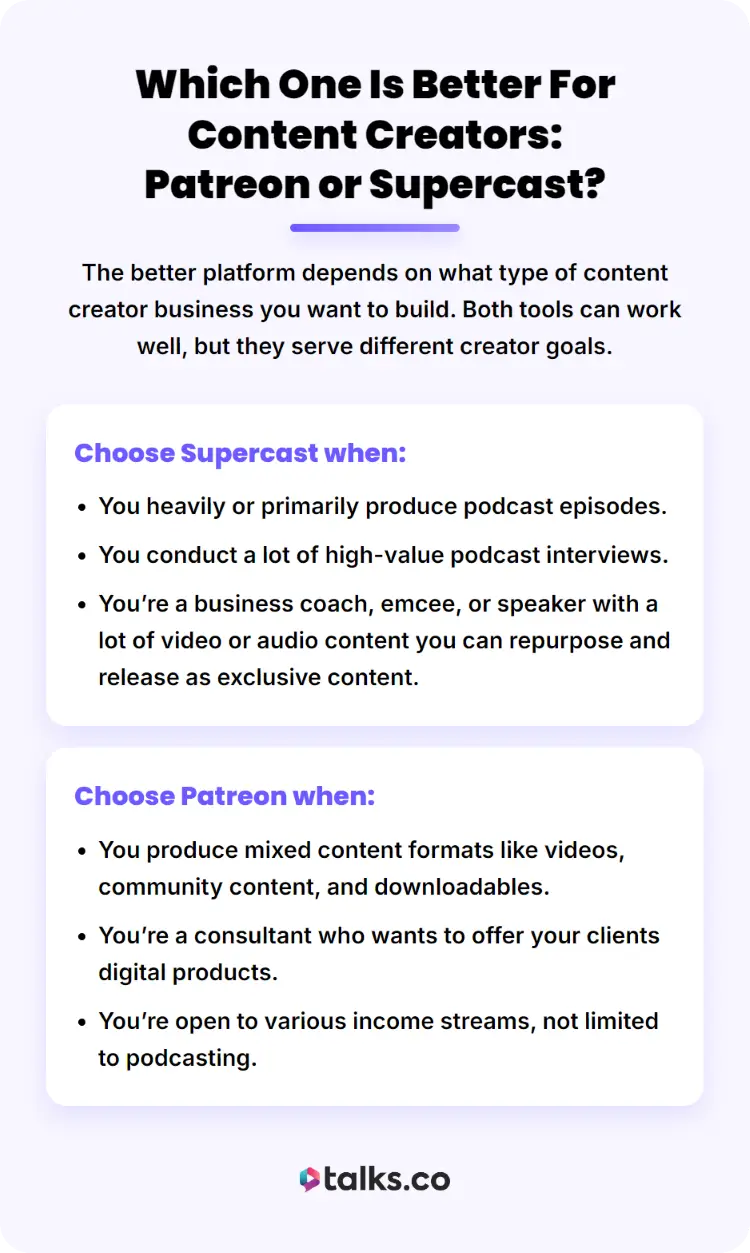
The better platform depends on what type of content creator business you want to build. Both tools can work well, but they serve different creator goals.
Choose Supercast when:
- You heavily or primarily produce podcast episodes.
- You conduct a lot of high-value podcast interviews.
- You’re a business coach, emcee, or speaker with a lot of video or audio content you can repurpose and release as exclusive content.
Choose Patreon when:
- You produce mixed content formats like videos, community content, and downloadables.
- You’re a consultant who wants to offer your clients digital products.
- You’re open to various income streams, not limited to podcasting.
Many creators also use visibility platforms like Talks to grow awareness and book interviews while using Supercast or Patreon for monetization. You can also explore whether podcast guests get paid if you are building a guest-based content strategy.
How to choose the right monetization platform (Checklist)
Picking a tool should feel strategic, not stressful. Here are actionable tips to guide your decision without falling into analysis paralysis.
☐ Know your format: If audio is your main product, prioritize a podcast subscription platform. If you produce multiple types of content, choose a more flexible tool.
☐ Count the costs: Look past platform rates and calculate how fees affect your subscription revenue at 100, 1,000, and 10,000 subscribers.
☐ Test integrations: Make sure you can embed signup forms on your site and integrate with tools you already use.
☐ Plan your tiers: Decide whether you need simple subscription plans or elevated bundles with a unique perk at every level.
☐ Think about discovery: Choose a platform that helps you grow your audience through marketing and promotion or partner networks.
☐ Measure what matters: Look for solid analytics so you know which strategies lead to actual revenue.
☐ Own your relationship: Pick a system where you control access to exclusive material and can offer gift subscriptions as lead magnets.
What are the best Supercast and Patreon alternatives?
If these platforms don’t fit your exact monetization strategy, consider these Supercast and Patreon alternatives:
- Ko-Fi: Ko-Fi is a creator support platform that helps creators earn through tips, memberships, commissions, and digital sales with low platform fees and flexible monetization options.
- Buy Me a Coffee: Buy Me a Coffee is a lightweight creator platform that allows creators to accept one-time support, recurring memberships, and digital product sales through a simple, fan-friendly interface.
- Memberful: Memberful is a membership platform built for creators and businesses that want full ownership of their website, branding, audience data, and subscription experience while integrating with tools like WordPress and Stripe
You can also explore RedCircle as another tool for your creator journey.
Supercharge Your Podcast
Before you even think about Supercast vs Patreon and monetization, you need to strengthen your podcasting strategy.
Producing great content makes sure that listeners will actually want to support you.
That’s where Talks comes in. Find guest experts who’ll share valuable insights your audience is looking for.
Take it from other podcast hosts on the platform. The Productivity Sweet Spot podcast connected with Ly Smith.
“Ly is an outstanding podcast guest. She’s a great speaker, very engaging. Her frameworks and concepts are powerful and she’s very professional.”
It’s your turn! Just create a free Talks profile and start matching in five minutes.
Yes! Set Up my Talks Creator Profile Now!


