

Some podcasts pull you in before you’ve finished your coffee. Others pull a hard stop because they already know what’s coming, or worse, they have no idea where you’re taking them.
So, how do you write a podcast script with that winning podcast outline formula?
Hundreds of podcast interviews will teach you that the best hosts have one thing in common: rhythm.
Kind of like watching a great soccer team, every pass has a purpose, every player knows their role, and the whole thing feels effortless because of the teamwork on and off the field.
A strong podcast format and episode script creates that same feeling. It keeps you on track, keeps listeners hooked, and makes every type of podcast recording easier to plan.
This podcasting guide rounds up 10 podcast format templates you can copy, plus real podcast script examples, general outline and script layouts for beginners, and practical ideas to ensure you give your listeners a podcast show they can’t stop listening to.
What Is a Podcast Format?
A podcast format is the repeatable flow your episodes follow. It shapes how each episode opens, develops, and wraps up so listeners always know what kind of experience they’re stepping into.
Common podcast formats include:
- Interview format: A host brings on a guest to explore a topic through conversation, stories, and expertise.
- Solo monologue: One host delivers insights, commentary, or teaching directly to the listener.
- Co-host banter: Two or more hosts discuss topics together, blending humor, opinions, and natural back-and-forth chemistry.
- Narrative storytelling: A detailed outline or often word-for-word script format that unfolds a story across an episode or series.
- Panel discussion: Multiple guests or experts discuss a topic, with a moderator guiding the conversation with bullet points to keep listeners hooked from start to finish.
Common podcast format example
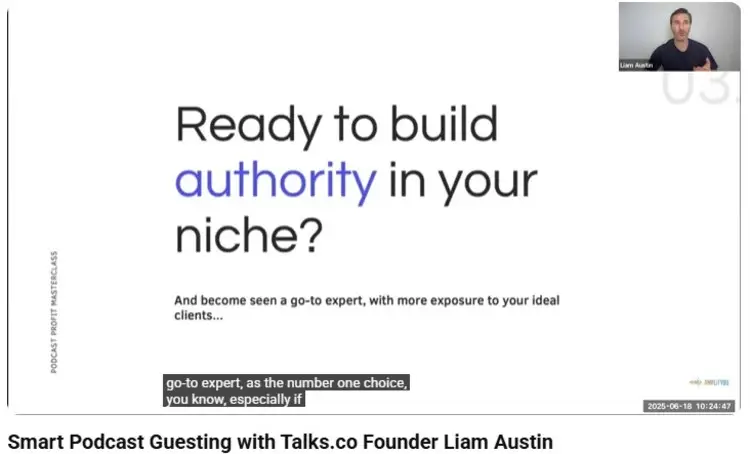
Here’s a real example from one of my guest appearances, where I joined Kimberly Crowe to show speakers how to create a Talks profile in 10 minutes.
The episode structure follows a clear podcast outline template:
- Hook: Kimberly explains what viewers will learn and mentions a special offer waiting at the end.
- Podcast intro: I explain why a strong speaker profile helps experts get invited onto more podcasts, stages, and events.
- Main content: We walk through the Talks platform step by step, covering profile setup, podcast matching, AI-powered recommendations, and ways to improve visibility.
- Call to action: I invite viewers to create a free account, upgrade to Pro if they want more opportunities to attract sponsors, and join a private coaching call.
Nothing feels random because every section has a job. The introduction has a conversational tone that naturally creates curiosity, the tutorial delivers on the promise, and the ending sets the stage for viewers a clear next step for joining us on Talks.
That’s exactly what a good podcast episode script and simple outline format should do.
Podcast Format Templates
These podcast format templates are your starting point that you can adapt to fit your personality, audience, and goals.
Want every template in one place? Download our full collection of podcast format templates and keep it beside you while planning your next episode.
1. Interview podcast format template
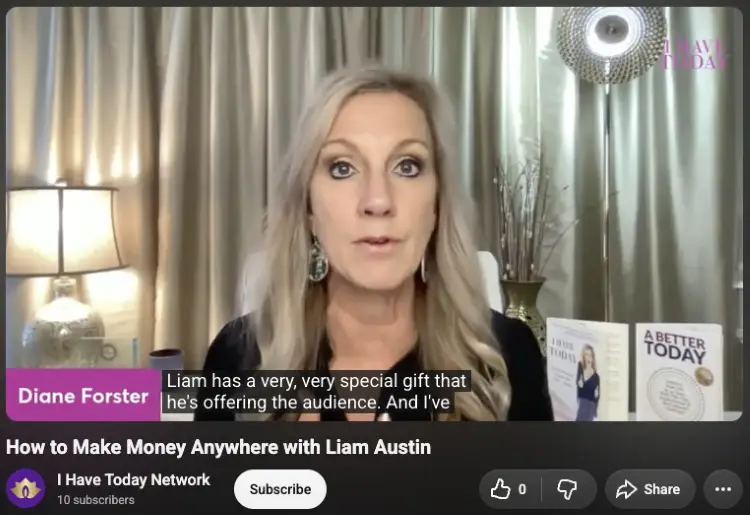
Best for: Learning from guests while growing your authority by association.
Great interviews feel like conversations with direction. Every question builds on the last, helping listeners stay engaged from start to finish.
Template:
Hook
- Today’s guest: ______________________
- By the end of this episode, you’ll learn: ______________________
Introduction
- Guest background: ______________________
- Why listeners should care: ______________________
Main discussion
- Question 1: ______________________
- Question 2: ______________________
- Question 3: ______________________
- Follow-up question: ______________________
Quick-fire questions
- One book: ______________________
- One lesson: ______________________
- One piece of advice: ______________________
Closing
- Biggest takeaway: ______________________
- Where listeners can connect: ______________________
Example: A business coach interviews a founder who grew a coaching business from $5K to $50K months, unpacking lead generation, sales, and client retention one topic at a time.
Talks Tip: Research your podcast’s guest beforehand so you have follow-up questions you’ll ask instead of reading from a script.
2. Solo podcast format template
Best for: Coaches, consultants, authors, and experts building authority around their own ideas.
Solo episodes position you as the expert while giving listeners practical advice they can apply immediately.
Template:
Hook
- Common belief: ______________________
- Different perspective: ______________________
Introduction
- Today’s topic: ______________________
- What listeners will learn: ______________________
Main teaching
- Point 1: ______________________
- Point 2: ______________________
- Point 3: ______________________
- Story or example: ______________________
Recap
- Biggest lesson: ______________________
- One action listeners should take: ______________________
Closing
- Call to action: ______________________
Example: A career coach shares a 3-step framework for preparing for executive interviews, including common mistakes and practical examples from coaching clients.
Talks Tip: Imagine you’re answering one question from one person instead of speaking to thousands. Your delivery will feel more natural and conversational.
3. Storytelling podcast format template
Best for: Building trust through personal experiences, client stories, or behind-the-scenes lessons.
Stories keep people listening because they create curiosity. A strong story also makes your advice easier to remember.
Template:
Hook
- Outcome to tease: ______________________
Set the scene
- Who was involved: ______________________
- Starting situation: ______________________
The challenge
- Biggest obstacle: ______________________
The turning point
- What changed: ______________________
The result
- Final outcome: ______________________
The lesson
- What listeners can apply: ______________________
Closing
- Call to action: ______________________
Example: A health coach shares how one client overcame emotional eating by changing one daily habit, then explains how listeners can apply the same approach.
Talks Tip: Focus on one story per episode. Trying to squeeze in multiple stories often weakens them all.
4. Q&A podcast format template
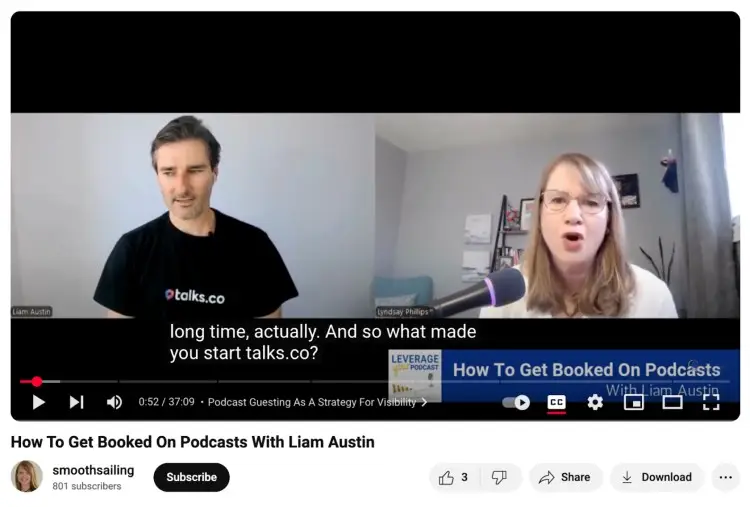
Best for: Turning audience questions into a steady stream of episode ideas.
Every episode answers questions your audience is already asking, making your content immediately relevant.
Template:
Hook
- Today’s question: ______________________
Background
- Why people ask this: ______________________
- Common misconception: ______________________
Your answer
- Step 1: ______________________
- Step 2: ______________________
- Step 3: ______________________
Real-world example
- Client story or personal experience: ______________________
Recap
- Biggest takeaway: ______________________
- One action listeners should take today: ______________________
Closing
- Question to answer in a future episode: ______________________
- Call to action: ______________________
Example: A business coach answers, “How do I get my first coaching clients without a large audience?” before breaking the process into simple, practical steps.
Talks Tip: Group similar questions into one episode instead of answering only one. It creates more value and reaches a wider audience.
5. Educational podcast format template
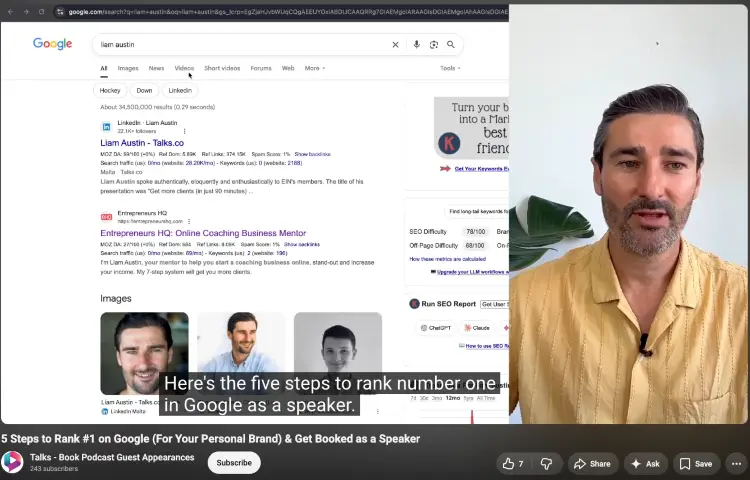
Best for: Teaching listeners a practical skill, framework, or process.
Educational episodes position you as an expert by helping listeners achieve a clear outcome before the episode ends.
Template:
Hook
- Today’s lesson: ______________________
- By the end of this episode, you’ll know how to: ______________________
Introduction
- This episode is for: ______________________
- Why this matters: ______________________
Step-by-step lesson
- Step 1: ______________________
- Step 2: ______________________
- Step 3: ______________________
Common mistakes
- Mistake to avoid: ______________________
- How to fix it: ______________________
Recap
- Biggest takeaway: ______________________
- First action listeners should take: ______________________
Closing
- Related resource or next lesson: ______________________
Example: A marketing consultant teaches listeners how to launch a lead magnet, covering the offer, landing page, email sequence, and promotion strategy in one episode.
Talks Tip: Aim for one lesson and one outcome per episode. Listeners are far more likely to finish and remember focused content.
6. Coaching podcast format template
Best for: Coaches, consultants, and service providers who want to demonstrate their expertise in action.
Instead of telling listeners what to do, you coach someone through a real challenge. That makes your advice practical, relatable, and easier to apply.
Template:
Hook
- Today’s coaching challenge: ______________________
Current situation
- Who you’re coaching: ______________________
- Their goal: ______________________
- What’s holding them back: ______________________
Coaching conversation
- Question 1: ______________________
- Question 2: ______________________
- Breakthrough moment: ______________________
Action plan
- Step 1: ______________________
- Step 2: ______________________
- Step 3: ______________________
Recap
- Biggest lesson: ______________________
Closing
- Challenge listeners to: ______________________
Example: A mindset coach helps an entrepreneur work through the fear of raising their prices by identifying limiting beliefs and creating a simple action plan.
Talks Tip: Resist solving everything immediately. Great coaching episodes reveal the thought process, not just the answer.
7. Panel podcast format template
Best for: Exploring one topic through multiple perspectives.
A well-moderated discussion creates variety while giving listeners different opinions, experiences, and practical ideas in a single episode.
Template:
Hook
- Today’s topic: ______________________
- Why it matters: ______________________
Guest introductions
- Guest 1: ______________________
- Guest 2: ______________________
- Guest 3: ______________________
Discussion
- Opening question: ______________________
- Topic 1: ______________________
- Topic 2: ______________________
- Topic 3: ______________________
Final round
- One takeaway from each guest: ______________________
Closing
- Resources or where to follow each guest: ______________________
Example: 3 marketing experts debate whether LinkedIn, YouTube, or podcast guesting is the best channel for building authority, sharing where each strategy works best.
Talks Tip: Send your discussion topics in advance, but leave room for natural follow-up questions and healthy debate.
8. Case study podcast format template
Best for: Showing exactly how a result was achieved instead of talking about it in theory.
Real examples build credibility because listeners can follow the journey from problem to outcome.
Template:
Hook
- Result achieved: ______________________
- Timeframe: ______________________
Starting point
- Who this case study is about: ______________________
- Initial situation: ______________________
The challenge
- Biggest obstacle: ______________________
The strategy
- Step 1: ______________________
- Step 2: ______________________
- Step 3: ______________________
The results
- Outcome: ______________________
- Metrics or numbers: ______________________
Key lessons
- Lesson 1: ______________________
- Lesson 2: ______________________
Closing
- Related resource or next step: ______________________
Example: A business coach explains how a client booked their first 20 podcast interviews on popular podcasts in 90 days by refining their positioning, improving their speaker profile, and pitching the right shows.
Talks Tip: Include real numbers, timelines, and decisions whenever possible. Specific details make case studies far more believable than broad success stories.
9. News podcast format template
Best for: Sharing timely insights on industry news, trends, and updates.
People don’t need another headline. They want someone they trust to explain what changed, why it matters, and what to do next.
Template:
Hook
- Today’s news: ______________________
What happened?
- Summary of the update: ______________________
Why it matters
- Who it affects: ______________________
- Biggest impact: ______________________
Your perspective
- What this means: ______________________
- Recommended action: ______________________
Recap
- Biggest takeaway: ______________________
Closing
- Topic for the next update: ______________________
Example: A social media strategist unpacks Instagram’s latest algorithm update, explaining how it affects creators, which content formats are getting more reach, and what to test next.
Talks Tip: Focus on one major story per episode. Going deep is usually more valuable than covering several updates at surface level.
10. Seasonal or series podcast format template
Best for: Guiding listeners through one transformation across multiple episodes.
Each episode builds on the last, creating momentum and giving listeners a reason to return for the next installment.
Template:
Series title
Final goal
- By the last episode, listeners will: ______________________
Episode plan
- Episode 1: ______________________
- Episode 2: ______________________
- Episode 3: ______________________
- Episode 4: ______________________
- Episode 5: ______________________
- Final episode: ______________________
Series recap
- Biggest transformation: ______________________
Closing
- Invite listeners to continue with: ______________________
Example: A business coach creates a 6-part series on booking podcast interviews, covering niche selection, guest positioning, pitching hosts, interview preparation, lead generation, and turning listeners into clients.
Talks Tip: Mention the next episode before you finish each one. A small teaser gives listeners a reason to keep following the series.
Podcast Format Ideas
Start with a podcast format that suits your personality, your audience, and the kind of conversations you want to have.
- Interview podcast: DTC skincare founder scaled from $0 to $50K/month using TikTok ads, covering creative testing, CAC vs LTV, and early winning ad angles.
- Solo podcast: Solo shows that teach solopreneur coaches to write a high-converting lead magnet using problem identification, quick-win solution, supporting data, and opt-in positioning.
- Storytelling podcast: Case study of a freelance copywriter who reached $8K/month by sending 50 cold emails daily and refining a 5-email outreach sequence. Open with an anecdote to draw listeners in.
- Q&A podcast: Answer how to get the first 10 coaching clients with no audience, no email list, and 200 Instagram followers.
- Educational podcast: Build a $27 Kajabi tripwire funnel, including page structure, checkout, upsells, and email sequence. Provide step-by-step instructions listeners can follow immediately.
- Coaching podcast: Fix an Instagram bio live, e.g., rewrite headline, clarify offer, and optimize link-in-bio for booked calls.
- Panel podcast: 3 creators debate TikTok vs YouTube Shorts for lead gen in 2025, comparing RPM, conversions, and effort.
- News podcast: Break down an Instagram algorithm update and its impact on accounts under 10K followers.
- Case study podcast: How a Notion creator made $100K in 90 days via Gumroad using Twitter, urgency pricing, and affiliates.
- Series podcast: 6 episodes on building a $1K/month digital product from idea to first 100 sales.
How to Format a Podcast
A strong podcast feels intentional from the first second until the end of the episode. It’s structured around the listener’s attention span, not the host’s stream of thought.
Using a script ensures you have a repeatable episode framework that makes every recording feel clear, focused, and easy to follow especially when you’re just starting your podcast.
- Start with hook (0-60 seconds): Open with a bold claim, surprising stat, relatable pain point, or curiosity question to earn attention and prevent skipping instantly.
- Introduce episode: In 1-3 sentences, state topic, target audience, and outcome. Add brief credibility if relevant to build trust quickly and authority.
- One core idea: Focus on a single transformation or takeaway; avoid multiple topics so the episode template stays focused and memorable.
- Transitions: Use signposts like “Now that we’ve covered that,” or “Let’s move into” to maintain flow and listener engagement.
- End recap: Summarize 2-3 key points in simple language for retention.
- CTA: Tell listeners exactly what to do next like subscribe, review, download, or follow, aligned to episode based on episode topic clearly actionable.
Layout Podcast Script Template
This is how you build a repeatable framework that keeps every episode focused while giving you room to sound natural.
General podcast script template
Episode title: [Insert title]
Target listener: [Who is this episode for?]
Main takeaway: [What’s the one thing listeners should remember?]
Hook (30-60 seconds):
- Open with a question, bold statement, surprising fact, or relatable story.
- Tell listeners why they should keep listening.
Introduction (1-2 minutes):
- Welcome listeners.
- Introduce the topic.
- Explain what they’ll learn.
Main content:
- Point 1: ___________________________________
- Point 2: ___________________________________
- Point 3: ___________________________________
- Example or story: __________________________
- Key takeaway: _____________________________
Recap:
- Summarize the biggest lesson in a few sentences.
Call to action:
- Subscribe
- Leave a review
- Download your lead magnet
- Visit your website
- Book a call
Outro:
- Thank listeners.
- Tease the next episode.
Podcast layout template
If you prefer thinking visually, use this simple episode flow:
- Hook: _____________________________
- Intro: _____________________________
- Main topic: ________________________
- Story or example: __________________
- Key takeaways:
- _____________________________
- _____________________________
- _____________________________
- CTA : _____________________________
- Outro: _____________________________
You’ll notice most successful podcasts follow some version of this structure. The topic changes but the podcast introduction template and flow always stays familiar.
Podcast template design (Checklist)
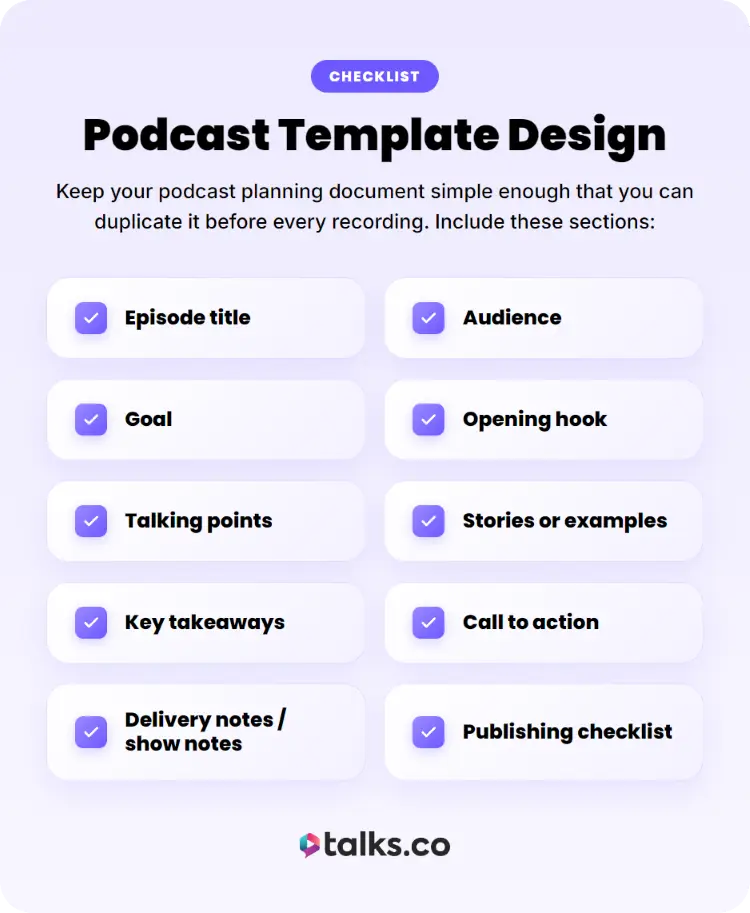
Keep your podcast planning document simple enough that you can duplicate it before every recording.
Include these sections:
☐ Episode title
☐ Audience
☐ Goal
☐ Opening hook
☐ Talking points
☐ Stories or examples
☐ Key takeaways
☐ Call to action
☐ Delivery notes / show notes
☐ Publishing checklist
Whether you use free templates from Google Docs, Notion, Word, or paper doesn’t matter. Using the same free script every week helps you spend less time planning and more time creating.
Podcast template video
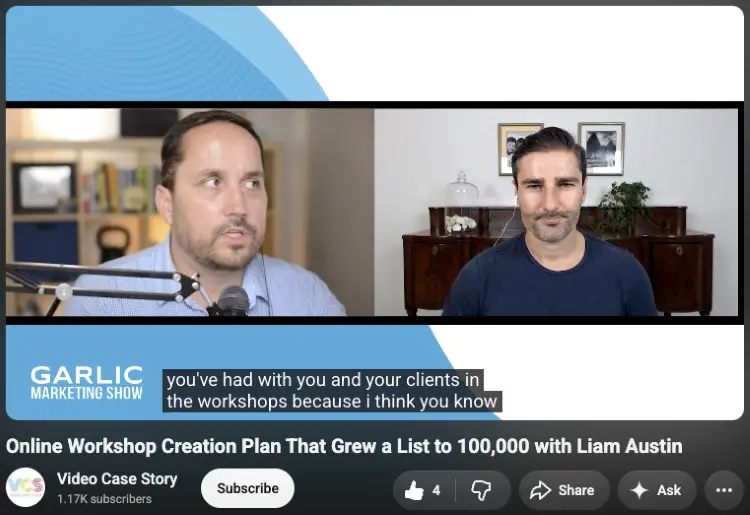
One of the fastest ways to improve your podcast is to study someone else’s structure instead of only listening to their ideas.
Watch this podcast episode with a notebook beside you. Ignore the topic for a moment and study the structure instead on how to do a podcast interview. Pause the video every time the conversation shifts and ask why.
- 0:00: How does the opening hook earn attention?
- Introduction: How are expectations set?
- Main conversation: How are stories, teaching, and transitions balanced?
- Credibility moments: Where does expertise naturally appear?
- Call to action: How does the rest of the episode lead to the next step without feeling forced?
- Outro: How does it end while leaving you wanting more?
Once you’ve mapped the episode, reuse the framework and tips for success you’ve gathered for your own topic to give your audience even better episodes instead of writing from scratch every time.
Remember: Great podcast formats are studied, adapted, and repeated.
Your Podcast Deserves an Audience Bigger Than Your Own
Your podcast format templates to get started are ready. Your ideas and supporting points are ready. The only question left is who gets to hear them post-production.
Every day you wait, podcast hosts are booking guests. Conversations are happening. Audiences are discovering experts in your niche. Those opportunities don’t stay open forever.
Which is basically why I built Talks in the first place.
Create your free Talks profile, get matched with podcast hosts looking for many solo guests like you, and let our automation handle the introductions while you focus on showing up and sharing your expertise.
The next interview that grows your audience, lands a client, or opens a speaking opportunity could start with one free profile.
Yes! Sign Me Up for Talks Now!


