

Every podcaster’s dream is to make a good podcast. Just think of it, feeling accomplished about what you put out and having listeners who keep coming back for more.
But what makes a good podcast? Is it the crisp audio, a captivating guest, or good storytelling?
It’s not just about having a microphone and talking into it. There’s an art and skill behind hosting your show, getting it out in the world, and building a community around it.
Let’s hear what experts in the podcasting world have to say. I compiled 33 tips to make your podcast successful, from creating your show name to preparing for interviews.
I’ll also walk you through how to be a good podcast host and give you a glimpse of what it’s like to monetize.
Why Have Podcasts Become So Popular?
Podcasts have exploded in popularity over the past years, and for good reason.
Here’s why people couldn’t get enough of podcasts, and why you should consider hopping onto this booming platform:
- On-demand content: People can listen anytime, whether they’re commuting, exercising, or relaxing at home.
- Variety of topics: There’s a podcast for almost every interest, from entrepreneurship to mindfulness.
- Personal connection: It feels like you’re just listening to a friend talk, creating a deeper bond between the host and the listener.
- Community building: People who become fans of your show can build a community and connect with each other.
- Accessibility: Anyone with a smartphone can tune in, making it easy to reach diverse audiences.
What is a good podcast?
A good podcast resonates with listeners. To build this connection, your podcast should have the following qualities:
- Clear focus: A strong, unique premise that defines what the show is about and who it’s for.
- Consistent schedule: Upload regular episodes that keep listeners coming back.
- High-quality sound: Crisp, clear podcast sound with minimal distractions from background noise.
- Engaging content: Stories and interviews that offer valuable insights or entertainment.
- Strong hosting: You should have good hosting skills to guide conversations skillfully and connect with the audience.
- Audience interaction: Build a sense of community for your listeners around the podcast using show notes, newsletters, and social media posts. Keep them coming back for more.
- Standout branding: Create a memorable cover art, catchy name, and clear style that helps you stand out from the crowd.
- Effective promotion: It’s not enough to put your podcast out there. You need to market your show to drive listens.
- Adaptability: Podcasting is evolving. You need the ability to catch up and improve based on feedback.
- Authenticity: Your genuine passion and personality have to come through, making listeners want to stay.
What Makes a Good Podcast?

When it comes to podcasting, there’s really no one-size-fits-all kind of advice. What you need to improve would still depend on your situation, whether you need podcasting 101 or you’ve been hosting for a while.
But there are some key focuses that experts keep pointing out. Those are what I’ll share with you today.
Because making a good podcast isn’t just about good sound, it’s about making sure that your final output is something that’s meaningful and can move people.
Here are ten expert tips on how to make a good podcast:
1. The host’s good energy
“Your guest mirrors your mental state. If you come to the interview well-prepared, confident, and curious, with the good intentions of producing great art, your guest will bring their A game as well.” – Alex Birkett, Host
Alex talks about mindset matters: how you show up as a host influences how the guest shows up. To create a good guest experience, show them that you are ready but also give them time to warm up, prepare and feel open so you can have a better conversation later on.
- Best for: Anyone who interviews guests frequently and wants quality conversations.
- Pros: Good chemistry is highly likely, good rapport building.
- Cons: Takes time and emotional labor, some guests still stay guarded or nervous.
2. Ability to adapt to your audience’s needs
“Your audience will tell you what they want and a great podcast knows how (and when) to listen.” – Fay M., Marketing Team at Tink Media Co
When you have a really engaged audience, you can tell which formats, topics and types of guests they appreciate more. It can be scary to go through the numbers and the comments, but understanding your listeners is what really helps you grow.
- Best for: Creators who want to scale but have no starting point.
- Pros: Builds stronger connections with your audience, gives you clarity on what improvements to prioritize.
- Cons: Can be disheartening if you keep seeing negative feedback that isn’t helpful.
3. Ability to build real human connections
“As creators, our job is to find the frequency that most resonates with our audience, and amplify it, in hopes that our listeners may feel more deeply connected to the world, to themselves, and to one another.” – Lukę Brawner, Founder and Head of Vision at Odd Parliament
A podcast isn’t some polished audio content you create just to ramble. You share an authentic part of yourself through stories, realizations and insights. This is what people relate to and makes them want to hear more.
- Best for: Hosts who want to gain a loyal following and produce good podcast episodes.
- Pros: Authentic episodes that people will relate to.
- Cons: Requires you to open up and get real with yourself so you can show that to audiences.
4. Sparking interest and value
“I think three elements of a potentially good podcast are that it should challenge, be entertaining, and/or come from genuine expertise.” – Tom Webster, Partner at Sounds Profitable
Think from your listeners’ perspective. What’s in it for them? Your podcast should offer either tension, fun or new knowledge for it to be valuable to people.
- Best for: Beginner podcasters thinking of their podcast concept.
- Pros: You can ground your efforts on these three elements of a good podcast.
- Cons: Can always be pressured to include all three, which is a hard thing to do.
5. Great attention to detail
“Whether it’s your recording equipment, your sound, your interview process, or your message, the list goes on… attention to detail will go a long way if you’re looking to make a podcast that stands out amongst the rest.” – Dennis Cooper, Host of Culpable
The effort you put in will always shine through. If you put thought into planning, production and editing, your listeners will be able to tell.
- Best for: Creators who tend to wing it and need direction.
- Pros: You’re sure about the quality you put out, intentional and well-thought-out episodes.
- Cons: Can be tough to maintain high standards on your own.
7. Has purpose
“Define that reason, use it in your description, and make it super-obvious for any new listener – whichever episode they start listening to – by explaining what your podcast is and why they should listen within the first twenty seconds of your show.” – James Cridland, Editor of Podnews
Good podcasts exist for a clear purpose, whether that be to inform, entertain or investigate. It’s that meaningfulness that draws people in.
- Best for: New podcasters coming up with ideas for their show.
- Pros: Central value and purpose to anchor new ideas in, clarity of direction.
- Cons: Needs a lot of time to figure out, can be stuck in a loop with brainstorming.
8. Engages listeners
“A good podcast finds a way to collect those stories, engage with the listeners, and become something greater and more layered than it could ever have been if the host just threw down content and walked away. Invite your listeners in.” – Lauren Passell, Founder of Tink Media
The beautiful thing about podcasts is that you can co-create with your audience. Encourage them to participate and submit their own stories.
- Best for: Seasoned creators with a loyal community and want to do more.
- Pros: More engagement and value from user submissions.
- Cons: Need to filter and verify submissions.
9. Consistency
“Consistency signals to your audience that you take the podcast seriously. Regularly showing up demonstrates your commitment and can foster trust between you and your audience.” – Ben Terry, Host of How You Create
Maintain a level of professionalism. That can be as simple as having a posting schedule to keeping up with the quality and style of all your episodes.
- Best for: Anyone who wants to signal their expertise in podcasting.
- Pros: Structured and organized process, established standards.
- Cons: You’d need help for things you might miss.
10. Fun and electric vibe
“A fun atmosphere is contagious and often conveys your passion and energy for the podcast topic. This can be infectious, inspiring your listeners to share your enthusiasm.” – Ben Terry, Host of How You Create
There are a lot of things to mind when you create your own podcast. But at the end of the day, you also need to have fun for your audience to enjoy it. When they hear you talking about what you love, they can also feel your joy and authenticity,
- Best for: Long-time podcasters who need to find their spark again.
- Pros: Your energy and vibe transmits to what you create.
- Cons: Having too much fun can compromise the structure of your episodes.
11. Have a strong first impression
“A strong intro will consistently keep new listeners intrigued and loyal listeners excited for more.” – Devin, podcast marketer at Tink Media
Your teaser or the first few seconds of your podcast episode should make listeners want more. Whether that’s a mysterious or dramatic hook, a question or crisp sound, make sure something sticks. Be sure to also introduce who you are and what the show is about during this crucial intro.
- Best for: New and veteran podcasters who want to gain new listeners.
- Pros: Chance to get clear on your branding and experiment with hooks.
- Cons: Trying to fit everything in your intro can be chaotic.
12. Easy to recommend
“If you listen to a podcast you really love, it becomes easy to make a case for it and become an advocate for it.” – Aakshi Sinha, Podcast Marketer at Tink Media
It’s easy to introduce a good podcast to a friend. When you’re clear with who your audience is and what you do, people have clear expectations from you. If someone they know enjoys your type of show, they can easily share your show link.
- Best for: Hosts who need to get clear on the value of their show.
- Pros: Growing your audience, being vetted by your loyal audience.
- Cons: Can limit the types of people that you attract.
13. Community-building
“We all crave authentic connection, so establishing a place for your listeners to interact with one another takes it one step further.” – Gin Stephens, Author and host of Intermittent Fasting Stories
It’s more than finding people with shared interests. Podcasting lets you create a community where people have the same values and can connect and share their knowledge about a common topic.
- Best for: Established podcast hosts who have a growing following.
- Pros: Highly engaged audiences, feedback, and opportunities for monetization.
- Cons: Need to manage the community and set standards and boundaries.
14. Simplifies complex ideas
“A good podcast distills complex, compelling topics into easily digestible and well-crafted stories.” – Bradley Davis, Co-Founder and CEO of Podchaser
Your gift lies in how you turn difficult concepts into ones your listeners can understand. This makes sharing knowledge easy and can even make them curious to learn more.
- Best for: Hosts who struggle with the language to use on their show.
- Pros: No need for big words and technical terms, use of everyday language.
- Cons: Oversimplifying can change the meaning of things you want to discuss.
15. Doesn’t please everyone
“So stop trying to please every person out there. That leads to plain vanilla content caused by your identity crisis and unwillingness to lean into your brand voice.” – Armand Farrokh, Co-Founder of 30 Minutes to President’s Club
Be unapologetically you. It’s your podcast and your voice that people are looking forward to. If you try to be everyone else, you’ll get lost in the sea of every other podcast out there.
- Best for: Anyone who wants to establish a unique voice in the podcasting space.
- Pros: Individuality, standing out from the crowd, finding your audience.
- Cons: Risk that people might not appreciate what you put out.
What Makes a Podcast Great?
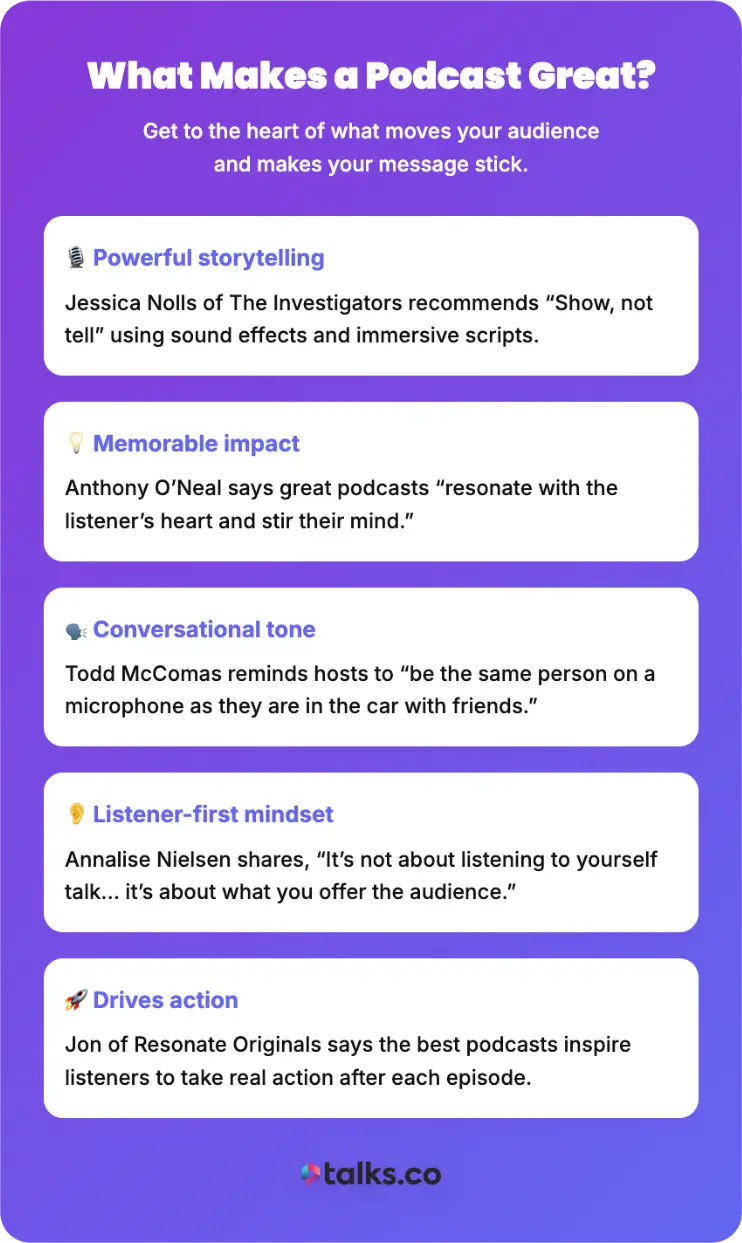
To kick your podcast up a notch, you need to look into the heart of what you do. How do you get your message across in a way that affects your audience?
- Powerful storytelling: If you want to be more expressive, Jessica Nolls of The Investigators emphasizes “Show, not tell” with podcast scripts and sound effects.
- Memorable impact: For seasoned podcasters changing it up, Anthony O’Neal says podcasting should “resonate with the listener’s heart and stir their mind.”
- Conversational tone: If you stick to a rigid script, Todd McComas of The Investigators encourages hosts to “be the same person on a microphone as they are in the car with their friends”.
- Listener-first mindset: If you’re looking for purpose in podcasting, Annalise Nielsen of Pacific Content says that a podcast is “not about listening to yourself talk”. It’s about what you can offer listeners.
- Drives action: Jon of Resonate Originals points out how great podcasts encourage listeners to do something. Good reminder for creators who lack calls to action.
What makes a podcast successful?
A great podcast is planned with the end in mind. Here’s how to make a podcast successful:
- Include marketing in the production process: Arielle Nissenblatt says that marketing (e.g., episode announcement, posting teasers) is just as important as production.
- Have a business plan: Rae Palermo of Spotify asks creators to “consider good data, monetization, audience growth and a clear trajectory.”
- Spend time on pre-production: Sabrina Seiwert of Resonate Recordings emphasizes the importance of research, thoughtful questions and talking points.
- Make your show accessible: Jacob Wolf of Visionaries warns podcasters against using jargon and getting too complicated. The goal is not to sound smart but to make your ideas easy to understand.
- Invest in good quality audio: Chris Mottes of Hindenburg Solutions reminds hosts that no matter how good their stories are, bad audio is distracting. Learn the basics of audio production and invest in equipment and software.
What makes a good podcast cover?
Creating a good podcast cover isn’t just about having graphic design skills. It’s about showcasing your unique identity. Keep these in mind:
- Consistent with your branding: The colors, symbols and design should match the branding materials you’ve already put out.
- Clear and prominent podcast name: Your podcast name should be easy to read so people can identify your show.
- High-resolution cover: Use a high-quality image sized correctly (usually 3000×3000 pixels) for crisp display across different podcast platforms.
- Not too much text or detail: Keep your design minimal but impactful. Too many words and graphics can make it look messy.
What makes a good podcast host?
As the podcast host, you are the star of the show. Make sure you fulfill your role well with these tips:
- Control of episode flow: Roula Amira of Better believes that a good host knows how to structure an episode, interview guests and share stories that make an impact.
- Drive to get better: Podcasting isn’t just speaking over a mic. Your voice is your bread and butter so you should work on speaking better. Chris Williamson shares how he hired a speech coach to improve his diction and pronunciation.
- Practice: Danielle also emphasizes the importance of developing hosting skills. By mastering your timing and flow, you can keep listeners engaged.
- Responding to listeners: Daniele Bolleli treasures replying to as many listener messages as he can. This builds real connection with listeners. You receive invaluable feedback and they feel heard by you.
How to Make a Good Podcast
Making a good podcast isn’t overwhelming if you follow the right steps. Here’s a simple guide for creating your own podcast (and making sure of its quality).
- Define your audience and topic: Know who you’re speaking to and what unique angle your podcast will have to attract the right listeners.
- Choose your format and style: Decide if your show format will be solo, interviews, storytelling, and set the tone and episode length.
- Invest in good equipment: Use a good microphone and recording tools for a clear and professional podcast sound.
- Plan and record episodes: Outline your topics and questions, then record in a quiet space using reliable software.
- Polish your episode: Clean up your audio, add intros or effects, and create eye-catching cover art with your podcast’s theme.
- Publish consistently: Upload episodes on a regular release schedule to build habits and grow your podcast.
- Promote and engage: Share episodes through your profiles, and connect with listeners to keep the experience going beyond your episodes.
There are many benefits of podcasts for your business. If you’re new to this, check out this podcast starter kit.
3 Tips to make a good podcast
Producing quality and clear sound is the most important thing when making a podcast. Make sure listeners enjoy their experience so they keep coming back. Here are other tips and best practices you can apply:
- Prepare engaging interview questions: Well-thought-out questions lead to interesting conversations.
- Be authentic as a host: Let your personality shine through and speak genuinely to build a real connection with your guests and listeners.
- Keep episodes focused: Deliver clear, tight content without unnecessary fluff and filler (ums or ahs) to respect your listeners’ time and maintain their interest.
How to Make a Good Podcast Name
Naming your podcast is creative but strategic. It needs to be catchy, clear, and SEO-friendly to attract your ideal listener.
- Personalize names: Brainstorm keywords related to your niche and audience.
- Experiment with combos: Mix and match words for impact and memorability.
- Assess availability: Check if the name is available on podcast platforms and as a domain.
- Catchiness test: Test how the name sounds when spoken aloud.
You can also use AI name generators like the Talks Podcast Name Generator to get ideas and variations. For example, you need a name for a health-related podcast. Type “health” and you’ll get:
- Vitality Vibes
- Wellness Whispers
- Peak Performance Perspectives
- Mindful Medicine Matters
- Holistic Harmony Hour
What makes a good podcast name?
How do you know you’ve found the one? Remember these tips for coming up with a good podcast name.
- Keep it short but memorable: Short names (under four words) are easier for listeners to recall and share.
- Reflect your podcast’s content: Your name should give listeners a clear idea of what your show is about.
- Make it unique and easy to find: Choose a unique name that stands out in directories and search engines.
How to Make a Good Podcast Script
Having a good podcast script, or at least a solid outline, helps maintain flow and focus. Here are five steps to create a good script for your show:
- Start with a clear intro: Welcome listeners and give a preview of the episode.
- Write an outline: Prepare your main talking points or questions, leaving room for natural conversation.
- Plan segues: Include transitions to smoothly move between topics.
- Plan your call-to-action: What do you want listeners to do, like subscribing or visiting your website?
- Wrap up with a clear ending: Summarize key takeaways and give a teaser that motivates listeners to return.
What makes a good podcast interview?
Getting ready to interview a guest? Make them comfortable and conduct a great interview, following these tips:
- Pre-interview warm-up: Andrew Warner recommends building rapport with guests even before you start rolling. Ask them simple questions like “What’s a win for you?” to help them open up.
- New perspectives: A good interview brings out stories that haven’t been heard before. Wanyee Li of Pacific Content says that when you have the perfect podcast guest, they can make you think, “huh, I had not thought of that before”.
- Host’s point of view: Interviews are not just about the other person opposite you. Alban Brook of Buzzprout says that you also need to be able to bring out how you see the world, your passions, curiosities and values.
- Storytelling: Sarai Mitnick of Semwork Radio sees narratives as central to podcasting. Especially when you’re conducting interviews, a short anecdote can illustrate a point or make things relatable.
What are good podcast questions?
Here are some examples of good podcast questions to ask, especially when interviewing and getting to know a guest:
- What inspired you to start your journey?
- Can you share a challenge you overcame?
- What advice would you give to someone starting out?
- What’s a typical day like for you?
- What’s one thing people often misunderstand about your work?
What’s a good podcast ending?
Some hosts find it awkward to end a recording. It can be difficult to find the right words to wrap up. Here are some suggestions for a good podcast ending:
- Thank your listeners: Appreciate those who stayed until the end of the episode to make your audience feel valued.
- Recap key takeaways: Briefly summarize the main points from the episode, so listeners leave with a fresh memory of what they learned.
- Include a clear CTA: Ask listeners to take one specific action, like subscribing, leaving a review, sharing the episode, or visiting your website.
How Many Podcasts Make Money?
Podcast monetization is a growing but competitive space. Only about 10-15% of podcasts actually generate significant revenue.
Most podcasters do not earn substantial income. Many consider it a passion project or marketing tool.
But it is possible to earn. Popular ways to monetize include sponsorships, listener donations, premium content, merchandise, and live events.
To get to that, you need to prioritize building your audience. Having high engagement rates means higher chances of monetizing successfully.
How much does a podcast make?
How much you can earn is based on your audience size and revenue streams.
- Sponsorships: Podcasters earn $18-$50 per 1,000 downloads for ads, depending on niche and demand.
- Listener support: Platforms like Patreon can provide a steady monthly income from dedicated fans.
- Merchandising: Selling branded products boosts revenue and builds brand loyalty.
- Live shows: A good way to engage with fans and earn from access passes.
- Affiliate marketing: Promoting relevant products can add passive income.
Many podcasts need thousands of downloads per episode before making meaningful money, so focus first on growing your audience.
Turn the Volume Up
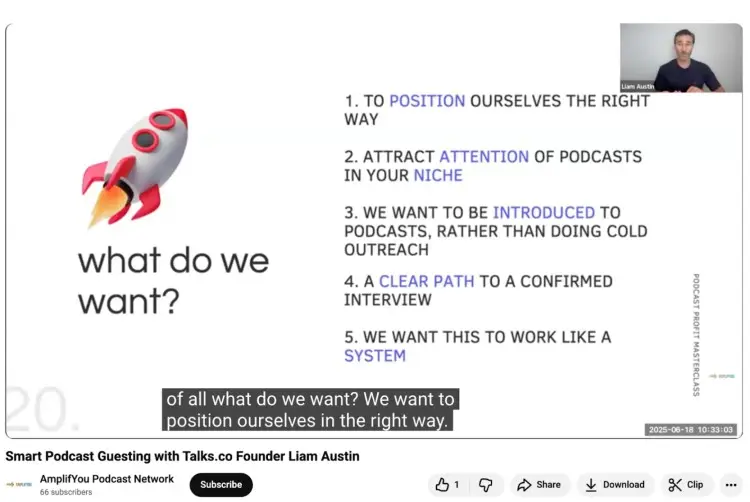
What makes a good podcast is the dedication you put into your show. Whether it’s developing your hosting skills, knowing how to conduct an interview, or inviting great guests, everything counts to improve your podcast.
Put what you’ve learned into practice and start interviewing guests. Get matched with the right guest for your show and let the stories unfold.
All it takes is creating your free Talks profile. With a few easy clicks, the system pairs you with guests to collaborate with.
No more scouring the internet for one good lead. People who align with your show’s style… they’re all there.
Time to conduct your dream interview.
Sign Up with Your Free Talks Creator Profile Today.


