

You want reach. Attention. Booked interviews. People mentioning your name on shows and asking you to speak.
Podcasting does that faster than almost anything else right now and you don’t need a studio to start.
Coaches and experts are using mobile podcast kits from hotel rooms, taxis, conference halls, airport lounges, and sideline seats at soccer games.
Episodes are getting recorded on travel days, between client calls, and straight after talks while the topic is still hot.
And with this guide?
You’ll find out exactly how a mobile podcast kit works. From what gear belongs in a mobile podcast studio to which portable podcasting options suit beginners vs advanced hosts and how they compare to traditional podcasting setups.
I’ll even show you where to buy the right mobile podcasting kit for your budget so you can start recording anywhere.
What Is a Mobile Podcast Kit?
A mobile podcast kit is a portable setup that lets you record high-quality audio using your phone. It replaces the bulky desk setup with lightweight gear you can carry in a small bag.
A good portable podcasting studio kit also fixes the problems most phone recordings have: thin sound quality, background echo, bad mic placement, wind noise, and episodes that drag on.
The goal is simple: sound professional, record anywhere, and stay consistent.
How a mobile podcast setup works
A mobile podcast setup connects directly to your phone as a recording.
You plug a microphone into the port of your phone, add Bluetooth or wired headphones so you can monitor your sound, and use a recording software or app to capture the audio.
Some portable podcasting setup kits also include a small tripod, light, or interface to control volume levels. Once you finish recording, you can edit your audio and clips on your phone or upload them to your hosting platform.
That’s what makes it “mobile.”
Everything happens from one device you already carry in your pocket.
Why Podcasting Is Popular
Podcasting is popular because it meets people where they already are and the numbers back it up.
There are now 505 million podcast listeners worldwide, with over half of Americans listening monthly and 1 in 3 tuning in weekly.
Podcasts aren’t niche anymore; they’re mainstream, routine, and trusted.
For experts and entrepreneurs, the appeal is simple:
- Your ideal buyers are already listening
- 55% listen to learn something new
- 83% of senior executives listen weekly
That’s why podcasting keeps growing while other trends fade.
More listeners. More time spent. More decision-makers tuning in. And more opportunity for you to be the person they hear.
Can I start a podcast with my phone?
Yes, you can start a podcast with your phone and most people do.
Podcasting is now a mobile-first medium, with 73-80% of listening happening on smartphones.
Plus, the tech caught up. So, you don’t need a studio to sound professional anymore because it’s free to start a podcast.
A phone plus the right mobile podcast kit lets you:
- Record and edit solo episodes
- Interview remote guests easily
- Capture mobile recording content while traveling
- Batch short-form episodes fast with your easy-to-use podcast starter kit
And it works financially, too. Podcasting isn’t just “recording for fun.”
3 in 5 marketers now include podcasts in their strategy, ad spend is climbing toward $4+ billion, and shows with consistent output see real audience growth.
Best Mobile Podcast Kit for Beginners & Pros
The right mobile podcast kit does two things really well: it keeps your setup simple and it makes you sound credible fast with tools you can throw in a backpack and record anywhere.
Compared to a traditional studio setup:
- Mobile wins on speed, flexibility, and cost.
- Studio wins on acoustic control and deep post-production.
But the trade-off is clear: studio polish vs recording anywhere.
If visibility is your goal, a mobile podcast kit usually wins. You can record interviews on the road, capture opportunities on the spot, and publish without waiting to “get back to the studio.”
Below, you’ll see beginner kits, professional kits, and purpose-built portable podcast setups for travel, remote interviews, and short-form content so you’re not guessing what to buy or what each piece of gear actually does.
Best mobile podcast equipment for beginners
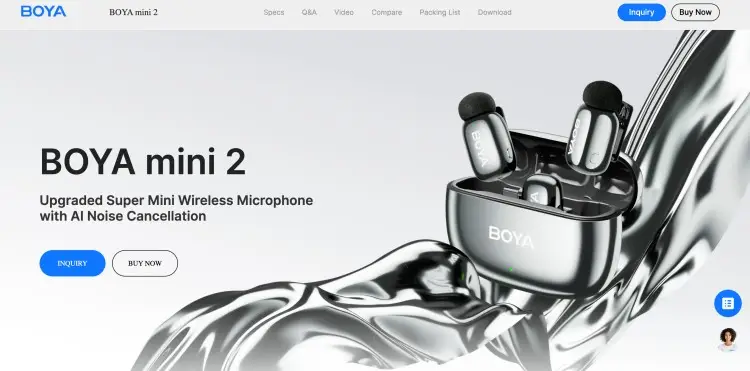
For beginners, the focus is portability, simplicity, and clear audio straight to your phone. BOYA’s lineup delivers the best podcast microphones at extremely affordable prices.
Best for: Solo episodes, interviews, and short-form content recorded directly to your phone.
Tiny mic. Big upgrade from “phone speaker” sound. This is the “throw it in your pocket and record anywhere” option.
- 5g ultra-light discreet mic.
- AI noise cancellation up to minus 40 dB.
- 48 kHz/24-bit audio, 80 dB SNR, 120 dB max SPL.
- Limiter and safety track to avoid distortion.
- BOYA Central app for gain and EQ control.
- 6 hours per mic, up to 30 hours with charging case.
- Works with USB-C and Lightning phones, cameras, and computers.
- Up to 100 meters transmission range.
Best for: Creators who podcast, film Reels, and run Zoom calls and want one mic that does all of it.
This one changes shape depending on how you use it, i.e., clip it on, hold it, or mount it. One device, multiple styles.
- 4-in-1 design (clip-on, handheld, desktop, on-camera).
- AI noise cancellation up to minus 40 dB.
- 7 grams and 13 mm thin.
- 48 kHz/24-bit audio with limiter and safety track.
- 6 hours battery per mic, 30 hours total with case.
- Mono, stereo, and safety track modes.
- Supports 2 transmitters to one receiver.
- Up to 100 meters transmission range.
Best for: Hosts who want studio-quality audio on mobile and plan to interview guests regularly.
This is the “serious beginner” mic. Still super easy to use, but powerful enough to grow with you.
- True AI noise cancellation up to 40 dB.
- 48 kHz/24-bit and optional 32-bit float recording.
- Records a backup copy inside the mic with 8 GB storage.
- Up to 14.5 hours recording at default settings.
- 90 dB signal-to-noise ratio.
- Limiter, safety track, automatic gain control.
- Supports 2 transmitters and up to 4 receivers.
- 300 meters line-of-sight maximum transmission range .
Best phone podcast kit for professional podcast hosts
These options are built for hosts who care about reliability, consistent audio quality, and multi-guest recording.
1. RODE Wireless GO (Gen 3) ($178.08)
Best for: Two-person interviews, on-location recording, and hosts who want wireless mics that “just work.”
Professional dual-mic wireless system designed for interviews, vlogs, and podcast production.
- 2 clip-on transmitters with built-in omni microphones.
- Onboard 32-bit float recording for distortion-free backup audio.
- USB-C digital out + 3.5 mm analog out for phones and cameras.
- Intelligent GainAssist automatically manages levels.
- Simple setup with no menu diving required.
- Up to 7 hours battery life per charge.
- Secure 128-bit encryption for stable wireless signal.
- Up to 853 ft range in ideal conditions.
Optional add-on: The best USB power banks like the RODE Charge Case+ for storage plus two full recharges and up to 21 hours of total run time.
(You can always upgrade to the RØDECaster Duo or RØDECaster Pro II when you’re ready to invest in the best tools.)
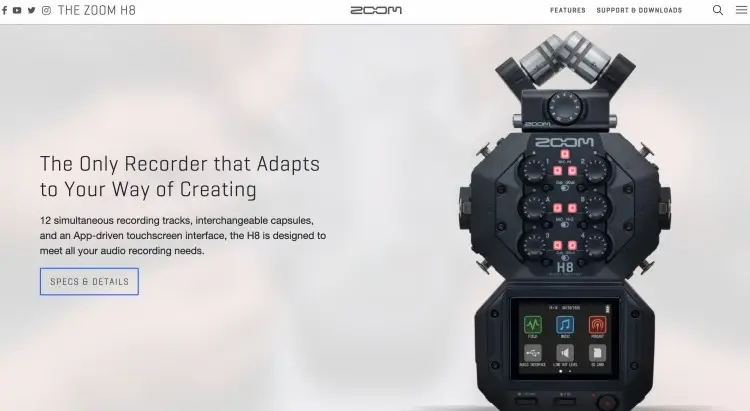
2. Zoom H8 Handy Recorder ($399.99)
Best for: Multi-guest shows, panel podcasts, and hosts who want full control over each microphone.
The Zoom H8 Handy Recorder is essentially a mobile mixing board plus recorder that fits in your bag.
- Three touchscreen modes optimized for podcasting, music, and field recording.
- Record up to 8 inputs at once for multi-mic conversations.
- Four XLR mic inputs with pads and phantom power.
- Two combo XLR-1/4″ inputs for instruments or line sources.
- Swappable stereo mic capsule included for room or ambience pickup.
- 24-bit/96 kHz recording for studio-quality audio.
- Sound pad buttons for effects, intros, and ad stingers.
- SD card recording plus USB audio interface mode.
- Backup and safety tracks to protect from clipping.
3. Shure MV88+ Video Kit with SE215 Earphones ($329)
Best for: Recording on-location interviews at conferences, street interviews, and events.
The MV88+ is the phone podcast kit for people who record in the noisiest places. It locks onto your phone, sits on the mini tripod, and delivers clear vocal pickup.
- 24-bit/48 kHz digital audio straight to your phone.
- Multiple mic pickup patterns including cardioid, bidirectional, and mid-side stereo.
- Adjustable stereo width, EQ, gain, and dynamics in the Shure MOTIV app.
- All-metal housing designed for field use and travel.
- 120 dB max SPL for confident recording in louder environments.
- Real-time monitoring using the SE215 in-ear monitors.
Best mobile podcast unit kit for hosts who travel
These kits are built for on-the-go interviews, hotel recordings, and event coverage where you don’t control the environment but still need clean audio.
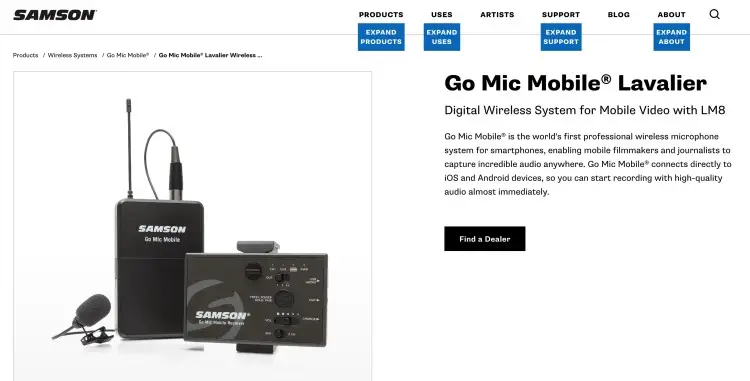
1. Samson Go Mic Mobile Lavalier Wireless System ($244.99)
Best for: Travel hosts who do on-location interviews and want a walk-and-talk podcast solution.
The Samson Go Mic is a two-channel wireless lavalier system designed specifically for smartphones. Clip the lav mic on your guest, mount the receiver to your phone, and record.
- 2.4 GHz wireless with low-latency audio.
- Up to 100 ft range.
- Direct phone mount and tripod options.
- Lightning/USB-C/Micro-USB connectivity.
- 13-hour receiver and 20-hour transmitter battery life.
- Dual-channel receiver for two speakers.
2. Movo iPhone Podcasting Bundle ($399.95)
Best for: Podcast creators who want studio-style sound while travelling light.
The Movo iPhone Podcasting Bundle is a complete 2-host podcasting bundle that includes everything you need for a seated interview setup.
- 2x VSM-5 condenser mics for broadcast-quality audio.
- Cardioid pattern cuts out background noise.
- Tabletop mic stands for compact setups.
- Pop filters to manage plosives.
- Lightning interface with 2 mic inputs.
- Headphone splitter plus 2 studio headphones.
Best mobile podcast kit for remote interviews
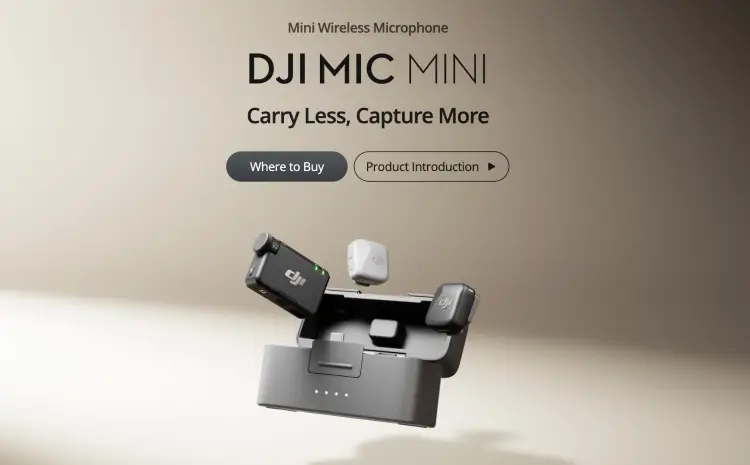
These kits make it easy to record and make remote audio feel connected and clean with guests no matter where they are.
Best for: High-quality field interviews, on-location reporting, or remote podcasts.
Ultra-compact wireless system that records crystal-clear audio, perfect for solo or two-person interviews using phones, tablets, or cameras.
Why it works for remote interviews
- 2.4 GHz Series IV digital transmission with 128-bit encryption.
- Built-in microphones in both transmitter and receiver for front-and-back audio capture.
- 7 hours battery life, 100m range line-of-sight.
- Works with iOS, Android, macOS, Windows, and cameras.
- Includes USB-C and Lightning cables, 3.5mm TRS cables, 2 furry windscreens, and carry pouch.
- GainAssist automatically balances audio and prevents clipping.
Best for: Creators needing ultra-light, discreet wireless audio for interviews, vlogs, and mobile podcasts.
Compact dual-transmitter system with omnidirectional microphones and stable, long-range transmission. Great for mobile interviews and on-the-go content creation.
- 400m stable transmission with anti-interference tech.
- Up to 48 hours total battery life with charging case; single transmitter lasts 11.5h, receiver 10.5h.
- Dual-channel recording with optional safety track to prevent clipping.
- Two-level noise cancellation for indoor or windy outdoor conditions.
- Direct connection to smartphones, cameras, computers, and DJI Osmo devices.
- Includes 2 transmitters, 1 receiver, USB-C & Lightning adapters, windscreens, and carry case.
Best mobile podcast kit for short-form podcasting
These mobile kits are small, wireless, and clip straight onto your shirt so you can record clean audio while filming vertically on your phone.
1. Hollyland LARK M2S Wireless Microphone System ($114)
Best for: Creators filming TikToks, Shorts, Reels, walk-and-talk clips, and on-the-go interviews.
The Hollyland LARK M2S is small, invisible, has no wires and doesn’t cover your face on camera, which is ideal for vertical video podcasts.
- 48 kHz/24-bit high-fidelity audio.
- Up to 300m/1,000 ft wireless range (open environment).
- Up to 9 hours working time per unit.
- Up to 30 hours with the charging case (combo version).
- Dual-level environmental noise cancellation.
- App control for gain + settings.
- USB-C, Lightning, 3.5mm, and camera receiver options.
- Plug-and-play pairing out of the box.
2. NEEWER CM28 Wireless Lavalier Microphone System ($99.99)
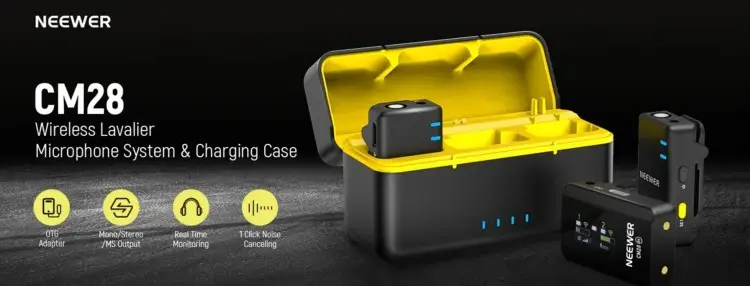
Best for: Budget short-form podcasters, two-person mobile interviews.
Easily one of the best budget microphones with a two-transmitter lavalier kit designed to record fast, wirelessly with internal recording for extra peace of mind.
- Up to 200m/656 ft wireless transmission in open space.
- 48 kHz WAV standalone recording on each transmitter (about 9 hours each).
- 9-hour TX battery life, 8-hour RX battery life.
- Charging case included for quick recharges.
- One-tap noise cancellation.
- Mono/Stereo/MS audio modes.
- LCD display for levels, battery, and connection status.
- Compatible with iPhone, Android, cameras, and computers via included adapters.
Where to Buy Mobile Podcast Recording Equipment
These retailers consistently stock legit mobile podcast kits and accessories, with fast shipping and easy returns.
- Amazon: Biggest selection, tons of bundle kits, fast delivery, and helpful reviews for comparing gear. (I got my Blue Yeti USB microphone here years ago and it’s still kicking.)
- B&H Photo Video: Professional audio retailer with vetted listings and reliable specifications on XLR mics, dynamic mics, XLR cables, and headphone jacks for podcasters and creators.
- Sweetwater: Great for microphones and audio gear, plus solid customer support if you need advice.
- Best Buy: Easy in-store pickup for last-minute podcast gear and popular phone mic kits.
- RODE Official Store: Buy direct for the latest releases, bundles, and warranty coverage on wireless kits.
- Shure Official Store: Trusted audio brand site with genuine parts, spares, and mobile-friendly microphone systems like the Shure 58 microphone.
How to Record a Podcast with Mobile Podcast Kits (Checklist)
Here’s how to do a podcast interview using your phone without too many moving parts or heavy technical requirements:
☐ Charge everything first: Phone, transmitters, receiver, charging case, your Sony MDR 7506 headphones.
☐ Plug in or pair your mics: Connect the wireless receiver, clip transmitters, confirm each mic is actually active.
☐Pick a quiet spot: Sofas, curtains, carpet = yes; tiled rooms = no.
☐ Do a 10-15 second test recording: Talk loud, move, then listen back for noise or clipping
☐ Set simple mic rules for guests: Center chest, don’t touch, don’t whisper into it.
☐ Get recording: Use your podcast hosting platform, voice recorder, or camera app,
☐ Watch your levels: Green = good, red = bad; peaks in yellow.
☐ Airplane mode on: Block calls and notifications before starting.
☐ Save immediately after: Label files clearly, e.g., “Episode 1 – Dan Alter RAW.”
☐ Back it up: Cloud, AirDrop, or external storage for added safety.
Practical podcast time limit examples
Use these typical battery life, file size, and listener attention spans for mobile-first shows for your next podcast episode
- 5-10 minutes: Short-form podcasts, quick tips, daily updates, solo takes, TikTok or Reels-style content.
- 15-20 minutes: Lightweight interviews, Q&A sessions, reaction episodes, single-topic formats.
- 25-35 minutes: Standard mobile podcast episode length most beginners can sustain comfortably.
- 40-50 minutes: Deeper interviews recorded with dual wireless mics and external power banks.
- 60-90 minutes: Long-form conversations only if using: external battery + large phone storage + quiet space.
- 2+ hours: Not ideal on mobile kits; better suited to traditional studio or dedicated recorder setups.
On the Go and Always Ready
A mobile podcast kit removes every excuse of no studio, no problem, no “I’ll start later.”
With the ultimate portable podcasting setup, you can record in hotel rooms, co-working spaces, spare bedrooms, cars, and conference corridors.
You’ve now got the best tools and recording device options to sound good, move fast, and actually hit publish instead of endlessly planning.
The next step is simple: get yourself in front of the right audiences.
Talks helps you do exactly that.
You create your free profile, get matched with hosts, and start booking interviews without chasing inboxes or pitching all day.
The new automation tools even match and message for you, so interviews show up while you’re busy doing real work
If you want more listeners, more leads, and more opportunities from your podcast gear, don’t sit on it.
Create your free Talks profile and start getting booked in just 5 minutes!


