

Ever wondered how you can boost your reach and visibility online as a public speaker?
Think about it. When everyone’s searching for speakers to invite, you want your name to show up, and what better way than to have your own professional website attached to it.
A professional speaker website is like having a digital stage with all your services and credentials. It draws people in, introduces you, and drives leads.
That’s why so many top keynote and motivational speakers make sure to launch their own.
If that’s something you also want to do, this guide is for you. Start by taking inspiration from the best speaker website examples out there.
Let’s look at these 17 top picks and break down what makes them effective so you can gain insights and apply them to your own page.
17 Top Public Speaker Website Examples (2026 Snapshot)
To give you a quick overview, here are 17 of the best professional speaker websites to inspire your own design.
- Liam Austin: Best for combining authority, credibility, and a streamlined booking flow on a modern platform-based speaker page.
- Simon Sinek: Best for showcasing a deep library of thought leadership content.
- Christine Hassler: Best for using a lead magnet to capture visitor information effectively.
- Jay Baer: Best for demonstrating a bold and energetic personal brand.
- Cassandra Worthy: Best for creating a unique and memorable brand identity around a core message.
- Mel Robbins: Best for integrating various media forms like podcasts and books seamlessly.
- Nick Vujicic: Best for conveying a powerful and inspirational personal story.
- Tony Robbins: Best for balancing a massive personal brand with diverse product and service offerings.
- Gary Vaynerchuk: Best for integrating social media and creating a direct line to the audience.
- Brittany Hodak: Best for clearly targeting event planners with dedicated resources.
- Debra Benton: Best for showcasing extensive coaching programs alongside speaking.
- Jacob Green: Best for a clean, modern design with a clear promise statement.
- Katrina Cravy: Best for using a blog and other free content to build authority.
- Eric Thomas: Best for using storytelling to create an immersive user journey.
- Cy Wakeman: Best for providing a library of free resources to demonstrate value.
- Anne Grady: Best for focusing on a specific niche and owning it.
- Jay Shetty: Best for building a community and offering a pathway from free content to paid programs.
What Makes a Good Professional Speaker Website?
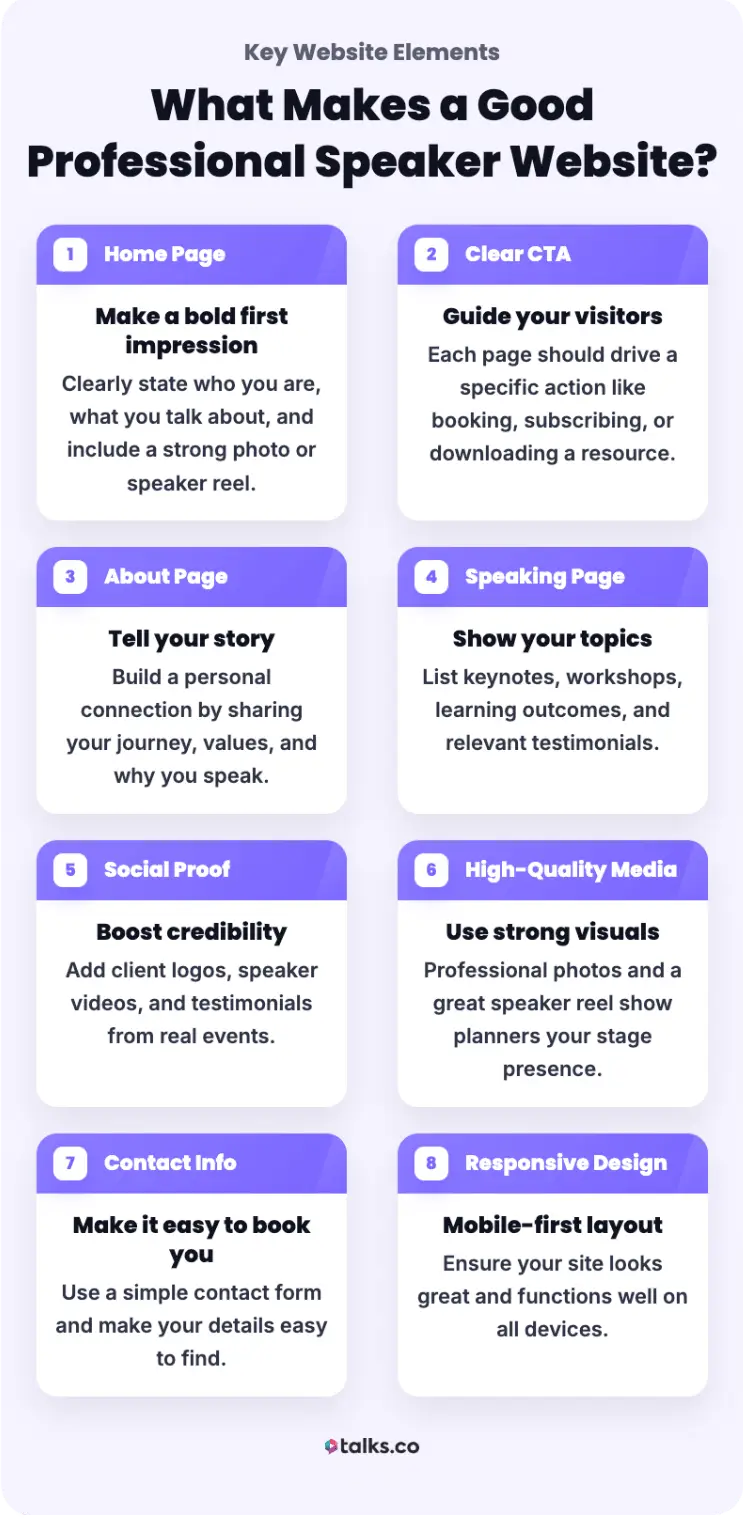
A good professional speaker website does more than just list your credentials. It tells a compelling story, builds trust with website visitors, and makes it easy for an event planner to book you.
In my experience, a professional speaker site does three things fast: it makes your expertise obvious, proves you’ve done the work, and shows you can actually speak. That’s the bar we build to with Talks speaker pages.
Here are the key components:
- Compelling home page: Your home page must clearly state who you are, what you talk about, and the value you provide. A high-quality photo or a dynamic speaker reel can make a strong first impression.
- Clear Call-to-Action (CTA): Every page should guide visitors to a specific action, whether it’s booking you for an event, signing up for your newsletter, or downloading free resources.
- About page: This is where you share your story and build a personal connection. Explain your journey, your passion, and why you are the ideal speaker for their event.
- Speaking page: Detail your keynote topics, workshops, and services. Include descriptions, learning outcomes, and testimonials for each.
- Social proof: Testimonials, client logos, and videos of past speaking engagements build credibility. Show that you are an established speaker trusted by other organizations.
- High-quality media: Professional photos and a high-energy speaker reel are non-negotiable. They give event planners a glimpse of your stage presence.
- Contact information: Make it simple for visitors to get in touch. Place a straightforward contact form and clear contact details.
- Responsive design: Your website design must look and function perfectly on all devices. A significant portion of web traffic comes from mobile devices, so a responsive design helps.
17 Best Professional Speaker Website Examples
Whether you’re a speaker, emcee, or content creator, having a digital hub of your own can help with discoverability and branding. That’s what these professional speaker sites do.
Let’s take a closer look at what makes them so effective so you can do the same when you build your own.
1. Liam Austin
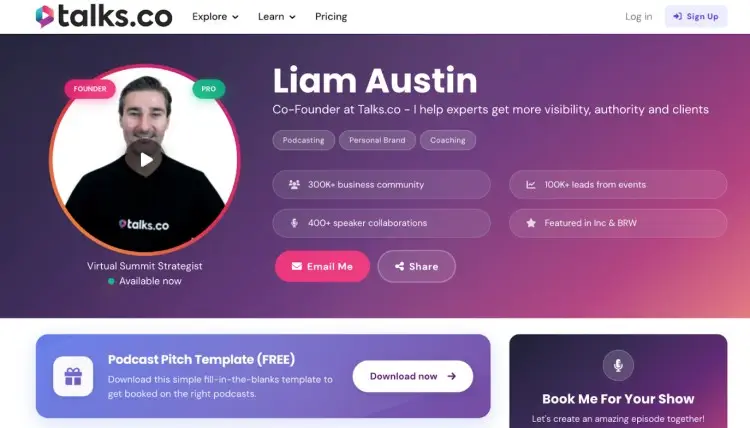
Liam Austin’s Talks profile functions as a modern professional speaker website built for visibility and bookings.
It clearly positions him as a podcast visibility strategist and co-founder of Talks.co, showing visitors exactly what he speaks about and how to book him.
Key features:
- Clear positioning as a podcast visibility strategist and Talks.co co-founder.
- Strong social proof, i.e., 300K+ entrepreneur community, 400+ speaker collaborations, 100K+ leads generated.
- Structured speaker topics, episode angles, and audience takeaways.
- Built-in booking flow with availability, interview formats, and zero-fee podcast interviews.
- Free lead magnet (Podcast Pitch Template).
- Live profile updates with recent podcast appearances.
Show impact upfront. If you’re a coach, consultant, author, speaker, or entrepreneur like Liam Austin, highlighting past results and collaborations gives hosts confidence in your credibility before they even reach out.
2. Simon Sinek
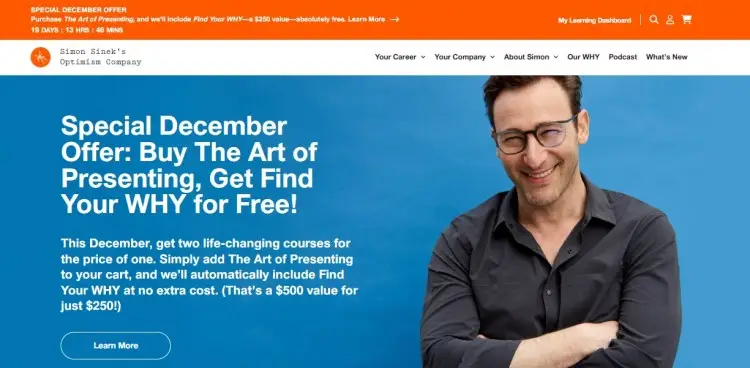
Simon Sinek’s website shows you content-driven branding done right. The site is a hub for his books, podcasts, and online courses, all centered around his core “Why” philosophy.
Key features:
- Extensive library of blog posts, videos, and podcast episodes.
- Clear pathways to his books and courses.
- A clear newsletter signup form.
If you’re a thought leader with a lot of content, Simon Sinek’s website shows how to organize it effectively. The clean navigation makes it easy for visitors to find what they need.
3. Christine Hassler
Christine Hassler is a speaker and coach whose website immediately engages visitors with a compelling offer. Her pop-up assessment is a smart way to capture leads.
Key features:
- A free assessment as a lead magnet.
- Clear sections for coaching, speaking, books, and retreats.
- Warm and inviting website design.
Christine Hassler’s website demonstrates the power of a strong lead magnet. By offering a free assessment, she provides immediate value and captures contact information for her mailing list.
4. Jay Baer
Jay Baer’s website is bold and energetic, just like his speaking style. The use of a video background on the home page instantly grabs attention.
Key features:
- High-energy video background.
- Clear display of client logos for social proof.
- Very clear, action-oriented call-to-action buttons.
Jay Baer perfectly reflects his personality. The dynamic design and confident copy show event planners exactly what kind of energy he will bring to their virtual event or stage.
5. Cassandra Worthy
Cassandra Worthy’s website is a perfect example of how to build a strong brand around a unique concept, “Change Enthusiasm.”
Key features:
- Unique and consistent branding throughout.
- Subtle animations that improve user experience.
- Clear sections explaining her unique framework.
Cassandra Worthy’s website teaches the importance of owning a niche. By branding her unique approach, she stands out in a crowded market and makes a memorable impression on every site visitor.
6. Mel Robbins
Mel Robbins’ website is a perfect example of putting out good content with personal branding. It seamlessly integrates her podcast, books, and speaking engagements into one cohesive experience.
Key features:
- Page focused on her podcast with searchable episodes.
- Noticeable promotion of her bestselling books.
- An engaging “About Mel” section that builds a strong connection.
For speakers who are also authors and podcasters, Mel Robbins’ website provides a fantastic model. The website’s design is easy to navigate and drives visitors toward her various offerings, effectively monetizing her brand.
7. Nick Vujicic
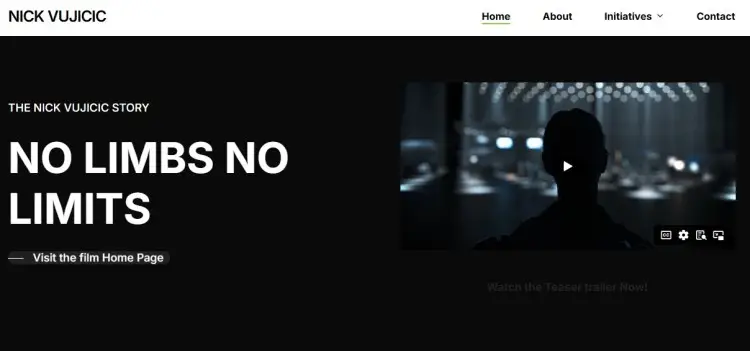
Nick Vujicic has a deeply personal inspirational speaker website. It tells his extraordinary story through powerful visuals and heartfelt copy, creating an immediate emotional connection.
Key features:
- Inspirational imagery and video content.
- A clear mission-driven message.
- Easy access to his books, videos, and charitable work.
If your personal story is central to your message, follow Nick Vujicic’s lead. His website shares an authentic and moving experience that resonates deeply with visitors and inspires them to make an impact.
8. Tony Robbins: Motivational speaker website
As a world-renowned motivational speaker, Tony Robbins has a website that matches his larger-than-life persona. It’s an all-in-one hub for his events, products, and coaching services.
Key features:
- High-impact visuals and powerful language.
- Detailed information about his live events and online courses.
- Extensive social proof, including testimonials and media mentions.
Tony Robbins’ site shows how to manage a massive personal brand. Despite the great amount of content, the site is well-organized.
9. Gary Vaynerchuk
Gary Vaynerchuk’s website is a direct reflection of his always-on, content-heavy approach. It’s a dynamic and regularly updated hub for all his content, from blog posts to podcast episodes.
Key features:
- A layout that showcases his latest content.
- Social media links are clearly present.
- A direct and unfiltered tone that resonates with his audience.
If your strategy is based on content volume, Gary Vaynerchuk’s website is your go-to example. It’s designed to be a reliable platform that encourages daily visits.
10. Brittany Hodak
Brittany Hodak’s website design is clean, professional, and directly targets event planners. The navigation bar includes a “Speaking” page, which is a brilliant move.
Key features:
- A dedicated page for event planners to make the booking process smooth.
- Clear call-to-action buttons to “Book Brittany.”
- Concise descriptions of her keynote topics.
Know your audience. Brittany Hodak understands that event planners are her primary customers, and her website is a perfect example of catering to their specific needs.
11. Debra Benton
Debra Benton is an experienced leadership coach and speaker, and her website reflects her deep expertise. It balances her speaking services with detailed information about her coaching programs.
Key features:
- Strong focus on executive coaching.
- A professional and authoritative design.
- Extensive resources, including books and articles.
For speakers who also offer coaching or consulting, Debra Benton’s site shows how to balance these offerings. It positions her as a multifaceted expert, appealing to both event planners and individuals seeking coaching.
12. Jacob Green
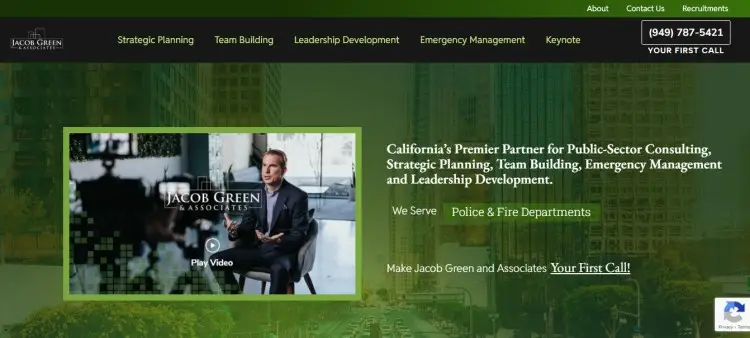
Jacob Green’s website has a modern and sleek design. The homepage features a clear promise statement and an immediate call-to-action, which is highly effective.
Key features:
- A strong promise statement on the home page.
- Clean and concise program descriptions.
- Modern branding and up-to-date design.
A clear and confident promise can be very persuasive. Jacob Green’s site immediately tells visitors what they can expect and how he can help, building trust from the first click.
13. Katrina Cravy
Katrina Cravy uses her website as a powerful content marketing tool. Her regularly updated blog, combined with her services on coaching and executive storytelling, establishes her as a knowledgeable authority.
Key features:
- An active blog with valuable content.
- A dedicated “Speakers” page.
- Clear CTAs to book a meeting.
Katrina Cravy’s site shows how providing consistent, valuable free content can attract and engage your target audience, leading to more public speaking opportunities.
14. Eric Thomas: Professional speaker brands
Eric Thomas, the “Hip Hop Preacher,” has a website that tells a story. As you scroll, you’re taken on a journey through his life and message, creating an immersive and engaging experience.
Key features:
- A narrative-driven design that unfolds as you scroll.
- High-energy visuals and videos.
- A strong, motivational tone throughout the copy.
Storytelling is a powerful tool. Eric Thomas’s website uses this approach to create a deeper connection with the audience and make his brand more memorable.
15. Cy Wakeman
Cy Wakeman’s website is a goldmine of free resources. She offers a vast library of tools, worksheets, and videos, which provides great value to visitors and gives them a taste of what it’s like to work with her.
Key features:
- A large library of free, downloadable tools.
- YouTube vlogs and a blog with actionable advice.
- Focus on leadership and workplace sanity.
Generosity builds trust. By offering so many valuable resources for free, Cy Wakeman’s website gives visitors a reason to return and positions her as a go-to expert in her field.
16. Anne Grady
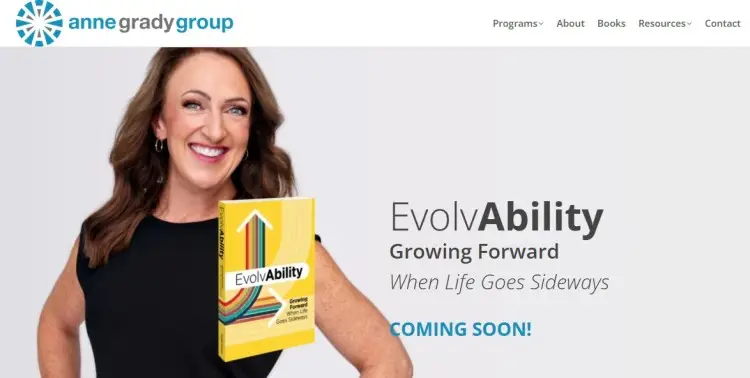
Anne Grady’s website is a great example of niching down. Her entire brand is focused on resilience, and the site’s design and content reflect this singular focus with clarity and authority.
Key features:
- A strong focus on the niche topic of resilience.
- A large library of YouTube videos and blog posts.
- A professional and clean design is simple but effective.
Don’t be afraid to specialize. Anne Grady’s site shows that owning a specific niche can make you the go-to expert. This focus makes it easy for event planners looking for a speaker on that topic to find her.
17. Jay Shetty
Jay Shetty’s website masterfully bridges the gap between free content and paid offerings. It’s a community-focused platform that invites visitors to engage on multiple levels.
Key features:
- A free “business readiness” assessment.
- Links to his popular podcast and social media.
- Clear pathways to his online courses and coaching.
Build a community around your brand. Jay Shetty’s design reflects his mission to make an impact, and it effectively nurtures visitors from casual listeners to dedicated students.
4 Professional Speaker Website Template Examples
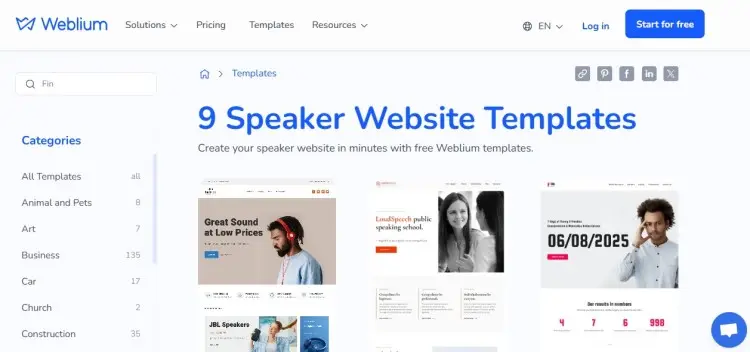
If you’re looking to design a website quickly, a template is a great starting point. Here are three platforms where you can get a professional website template:
- Talks.co: Lets you create a Creator profile that functions as a full professional website, with built-in booking, topics, and visibility tools designed to get you noticed by podcast hosts and event planners.
- Weblium: Offers free, customizable speaker website templates with drag-and-drop builders. Good example of a motivational speaker website that showcases bios, events, and testimonials quickly.
- Ready Steady Websites: Provides pre-designed, fully customizable templates specifically for speakers, allowing mix-and-match layouts to launch professional sites without coding.
- Squarespace: Features premium templates custom for professional speakers, coaches, and thought leaders, helping them build trust and attract bookings with modern, responsive designs.
3 public speaker website templates
Here are a few options from popular website builders:
- Amplify (Squarespace): If a pop of color and energy is something you’re looking for, this template captures that in its design. Includes speaker, blog, and booking pages.
- Life Coach (Wix): Designed specifically for speakers who also offer life coaching, this template includes pre-built sections for booking, blogs, and pop-ups.
- Astra (WordPress): Astra is a highly customizable theme, and its speaker starter site provides a professional framework you can build upon. It’s ideal for those who want more control over their website’s design.
How to Create a Public Speaker Website Design
Ready to build your own public speaker website? Here’s your step-by-step guide:
- Define your brand and audience: Before you start, get clear on your personal brand and who your audience is. Your website design and copy should speak directly to them.
- Choose your platform: Select a website builder that fits your technical skills and budget (e.g., Squarespace, Wix, WordPress).
- Gather your assets: Collect high-quality photos, video clips for your speaker reel, testimonials, and client logos. Having these ready will make the design process much smoother.
- Structure your website: Plan your site’s navigation. Include Home, About, Speaking, Testimonials, and Contact pages. Consider adding a blog or resources page to provide ongoing value.
- Write a compelling copy: Your words matter. Write a clear and persuasive copy that tells your story, explains your value, and encourages visitors to take action.
- Optimize for SEO: Use relevant keywords like “public speaker,” “motivational speaker,” and “keynote speaker” throughout your site. This will help event planners find you through search engines.
- Integrate a strong Call to Action: Make sure every page has a clear CTA. Use action-oriented language like “Book Me Now,” “Check My Availability,” or “Download My Speaker Kit.”
- Launch and promote: Once your speaker site is live, promote it across your social media channels and in your email newsletter.
How to Become a Professional Speaker
Building a great speaker website is a big part of the journey. Here are the steps to becoming a successful professional speaker.
- Master your craft: Become an expert in your chosen topic. Read, research, and practice constantly.
- Define your niche: What unique perspective can you offer? A clear niche helps you stand out and attract the right audience.
- Develop your keynote: Craft a signature talk that is engaging, informative, and memorable.
- Get matched with opportunities: Create a free Talks Creator profile to get suggested matches, auto-match with hosts, and connect without cold outreach.
- Get speaking experience: Start with local groups, schools, non-profits or book events on public speaking platforms. These early gigs, even if unpaid, are crucial for developing your skills and gathering testimonials.
- Create a speaker kit: This should include your bio, headshots, speaking topics, testimonials, and a link to your speaker reel.
- Network strategically: Connect with event planners, other speakers, and industry leaders. Learning how to get on podcasts or become a guest on YouTube shows can be a great way to network.
- Seek feedback and improve: After every speech, ask for feedback. Continuous improvement is what separates a good speaker from a great speaker.
Time to Build Your Own Spotlight
Your professional speaker website grabs attention, shows your expertise, and gets you noticed by the right people. Remember: every detail counts when visibility = opportunity.
Talks makes all of that (and more) effortless just for you.
- Personalized speaker profile: Build a free page with your experience, past appearances, and speaking topics.
- Direct booking: Hosts can match with you instantly and send a message in seconds.
Say ‘ bye-bye’ to those dreaded, endless emails and complicated tools. Get connected, book fast, and put yourself where opportunities happen.
It’s time to make your presence unavoidable.
Register for a FREE Talks Creator Profile Today!


