

You know that awkward silence before someone figures out what they want to say? That’s exactly what your listeners don’t want to hear.
Great types of podcast episodes sound natural, but they almost never start that way. Behind every conversation that keeps podcasters listening is a simple structure that keeps the host focused and the episode moving.
400 podcasting interviews deep and you learn that you just can’t memorize your way into what makes a good podcast episode.
Think of it like a soccer team. The best matches leave room for creativity, but they still start with a game plan.
A podcast episode template gives you that structure. It helps you plan faster, avoid rambling, and write a podcast script for your next episodes your audience can actually follow.
Below, you’ll find 11 podcast episode templates, planning worksheets, podcast outline examples, and copy-and-paste frameworks and roadmaps for every style of show.
What Are Podcast Episode Templates?
A podcast episode template is a repeatable framework to help you plan and record each episode from start to finish confidently.
Instead of wondering what to say next, you follow a proven flow to create your own podcast script style from your opening hook to your closing call to action.
The result ensures a more focused conversation between you and your co-host or guest, a better listening experience, and a podcast that’s easier to produce consistently, one episode after another.
Podcast Episode Templates and Examples
Starting from scratch every time gets old fast. The good news? You can use any of these podcast episode templates as your starting point, then adjust the podcast script examples to fit your style, audience, and format.
You’ll spend less time wondering what comes next and more time recording episodes people actually want to finish.
Think of this as your podcast playbook. Download the full collection once, then steal, remix, and reuse the templates every time a new episode idea pops into your head.
1. Podcast episode outline template
Best for: Any podcast format
A podcast outline template keeps your thoughts organized without making you sound like you’re reading from a script. Think of it as your game plan in the form of bullet points. You know where you’re going, but there’s still room for natural conversation.
Step-by-step flow
☐ Hook: Start with a question, bold statement, surprising fact, or short story.
☐ Introduction: Introduce yourself, the topic, and what listeners will learn.
☐ Segment 1: Cover your first key point.
☐ Transition: Connect naturally to the next idea.
☐ Segment 2: Share another insight, story, or example.
☐ Transition: Preview what’s coming next to keep listeners engaged.
☐ Segment 3: Finish with your final takeaway or action step.
☐ Call to action: Invite listeners to subscribe, leave a review, download a resource, or visit your website.
☐ Outro: Use a podcast script template to create a smooth conclusion. Close with a consistent sign-off.
Copy-and-paste template
Podcast title: _____________________________________________
Episode topic: ____________________________________________
Hook: _____________________________________________________
- Introduction
- Introduction: _____________________________________________
- Why this topic matters: __________________________________
- What listeners will learn: ________________________________
- Main content
- Main point 1: _____________________________________________
- Example or story: _________________________________________
- Transition: _______________________________________________
- Main content
- Main point 2: _____________________________________________
- Example or story: _________________________________________
- Transition: _______________________________________________
- Main point 3: _____________________________________________
- Example or story: _________________________________________
- Closing
- Key takeaway: _____________________________________________
- Call to action: ___________________________________________
- Outro: ___________________________________________________
Example
A business coach recording an episode called How to Get Your First Five Coaching Clients might open with the question, “Why do some great coaches struggle to find clients while others fill their calendars?”
Each section then tackles one practical strategy before ending with an invitation to download a free coaching checklist.
Common mistakes
- Word-for-word script: You’ll sound robotic instead of conversational.
- Skipping transitions: Abrupt topic changes make episodes harder to follow.
- Ending without a CTA: A great podcast script always remembers to tell listeners what to do next.
Talks Tip: Aim for one main idea every 5 to 10 minutes to maintain attention without cramming too much into a single episode.
2. Podcast episode planning template
Best for: Planning episodes before recording
The best episodes are planned long before you press record. A simple planning template helps you clarify your message, avoid going off track, and batch several episodes in one sitting before you start a podcast.
Step-by-step planning template
☐ Episode goal: What should listeners know, feel, or do after listening?
☐ Target listener: Who is this episode for?
☐ Main topic: What’s the central idea?
☐ 3 key talking points: Limit yourself to 3 major ideas especially if you’re planning to cover a lot.
☐ Stories or examples: Add personal experiences, client stories, or case studies to your delivery notes.
☐ Supporting resources: List books relevant to your episode topic, free scripts and tools, statistics, or links worth mentioning before you record your podcast.
☐ Call to action: Decide on one clear next step for listeners.
Copy-and-paste planning worksheet
Podcast title: _____________________________________________
Episode topic: ____________________________________________
Hook: _____________________________________________________
Introduction
- Introduction: _____________________________________________
- Why this topic matters: __________________________________
- What listeners will learn: ________________________________
Main content
- Main point 1: _____________________________________________
- Example or story: _________________________________________
- Transition: _______________________________________________
- Main point 2: _____________________________________________
- Example or story: _________________________________________
- Transition: _______________________________________________
- Main point 3: _____________________________________________
- Example or story: _________________________________________
- Closing
- Key takeaway: _____________________________________________
- Call to action: ___________________________________________
- Outro: ___________________________________________________
A health coach planning an episode on meal prep could set the goal of helping busy parents prepare healthy lunches in under an hour, include 3 practical strategies, share a client success story, and finish by inviting listeners to download a weekly meal planner.
Common mistakes
- Covering too much: One focused topic is easier to follow than 5 smaller ones, especially when using a podcast script template.
- Skipping stories: Examples in your script helps you stay on track and listeners can pause long enough to remember your message.
- Recording without a goal: Every perfect podcast episode should have a clear purpose.
Talks Tip: Batch 3 to 5 planned episodes using free templates before recording. You’ll stay consistent and spend less time switching between planning, recording, and editing.
3. Podcast first episode template
Best for: Launching a brand-new podcast and needs a good script for their next podcast interview
Your first episode really just needs to answer one question: Why should someone come back for episode 2? Introduce yourself, set expectations, and give listeners a reason to subscribe.
Step-by-step roadmap for your episode
☐ Hook: Share the problem your podcast will help solve.
☐ Introduction: Introduce yourself and why you started the podcast.
☐ Your story: Explain what led you to create the show.
☐ What listeners can expect: Share the topics, format, and publishing schedule.
☐ Who it’s for: Describe your podcast’s ideal listener.
☐ Call to action: Invite listeners to subscribe and listen to the next episode.
☐ Outro: End with a preview of what’s coming next with your new podcast episode and pair your strong script with outro music.
Copy-and-paste template
Hook: _____________________________________________________
Introduction:
“Hi, I’m ______________, and welcome to ____________________________.
Why I started this podcast: _______________________________”
Setting listener expectations
- Who this podcast is for: __________________________________
- What we’ll cover: _________________________________________
How often new episodes are released: ______________________
Closing
- Call to action: ___________________________________________
- Outro: ___________________________________________________
Example
A mindset coach could introduce their coaching background, explain why they created the podcast to help professionals build confidence, preview upcoming episodes on imposter syndrome and resilience, then invite listeners to subscribe before episode two drops.
Common mistakes
- Talking only about yourself: Focus on what listeners will gain.
- Covering every topic at once: You don’t need to let your listeners know everything all at once. Save future ideas for future episodes.
- Skipping the next step: Give people a reason to come back.
Talks Tip: Keep your first episode between 10 and 20 minutes. Give listeners enough to get excited without trying to tell your entire story.
4. Solo educational podcast episode template
Best for: Coaches, consultants, authors, and experts creating an episode alone
Solo podcast episodes are your chance to teach, build credibility, and share your expertise. Stick to one clear takeaway so listeners finish feeling they’ve learned something useful.
Step-by-step flow to create a script
☐ Hook: Lead with a question, myth, or surprising statistic.
☐ Introduction: Explain what listeners will learn.
☐ Problem: Describe the challenge your audience faces.
☐ Solution: Walk through 3 to 5 practical steps.
☐ Examples: Share client or sponsor stories, personal experiences, or real scenarios.
☐ Recap: Reinforce the biggest takeaways.
☐ Call to action: Point listeners toward your next resource or episode.
☐ Outro: Close with your regular sign-off.
Copy-and-paste template
Podcast title: _____________________________________________
Episode topic: ____________________________________________
Hook: _____________________________________________________
Introduction
- Introduction: _____________________________________________
- Why this topic matters: __________________________________
- What listeners will learn: ________________________________
- Teaching points
- The problem: _____________________________________________
- Step 1: _________________________________________________
- Step 2: _________________________________________________
- Step 3: _________________________________________________
- Example or story: _______________________________________
- Closing
- Key takeaway: ____________________________________________
- Call to action: ___________________________________________
- Outro: ___________________________________________________
Example
A career coach could use this template to record an episode called 3 Interview Mistakes That Cost You Job Offers, explain each mistake with real examples, and finish by directing listeners to a free interview checklist.
Common mistakes
- Teaching too much: One topic beats ten quick tips.
- Skipping examples: Stories make advice easier to remember.
- Going off on tangents: Stay focused on the promise you made in the hook.
Talks Tip: Batch several solo episodes around one theme so you can build a natural series and spend less time planning.
5. Interview podcast episode template
Best for: Host interviews with guests
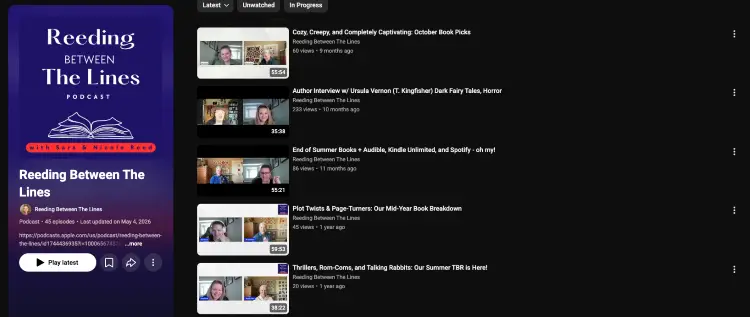
A great interview feels like a conversation, not a list of questions. Prepare enough to keep things moving, but leave room to follow interesting stories when they appear.
Step-by-step flow
☐ Hook: Introduce the guest and tease one insight listeners won’t want to miss.
☐ Introduction: Welcome your guest and give a short background.
☐ Warm-up questions: Start with easy questions to help the conversation flow, using a segue to transition smoothly.
☐ Main discussion: Cover your key topics while asking thoughtful follow-up questions.
☐ Quick-fire questions (optional): End with a fun or memorable segment.
☐ Call to action: Tell listeners where they can connect with your guest.
☐ Outro: Thank your guest and preview the next episode.
Copy-and-paste template
Podcast title: _____________________________________________
Guest name: _____________________________________________
Hook: _____________________________________________________
Guest introduction
- Guest introduction: ______________________________________
- Icebreaker question: _____________________________________
Interview questions
- Question 1: _____________________________________________
- Follow-up: ________________________________________
- Question 2: _____________________________________________
- Follow-up: ________________________________________
- Question 3: _____________________________________________
- Final question: __________________________________________
Closing
- Guest call to action: ____________________________________
- Outro: ___________________________________________________
Example
A business podcast could interview a founder about scaling from 6 to 7 figures, mixing prepared questions with follow-ups whenever the guest shares an unexpected lesson or story.
Common mistakes
- Reading questions word for word: Listen first and let the conversation develop.
- Talking over your guest: Give them space to finish their thoughts.
- Ignoring follow-up questions: The best insights often come from asking, “Can you tell me more about that?”
Talks Tip: My go-to podcast interview tip is to always, always ask for your guest’s bio, links, and headshot before recording so publishing the episode is faster afterward.
6. Storytelling podcast episode template
Best for: Personal brands, authors, speakers, and creators
Stories capture attention in a way facts alone rarely can. The goal is to entertain, teach, and leave listeners with one clear lesson they can apply.
Step-by-step flow
☐ Hook: Tease the moment that changed everything.
☐ Introduction: Set the scene and explain why the story matters.
☐ Beginning: Introduce the challenge or situation.
☐ Middle: Build tension and explain what happened.
☐ Turning point: Share the lesson or breakthrough.
☐ Takeaway: Connect the story to your listeners’ lives.
☐ Call to action: Encourage listeners to apply the lesson or explore a related resource.
☐ Outro: Close with your regular sign-off.
Copy-and-paste template
Podcast title: _____________________________________________
Story topic: _____________________________________________
Hook: _____________________________________________________
Setting the scene
- Introduction: _____________________________________________
- The situation: ____________________________________________
- The challenge: ___________________________________________
The story
- What happened: __________________________________________
- Turning point: ___________________________________________
- The lesson: _____________________________________________
Closing
- How listeners can apply it: _______________________________
- Call to action: ___________________________________________
- Outro: ___________________________________________________
Example
An entrepreneur could share the story of losing their biggest client, explain what went wrong, reveal the changes they made, and finish with three lessons other business owners can use.
Common mistakes
- Adding unnecessary details: Every part of the story should move it forward.
- Waiting too long for the point: Reveal the lesson before listeners lose interest.
- Forgetting the audience: Tie your experience back to their challenges.
Talks Tip: Start with the most interesting moment, then rewind and explain how you got there.
7. Q&A podcast episode template
Best for: Answering audience questions and building trust
Q&A episodes help listeners feel heard while giving you a steady source of episode ideas. Choose questions that lots of people are likely asking, not just one person.
Step-by-step flow
☐ Hook: Introduce the topic or most interesting question.
☐ Introduction: Explain where the questions came from.
☐ Question 1: Read the question and give a clear answer.
☐ Transition: Connect to the next question.
☐ Question 2: Share practical advice and an example.
☐ Question 3: Finish with your strongest answer.
☐ Call to action: Invite listeners to submit questions for a future episode.
☐ Outro: Preview the next episode.
Copy-and-paste template
Podcast title: _____________________________________________
Episode topic: ____________________________________________
Hook: _____________________________________________________
Introduction
- Introduction: _____________________________________________
- Where these questions came from: _________________________
Questions and answers
- Question 1: _____________________________________________
- Answer: ________________________________________________
- Question 2: _____________________________________________
- Answer: ________________________________________________
- Question 3: _____________________________________________
- Answer: ________________________________________________
Closing
- Call to action: ___________________________________________
- Outro: ___________________________________________________
Example
A fitness coach could answer common questions about building muscle after 40, explain common mistakes, and invite listeners to send questions for the next Q&A episode.
Common mistakes
- Choosing random questions: Group similar topics into one episode.
- Giving long-winded answers: Keep each response focused and practical.
- Ignoring follow-up opportunities: Mention related resources or previous episodes when they’re relevant.
Talks Tip: Keep a running document of audience questions so you’re never short on episode ideas.
8. Coaching podcast episode template
Best for: Life coaches, business coaches, career coaches, and consultants
A coaching episode should leave listeners with one practical win they can put into action today. Keep the advice clear, relatable, and backed by examples.
Step-by-step flow
☐ Hook: Describe a challenge your audience faces.
☐ Introduction: Explain what they’ll achieve by the end of the episode.
☐ Coaching point 1: Explain the first strategy.
☐ Coaching point 2: Build on the previous lesson.
☐ Coaching point 3: Finish with a practical action step.
☐ Success example: Share a client story or relatable scenario.
☐ Call to action: Encourage listeners to complete one action before the next episode.
☐ Outro: Wrap up with your regular sign-off.
Copy-and-paste template
- Hook: _______________________________________________
- Introduction: ________________________________________
- Coaching point 1: ____________________________________
- Coaching point 2: ____________________________________
- Coaching point 3: ____________________________________
- Client example: ______________________________________
- Action step: _________________________________________
- Call to action: ______________________________________
- Outro: _______________________________________________
Example
A career coach could walk listeners through a simple networking strategy, explain how one client used it to land interviews, then challenge listeners to reach out to one new contact before the week ends.
Common mistakes
- Teaching without action: End with one clear next step.
- Covering too many ideas: One transformation is enough for a single episode.
- Using jargon: Speak the way you coach clients in real conversations.
Talks Tip: End every coaching episode with a simple challenge listeners can complete within 24 hours.
9. Case study podcast episode template
Best for: Coaches, consultants, agencies, and service providers
Case study episodes turn real results into practical lessons. Walk listeners through what happened, why it worked, and how they can apply the same ideas to their own situation.
Step-by-step flow
☐ Hook: Share the result before explaining how it happened.
☐Introduction: Introduce the client, project, or situation.
☐ The challenge: Explain the starting point.
☐ The solution: Walk through the steps you took.
☐ The outcome: Share the results and biggest lessons.
☐ Key takeaway: Explain what listeners should do next.
☐ Call to action: Direct listeners to a related resource or service.
☐ Outro: End with your regular sign-off.
Copy-and-paste template
- Hook: _______________________________________________
- Introduction: ________________________________________
- The challenge: _______________________________________
- The solution: ________________________________________
- The results: _________________________________________
- Key lesson: __________________________________________
- Call to action: ______________________________________
- Outro: _______________________________________________
Example
A business coach could explain how a client went from inconsistent sales to signing five high-ticket clients in three months by refining their offer and improving their sales process.
Common mistakes
- Skipping the starting point: Show where the client began so the results have context.
- Sharing vague outcomes: Include specific numbers or measurable improvements whenever possible.
- Making it all about you: Focus on the lessons listeners can apply.
Talks Tip: Ask satisfied clients for permission to share their story before recording the episode.
10. Roundtable podcast episode template
Best for: Experienced podcast hosts or guest panel setups
Roundtable episodes work best when everyone has something different to contribute. A clear episode structure keeps the conversation balanced and stops one person from dominating the whole episode.
Step-by-step flow
☐ Introduction: Share a quick overview of the episode and brief introductions of each guest (don’t read your script out loud!).
☐ Opening thoughts: Let each person share their perspective.
☐ Discussion: Explore the topic with follow-up questions and healthy debate.
☐ Key takeaways: Summarize the biggest points from each guest.
☐ Call to action: Encourage listeners to continue the conversation or check out your guests.
☐ Outro: Thank everyone including podcast sponsors and specific episode sponsors, then preview the next episode.
Copy-and-paste template
- Hook: _______________________________________________
- Host introductions: _________________________________
- Guest introductions: ________________________________
- Opening question: ___________________________________
- Discussion topics: __________________________________
- Key takeaways: ______________________________________
- Call to action: ______________________________________
- Outro: _______________________________________________
Example
A marketing podcast could bring together an SEO expert, email marketer, and social media strategist to discuss where businesses should focus their marketing budget this year.
Common mistakes
- Inviting too many guests: Three or four voices are usually easier to follow.
- Letting one person dominate: Make space for everyone to contribute.
- Jumping between topics: Keep the discussion focused on one central theme.
Talks Tip: Share the discussion topics with your guests before recording so everyone arrives prepared.
11. Seasonal or series podcast episode template
Best for: Multi-part topics and themed content
Some ideas deserve more than one episode. Breaking a topic into a series gives listeners a reason to return while making complex subjects easier to understand.
Step-by-step flow
☐ Hook: Introduce the series and explain what listeners will gain.
☐ Introduction: Explain where this episode fits within the series.
☐ Main topic: Focus on one part of the bigger subject.
☐ Recap: Reinforce the biggest lesson.
☐ Preview: Tease the next episode to build anticipation.
☐ Call to action: Encourage listeners to subscribe so they don’t miss the next part.
☐ Outro: End with your regular sign-off.
Copy-and-paste template
- Series title: _______________________________________________
- Episode title: ______________________________________________
- Hook: _______________________________________________________
- Introduction: _______________________________________________
- Main topic: ________________________________________________
- Key takeaway: ______________________________________________
- Preview of the next episode: ________________________________
- Call to action: _____________________________________________
- Outro: ______________________________________________________
Example
A health coach could create a four-part series on healthy habits, covering nutrition, exercise, sleep, and stress management in separate episodes instead of squeezing everything into one.
Common mistakes
- Making episodes dependent on each other: Each episode should still provide value on its own.
- Forgetting to mention the next episode: Give listeners a reason to return.
- Stretching the series: End the series once you’ve covered the topic well.
Talks Tip: Plan every episode in your series before recording the first one. You’ll create smoother transitions, avoid repetition, and make batching much easier.
How to Structure a Podcast Episode (Checklist)
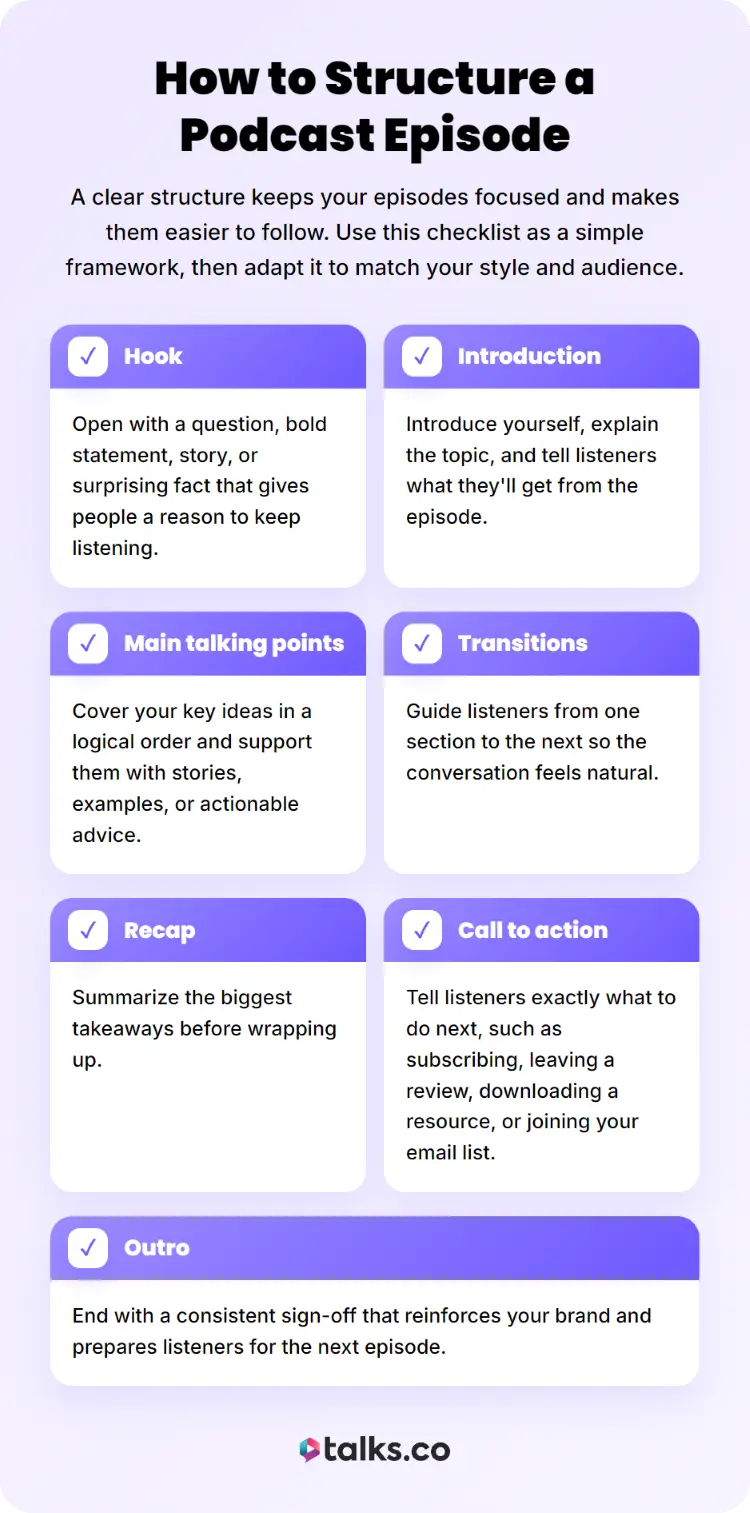
A clear structure keeps your episodes focused and makes them easier to follow. Use this checklist as a simple framework, then adapt it to match your style and audience.
☐ Hook: Open with a question, bold statement, story, or surprising fact that gives people a reason to keep listening.
☐ Introduction: Introduce yourself, explain the topic, and tell listeners what they’ll get from the episode.
☐ Main talking points: Cover your key ideas in a logical order and support them with stories, examples, or actionable advice.
☐ Transitions: Guide listeners from one section to the next so the conversation feels natural.
☐ Recap: Summarize the biggest takeaways before wrapping up.
☐ Call to action: Tell listeners exactly what to do next, such as subscribing, leaving a review, downloading a resource, or joining your email list.
☐ Outro: End with a consistent sign-off that reinforces your brand and prepares listeners for the next episode.
How Many Episodes in a Podcast Season
There’s no perfect number. The right podcast season length depends on your goals, available time, and how consistently you can publish quality episodes.
Here’s a general breakdown of common season lengths to help you decide what fits your format:
| Season Type | Episode Range | When it works best |
|---|---|---|
| Mini season | 3-5 episodes | Testing a new idea or launching a focused topic |
| Short run | 6-9 episodes | Tight storytelling arcs or limited guest availability |
| Standard season | 9-14 episodes | Balanced structure for most niche podcasts |
| Extended season | 18-30 episodes | Established shows with steady content pipelines |
How many episodes should be in a podcast season
Most podcasts fall somewhere between 8 and 20 episodes per season. A shorter season is easier to plan and batch, while a longer season helps build momentum.
- 8 episodes: Great for testing a new podcast or covering a specific topic.
- 10 to 12 episodes: A popular choice that gives you enough content without becoming difficult to manage.
- 15 to 20 episodes: Works well if you publish weekly and have a steady stream of ideas or guests.
- Ongoing podcast: Skip seasons altogether if you can commit to publishing consistently throughout the year.
- Choose consistency over quantity: It’s better to release 10 strong episodes on schedule than promise 30 and stop halfway through.
10 Free Talks Podcast Template Generators and Tools
These free Talks tools help you fill in the details faster, from planning your next topic to writing your intro, outro, and show notes.
- Podcast Topic Generator: Find fresh episode ideas in seconds for your next podcast script outline.
- Podcast Episode Titles Generator: Write podcast episode titles people actually want to click.
- Podcast Question Generator: Come up with interview questions that create better conversations.
- Podcast Intro Generator: Create an opening that grabs attention from the first sentence. Check out the podcast intro templates I’ve built using this free Talks tool.
- Podcast Script Generator: Turn your ideas into a clear episode script before you record.
- Podcast Outro Generator: Wrap up every episode with a strong call to action.
- Podcast Show Notes Generator: Write polished show notes without starting from scratch.
- Podcast Name Generator: Brainstorm podcast names that fit your brand.
- Podcast Tagline Generator: Sum up your podcast in one memorable line.
- Podcast Description Generator: Write a description that gives listeners a reason to subscribe.
Don’t Let Your Episodes Go Unheard
You poured time into planning, recording, editing, and publishing. Then you hit publish… and waited.
Sound familiar?
The best podcast episode templates help you create episodes people want to hear. Getting those episodes in front of the right people is a different challenge.
Why wait for listeners to stumble across your podcast when you can put yourself in front of audiences that already trust the host?
Use Talks to connect with podcast hosts in your niche, and let our automation tools help you start booking interviews faster.
Book More Podcasts While You Sleep


