

You’ve locked in a good podcast interview. Now your mind’s running a mile a minute.
What will they ask?
Should you plan every answer?
What if your microphone cuts out during the actual recording?
Or worse… your brain goes blank mid-sentence?
Many podcast guests either wing it or overdo it. Interviewees panic-prep with pages of notes, or show up without preparing for an interview and hope for the best.
That’s how good interviews turn into forgettable ones.
Truth is? Great podcast guests aren’t just great talkers; they’re prepared.
Mentally.
Technically.
Strategically.
After 400+ interviews (on both sides of the mic), I’ve built a foolproof system on how to prepare for a podcast interview that makes every single one of your podcast guest appearances more valuable.
And I’m sharing that same system with you step by step in this full guide. All for free.
From prep to follow-up, you’ll know exactly how to show up ready, deliver value, and turn every great podcast interview into leads, sales, and new listeners.
Podcast Guest Checklist (Quick Guide)
Here’s a high-level, anywhere-you-can-reference list to make sure nothing slips through the cracks every time you guest on a podcast.
Use it before, during, or right after your first podcast interview to stay sharp, on-message, and fully in control.
☐ Create and send your Talks Creator profile: Include a short bio, story-driven intro, professional headshot, media-ready questions, and a CTA link.
☐ Research the show and host: Understand audience, pacing, and storytelling style. Scan recent episodes and comments for context.
☐ Lock down 3-5 key talking points: Focus on memorable, repeatable ideas and pair them with quick stories or results.
☐ Prepare supporting stories: Pick proof-backed, relatable examples that illustrate transformation in under 90 seconds each.
☐ Set your Magic Pill offer or lead magnet: Provide a simple, free next step that aligns with the episode topic.
☐ Test your recording equipment: Check mic placement, sound, visuals, and internet connection before you go live.
☐ Create an on-brand background: Keep it tidy, consistent, and visually aligned with your brand.
☐ Do a practice run aloud: Record a mini mock interview to refine pacing, phrasing, and story delivery.
☐ Confirm recording logistics: Double-check platform, time, format, and promotion expectations with the host.
☐ Get in the right headspace: Center yourself, warm up your voice, stand tall, and focus on value over perfection.
What Is Podcast Interview Preparation?
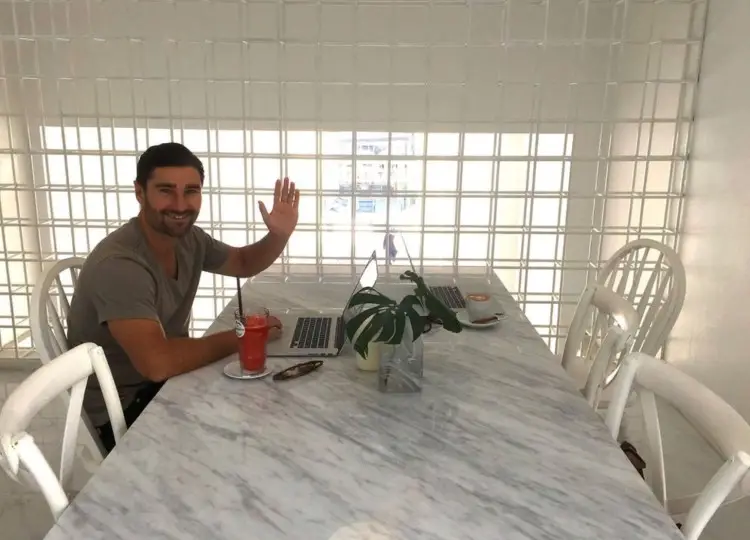
Podcast interview preparation is the process of getting ready mentally, technically, and strategically to make the most of your time on a show.
It’s how guests move from “winging it” to delivering focused, memorable interviews that build authority and drive results.
Think of it like this:
- Knowing the show: Understand the audience, tone, and specific questions they ask. For example, a business podcast might focus on a set of questions about growth metrics, while a mindset podcast dives into personal tips and lessons.
- Understanding your role: You’re there to educate, entertain, or inspire the audience and to leave a lasting impression, not just give generic advice.
- Clarity on results: Decide why you’re showing up, whether it’s building your email list, showcasing a product, or growing your credibility in your niche.
What do you need to prepare for podcast interviews?
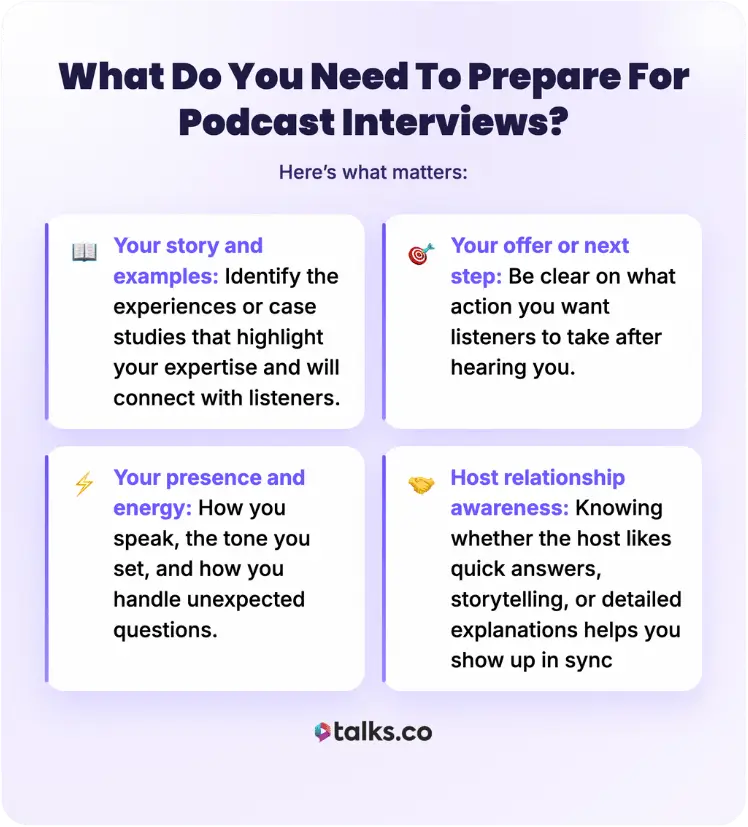
Before thinking about checklists or setups, you need to know what the “must-have” elements are conceptually.
Here’s what matters:
- Your story and examples: Identify the experiences or case studies that highlight your expertise and will connect with listeners.
- Your offer or next step: Be clear on what action you want listeners to take after hearing you.
- Your presence and energy: How you speak, the tone you set, and how you handle unexpected questions.
- Host relationship awareness: Knowing whether the host likes quick answers, storytelling, or detailed explanations helps you show up in sync.
Pros and cons of preparing for a podcast interview
Preparation on how to be a guest on a podcast has a huge impact if done smartly. Done poorly, it can backfire.
Pros:
- You avoid “brain freeze” moments: Prepping mental anchors helps you pivot smoothly when hosts throw curveballs.
- Hidden credibility boost: Subtle prep like knowing the host’s recent episodes or listener comments makes you seem tuned-in and connected.
- Control without controlling: Knowing your 3-5 talking points lets you guide the conversation without dominating it.
- Story gold ready: Pre-framing anecdotes means you can pull a perfect, audience-relevant story anytime.
- Improvised brilliance looks natural: The more you prep, the easier it is to riff confidently while keeping the audience hooked.
- Signals professionalism subtly: Even small touches like mic placement, lighting tweaks, or slide backups tell the host you’re serious without saying it.
Cons:
- The “too polished” trap: Overthinking delivery can kill your natural charm and humor.
- Tunnel vision: Focusing only on your key points might make you miss unexpected opportunities in the chat.
- Prep fatigue: Endless planning can drain your mental energy before the mic even turns on.
- False confidence: Knowing your stuff doesn’t always translate to audience connection. Delivery and tone still matter.
- Micromanagement risk: Obsessing over every small detail (lighting, background props, phrasing) can steal focus from the conversation itself.
How to Prepare for a Podcast Interview as a Guest (Checklist)
Most guests hit “record” and hope for the best.
But the ones who stand out? The ones who make listeners stop scrolling and hosts say, “We’ve got to have them back”?
They prepare with intention.
Because podcast interview prep isn’t about scripts or memorizing lines. It’s about showing up confident, knowing your message, and making it easy for the host to shine with you, not around you.
Here’s your guest prep checklist, broken down step-by-step so you can focus on delivering value (and maybe even have some fun doing it).
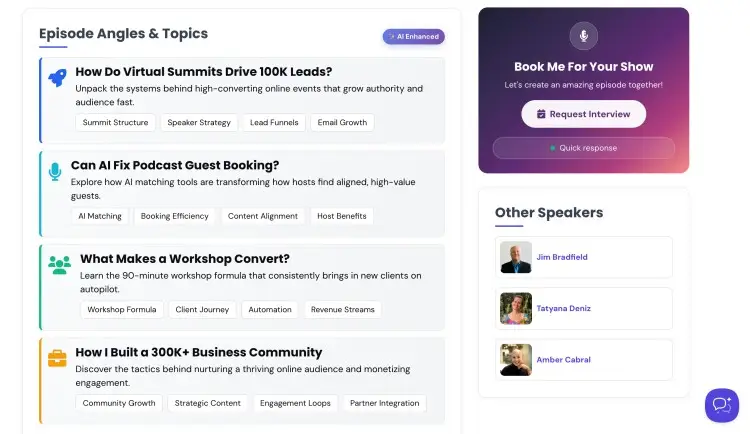
1. Create and send your Talks Creator profile
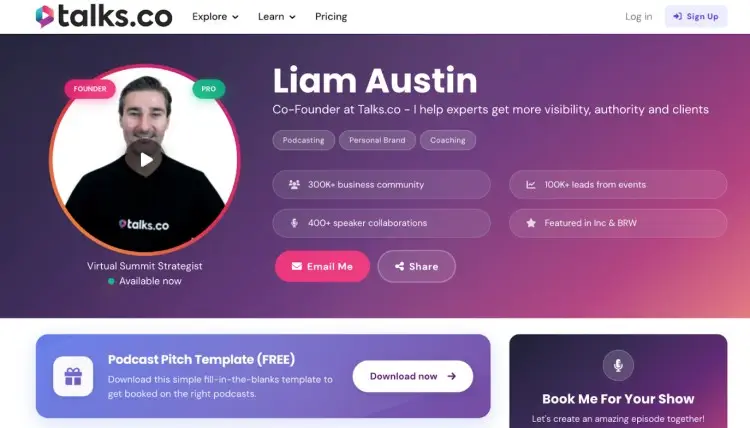
Your Talks Creator profile is your pre-show handshake. It tells the host, “You can trust me to deliver.” Make it easy for them to book, brief, and promote you without asking twice.
- Write a 2-line positioning bio: “I’m Liam Austin, co-founder of Talks.co. I help experts get more visibility, authority, and clients through virtual events and collaborations.” Short, sharp, and instantly clear.
- Add a story-driven intro: “Since my first online sale in 2001, I’ve helped 100K+ entrepreneurs grow their audiences using summits, workshops, and AI-powered systems.” It builds credibility fast and matches the tone of business podcasts.
- Include a professional, consistent headshot: Bright, well-lit, with the same look across your LinkedIn, Talks Creator profile, and website. It keeps your brand cohesive when hosts promote you.
- Share 3 media-ready questions: E.g., “What’s the #1 mistake coaches make when raising prices?” This guides the conversation toward your expertise.
- Add one clear call-to-action link: “Download the free Podcast Pitch Template at talks.co. It’s helped hundreds of experts land interviews on the right shows.” Make it easy for hosts to plug.
- Keep it all in one place: A clean Talks Creator profile acts like a media kit with all your assets, contact information, and pronunciation of your name (yes, it matters), saving time for busy podcast producers.
2. Research the show and host
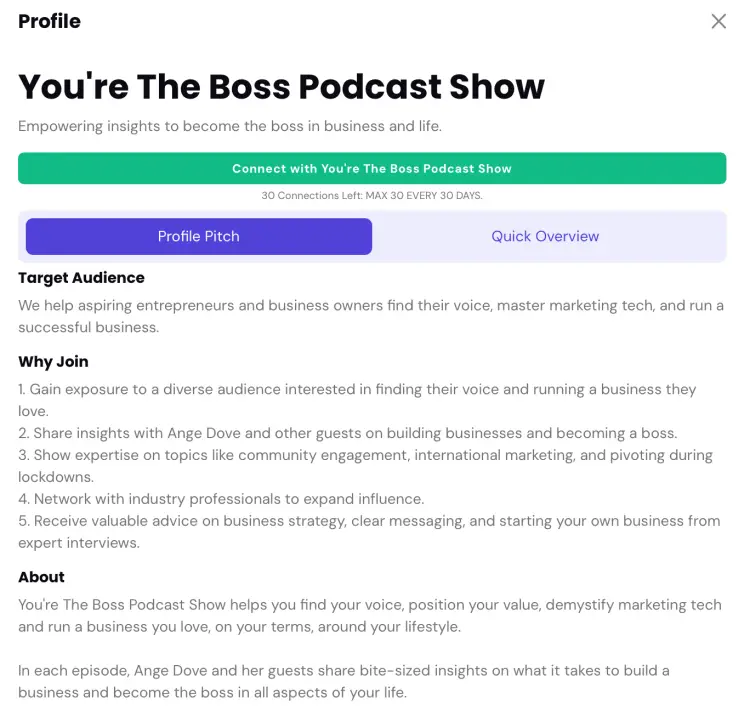
Preparation starts with understanding the room you’re walking into.
Knowing the host’s rhythm and audience helps you adapt your tone, pace, and stories. It’s the difference between “just another guest” and someone who clicks right away.
- Listen like a strategist: Play 2-3 recent episodes and note their flow. Does Emily from The Purpose Project pause for reflection or keep a fast pace? Adjust your delivery to match her rhythm.
- Spot audience triggers: Read the YouTube comments or Apple Podcasts reviews. If fans rave about mindset breakthroughs, shape your stories around transformation, not just tactics.
- Track their storytelling style: Some hosts want step-by-step frameworks; others want real-life examples. If Sarah Thorslund talks in wins and numbers, be ready with “One of my clients hit 80% close rates after our new onboarding script.”
- Research their community: Peek into their Facebook group or newsletter to see what their listeners struggle with. Tailor your examples to those challenges. You can even check how many listeners a podcast has for extra ammo.
- Warm up the relationship: Comment on a recent post or share their latest episode with a thoughtful note. It signals you’re not just here for exposure; you’re part of their world.
3. Lock down your 3-5 main talking points
Listeners won’t remember everything you say but they will remember 3-5 clear, repeatable ideas. Those become your anchors.
- Turn results into repeatable phrases: Instead of saying “I help coaches make more money,” say “I help burnt-out health coaches scale to $20K months working 3 days a week.”
- Pair data with emotion: Hit them with a “When I helped Sarah hit $10K her first month, she cried on our final call because she finally believed her coaching business could work.” Proof + feeling = connection.
- Tell a micro story: Build a 30-second version and a 2-minute version of each talking point. Example: “I used to get 10 views on my Reels, then I shifted my hook, and one went viral overnight, bringing in 300 leads.”
- Frame each idea as a takeaway: “You can triple your conversions by adding one 15-minute pre-call step” hits harder than “I talk about sales.”
- Refine your transitions: If the host goes off-topic, say, “That actually ties back to one of my key principles: sell with permission. Here’s what I mean…” It keeps you in control of your message.
4. Prepare relevant supporting stories
Stories make stats memorable. A good story turns “100K leads” into a moment listeners can picture and remember. Here’s how to find and frame yours.
- Pick stories with proof and payoff: Share a real win like “When we hosted our first virtual summit with 35 speakers, we hit 15K leads in a week without paid ads.”
- Show transformation: Instead of listing numbers, talk about the before-and-after. “Our clients went from struggling to fill workshops to enrolling 50+ paying students per launch.”
- Add a relatable hook: Paint a simple scene like “I was in my Sydney flat staring at the attendee count when it jumped from 5 to 500. That’s when I knew virtual summits worked.”
- Keep each story under 90 seconds: Think mini case studies, not TED Talks. Share enough to give context, then connect it to your takeaway.
- Link back to your topic: Each story should underline your expertise like how partnerships, systems, and AI tools scale reach faster than cold outreach.
5. Set your Magic Pill Offer or lead magnet
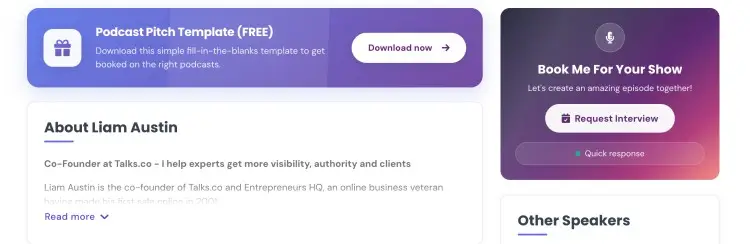
Every great guest gives listeners a next step. Not a hard sell… just a helpful, easy “want more?” option that connects the dots.
- Offer something fast and free: “Download my Podcast Pitch Template” or “Grab my 90-Minute Workshop Formula.” It should deliver instant value, not gated access.
- Match it to the episode topic: If you’re talking about lead generation, promote your “Virtual Summit Starter Kit.” If it’s about podcasting, mention your “AI Guest Booking Guide.”
- Say it naturally mid-episode: Instead of saving your link for the outro, weave it in like: “We actually built a free template for that. It’s at https://talks.co/p/podcast-pitch-template/.”
- Track your traffic: Use short customized links (e.g. talks.co/liam) so you can see which interviews drive results.
- Think long-term: That one free resource can nurture thousands of leads into subscribers, clients, or partnerships over time.
6. Test your podcast recording equipment
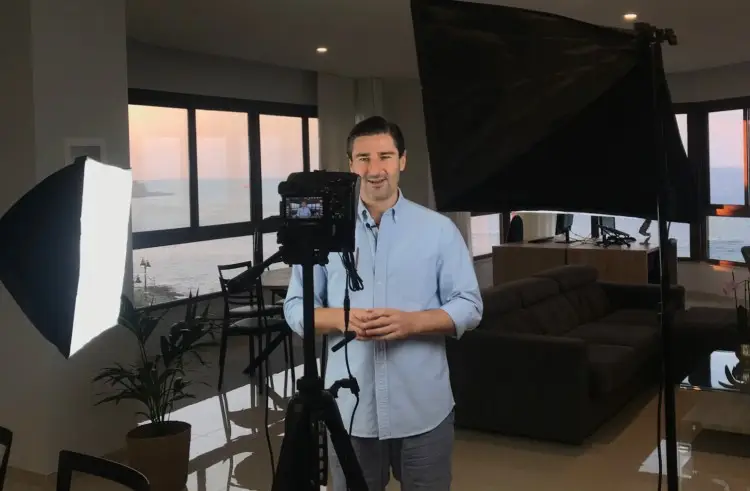
Even the best message falls flat if your audio cuts out. Good sound and visuals aren’t about fancy gear; they’re about consistency and control.
- Do a 60-second test recording: Say your name, episode topic, and key phrase. Replay it to catch echo, static, or volume dips.
- Use gear that fits your setup: A USB mic like the Samson Q2U or the Blue Yeti (my personal favorite) and wired headphones are enough to sound crisp and clear.
- Position your mic right: Keep it 3-4 inches from your mouth, slightly off-center to avoid “pops” on words like powerful or podcast.
- Lock in your connection: Plug in your laptop, close unused tabs, and run a quick speed test before hitting record.
- Double-check visuals: Clean lens, level camera, soft light in front. It’s what helps me look camera-ready for all my HD podcast appearances.
7. Create an on-brand background
Your backdrop should quietly communicate authority. It’s less about perfection and more about setting a clean, credible scene that looks good on camera.
- Keep it simple and consistent: A tidy wall, bookshelf, or plant setup works better than a virtual background. I often record in front of neutral shelves with Talks or EHQ logos visible.
- Add subtle brand cues: A small Talks.co mug, Entrepreneurs HQ book, or logo canvas behind you can help viewers remember your name long after the episode ends.
- Use natural or soft light: Sit facing a window or ring light for bright, even lighting that makes your eyes and face clear.
- Check your framing: Make sure your head and shoulders are centered, with a little space above your head. Nothing distracts faster than a tilted camera angle.
- Remove clutter: Anything behind you should add to your message, not pull focus from it. No messy cables or gym gear in view if you want to be a good podcast guest.
8. Do a practice run aloud
Even seasoned guests tighten up on mic (myself included). A short run-through helps you sound natural, confident, and in rhythm with how you actually speak.
- Record a mini mock interview: Answer one of your main talking points like “How do virtual summits generate 100K leads?” and listen back to adjust pacing or tone.
- Refine phrasing, not personality: Keep your words conversational. If you wouldn’t say “leverage scalable frameworks” in real life, skip it.
- Practice short story delivery: Time your key story on how your first virtual summit grew from 15K to 100K leads to fit cleanly in under 90 seconds.
- Check your filler words: You’ll catch patterns like too many “um,” “like,” or “you know.” Awareness is half the fix.
- Rehearse your outro line: End with confidence, e.g., “Grab the free Podcast Pitch Template at talks.co. It’ll help you get booked on podcasts 5x faster in just 5 minutes.”
9. Confirm recording logistics
Last-minute confusion kills focus. Lock down all the moving parts before engaging with the host so you can show up relaxed and sharp.
- Reconfirm the platform and time: Double-check whether the recording software is Riverside, Zoom, or SquadCast and sync the timezone with the interviewer’s (Stockholm vs Sydney can trip people up).
- Know the format: Is it video, audio-only, or live? That changes how you prep your space and camera presence.
- Ask for the interview flow: Some hosts send a list of questions or prompts; other interviewers prefer free-form chats for a more captivating podcast. Knowing which helps you plan your transitions and be a good guest.
- Clarify promotion and payment terms: Will they tag you on socials? Can you repurpose the episode clip for your channels? Do podcast guests get paid to be on their show? If so, how much? Get it in writing if needed.
- Keep everything in one doc: Host details, links, topic notes, promo assets, podcast guest release form, so you’re not scrambling 10 minutes before the call.
10. Get in the right headspace
A confident, relaxed guest makes for an engaging interview. Take a few minutes to center yourself before hitting “record.”
- Do a one-minute reset: Close your eyes, take three slow breaths, and visualize a smooth, high-energy chat like you’re swapping wins with a friend.
- Set your intention: Think, “I’m here to give massive value and connect with the audience,” not “I need to sound perfect.”
- Stand or sit tall: Good posture improves vocal projection and presence. I usually record standing to keep my energy high.
- Warm up your voice: Hum or read your intro line aloud, e.g., “I’m Liam Austin, co-founder of Talks.co, helping experts grow visibility and clients.”
- Hydrate, not caffeinate: A glass of water keeps your voice crisp; too much coffee can make you sound rushed or jittery.
How to Prepare for a Podcast Interview (In-person)
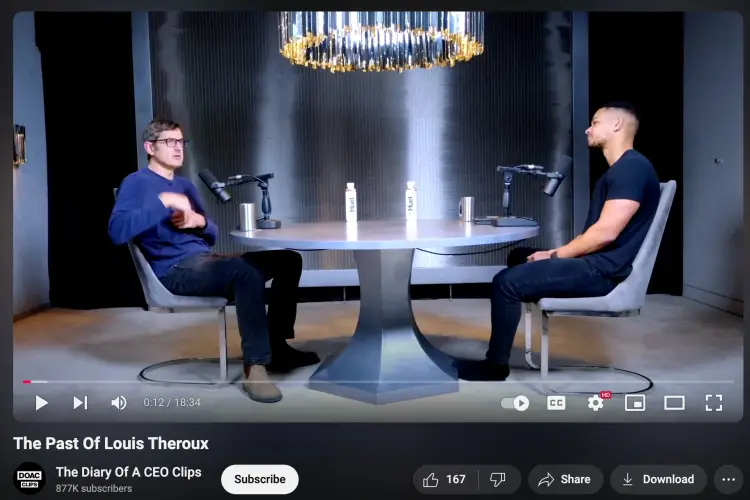
In-person interviews bring real energy but also real variables. The goal? Stay sharp, adaptable, and fully present during your podcast guesting without tech doing the heavy lifting.
- Walk the room first: Notice lighting, echo, and distractions before recording. If a window glare hits your face or the host’s camera, let the host know and suggest shifting your chair or angle slightly until both frames look clean.
- Pack situational backups: Bring printed notes, a pen, bottled water, and a USB stick for slides. Those small “insurance items” prevent panic when something goes missing.
- Match the host’s energy: If they’re chill, don’t overpower. If they’re fast-paced, lean in. Watch their rhythm with the previous guest.
- Mind your mic technique: Stationary? Handheld? Clip-on? Each has its quirks. If it’s a handheld, hold it just below your chin and slightly off to the side to avoid “p” pops. If it’s on a stand, keep your mouth about three fingers away for clear sound.
- Dress for lighting, not luck: Studio lights can wash out colour. Bring one extra layer (a blazer, scarf, or solid tee) for on-the-spot fixes.
How to Prepare for a Podcast Interview (Online)
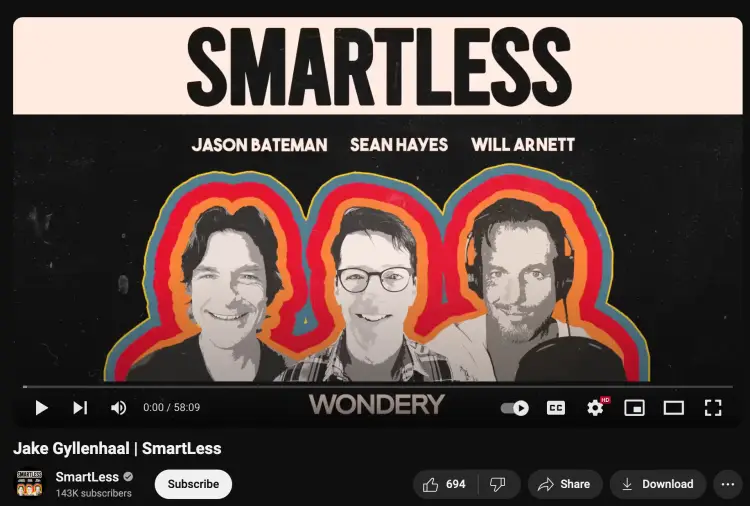
When you’re recording remotely, you’re both the guest and the tech crew. These steps make sure the setup supports your voice and presence.
- Secure your connection: Use a wired internet cable if you can. It prevents mid-interview freezes or lag. If you’re stuck on Wi-Fi, ask others in your space to pause streaming until you’re done.
- Soundproof creatively: Hang a blanket behind you, close your windows, and put your cat in another room to prevent surprise meows. Clear sound builds instant credibility.
- Check your on-screen frame: Keep your head centered, eyes at camera level, and background simple. Turn off desktop notifications to avoid random pings showing up mid-sentence.
- Have your materials ready: Keep slides, notes, or lead magnet links open and labelled. If the host wants visuals, you can share them smoothly instead of hunting through folders.
- Environment consistency: Keep background noise, temperature, and lighting consistent to give you that professional look. Avoid flickering lights or noisy fans that can distract the audience.
How to Prepare for a Podcast Episode
Once your guest interview prep’s sorted, zoom out: you’re not just showing up for just any interview, you’re showing up for an episode.
That means understanding the bigger story the host wants to tell and how you fit into it.
- Study the episode theme: Re-read the host’s brief or email. If the focus is “Building authority through small wins,” plan 2-3 stories that highlight quick, repeatable results like how 400+ speaker collaborations drove 1,200 leads in a week.
- Align with the audience: Who’s tuning in? Coaches, founders, creatives? Tailor your tone and examples to speak their language like showing how a virtual summit can generate authority without paid ads.
- Understand episode flow: Listen to 1-2 recent episodes to note pacing, energy shifts, and segment transitions. Are there long-form storytelling moments, or fast-fire Q&A bursts? Adjust your delivery accordingly.
- Prep your “episode intro” soundbite: Summarize yourself in 10 seconds or less: e.g., “I’m Liam Austin, co-founder of Talks.co, helping experts turn virtual events into 100K+ leads.” Clear, confident, and audience-ready.
- Sync your CTA to the topic: Make sure your lead magnet or next-step offer fits naturally with the episode theme. If the topic is mindset, “Download my Productivity Reset guide” beats a random webinar pitch.
- Rehearse your opener and closer: Hosts often cue you in or wrap up fast. Practice greeting the host and closing with a hook that reminds listeners of your name, your brand, and a next-step action.
10 Podcast Guest Interview Tips After Recording
The interview’s over, but your job isn’t done. What you do post-recording separates guests who get traction from those who disappear into the feed.
These tips help you maximize every guest appearance, build relationships, and turn listeners into leads.
- Send a prompt thank-you: Message the host within 24 hours. “Thanks, Dr. Cam! Loved breaking down how midlife energy can be regained through hormone optimization. Excited for listeners to hear this!” Shows appreciation and professionalism.
- Share key assets: Provide headshots, bios, or links they can use for promotion. Or better yet, send over your Talks Creator profile as your one-page bio so hosts have everything ready in one click. (Check out these free podcast one-sheet examples.)
- Offer social snippets: Send 1-2 quote graphics or short audiograms they can post. Makes promotion easier and increases shareability.
- Share the episode actively: Post on LinkedIn, Instagram, and email lists with a personalized hook: “Sharing tools from my talk on emotional resilience to help listeners navigate challenging times. Catch it on The School of Heritage.”
- Tag and acknowledge the host: Publicly thank the host on social media to boost their visibility and build rapport. Example: Tag Dr. Cam with: “Loved chatting about nutrition and testosterone strategies on Maximus Podcast today!”
- Engage with listeners: Respond to questions or comments in episode threads. Let’s say a listener asks, “How can I naturally support T levels?”. Respond with actionable advice from your segment.
- Repurpose content: Turn key stories or frameworks from the episode into blog posts, carousel graphics, or newsletters to extend reach.
- Track performance: Note downloads, clicks, or lead conversions from each episode to identify high-value shows. Shortened links help with tracking.
- Request a testimonial or quote: Ask the host for a short line you can use on your site or Talks Creator profile: “Liam breaks down virtual summits in a way that makes lead generation simple and repeatable.”
- Plan follow-up collaborations: Suggest webinars, guest blogs, or joint events to keep momentum and leverage the host’s audience further. Something like a joint workshop on building emotional resilience after The School of Heritage episode.
Podcast Hosts Don’t Bite…Unless You Show Up Unprepared
You’ve got the checklist. You’ve got the stories. You’ve got the talking points.
Now it’s time to turn all that prep into actual bookings. Because knowing how to prepare for a podcast interview is only half the battle.
But actually getting booked? That’s where most people stall.
That’s where Talks.co comes in. With a free Talks Creator profile, you can:
- Stand out with a professional speaker one-sheet and show-ready profile.
- Get auto-matched with podcasters in your niche, so you’re talking to the right audience.
- Send authentic, personalized pitches without the hours of back-and-forth or spammy outreach.
- Book interviews faster, whether you’re a seasoned guest or just starting out.
Your prep only matters if someone’s listening. Don’t let it sit in a doc.
Join our Talks community and start showing up on the podcasts that grow your audience, your authority, and your clients.
Claim your FREE Talks profile now before slots run out!


