

If you think getting booked on podcasts is about blasting cold pitches and hoping someone bites, that’s exactly why you’re getting ignored.
I’ve helped hundreds of expert guest speakers get booked on podcasts that actually matter, and seen firsthand how the right guest interview placement changes everything.
Podcast guesting is one of the highest-leverage growth channels right now, yet almost everyone is doing it wrong.
The average B2B podcast guest converts around 10% of listeners into clients, and podcasts drive up to 25x more conversions than blog content.
But chasing any show with a microphone is the fast track to wasted time and zero results. In 2027, the smart play is precision. Niche audiences. Strategic placements. Systems that compound.
If you’re tired of throwing pitches into the void and calling it marketing, good.
This guide shows you exactly how to get booked on podcasts and make every appearance count.
How to Get Booked On a Podcast (Quick Cheat Sheet)
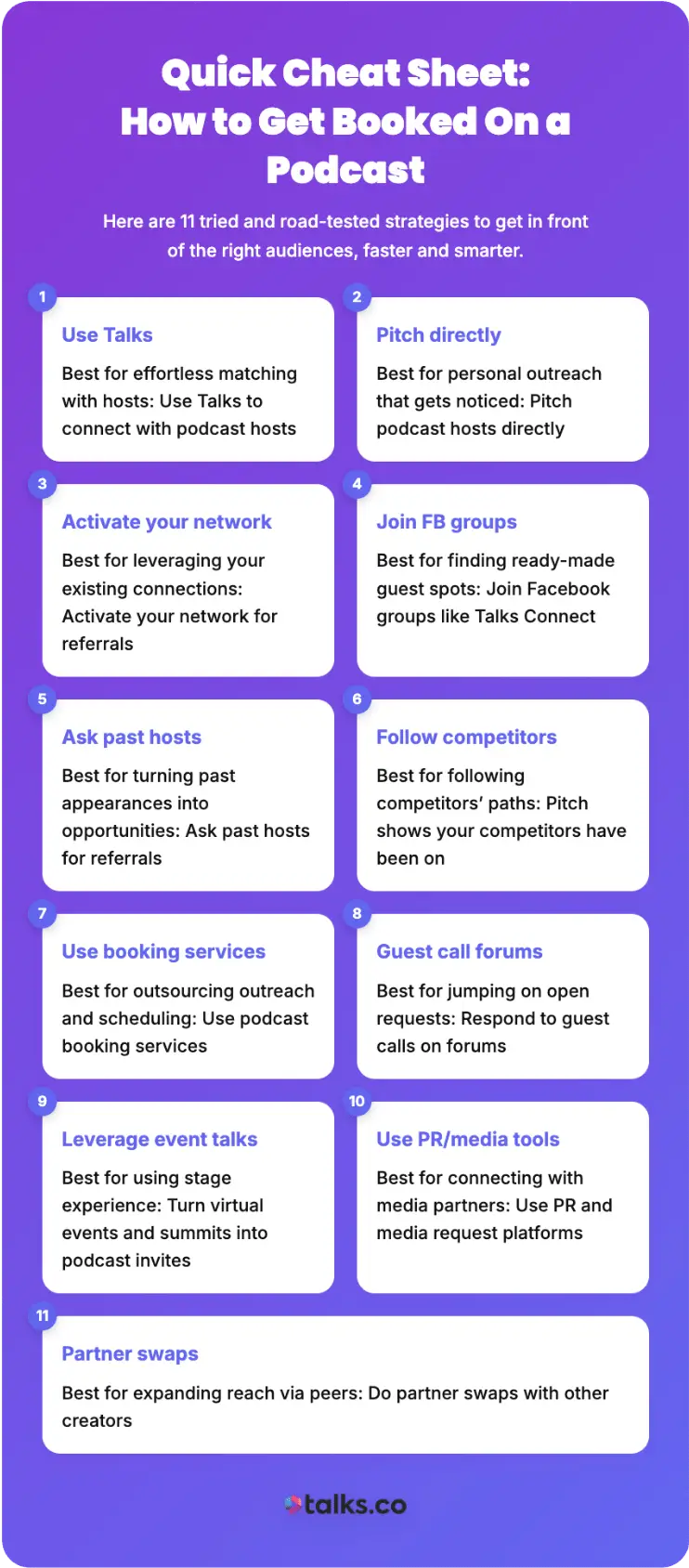
Short on time and need the TL;DR? Here are 11 tried and road-tested strategies to get in front of the right audiences, faster and smarter.
- Best for effortless matching with hosts: Use Talks to connect with podcast hosts
- Best for personal outreach that gets noticed: Pitch podcast hosts directly
- Best for leveraging your existing connections: Activate your network for referrals
- Best for finding ready-made guest spots: Join Facebook groups like Talks Connect
- Best for turning past appearances into opportunities: Ask past hosts for referrals
- Best for following competitors’ paths: Pitch shows your competitors have been on
- Best for outsourcing outreach and scheduling: Use podcast booking services
- Best for jumping on open requests: Respond to guest calls on forums
- Best for using stage experience: Turn virtual events and summits into podcast invites
- Best for connecting with media partners: Use PR and media request platforms
- Best for expanding reach via peers: Do partner swaps with other creators
Do You Need to Get Booked On Podcasts?
If your goal is to grow your authority, influence, and business without pouring money into ads, then yes. Podcast guesting isn’t optional; it’s strategic.
Guest appearances give you direct access to engaged listeners, long-term content that drives traffic, and a platform to strengthen credibility all in a medium that’s personal, intimate, and persistent.
With global listenership projected to hit over 700 million by 2029 and ad revenue climbing toward $5.36 billion, brands are betting on podcasts for real results.
8 Benefits of getting booked as a guest on a podcast
Each booked podcast guest appearance builds your authority, generates leads, and opens doors traditional marketing rarely reaches.
- Direct audience insight: Hear exactly which good podcast topics, solutions, and ideas resonate with your ideal listeners.
- Long-term lead generation: Episodes stay live online, attracting wider demographics and potential clients months or years after airing.
- Laser-targeted audience reach: You connect with listeners who mirror your ICP, not just a random mass audience, increasing conversion potential.
- Message testing: Try new offers, stories, or frameworks and see how a live audience reacts before scaling your marketing strategy.
- High-value networking: Podcaster guest spots often lead to partnerships, collaborations, or invitations to other high-profile shows.
- Content repurposing: Transform episodes into social clips, email newsletter sequences, lead magnets for LinkedIn and other assets that keep working.
- Revenue opportunities: Podcast appearances frequently lead to paid speaking gigs, consulting, workshops, or sponsorships from other experts in your field.
- Organic lead generation: Engaged listeners naturally convert, providing a steady pipeline without cold outreach or ads.
How to find podcasts to be a guest on easily
Finding the right podcasts to guest on can feel like a guessing game. Talks makes it simple, fast, and actually enjoyable.
Here’s how to get matched in a few easy steps:
- Create your profile: Choose whether you’re a guest, host, or both. Fill in your expertise, interests, and audience details. The more specific, the better your matches will be.
- View your suggested matches: Talks shows you hosts or guests who fit your profile. You can browse their bios, see linked podcasts, and check out past interviews.
- show interest: Spot someone you want to connect with? Click “Show Interest.” If they’re interested too, you’re instantly matched and can start chatting.
- Use auto-match and auto-message: Set your preferences once and let Talks handle the matching. You can send an auto-first message with your calendar link ready to go.
- Apply filters (paid feature): Upgrade to Essentials, Pro, or Agency to refine your search. Narrow by recent episodes, activity status, number of episodes, mailing list size, and more.
- Connect and follow up: Once a match accepts, send a friendly, personal message. Talks also sends podcast guests booking reminders so your message has a better chance of being seen.
- Schedule your interview: Share your calendar link and lock in a time that works for both of you. Add it to your personal calendar so you don’t double-book.
- Record and promote: Show up prepared (even if all you’ve got is your best budget podcast mic), deliver value, and share the episode with your network. This boosts your visibility and attracts more listeners.
- Review your host or guest: Leave feedback on your experience. This helps other guests and hosts know who’s reliable and encourages positive collaborations in the Talks community.
How to Get Booked On Podcasts (11 Top Strategies)
The right approach puts you in front of the listeners who actually care about what you do.
These 11 strategies cover everything from smart outreach to clever networking moves so you can consistently land guest spots and grow your audience.
1. Use Talks to match with podcast hosts
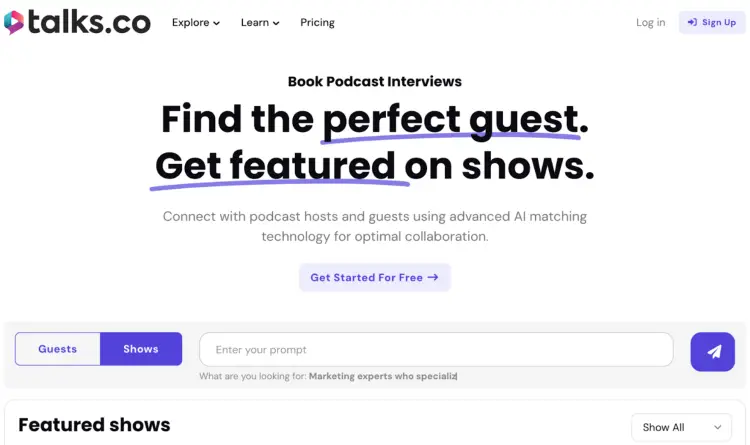
I built Talks to make it simple for you to connect with the right hosts. Instead of sending dozens of cold emails, the platform matches you with podcasts aligned to your niche, audience, and expertise.
How to get the most out of Talks:
- Complete your profile: Add your expertise, audience info, and speaking topics.
- Browse your matches: Read host bios and listen to past episodes.
- Show interest: If a host looks like a fit, click “Show Interest.” Mutual interest opens the door to direct messaging.
- Track your outreach: Keep notes on conversations, pitches, and scheduled interviews so nothing slips through the cracks.
2. Pitch podcast hosts directly
Your pitch is your first impression, and it’s doing a lot of work in a very small space. Keep it human, keep it specific, and make it easy for the host to say yes.
What to include in every pitch:
- A real, personal opener: Use the host’s name and reference their show. Skip “Dear Podcast Host.” It screams copy-paste.
- Proof you actually listened: Mention a recent episode or a specific point they made so they know you did your homework.
- Your angle, not your life story: Say what you’d talk about and why their listeners would care. One or two tight lines are enough.
- A clear listener benefit: Spell out the outcome. What will their audience learn, fix, or see differently after hearing you?
- A simple call to action: Ask for the booking. Don’t overthink it. Make the next step obvious and easy.
Example pitch:
“Hey [Host’s Name], I just listened to your episode on [Topic] and loved your point about [specific detail].
I’m a [your role] and I help [who you help] with [specific result]. I’d love to share how [your topic] can help your listeners [clear benefit].
If you’re open to it, I’m happy to send over a few topic ideas or grab a time that works for you.”
3. Activate your existing network
Podcasting isn’t just a one-and-done deal. Building relationships with hosts is how to get booked as a podcast guest consistently and open doors to more referrals and collaborations.
- Engage with hosts: Comment, share, or DM them on social media to stay visible.
- Send thank-you notes: After your appearance, a quick note makes you memorable and leaves the door open for referrals.
- Ask for introductions: Let your peers or previous hosts know you’re looking for new opportunities. They often have connections you wouldn’t find on your own.
- Provide value first: Share relevant resources or insights before asking for anything.
Example:
“Hey [Host’s Name], thanks again for having me on the show! I had a blast chatting about [topic].
Let me know if there’s anything I can share to promote the podcast episode or help connect you with someone in my network.”
4. Find guest opportunities on Facebook groups
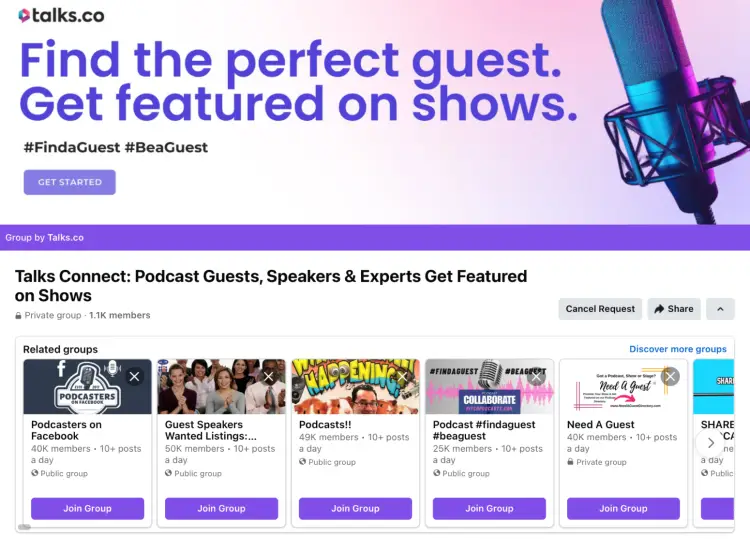
Facebook groups can be a fast track to podcast bookings if you know where to look. Talks Connect is a great example.
- Join a relevant group: Talks Connect has 2.5K members connecting hosts and guests in podcasts, summits, and speaking events.
- Use hashtags: #BeaGuest to find guest spots, #FindaGuest to promote your expertise.
- Engage first: Comment, like, and introduce yourself before posting.
- Post clearly: Share your expertise, past appearances, and what listeners will gain.
- Follow group rules: No unsolicited DMs, no outside links in posts, stick to guidelines.
- Track opportunities: Save posts and follow up on comments to stay organized.
5. Turn past podcast appearances into referrals
Your past guest spots can open doors to new opportunities.
- Ask hosts for introductions: A quick “Know any other shows that might enjoy this topic?” works well.
- Highlight your experience: Mention past episodes when pitching new podcasts to show credibility.
- Share your content: Send episode links to friends, peers, or other podcasters. They could always forward or recommend you.
- Offer value first: Suggest ideas for their audience before asking for anything in return.
- Keep relationships alive: Engage with past hosts on social media and email to stay top of mind.
6. Piggyback on shows your competitors have already been on
Your competitors’ appearances give clues for your next opportunities.
- Do competitor research: Google “podcast + [competitor name]” or check platforms like Listen Notes.
- Spot gaps: Look for topics they covered but with a different perspective you can bring.
- Pitch your unique angle: Show hosts why your story or expertise adds fresh value.
- Use social proof: Mention competitor appearances to demonstrate relevance in the niche.
- Track and repeat: Keep a list of where your competitors are getting featured on podcasts for future pitches to relevant podcasts in your niche.
7. Work with podcast booking services
If you want someone else to handle outreach and scheduling, booking services can do the heavy lifting so you show up prepared and confident.
- Kitcaster: A podcast booking agency that researches shows, crafts outreach, and books interviews for experts and founders.
- PodGuest: A done‑for‑you placement service that uses data and outreach to get you on podcasts that might be hard to find on your own.
- Spotlight Podcasting: Custom guest booking service that builds a dashboard and handles outreach and scheduling for busy experts.
Booking services vary in approach, style, and pricing, but they all take the outreach and coordination off your plate so you can focus on delivering great interviews.
8. Look for open guest requests on forums
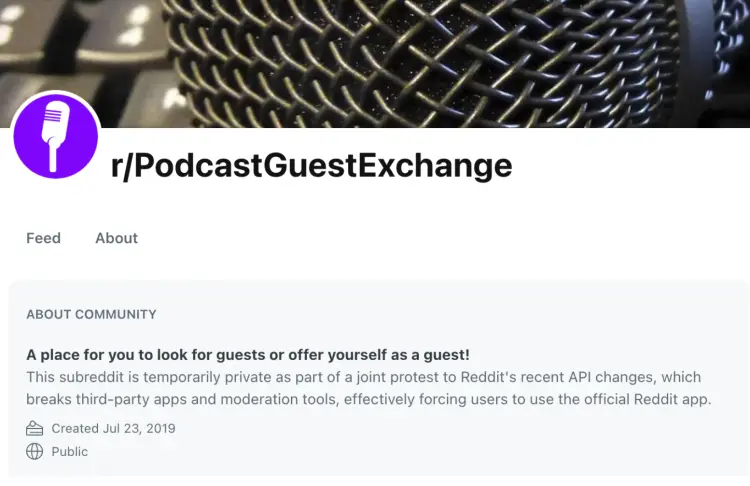
Forums and online communities are full of hosts actively looking for guests. If you respond quickly, you can lock in opportunities before others even see them.
- Reddit podcast subreddits: Search for subreddits like r/podcasting or r/podcastguests and look for posts tagged “seeking guests.” Comment directly with your pitch and links to your Talks Creator profile with past episodes.
- Podcast guest boards: Sites like Podchaser Community or Podcast Guests Forum often have threads where hosts post open slots.
- Industry-specific forums: If your niche has forums, boards, or Slack/Discord groups, check for “guest request” or “looking for experts” threads. Niche audiences make it easier to get booked on targeted shows.
- Engage, don’t spam: Always respond to posts thoughtfully. Mention why you’re a good fit and link to your speaker one-sheet or past appearances.
Using forums is one of the most low-cost methods to get featured in podcasts. You just need to be visible, timely, and specific about the value you bring.
9. Leverage virtual events and summits for podcast invites
If you’re already speaking at virtual events or summits, you’ve got a ready-made audience and credibility that podcasters want. Use your appearances to open doors for interviews.
- Add a “guest-ready” note in your speaker bio: Let hosts know you’re available for podcast interviews. Include links to past episodes or your speaker one-sheet.
- Network with other speakers: Fellow presenters often know podcast hosts in your niche. Ask for introductions or co-promote each other.
- Mention your event experience in pitches: Highlight your stage experience and audience reach to show you’re comfortable sharing insights on air.
- Repurpose event content: Share clips, slides, or highlights from your talks in your pitch to demonstrate your expertise and value.
10. Use PR and media request platforms to get booked
PR and media platforms are a shortcut to find podcasts actively looking for guests. These tools let you pitch your expertise directly to shows that want speakers like you.
- Browse guest requests: Platforms like HARO, ProfNet, or SourceBottle regularly post opportunities for podcasts, interviews, and articles.
- Respond quickly and personally: Tailor each pitch to the host’s topic, showing you understand their audience and can deliver value.
- Track your responses: Keep notes on which platforms, requests, and hosts you’ve pitched so you can follow up effectively.
These platforms help you find opportunities that might never show up in a Google search, letting you get in front of hosts who are already looking for guests.
11. Set up partner swaps with other creators in your niche
Partner swaps are a win-win for you and your ideal partner creator: both your audiences get fresh content, and you reach listeners who already trust someone in your space.
- Find compatible creators: Look for podcasters or industry experts whose audience overlaps with yours but isn’t identical.
- Propose a swap: Reach out with a short, friendly message explaining the idea. Highlight what their audience will gain and how it benefits both sides.
- Coordinate topics and timing: Decide on episode topics, recording dates, and any promo support for each other.
- Promote each other: Share the episodes across your channels to maximize reach and engagement.
Partner swaps are a simple way to expand your visibility without spending on ads or services.
How to Get on Podcasts as a Guest (Prep Checklist)
Before you hit “Send” on a pitch to be a guest on a podcast, you need to have your prep sorted. Think of this as your backstage pass with everything ready so when the recording starts, you shine.
☐ Polish your Talks Creator profile: Treat your profile like a speaker one-sheet. Include a clear headshot, your bio, your expertise, links to your website and past podcasts, and 3-5 topics you can speak on. This is your podcast resume.
☐ Prepare your talking points: Jot down key lessons, stories, or unique insights you want to share. Think of what makes you a good podcast guest and what’ll make the audience remember you, not just the services you’re selling.
☐ Check your gear: Make sure your top podcast microphone, headphones, and internet connection are solid. Test them in advance to avoid interruptions.
☐ Practice your intro: Keep it friendly, concise, and human. You want to sound natural, not scripted.
☐ Review the podcast: Listen to a couple of episodes to understand the host’s style, audience, and tone. Note anything you can tie your story to.
☐ Prep a personal note for the host: A quick message that feels warm, not salesy. Mention what you liked about the show and why you’d be a good fit.
☐ Set up your podcast room setup: Quiet space, good lighting if it’s a video call, and minimal distractions. You want to look and sound professional and trustworthy.
Already preparing for your podcast interview but stuck on what to add to your Talks Creator profile? Check out these speaker one sheet examples to kickstart your creativity.
How to see how many listeners a podcast has
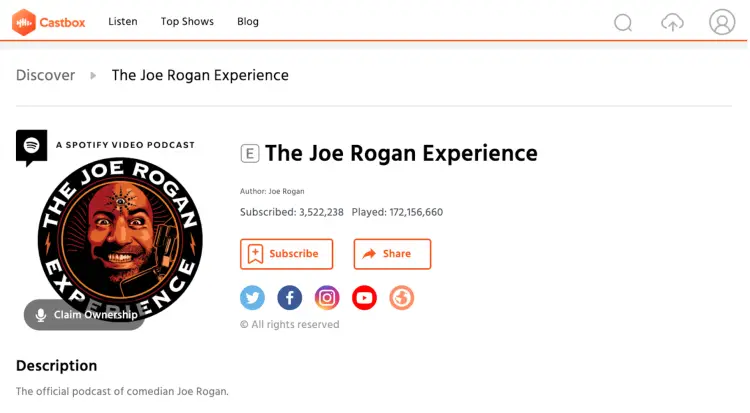
Not all podcasts post their stats, but a little detective work goes a long way to help you pitch to the right type of podcasts. Here’s how to estimate audience size:
- Ask the host for metrics: Most hosts are happy to share average downloads, listens per episode, or monthly reach.
- Check charts and rankings: Look at Apple Podcasts, Spotify, Podchaser, or Chartable. A high ranking in a niche often indicates solid listenership.
- Read reviews and engagement: Scroll through ratings, comments, and social media buzz. A show with hundreds of reviews or active fan comments usually has an engaged audience.
- Use audience tools: Listen Notes, Podtrac, and Chartable can give rough estimates on reach, downloads, and listener trends.
How much do you get paid for podcasts?
Not every podcast pays its guests. In fact, most don’t. But before you cross it off your list, think about what “compensation” really means. More than cash, it’s also exposure, connections, and credibility.
For example, if you’re on a podcast with 50,000 dedicated listeners in your niche, you’ve just been handed a chance to speak directly to people who already care about what you do. That’s a marketing goldmine.
That said, some podcasts do offer paid guest appearances, especially if they’re part of a bigger platform, are sponsored, or feature prominent guests.
Payment could range from a couple of hundred bucks to thousands, depending on the show’s reach and budget.
Do guests pay to be on podcasts?
Yes, sometimes guests do pay to be on podcasts. Some podcast hosts charge guests for a simple reason: running a podcast isn’t cheap.
There are hosting fees, equipment costs, editing, and time spent producing the episodes. Charging guests can be one way to offset those expenses.
This usually happens on shows with:
- Highly targeted audiences: If the podcast serves a very specific niche – like health coaching for new moms or productivity hacks for CEOs – hosts know their audience is valuable.
- Massive listenership: Think top-tier podcasts with thousands (or millions) of downloads per episode. Paying for a spot here can put your name in front of an audience that could genuinely move the needle for your business.
- Monetization models: Some podcasts function like media platforms and offer paid guest spots as part of their content marketing and revenue strategy.
How to Get Invited to a Podcast As a Repeat Guest (Checklist)
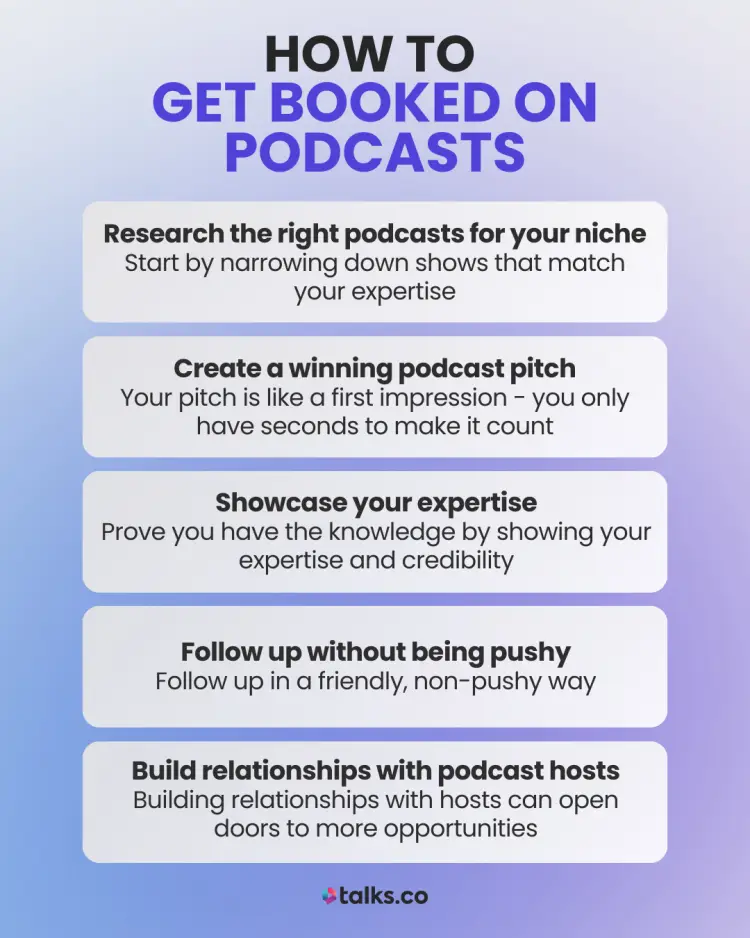
Once you’ve been on a show, getting asked back is about leaving a strong impression and giving the host reasons to say yes again.
Use this checklist to turn one appearance into multiple opportunities:
☐ Deliver value on every episode: Share actionable insights and stories that stick with listeners.
☐Engage the host personally: Send a thank-you note or follow-up message after the episode airs.
☐Share the episode widely: Promote it on social media, email lists, and your website to show the host your audience cares.
☐ Offer new angles: Suggest fresh topics or trends for future episodes based on your expertise.
☐ Be easy to schedule: Provide flexible dates and times for recording to make it simple for the host.
☐ Provide bonus content: Offer additional resources like templates, guides, or tips for listeners.
☐ Stay on their radar: Comment on recent episodes, share relevant updates, and keep your relationship active.
☐ Refer other guests: Introduce the host to other experts to show you’re invested in their show’s success.
5 Free Podcast Guest Pitch Templates (Copy & Use)
No need to stare at a blank email figuring out how to get on talk shows. Here are five ready-to-use, fill-in-the-blank podcast guest pitch templates you can copy, tweak, and send today.
Mix up the approach depending on the show’s style and audience.
1. Straightforward value pitch
Best for: Sharing actionable tips or expertise with a podcast audience.
Hi [Host Name],
I loved your episode on [specific topic]. I think your audience would benefit from hearing about [your topic/story].
I’ve [your relevant experience or achievement], and I’d be happy to share actionable insights your listeners can use right away.
Here’s a bit about me: [short bio].
Let me know if you’d like to explore this!
2. Problem-solution pitch
Best for: Showing you can solve a specific challenge for the audience.
Hi [Host Name],
I noticed your audience struggles with [specific problem].
I’ve helped [type of clients or audience] solve this exact challenge by [your method or strategy]. I’d love to share tips and examples on your podcast.
Quick intro about me: [bio].
Let me know if you’d like to connect!
3. Trending topic pitch
Best for: Leveraging current trends or news to connect with listeners.
Hi [Host Name],
I noticed your recent episodes cover [topic/trend].
I’d love to jump in with perspectives on [related hot topic] and actionable takeaways for your audience.
A bit about me: [bio].
Does this sound like a fit?
4. Personal connection pitch
Best for: Warming up cold outreach by showing you’re already familiar with the host.
Hey [Host Name],
I’ve been following your podcast since [episode/date], and your take on [specific topic] really stuck with me.
I’d love to share my own experience with [related story or lesson] that could resonate with your audience.
Quick bio: [short bio].
Let me know if you’re interested!
5. Cross-collaboration pitch
Best for: Offering mutual promotion or audience swap opportunities.
Hey [Host Name],
I recently [launched/achieved something relevant], and I think your audience would benefit from a conversation about [topic].
I’d also be happy to highlight your show to my [followers, subscribers, audience], so it’s a win-win.
About me: [short bio].
Interested in chatting?
The Guest Seat Is Waiting for You
Podcasts don’t need another guest. They need the right guest.
The one who knows their stuff, brings stories that stick, and actually makes listeners care every time you get booked on podcasts.
Forget cold emails that go nowhere. Forget endless spreadsheets of shows that may never respond. The hosts who matter are already looking for someone like you.
Your expertise deserves an audience that’s ready to listen and the mic is already waiting.
Sign up for your free Talks account and get booked on podcasts that actually want you.


