

A bad speech topic can make any great speaker look boring which is a really rough way to start.
You might have the confidence, know your stuff, or even have a few speeches under your belt. Then someone asks, “So, what are you talking about?” and suddenly your mind goes completely blank.
Or worse, you choose the “right topic” for an informative speech that sounds interesting at first, only to realize halfway through your prep that you’ve got about three minutes of material.
Sound familiar?
If you’ve been second-guessing every idea you come up with to make your speech, don’t. Because now you’ve got 400 info speech topics to work with.
From easy and fun informative speech topic ideas to expert-level topics across dozens of fields, there’s plenty of interesting informative speech topics here to get you moving.
All you need now is to choose a topic that gives you something worth saying.
What Is An Informative Speech?

An informative speech teaches your audience something they didn’t know before.
You’re there to explain a subject clearly, give people useful context, and help them understand how something works, why it matters, or what makes it interesting. You’re sharing knowledge rather than trying to push the audience toward a particular opinion or action.
That informative presentation can cover a huge range of subjects and interesting topics: how sleep affects the brain, how a business makes money, what causes an eclipse, how to start a podcast, or why certain training methods work.
What Are Informative Speech Topics?
Informative speech ideas are subjects you can explain, teach, or explore for an audience. These types of speech topics are designed to cover almost anything worth understanding, from how compound interest works to the psychology behind procrastination.
The sweet spot is choosing the right informative speech topic that gives you enough substance to teach something useful without becoming so broad that your persuasive speech wanders all over the place and you lose the whole purpose of your speech.
What are the different types of informative speech topics?
You can organize informative speech topics around what you’re teaching your audience:
- People: Famous figures, leaders, athletes, or historical personalities.
- Places: Countries, cities, landmarks, or cultural sites.
- Objects: Products, inventions, tools, or technologies.
- Processes: How something works or gets done.
- Ideas: Theories, beliefs, concepts, or social issues.
- Events: Historical moments, discoveries, or major developments.
What are good informative speech topics?
The right speech topics for informative presentations give you something interesting to explain and your audience a reason to keep listening.
Look for impromptu speaking topics that are specific enough to cover properly, relevant to the people in the room, and connected to something you genuinely understand or want to explore.
A few informative speech topics to engage your audience:
- How sleep affects athletic performance.
- How creators make money from podcasts.
- Why people procrastinate.
- How credit scores work.
- How solar panels generate electricity.
Master List of Info Speech Topics
Need an effective informative topic worth talking about?
Here are 400 interesting and informative speech topics covering business, health, fitness, coaching, education, technology, careers, personal development, science, finance, lifestyle, and plenty more.
The best informative speech topics for beginners

Starting your first informative speech? Choose fun and easy informative speech topics that are familiar enough to research and explore topics related to how you structure your speech writing.
- How to build a morning routine
- How podcasts are made
- How credit cards work
- Why people form habits
- How to create a personal budget
- How coffee goes from bean to cup
- Why people procrastinate
- How recycling works
- How passwords keep accounts secure
- How to prepare for a job interview
- Why people need sleep
- How search engines find information
- How to write a professional email
- How public libraries work
- How plants grow from seeds
- Why exercise improves your mood
- How grocery stores organize their products
- How online shopping works
- How to take better notes
- Why people get nervous before speaking
- How weather forecasts are created
- How traffic lights are programmed
- How a smartphone connects to the internet
- Why hydration matters
- How to plan a simple presentation
- How inflation affects everyday purchases
- Why music affects our emotions
- How a credit score is calculated
- How to build a basic workout routine
- Why people enjoy reality television
- How restaurants plan their menus
- How online reviews influence buyers
- Why people laugh
- How to start a vegetable garden
- How public transportation systems work
- How to set realistic goals
- Why people develop different sleep schedules
- How maps and GPS work
- How to make a strong first impression
- Why people remember some advertisements
- How a debit card works
- How to organize a home workspace
- Why stretching can improve flexibility
- How books become movies
- How supermarkets set prices
- Why people collect things
- How to prepare for a presentation
- How a barista makes espresso
- Why learning a second language can be useful
- How to build a simple personal savings plan
Informative speech best topics

Once you’ve got the basics of informative speaking and good speech covered, you can branch into many public speaking topics that resonate with your audience using stronger stories, surprising facts, and plenty of room for examples.
These are solid picks on broad topics and easy topics when you want your audience thinking, “I never knew that.”
- How companies build recognizable brands
- Why some products become cultural icons
- How professional chefs develop new recipes
- How athletes prepare for major competitions
- How museums preserve historical artifacts
- How airlines decide ticket prices
- Why certain songs become global hits
- How theme parks design attractions
- How architects design skyscrapers
- How newspapers verify breaking stories
- How documentary filmmakers tell real stories
- How fashion trends spread
- Why some inventions change everyday life
- How auction houses determine value
- How professional photographers use lighting
- How film directors create suspense
- How restaurants earn Michelin stars
- Why some cities become startup hubs
- How book publishers choose new authors
- How professional athletes recover between games
- How theme park queues are designed
- How video game soundtracks affect gameplay
- How luxury brands create exclusivity
- How supermarkets use product placement
- Why certain logos become instantly recognizable
- How professional speakers prepare keynote presentations
- How television networks decide what gets renewed
- How real estate agents market properties
- How food companies test new products
- How charities raise money online
- How hotels compete for repeat guests
- How magazines choose cover stories
- How entrepreneurs validate business ideas
- Why people become loyal to certain brands
- How movie trailers are edited
- How concert tours are planned
- How professional translators work
- How news anchors prepare for live broadcasts
- How amusement park rides are tested
- How professional athletes choose equipment
- How companies decide what products to discontinue
- 9How restaurants manage food waste
- How authors develop fictional characters
- How casting directors find actors
- How streaming services recommend shows
- How professional photographers choose locations
- How event planners manage large conferences
- How companies use customer feedback
- How independent creators build online audiences
- How a viral trend spreads across social media
Informative speech topics easy
These are engaging informative speech topics that don’t require specialist knowledge or weeks of educational ideas and research.
They’re broad, informational topics that are enough to give you material while still being easy to explain when you give your speech.
- How to make a good first impression
- Why people need regular sleep
- How to start a daily journal
- How sunscreen protects your skin
- Why drinking water matters
- How to create a simple budget
- How libraries organize books
- Why people develop hobbies
- How public parks benefit communities
- How to prepare for a job interview
- Why people listen to music
- How to build a healthy breakfast
- How recycling reduces waste
- Why people get stage fright
- How to improve your listening skills
- Why taking breaks can improve productivity
- How to prepare for a presentation
- How plants convert sunlight into energy
- Why people form habits
- How to organize a study schedule
- Why stretching can improve flexibility
- How online reviews influence shoppers
- How to write a professional resume
- Why people enjoy watching movies
- How to choose a book to read
- Why friendships matter
- How to make a weekly meal plan
- How weather forecasts work
- Why people dream
- How to reduce household food waste
- Why exercise supports mental well-being
- How to care for indoor plants
- How a debit card works
- Why people procrastinate
- How to improve your public speaking skills
- Why learning another language is useful
- How to plan a weekend trip
- How GPS helps people find their way
- Why people enjoy social media
- How to create a productive workspace
- Why body language matters
- How to make a strong presentation slide
- How to build a basic workout routine
- Why people celebrate birthdays
- How to prepare for a test
- How to save money on groceries
- Why people volunteer
- How coffee gets from farms to cafes
- How to set achievable personal goals
- Why getting outside can improve your mood
Informative speech topics fun
Many topics are geared to give you plenty of room to tell stories, share surprising facts, and keep the audience curious.
These fun topics are great especially when you want technical topics to feel lively and make your speech stand out instead of sounding like a textbook read aloud.
- Why cats knead blankets
- How theme parks create roller coasters
- Why popcorn pops
- How magic tricks fool the brain
- Why dogs tilt their heads
- How escape rooms are designed
- Why people love true crime stories
- How video game characters are created
- Why some songs get stuck in your head
- How movie special effects are made
- Why people enjoy horror movies
- How LEGO became a global toy brand
- Why optical illusions fool us
- How emojis changed online communication
- Why certain foods taste better together
- How professional chefs create unusual dishes
- Why people collect trading cards
- How amusement parks design haunted attractions
- Why people love nostalgia
- How animated movies are made
- Why roller coasters make people scream
- How escape room puzzles are created
- Why people enjoy reality television
- How professional wrestlers create characters
- Why some jokes work across different cultures
- How board games are designed
- Why people enjoy karaoke
- How movie trailers make films look exciting
- Why popcorn became a movie theater tradition
- How costume designers create superhero outfits
- Why people love conspiracy theories
- How video game sound effects are produced
- Why certain smells trigger memories
- How mascots become part of a brand
- Why people enjoy competitive cooking shows
- How chocolate is made from cacao beans
- Why people love celebrity gossip
- How stop-motion animation works
- Why amusement park rides make your stomach drop
- How escape artists perform dangerous-looking tricks
- Why some toys become collector’s items
- How cartoon characters get their voices
- Why people enjoy watching unboxing videos
- How movie makeup creates realistic characters
- Why people develop unusual food preferences
- How trivia games are created
- Why certain fictional characters become fan favorites
- How professional magicians practice illusions
- Why people love visiting haunted houses
- How a viral internet challenge spreads
Unique informative speech topics for students

Students have plenty of potential material right in front of them. These topics cover school life, learning, technology, careers, money, health, and the everyday stuff students are already dealing with.
- How college applications work
- How scholarships are awarded
- How student loans work
- How to choose a college major
- How internships help students build experience
- Why sleep affects academic performance
- How study groups can improve learning
- How to take effective lecture notes
- How plagiarism affects academic work
- How to prepare for a college interview
- Why students procrastinate on assignments
- How artificial intelligence is changing education
- How to build a college-level resume
- Why time management matters for students
- How student organizations build leadership skills
- How exchange programs work
- Why extracurricular activities matter
- How to choose a part-time job
- How campus libraries support students
- How online classes differ from in-person classes
- Why students experience test anxiety
- How tutoring can improve academic performance
- How to research a school project
- How internships can lead to job offers
- Why financial literacy matters for college students
- How to create a realistic student budget
- How social media affects studying
- Why networking matters before graduation
- How apprenticeships work
- How career fairs help students find opportunities
- Why learning practical skills matters alongside academic subjects
- How students can build a professional online presence
- How academic scholarships are funded
- Why volunteering can strengthen a college application
- How to prepare for a group presentation
- How peer mentoring programs work
- Why reading improves vocabulary
- How students can protect their online accounts
- How campus sports programs operate
- Why physical activity can support concentration
- How student newspapers operate
- How study-abroad programs are organized
- Why communication skills matter in the workplace
- How students can prepare for their first job
- How career assessments help students explore options
- Why students should learn basic personal finance
- How professors evaluate academic research
- How academic conferences work
- How volunteering can provide career experience
- How to build a useful professional network before graduation
Fun informative speech topics examples
These examples show how specific an informative speech topic can be while still giving you plenty to explain. I’ve mixed practical subjects with more unusual angles so you’ve got options beyond the usual classroom picks.
- How Airbnb changed the way people travel
- How Spotify creates personalized playlists
- How Olympic host cities prepare for the Games
- How Pixar develops an animated feature
- How electric vehicles are charged
- How farmers use drones to monitor crops
- How Netflix decides which shows to produce
- How Formula 1 teams use data during races
- How wedding planners coordinate large events
- How professional chefs earn a restaurant’s first Michelin star
- How NASA tracks objects in space
- How zoos design habitats for endangered animals
- How forensic investigators analyze fingerprints
- How archaeologists uncover ancient civilizations
- How fashion designers create a clothing collection
- How bookstores decide which titles to stock
- How publishers turn a manuscript into a finished book
- How museums authenticate valuable artwork
- How professional photographers edit raw images
- How voice actors create character voices
- How Broadway productions are rehearsed
- How stunt coordinators plan movie action scenes
- How professional dancers prepare for performances
- How cruise ships manage thousands of passengers
- How airports handle checked luggage
- How pilots train on flight simulators
- How meteorologists track hurricanes
- How volcanologists monitor active volcanoes
- How marine biologists study coral reefs
- How wildlife photographers safely approach animals
- How beekeepers maintain healthy colonies
- How guide dogs are trained
- How aquariums maintain large marine ecosystems
- How veterinarians perform routine pet checkups
- How orthodontists straighten teeth
- How physical therapists help patients regain movement
- How hearing aids amplify sound
- How contactless payments work
- How ATMs process cash withdrawals
- How package delivery companies sort millions of parcels
- How grocery delivery apps assign orders to drivers
- How restaurants calculate food costs
- How coffee shops choose their suppliers
- How independent bookstores stay competitive
- How small businesses build customer loyalty
- How nonprofit organizations measure their impact
- How coworking spaces make money
- How subscription businesses retain customers
- How entrepreneurs turn hobbies into businesses
- How creators turn online content into income
Informative speech topics for public speaking
A public speaking class gives you a chance to explain something people can actually picture, understand, or remember.
These topics are specific enough to build a focused informative speech example while giving you plenty of opportunities to use stories, demonstrations, visuals, or examples.
- How TED speakers structure memorable presentations
- How speakers use pauses for emphasis
- How vocal variety changes a presentation
- How speakers use storytelling to explain complex ideas
- How eye contact affects audience engagement
- How stage lighting affects a speaker’s presentation
- How teleprompters work
- How professional speakers prepare before going on stage
- How keynote speakers rehearse a major presentation
- How speakers use presentation clickers
- How audience size changes speaking techniques
- How microphones affect vocal delivery
- How speakers manage presentation slides
- How visual aids improve audience understanding
- How speakers remember long presentations
- How breathing exercises can support vocal control
- How comedians use timing during live performances
- How motivational speakers structure personal stories
- How debate teams prepare arguments
- How Toastmasters meetings help members practice speaking
- How speakers handle difficult audience questions
- How conference speakers prepare for Q&A sessions
- How public speakers overcome pre-speech nerves
- How gestures reinforce spoken messages
- How facial expressions affect communication
- How speakers adjust presentations for virtual audiences
- How online presentations differ from live speeches
- How podcast hosts prepare for interviews
- How interviewers create better questions
- How speakers introduce statistics without losing attention
- How analogies make complicated subjects easier to understand
- How speakers use demonstrations during presentations
- How conference organizers select keynote speakers
- How a speaker’s opening affects audience attention
- How speakers create memorable conclusions
- How speech coaches evaluate vocal delivery
- How presenters use storytelling in business meetings
- How speakers adapt content for different cultures
- How interpreters work during international conferences
- How sign language interpreters support live events
- How speakers use humor appropriately in presentations
- How speakers recover after forgetting a line
- How presenters handle technical problems on stage
- How speakers build credibility with an audience
- How panel moderators keep conversations focused
- How debate moderators manage competing viewpoints
- How speakers use audience polls during presentations
- How virtual event hosts keep audiences engaged
- How public speakers prepare for media interviews
- How speakers turn one presentation into multiple pieces of content
Persuasive and informative speech topics
Some subjects can work as informative speeches or become persuasive with a different goal and structure. These persuasive speech topics give you a useful starting point if you want to explain the issue first and then make a case for a particular position.
- How four-day workweeks affect employees
- Why companies are adopting remote work
- How school start times affect teenagers
- Why financial literacy should be taught in schools
- How public transportation reduces traffic
- Why cities are building more bike lanes
- How renewable energy works
- Why households are installing solar panels
- How food labeling helps consumers
- Why schools are reconsidering homework policies
- How screen time affects children
- Why workplaces are investing in mental health programs
- How paid parental leave works
- Why businesses offer flexible working hours
- How community gardens support neighborhoods
- Why cities create pedestrian-only areas
- How composting reduces household waste
- Why restaurants are reducing single-use plastics
- How school uniforms affect students
- Why students benefit from career-focused education
- How universal design makes buildings more accessible
- Why businesses should improve website accessibility
- How public libraries provide digital resources
- Why communities invest in public green spaces
- How farmers markets support local producers
- Why consumers are buying secondhand clothing
- How fast fashion affects clothing waste
- Why companies are switching to reusable packaging
- How electric public buses work
- Why cities are expanding electric vehicle charging stations
- How social media algorithms recommend content
- Why people should understand how algorithms influence feeds
- How facial recognition technology works
- Why organizations need strong data privacy practices
- How artificial intelligence is changing customer service
- Why students need to understand AI-generated content
- How workplace mentorship programs operate
- Why companies invest in employee training
- How flexible work arrangements affect productivity
- Why workers benefit from negotiating their salaries
- How credit card interest accumulates
- Why young adults should learn about compound interest
- How retirement accounts work
- Why people start investing early
- How charitable donations are distributed
- Why consumers should research nonprofit organizations
- How food delivery affects restaurant businesses
- Why consumers are returning to local businesses
- How influencer marketing affects purchasing behavior
- Why audiences should evaluate sponsored content carefully
How to Choose a Good Informative Speech Topic (Checklist)

Choosing the right commencement speech topic gets easier when you give yourself a few filters before committing to one.
Run your idea through this quick checklist before you pick the right topic for your next informative speech:
☐ Audience: Will these people actually care about the subject?
☐ Expertise: Do you know enough to explain your unique topic clearly?
☐ Scope: Can you cover it properly within the time limit of the length of your speech?
☐ Research: Can you find credible information to support your points?
☐ Originality: Can you bring an interesting angle or perspective?
☐ Purpose: Will your audience learn something useful, surprising, or memorable?
If your unique informative speech topic checks most of these boxes, your audience is in for one impressive speech.
List of informative speech topics do’s and don’ts
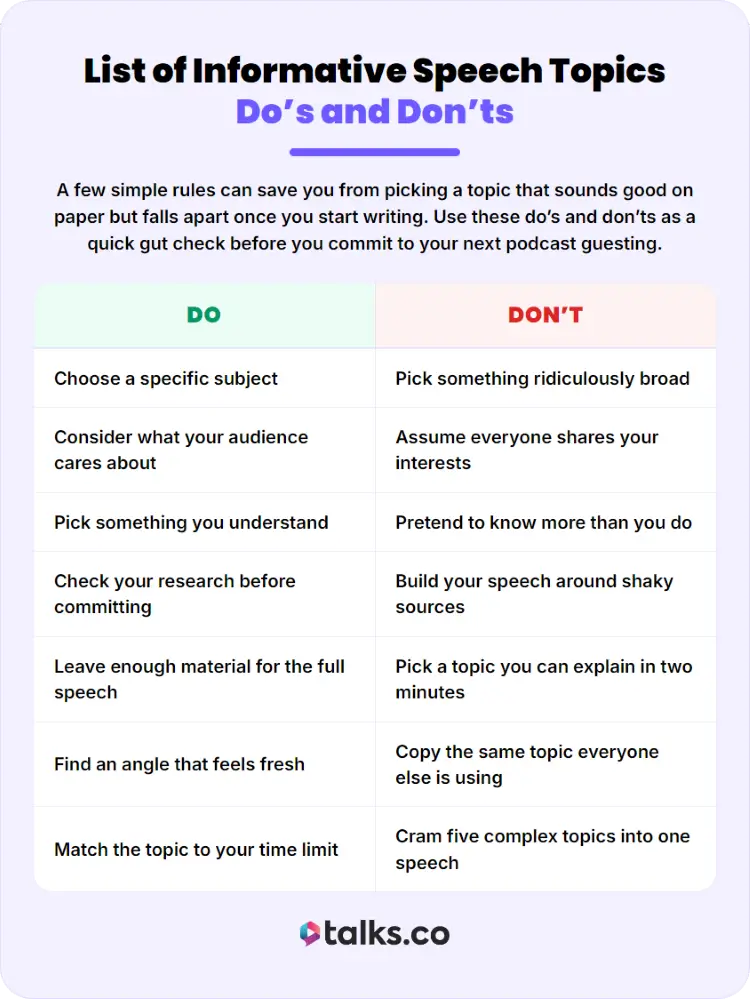
A few simple rules can save you from picking a topic that sounds good on paper but falls apart once you start writing. Use these do’s and don’ts as a quick gut check before you commit to your next podcast guesting.
| Do | Don’t |
|---|---|
| Choose a specific subject | Pick something ridiculously broad |
| Consider what your audience cares about | Assume everyone shares your interests |
| Pick something you understand | Pretend to know more than you do |
| Check your research before committing | Build your speech around shaky sources |
| Leave enough material for the full speech | Pick a topic you can explain in two minutes |
| Find an angle that feels fresh | Copy the same topic everyone else is using |
| Match the topic to your time limit | Cram five complex topics into one speech |
Ready to start your own podcast or become a content creator? Check out these ethos, pathos, and logos examples to include in your next public speaking opportunity.
It Costs Nothing For You To Get Heard
You’ve got 400 info speech topics. Surely one of these creative informative speech topics is calling your name.
So go choose an informative speech topic. Prepare it. Give people something worth remembering in your next speech.
Then keep going.
Your expertise on a wide range of topics deserve more than one audience, and Talks can help you find podcast hosts looking for voices like yours.
Create your free Talks profile and start getting discovered for free.


