

Ready to step into bigger stages and put your speaking career on the international map?
Many speakers know the value of sharing their story but aren’t sure how to reach a wider audience or start booking higher-profile events.
If this resonates with you, it’s important for you to learn how to join a speakers bureau.
Joining a speakers bureau is a tried-and-true path for professionals wanting more visibility and credibility without the gruesome searching process.
As someone who started by launching virtual events and has been speaking at summits and podcasts, I know the power of getting your own spotlight.
That’s why I’ll walk you through everything you need to know to join a speakers bureau.
I’ll help you prepare and list down all the factors you need to consider when choosing the right one.
Speakers Bureau Meaning

A speakers bureau is like a talent agency, but it specializes in public speaking. It connects speakers with event planners and organizations searching for the right speaker for their event.
There are several types of speaker bureau setups you can encounter:
- Traditional bureaus work much like a talent agency, representing a list of speakers bureaus and actively booking gigs for many speakers across a wide range of fields.
- Boutique bureaus are smaller but offer specialized attention for their roster, often focusing on business speakers, motivational speakers, or coaches in certain niches.
- Online platforms, like the ones here, help you market yourself directly to event organizers and speakers and get booked for both virtual and live events.
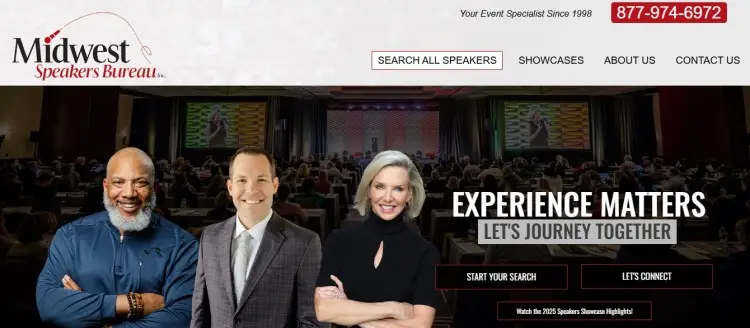
Some bureaus exclusive to a certain region, like the Midwest Speakers Bureau, operate out of Des Moines and serve North and South Dakota.
6 Benefits of joining a speakers bureau
Let’s talk about why many speakers try to join a bureau. The most obvious benefit is increased exposure. Bureaus handle marketing, negotiation, and logistics, freeing you up to focus on your craft.
Other benefits of joining a speakers bureau include:
- Access to potential clients: You gain a network of professionals and organizations you could work with in the future. They can also bring you to audiences relevant to you.
- Professional support to get booked: It’s easy to get speaking gigs as a keynote or featured guest at bigger, better events.
- Better opportunities: You can land speaking engagements that you might not even be aware of or find on your own.
- Command higher fees: Compared to solo pitching, bureau representation can help you fetch higher speaking rates.
- Access to bureau training: They support you with refining your bio, brainstorming talk topics, and developing your public speaking skills.
- Boost in reputation: Joining a speakers bureau can add to your credibility and show that you come from a respected speaker list.
In short, a bureau can help you build client relationships, test new markets, and spend less time chasing leads.
Whether you’re a new speaker or an established pro, joining a speakers bureau is a powerful way to share your message and grow your business.
How to Join a Speakers Bureau
Joining a speakers bureau can seem intimidating at first, but it’s very simple with the right information and preparation. Here’s a step-by-step guide to help you:
- Update your online presence: Make sure your website and social media profiles are professional and up-to-date. This is one of the things that signals to a speakers bureau that you are a credible speaker.
- Prepare a speaker bureau profile: Think of this as your first handshake. How you present yourself makes a strong first impression.
- Create your speaker one sheet: This is like your resume, but for speakers. Make sure to highlight your value and not miss out on anything. Get a free speaker profile on Talks.
- Create a portfolio: Collect and organize testimonials and sample talks.
- Do your research: Understand what bureaus work best for your field and goals.
- Prepare your message and hit send: Send inquiry emails or submit applications.
- Attend interviews: Speak with bureau representatives to showcase your expertise, but also to get to know how the bureau works.
- Confirm your working arrangement: Negotiate terms and make sure to understand the agreement, since the bureau takes a percentage of your speaking business.
- Maintain a positive relationship: Fulfill your responsibilities and constantly communicate with bureau staff.
How to prepare your speakers bureau profile
Your speakers bureau profile is the first thing bureaus handle when reviewing new applicants. Here’s a straightforward process for making your profile stand out:
- Write a professional bio: Share your story and what makes you a good fit for the bureau’s roster.
- Showcase expertise: Include your signature keynote and talk topics, emphasizing the real-world impact you create.
- List your credentials: Are you a best-selling author, or have you appeared on media shows? Highlight those.
- Send professional photos: Upload your headshot and action shots of you speaking.
- Share video links: If requested, provide a video reel or links to previous engagements (even as a podcast guest).
- Include success stories: Add a testimonial section featuring quotes from clients and event organizers.
- Include contact information: Give them options for reaching out, like your website, phone number, email, or LinkedIn profile.
- Attach or link your speaker one-sheet: This helps bureaus get a quick summary of your expertise.
Your free Talks profile includes everything a strong speakers bureau profile would. Only it’s simpler to set up and puts you in front of hosts faster.
How to get on a speakers bureau
When you’re ready to join, here’s how to confidently approach a speakers bureau:
- Review their speaker requirements and roster: Some may only accept established professional speakers, while others welcome new voices.
- Introduce yourself sincerely: Reach out with a professional introduction and a customized pitch. No to generic messages, so you stand out.
- Attach your key materials: Include your bio, talk list, one-sheet, and video links.
- Emphasize your value: Always highlight how your expertise fills a gap in the bureau’s current speaker list.
- Get clear on your terms: Be specific about your availability, preferred topics, and fee range.
- Follow up after a week if you don’t hear back. Many bureaus are swamped, but a persistent, polite follow-up shows you’re serious.
- Be open to feedback or an invitation to an initial interview: This conversation helps them decide if you’re a good fit for their lineup.
Remember: Many speakers only get a few seconds of attention at first, so clarity and professionalism count.
What You Should Know Before Joining a Speakers Bureau
Getting into a speakers bureau can be the leap your business needs, but it’s also a commitment you have to invest in. There are several things you should consider before moving forward:
- Bureau operates differently: Every bureau operates a little differently; some expect exclusivity, others don’t.
- Focus and levels: Some bureaus focus only on high-fee headliners, while others accept a variety of fields and levels. Learn about their speakers bureau programs as well to understand how they land you gigs.
- Representation and fees: It’s important to ask how the bureau represents speakers, divides fees, and markets its speakers.
- Agreement terms: Review the terms of any agreement carefully, including your percentage split and rights to book your own gigs.
- Speakers bureau help: Ask what speakers bureau help is available for building your brand, pitching, and finding clients. Some also offer training for their speakers.
- Commitment and support: Understand the commitment involved in working with the bureau and the level of support offered.
- Alignment with goals: Make sure the bureau’s focus aligns with your speaking goals and target audience.
Speakers bureau training
Many reputable agencies offer speakers bureau training to help speakers get booked and deliver better presentations.
Here are some concepts a speakers bureau training could offer:
- Storytelling (how to craft a talk that connects with different audiences)
- Stage presence, confidence, and voice coaching
- Tips for virtual presentations and online public speaking
- How to personalize your message for various industries or client types
- Marketing your services to event planners
- Handling Q&A sessions smoothly
Joining a top speakers bureau often means having access to these skill-building sessions and getting real industry feedback.
Speakers bureau program
A speakers bureau program is the structure the bureau uses for working with clients and speakers. Most programs are designed to help both sides save time and stress when booking events.
Key aspects include:
- Matching event organizers and speakers based on style, expertise, and audience needs
- Handling contracts, payments, and travel arrangements
- Marketing support so that speakers are found by more event planners
- Protecting the interests of both business speakers and event hosts
- Training or feedback to develop speaking skills
- Check-ins and other admin support
How to Choose a Speakers Bureau
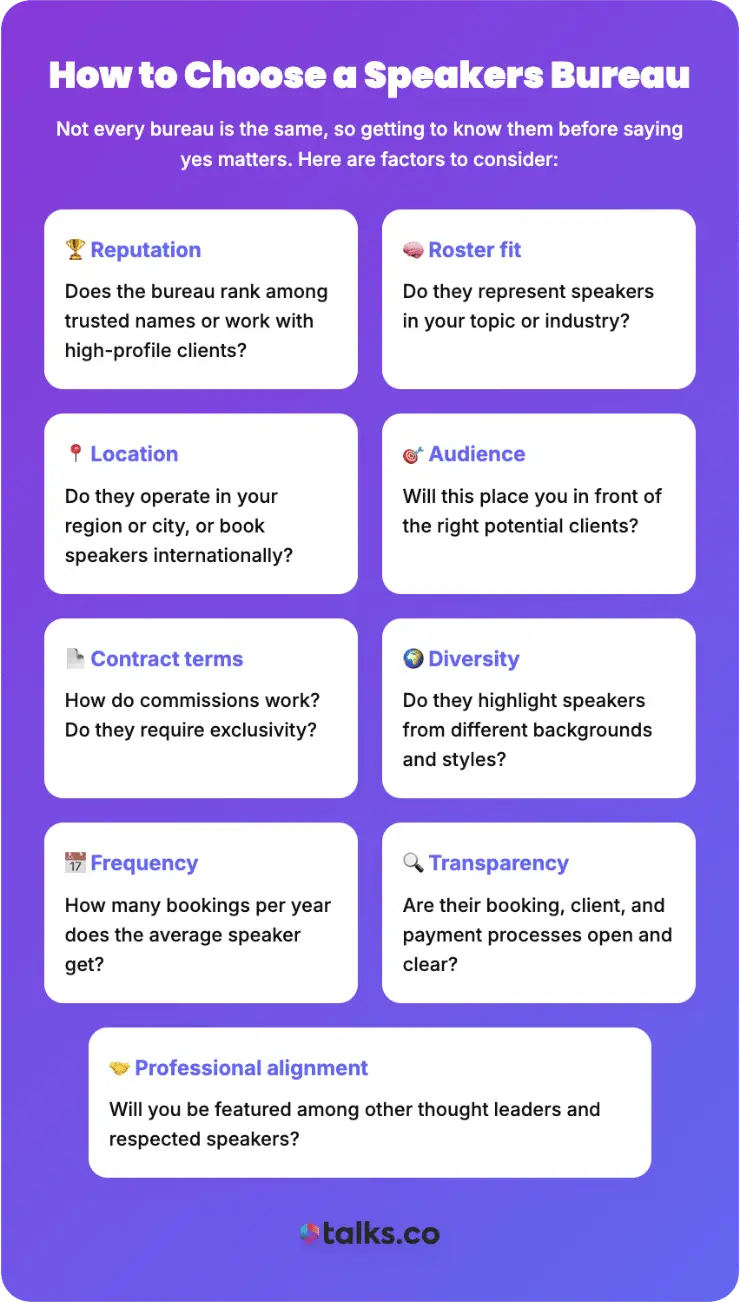
Choosing the right speakers bureau is an important decision for your career. Not every bureau is the same, so getting to know them before saying yes matters.
Here are factors to consider:
- Reputation: Does the bureau rank among trusted names like Executive Speakers Bureau or have a track record with high-profile clients?
- Roster fit: Does it represent a wide range of speakers, including your topic or industry?
- Location: Does it operate within your region or city?
- Audience: Will joining place you in front of potential clients you want?
- Contract terms: How does the bureau take its commission? Is exclusive representation required?
- Diversity: Are there opportunities for speakers from many backgrounds and with different speaking skills?
- Frequency: How often do they book a speaker per year?
- Transparency: Is the bureau transparent about booking processes, client communication, and payments?
- Professional alignment: Will you be alongside other thought leaders, business professionals, keynote speakers, or motivational speakers?
If you’re still exploring your options, you can also try getting booked on talk shows or on podcasts.
Is a speakers bureau necessary to get speaking gigs?
No, it is not a strict requirement. Many speakers, especially new or niche experts, find events through networking, referrals, or online platforms.
However, a bureau can help you reach larger audiences, secure higher fees, and gain credibility faster within the speaking market.
Even if you’re just starting out, looking into bureaus can carve your path to bigger venues faster.
Are speakers bureaus for everybody?
Not every speaker needs a bureau. If you’re still building your portfolio or prefer a more entrepreneurial approach, you might choose to book your own gigs for a while.
But, if you’re ready for more exposure and want help handling logistics, marketing, and negotiations, a bureau might be exactly what you need.
Think about your goals. If “grow your business as a speaker” is on your list of goals, a bureau could be a strong partner.
How to Start a Speakers Bureau
Want to start your own speakers bureau? If you’re passionate about helping both speakers and event organizers connect, this might be the path for you.
Here’s a basic roadmap for starting your own speaking bureau:
- Identify a target niche: Who will your bureau represent? Are you focusing on business leaders, coaches, or a certain industry?
- Build a database: Set up profiles for many speakers covering different specialties and topics.
- Decide on your bureau’s program: Think about how you’ll find, sign, and market talent.
- Set financial policies: How does your bureau take a cut, and what services do you include?
- Build strong connections: Network with event planners and organizations from day one.
- Know your way around admin tasks: Take care of contracts, insurance, and legal details.
- Train your team: Make sure your team is knowledgeable about the fields you serve.
- Develop marketing materials: Promote your speaker list and drive traffic to your website.
Examples of speakers bureaus
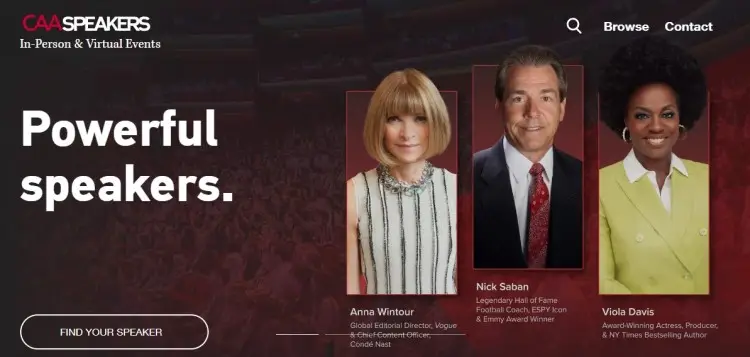
Looking for real-world examples? Here are some trusted speakers bureaus that many professionals recommend:
- Executive Speakers Bureau: Represents a wide range of professional keynote speakers, motivational speakers, business experts, industry thought leaders, and trainers.
- Midwest Speakers Bureau: A popular choice for Midwestern events. Conducts an annual speakers showcase.
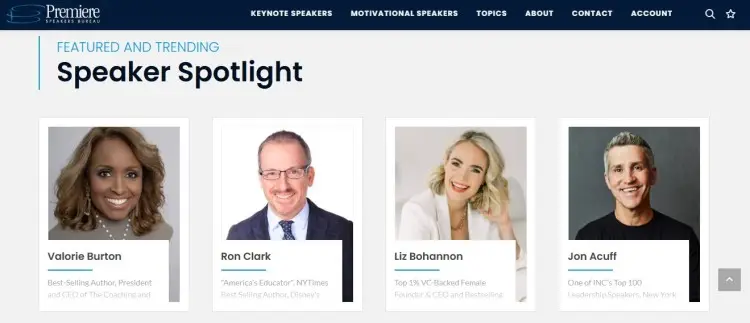
- Premiere Speakers Bureau: Offers full online access and assistance in case of emergency.
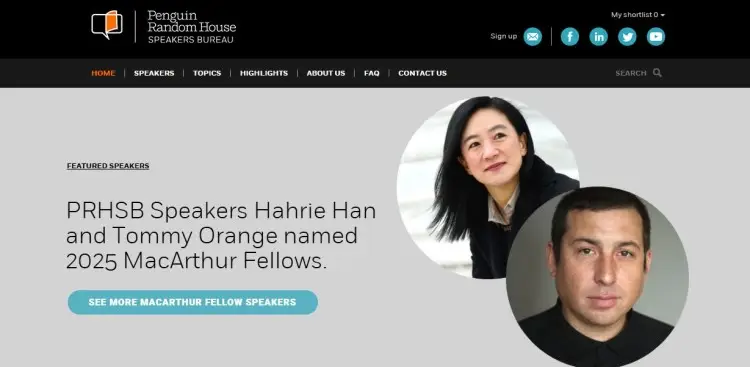
- Penguin Random House Speakers Bureau: Features best-selling authors and recognized thought leaders.
- Creative Artists Agency (CAA): Works like a talent agency, representing global celebrities, authors, and business speakers.
How to Be a Speaker
Want to start booking more speaking gigs and step up as a professional speaker? Here’s how to be a speaker, step by step:
- Choose a focus: What is your message or area of expertise?
- Develop your signature talk: This is what you’ll be known for, typically covering your speaking philosophy and values.
- Plan your main talking points: Collect and sharpen your stories, examples, and teaching points.
- Practice publicly: Speak at local events or even online webinars.
- Gather testimonials: Collect feedback and recommendations to showcase your impact.
- List yourself with speaking platforms: Expand your reach by showing up in places where planners naturally look for speakers.
- Network and maintain client relationships: Word of mouth is powerful, especially in the world of speaking.
How do speakers work
The life of a professional speaker involves both creating good materials and marketing your services. Most public speakers manage these roles and tasks:
- Developing fresh, relevant content for talks, workshops, or keynotes.
- Rehearsing and refining your public speaking skills.
- Marketing your services or working with a bureau to book events.
- Handling client communications, from the first call to feedback after the event.
- Traveling to events and adjusting to different audiences.
- Managing contracts, invoices, and follow-ups.
- Building your brand through social media, blogging, or podcast appearances.
- Staying updated on trends to remain a good fit for more events.
Grow your career by learning about public speaking platforms and public speaking opportunities.
Strengthen Your Connections
Knowing how to join a speakers bureau can give you a head start in your speaking career. Bureaus take care of logistics and find relevant stages for you, so you can focus on sharing your message.
A speakers bureau highlights how powerful connections are. The right network can open doors to new opportunities and lifelong partnerships.
That’s the same advantage that Talks offers you. It streamlines your process for getting booked on podcast shows, making sure you appear in front of relevant podcasters.
No need to pitch or to create a speaker one sheet over and over.
Build your own Creators profile with all your experience and previous appearances, and share it publicly.
Want in? Join the Talks Community Today.


