

The platform that gets you started isn’t always the platform that gets you where you want to go as a content creator.
Maybe you’re selling digital products. Maybe you’re building a membership. Maybe you’re growing a newsletter that’s starting to attract paying subscribers.
Whatever the goal, there comes a point where a simple “buy me a coffee” button for recurring donations just isn’t the best fit for you anymore.
That’s where this guide comes in.
We’ll compare 11 of the best Buy Me a Coffee alternatives, from creator memberships and digital product platforms to email newsletters and social community tools, so you can find the best alternative platform for creators that makes the most sense for your audience, content, and income goals.
Which Buy Me a Coffee Alternative Is Best for You? (Quick View)
Here’s your free cheat sheet to the best Buy Me a Coffee alternatives so you can match the platform to how you create, grow, and earn fast.
- Best for visibility-driven growth: Talks
- Best for writing and newsletters: Substack
- Best for recurring memberships: Patreon
- Best for branded subscription platforms: Memberful
- Best all-in-one creator business platform: Podia
- Best for simple tips and flexible monetization: Ko-fi
- Best for digital product sales: Gumroad
- Best for crowdfunding launches: Kickstarter
- Best for email marketing and automation: Kit (formerly ConvertKit)
- Best for merchandise and storefronts: Fourthwall
- Best for paid communities: Mighty Networks
What Is Buy Me a Coffee?
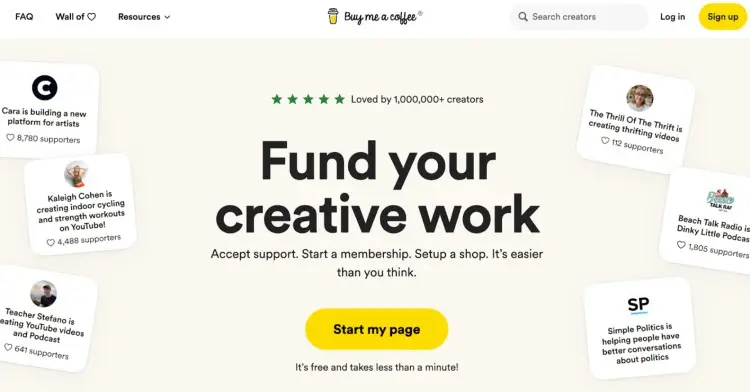
Buy Me a Coffee is a creator monetization platform for accepting tips, memberships, and digital product sales from a single link. No monthly fee to join. Instead, they take a 5% cut per transaction, plus Stripe’s standard 2.9% + $0.30 processing fee.
It launched in 2017 and now hosts over 2 million creators across 150+ countries.
Does Buy Me a Coffee work?
Yes. Buy Me a Coffee works exactly as advertised. Creators can create a profile, share a payment link, and receive support from their audience without needing a website, coding skills, or a complicated setup process.
For creators with an engaged audience, it can be an easy way to earn income from content they’re already creating.
Is Buy Me a Coffee legit?
Yes. Buy Me a Coffee is a legitimate platform used by creators around the world to accept payments, memberships, and donations from supporters.
The platform launched in 2017 and has since paid out over $1 billion to creators across 150+ countries. It’s a real business with a real track record.
Is Buy Me a Coffee safe?
Buy Me a Coffee is generally considered safe for both creators and supporters. Payments are processed through established payment providers, and the platform uses standard security measures to protect transactions and user accounts.
As with any online platform, creators should use strong passwords and enable available security features.
Buy Me a Coffee pricing
No monthly fee. You only pay when you earn.
- 5% platform fee per transaction
- 2.9% + $0.30 Stripe processing fee
- Additional 1% for international transactions
- Additional 0.5% for subscription payments
Buy Me a Coffee cost
Instead of charging a monthly fee, Buy Me a Coffee takes a percentage of transactions processed through the platform.
Still on the fence? Read my breakdown on Buy Me a Coffee vs Patreon to help you weigh the cost vs benefits.
Buy Me a Coffee reviews
Creators generally praise how easy it is to get started and receive support. Here’s what a few have said:
- “Used #BuyMeACoffee as a YouTuber, and in just 2 weeks, made $80! The site’s a breeze – simple, straightforward, breaks down the barriers for your audience to support you.” – Kevin Chee
- “I was working with a client from the USA and couldn’t find a better way to receive my international payment than @buymeacoffee. Now, I’m selling my FIRST eBook, consultations, and services via BMC.” – Nazish Mohsin
Why Consider an Alternative to Buy Me a Coffee?
Buy Me a Coffee works well for simple creator payments, but many creators eventually look for a platform that allows more than one-off support to monetize their podcast. It’s often the first step, but not always the last.
As income models evolve into memberships, digital products, newsletters, and community around your audience, the platform can start to feel limited in what it can support long term. This is especially true once creators start focusing on building a community and more stable income streams like monthly support.
Creators also start to factor in specific needs, like integrations, audience ownership, and how different tools handle podcast guest release forms and payment processors such as PayPal or Stripe, especially when platforms accept PayPal as part of their checkout flow.
Over time, small extra fees and platform limits become more noticeable as revenue grows.
What to look for in a Buy Me a Coffee Alternative (Checklist)
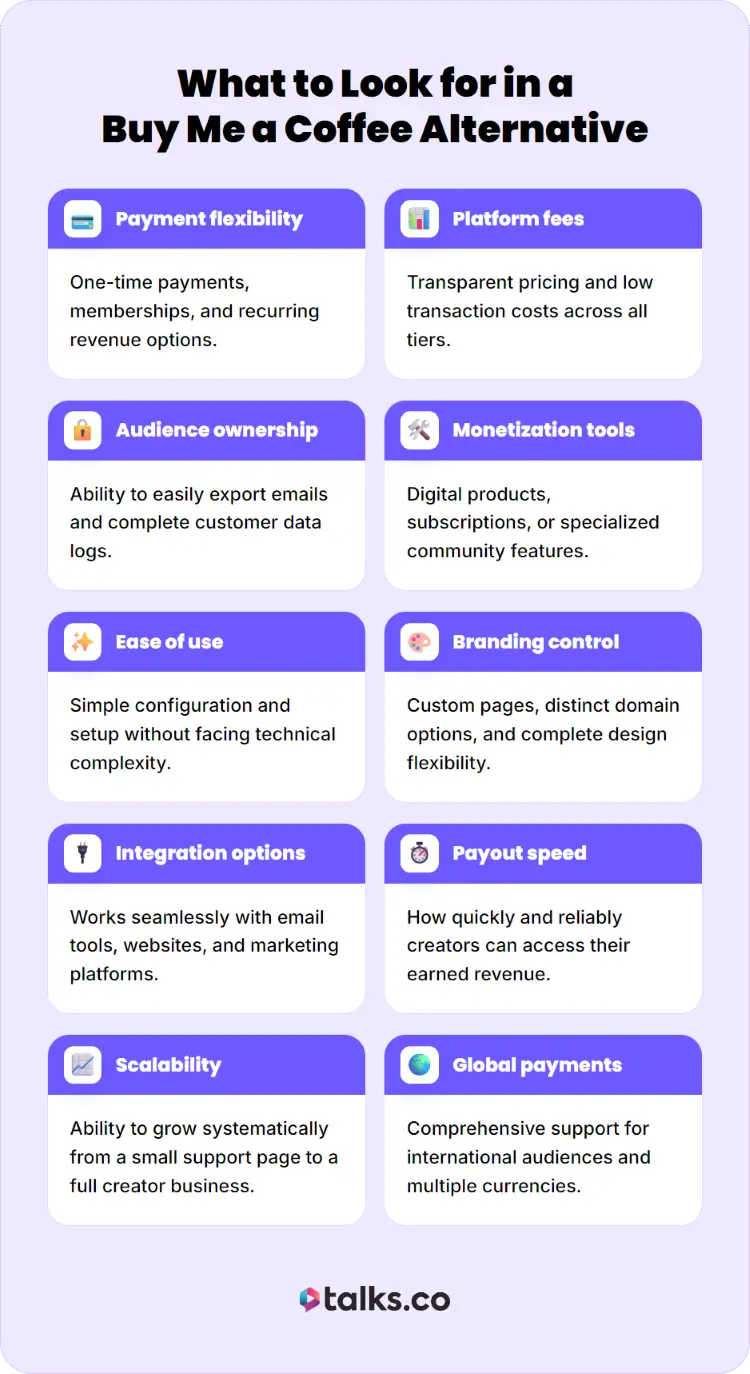
Before choosing a platform, it helps to focus on the key factors to consider when choosing a Buy Me a Coffee alternative.
☐ Payment flexibility: One-time payments, memberships, and recurring revenue options.
☐ Platform fees: Transparent pricing and low transaction costs.
☐ Audience ownership: Ability to export emails and customer data.
☐ Monetization tools: Digital products, subscriptions, or community features.
☐ Ease of use: Simple setup without technical complexity.
☐ Branding control: Custom pages, domain options, and design flexibility.
☐ Integration options: Works with email tools, websites, and marketing platforms.
☐ Payout speed: How quickly creators can access their earnings.
☐ Scalability: Ability to grow from small support page to full creator business.
☐ Global payments: Support for international audiences and multiple currencies.
Find out how podcasts make money before going all in on a platform that might not be the right one for you.
Best Buy Me a Coffee Alternatives & Competitors
Buy Me a Coffee is a solid starting point for creators who want a simple way to accept support.
But once you start thinking about memberships, digital products, email lists, or building a real income system around your audience, it can start to feel a bit limited. That’s where alternatives come in.
Check out the best Buy Me a Coffee alternatives and what each one does best.
1. Talks (AI-powered podcast matching platform)
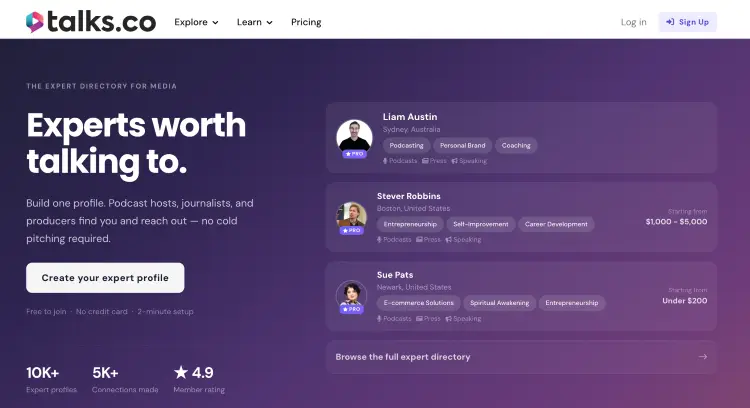
Best for: Coaches, experts, and creators who grow revenue through visibility and authority.
Talks helps creators land podcast features that build trust, attract clients, and expand reach alongside their monetization setup.
- Cost: Forever free to start, paid plan starts at $37/month
- Fees: No transaction fees
- Income options: Visibility-driven client growth
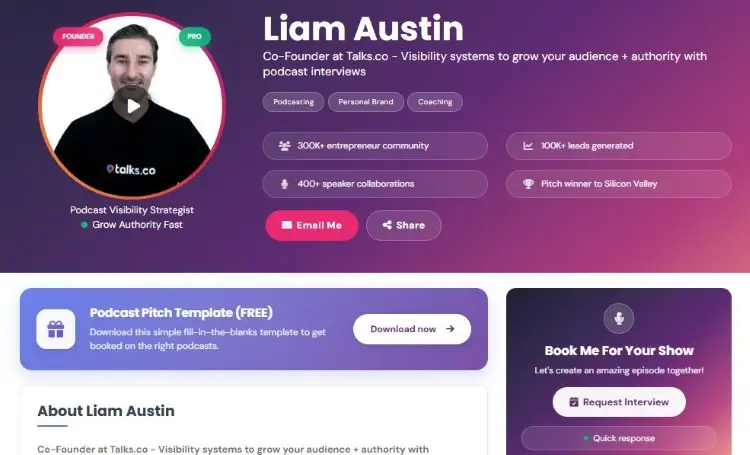
Pros:
- Built for visibility: Podcast placements in relevant niches.
- Authority growth: Strengthens expert positioning.
- Client acquisition: Turns interviews into leads.
Cons:
- Works alongside monetization tools: Requires pairing with other platforms.
2. Substack
Best for: Creators who want to grow an audience through writing and turn content into long-term authority and income.
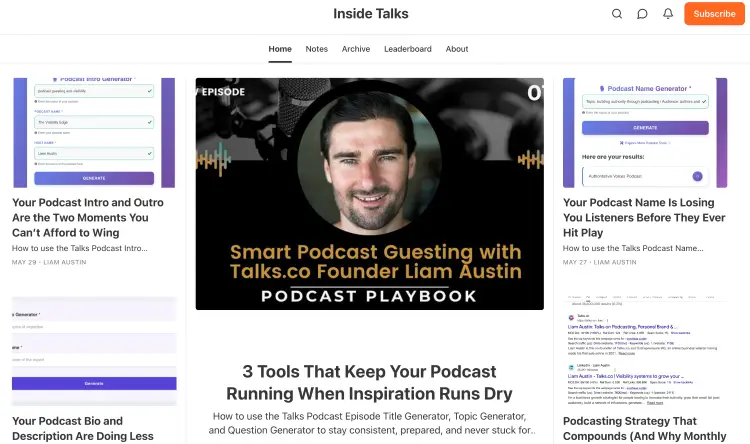
Substack is a newsletter platform where you publish posts, build an email list, and optionally charge for subscriptions. It’s used by writers, coaches, and experts focused on consistent content and audience ownership.
- Cost: Free to start
- Fees: 10% on paid subscriptions (plus Stripe account fees)
- Income options: Free newsletters, paid subscriptions, premium posts
Pros:
- Audience ownership: Direct email list access.
- Simple publishing: Fast setup, no tech needed.
- Monetization built in: Paid subscriptions available.
Cons:
- Platform fee: Cuts into paid revenue.
- Limited customization: Basic design control.
You can also explore Inside Talks on Substack.
3. Patreon
Best for: Creators who want steady recurring income through memberships and community access.
Patreon lets creators charge fans for exclusive content, memberships, and community perks. It’s widely used by podcasters, artists, and educators building predictable monthly income.
- Cost: Free to start
- Fees: 8%-12% platform fee + payment processing fees
- Income options: Membership tiers, exclusive content, community access
Pros:
- Recurring income: Monthly membership focus.
- Tier options: Flexible pricing levels.
- Established platform: Large existing user base.
Cons:
- Platform fees: Higher on lower plans.
- Limited discovery: Traffic depends on you.
- Setup required: More structure than simple tip tools.
Read the full breakdown on more Patreon alternatives for you.
4. Memberful
Best for: Creators building subscription businesses around memberships, newsletters, podcasts, or courses.
Memberful is a membership platform designed for recurring revenue, with tools for managing subscribers, gated content, and member experiences.
- Cost: $49/month
- Fees: 4.9% transaction fee + payment processing fees
- Income options: Memberships, newsletters, podcasts, courses
Pros:
- Membership focused: Built for recurring revenue.
- Brand control: Custom domains and paywalls.
- Content flexibility: Supports multiple content formats.
Cons:
- Monthly fee: Higher upfront cost.
- Setup required: More involved than tip-based platforms.
5. Podia
Best for: Creators who want their website, products, email marketing, and community under one roof.
Podia combines digital products, courses, coaching, email marketing, and website tools in a single platform.
- Cost: From $39/month
- Fees: 5% transaction fee on Mover; 0% on Shaker
- Income options: Courses, downloads, coaching, webinars, community memberships
Pros:
- All-in-one platform: Website, email, products, and community.
- Creator friendly: Supports multiple income streams.
- Built-in email marketing: Included with all plans.
Cons:
- Monthly cost: Higher than tip-based platforms.
- Advanced features: Reserved for higher-tier plans.
6. Ko-fi
Best for: Creators who want a simple way to accept tips and donations, memberships, and product sales with minimal fees.
Ko-fi combines donations, memberships, commissions, and a creator shop monetization options in one platform, with instant payouts through PayPal or Stripe payment options.
- Cost: Free or $12/month (Gold)
- Fees: 5% on free plan; 0% on Gold
- Income options: Tips, memberships, products, commissions
Pros:
- Low cost: Free plan available.
- Instant payouts: Funds go directly to your account.
- Flexible monetization: Supports multiple revenue streams.
Cons:
- Basic community tools: Limited engagement features.
Want to go deeper? Here’s your full guide to the Ko-fi vs Buy Me a Coffee debate to help you decide.
7. Gumroad
Best for: Creators selling digital products, downloads, templates, and memberships.
Gumroad makes it easy to sell directly to your audience without a monthly subscription. It’s popular with writers, designers, educators, and creators selling digital products online.
- Cost: Free to start
- Fees: 10% + $0.50 per sale
- Income options: Digital products, memberships, subscriptions
Pros:
- Simple setup: Start selling quickly.
- No monthly fee: Pay only when you sell.
- Digital product focused: Built for creators and educators.
Cons:
- Transaction fees: Can add up as sales grow.
- Limited customization: Fewer branding options than dedicated website platforms.
8. Kickstarter
Best for: Creators launching a new product, project, book, or creative idea with crowdfunding.
Kickstarter helps creators raise money upfront from supporters before a project is produced. It’s widely used for books, games, films, products, and creative ventures that require launch funding.
- Cost: Free to launch
- Fees: 5% platform fee + payment processing fees
- Income options: Crowdfunding campaigns
Pros:
- Launch funding: Raise capital before creating.
- Large audience: Well-known crowdfunding platform.
- Project validation: Test demand before investing heavily.
Cons:
- Campaign based: Not built for ongoing revenue.
- Funding pressure: Success depends on reaching campaign goals.
9. Kit (formerly ConvertKit)
Best for: Creators who want email marketing, audience growth, and monetization in one platform.
Kit combines newsletters, automations, landing pages, and digital product sales to help creators grow and monetize their audience.
- Cost: Free or from $39/month
- Fees: Payment processing fees apply to sales
- Income options: Newsletters, subscriptions, digital products
Pros:
- Email focused: Strong automation and segmentation.
- Creator friendly: Built for audience growth.
- Monetization tools: Sell products and subscriptions.
Cons:
- Learning curve: More setup than simpler platforms.
- Scaling costs: Pricing increases with subscribers.
10. Fourthwall
Best for: Creators who want to sell merchandise, memberships, digital products, and donations from one branded storefront.
Fourthwall combines ecommerce, memberships, and creator monetization tools while handling fulfillment, payments, and customer support.
- Cost: Free or $19/month (Pro)
- Fees: 5% on digital products and memberships; 0% on many physical products
- Income options: Merchandise, memberships, digital products, donations
Pros:
- Branded storefront: Full control over your shop.
- Multiple revenue streams: Products, memberships, and tips.
- Creator friendly: Handles fulfillment and customer support.
Cons:
- Merchandise focused: Best suited to product-driven creators.
11. Mighty Networks
Best for: Creators building paid communities with courses, events, and memberships.
Mighty Networks lets creators run communities, sell courses, and host events in one platform, with strong engagement tools and scaling options.
- Cost: From $95/month
- Fees: Payment processing fees apply
- Income options: Memberships, courses, events, community access
Pros:
- Community driven: Strong engagement features.
- Multiple income streams: Courses, events, memberships.
- Scalable: Supports growth into branded apps.
Cons:
- Higher cost: Expensive starting point.
- Setup required: Better for committed community builders.
What Is Better Than Buy Me a Coffee?
There isn’t one podcast monetization platform that is universally “better” than Buy Me a Coffee. It depends on what you’re trying to build.
Some creators only need a simple support link. Others need memberships, digital products, email marketing, or a full creator business setup.
- If you’re moving beyond basic tips and one-off support, platforms like Patreon, Podia, or Substack may be a stronger fit.
- If you’re selling digital products or building a storefront, Gumroad or Fourthwall may make more sense.
The “better” option is the one that matches how you earn and grow, not just how you collect payments.
How to choose the best Buy Me a Coffee alternative platform for you (Checklist)
Use this checklist to choose based on your goal, not just features.
☐ Income direction: Are you aiming for tips, stable memberships, or product-based income?
☐ Business stage: Are you testing ideas or scaling an existing audience?
☐ Content style: Does your work rely on writing, video, audio, or direct offers?
☐ Community intent: Are you actively building relationships or just accepting support?
☐ Growth goal: Are you optimizing for quick setup or long-term expansion?
☐ Workflow fit: Does it match how you already create and sell?
☐ Time investment: Do you want something low-maintenance or fully structured?
☐ Audience relationship: Are you focused on one-time supporters or ongoing members?
☐ Monetization depth: Do you want simple payments or layered income streams?
☐ Future flexibility: Can it evolve as your business model changes?
Need a bit more support? I wrote a full guide on how to become a content creator to make the journey easier no matter what stage you’re at.
No Wrong Choice Here
Most Buy Me A Coffee alternatives give you ways to collect support, sell products, or build recurring income, but the real difference shows up in how each one grows your reach. Some are built for newsletters, some for digital products, some for full communities.
If you’re also thinking about how to get in front of the right people faster, there’s another layer most creators miss: visibility that turns into actual conversations and clients.
That’s where Talks comes in.
Create your free Talks Creator profile and start turning podcast appearances into real opportunities.


