

Great ideas don’t always win because the best-presented ones usually do.
Super frustrating truth when you’ve spent years building your expertise only to watch someone else lock in that big new client, book your dream speaking gig, or get invited back because they connected with the room better than you did.
Presentation skills have a funny way of opening doors that knowledge alone can’t.
But you don’t need a louder voice, a bigger personality, or practice your presentation with a perfect set of slides and visual aids that you’ve memorized to get the same results.
What you need are a handful of presentation techniques that let you connect with your audience from your first sentence to that very well timed pause (completely intentional) down to your last call to action paired with intense eye contact which is exactly what you’ll find here.
What Are Presentation Techniques?
Presentation techniques are the methods you use to plan, structure, design, and deliver a presentation that keeps people engaged. They cover everything from your slides, bullet points, go-to anecdotes, and storytelling to your voice, body language, and how you connect with the audience.
For coaches, consultants, authors, speakers, and entrepreneurs, strong presentation techniques help turn your knowledge into a message people remember. They can make the difference between someone hearing what you say and someone wanting to work with you.
Why presentation skills are important
Caught yourself wondering why are effective presentation skills important? Giving a presentation well can change how people see you. It can help you earn trust faster, communicate your ideas clearly, and create more opportunities for your business.
Strong presentation skills help you:
- Build credibility: Show people you know your stuff and can communicate it with confidence.
- Keep people engaged: Hold attention during webinars, talks, podcast interviews, and client meetings.
- Make your message memorable: Give people stories, examples, and ideas they can repeat after the presentation ends.
- Win more opportunities: Create stronger impressions with potential clients, event organizers, and collaborators.
- Stand out as an expert: Become the person people remember when they need your knowledge.
Benefits of improving presentation skills
Improving your presentation skills pays off every time you step in front of an audience, camera, or potential client. A few improvements can help you communicate more confidently and make every appearance work even more in your favor.
The biggest benefits include:
- More confident delivery: Speak clearly and with direction instead of second-guessing every word.
- Better audience connection: Make people feel understood, involved, and interested in your message.
- Stronger sales conversations: Explain your offers in a way that feels natural and valuable.
- More speaking opportunities: Give organizers a reason to invite you back for future events.
- Greater visibility: Use presentations to reach more people through talks, podcasts, webinars, and online events.
12 Types of Presentation Techniques
Great presentations usually combine different techniques instead of relying on one perfect formula. The right approach depends on what you’re presenting, who you’re speaking to, and what you want people to do next. A keynote, podcast interview, webinar, and client pitch all need a slightly different approach.
Here are some presentation techniques you can use to make your message clearer, more memorable, and easier for people to connect with.
Effective presentation techniques
These are the fundamentals behind presentations that hold attention and communicate ideas clearly. They work especially well for coaches, consultants, authors, speakers, and entrepreneurs who need people to trust their expertise quickly.
- Rule of 3: Break your message into three key points, like “3 mistakes costing you clients” or “3 habits improving your health.”
- PREP method: Structure answers with a Point, Reason, Example, and Point, making podcast interviews and Q&As easier.
- Storytelling arc: Share a clear problem, turning point, and result to help people connect with your message.
Creative presentation techniques
Creative techniques help your presentation feel less like a lecture and more like a conversation. They give your audience moments they’ll remember.
- PechaKucha format: Use 20 slides that move every 20 seconds to keep your presentation focused and visual.
- Audience interaction: Add questions, polls, or exercises, like asking webinar attendees to identify their biggest business challenge.
- Personal storytelling: Share real experiences, lessons, and mistakes to build a stronger connection with your audience.
Advanced presentation techniques
Once you’re comfortable presenting, these techniques can help you create stronger talks, webinars, and guest appearances. They focus on presentation structure, emotion, and delivery.
- TED storytelling structure: Build your talk around one big idea supported by stories, examples, and a clear takeaway.
- SCQA framework: Organize your message with Situation, Complication, Question, and Answer to create a logical flow.
- AIDA framework: Guide your audience from Attention to Interest, Desire, and Action during persuasive presentations.
PowerPoint presentation techniques
Great slides should make your presentation easier to follow, not harder. Keep your visual aids simple so people focus on your message.
- 10/20/30 rule: Use 10 slides, present for around 20 minutes, and keep your font size large enough to read easily.
- One idea per slide: Give every slide a clear purpose instead of cramming multiple points together.
- Visual storytelling: Use images, charts, and examples to explain ideas faster than text alone.
How Do You Give a Good Presentation? (Checklist)
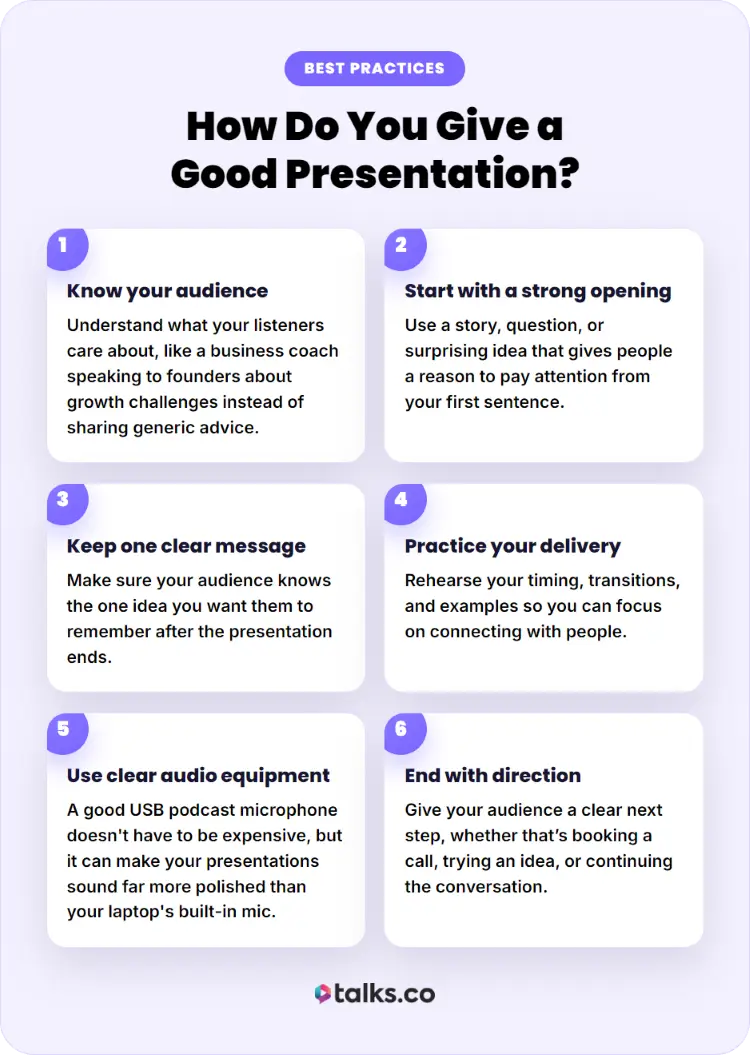
A good presentation starts before you step in front of the audience. The strongest speakers know their message, understand who they’re speaking to, and prepare in a way that makes delivery feel natural instead of forced.
From a client pitch to a keynote or podcast appearance, focus on these fundamentals:
☐ Know your audience: Understand what your listeners care about, like a business coach speaking to founders about growth challenges instead of sharing generic advice.
☐ Start with a strong opening: Use a story, question, or surprising idea that gives people a reason to pay attention from your first sentence.
☐ Keep one clear message: Make sure your audience knows the one idea you want them to remember after the presentation ends.
☐ Practice your delivery: Rehearse your timing, transitions, and examples so you can focus on connecting with people.
☐ Use a podcast microphone with clear audio: A good USB podcast microphone doesn’t have to be expensive, but it can make your presentations sound far more polished than your laptop’s built-in mic.
☐ End with direction: Give your audience a clear next step, whether that’s booking a call, trying an idea, or continuing the conversation.
How many slides should a presentation have?
There’s no magic number of slides that works for every presentation. A 60-minute workshop, 15-minute keynote, and 30-minute webinar will all need different amounts of content.
A few guidelines to keep in mind:
- Use the 10/20/30 rule: Aim for 10 slides, around 20 minutes, and a minimum 30-point font size for simple, focused presentations.
- Match slides to your time: Give yourself roughly 1 to 2 minutes per slide instead of rushing through dozens of visuals.
- Prioritize your message: Cut slides that repeat information or don’t help explain your main point.
- Use more visuals than text: Let your slides support your story instead of turning into a document people have to read.
- Adjust for your format: A podcast guest appearance may need no slides, while a virtual workshop may need more visuals to keep attendees engaged.
What are the main difficulties when giving presentations?
Most people struggle with presentations for the same reasons: they’re trying to remember too much, say too much, or impress everyone at once. The fix usually comes from simplifying your approach.
Common presentation challenges include:
- Nervousness: Worrying about mistakes, judgment, or forgetting your words can affect your confidence and delivery.
- Losing audience attention: Long explanations, unclear points, and too much information can make people tune out.
- Overloading slides: Too much text forces your audience to read instead of listening to your message.
- Lack of practice: Knowing your topic doesn’t always mean you know how to present it clearly.
- Finding your style: Many speakers copy others instead of developing a delivery style that feels natural to them.
How to Improve Presentation Skills
Presentation skills improve when you put yourself in situations where you have to explain ideas clearly. A webinar, podcast interview, sales call, or virtual event can all become practice grounds for becoming a stronger communicator.
The biggest improvements usually come from:
- Recording your presentations: Watch how you do podcast interviews or replay your own webinar to spot moments where you rush, over-explain, or bury your strongest ideas.
- Studying great speakers: Pay attention to how keynote speakers and emcees open, transition between stories, and make complex ideas feel simple.
- Practicing with real audiences: Use smaller opportunities like LinkedIn Lives, workshops, or guest appearances to sharpen your delivery before bigger stages.
- Getting outside feedback: Ask someone you trust what stood out, what was confusing, and where you lost their attention.
- Simplifying your message: If you can explain your idea clearly in a 5-minute conversation, you’ll usually present it better on a bigger stage.
Presentation skills and public speaking
Public speaking is a big part of presenting, but the best speakers focus less on “performing” and more on creating a connection. Your audience should feel like you’re talking with them, not at them.
- Tell stories with a lesson: A business coach explaining how they helped a struggling client find direction creates a stronger impact than listing 5 coaching benefits.
- Control your delivery: Slow down before an important point, change your tone during stories, and avoid speaking at the same pace from start to finish.
- Use confident body language: Stand tall, look into the camera during virtual events, and use natural gestures instead of hiding behind your laptop.
- Make your examples specific: “Improve your health” is forgettable. “Help busy dads build a 20-minute morning routine they can actually stick to” creates a clearer picture.
- Handle unexpected moments: Great speakers know how to recover when slides fail, questions go off-topic, or the audience needs more explanation.
Presentation skills in communication
Every presentation is a communication exercise. Your job is to make your audience understand your idea, see why it matters, and know what to do next.
- Explain complex ideas simply: A consultant should be able to explain a detailed strategy without making a client feel lost in industry jargon.
- Ask better questions: During a podcast interview, strong communicators guide the conversation by asking thoughtful follow-ups instead of giving rehearsed answers.
- Focus on the audience’s problems: A speaker talking about online business should address challenges like inconsistent leads, limited reach, or unclear offers.
- Use examples people recognize: Replace abstract advice with situations your audience has experienced, like struggling to sell a program or fill a webinar.
- Match your message to the moment: A keynote, sales presentation, and podcast appearance may share the same idea but need different delivery.
Presentation skills examples
Presentation skills show up long before you’re standing on a stage. They help people understand your value quickly and make it easy to say, “Yep, that’s the person I want to book.”
Examples include:
- Teaching people something they can finish: Instead of spending an hour explaining every Talks feature, I walk people through building a speaker profile in 10 minutes, then encourage them to spend the next 48 hours making it feel like them, not a podcast script template.
- Thinking like the decision-maker: A speaker profile isn’t built for you. It’s built for the podcast host or event organizer deciding if you’re worth inviting. Lead with the information they’ll look for first.
- Showing the whole process live: Rather than saying, “The podcast hosting platform finds podcast opportunities,” I click through matches, speaker topics, AI suggestions, and profile updates in real time so people can follow every step.
- Giving people one clear next move: Whether it’s finding old podcast appearances, adding speaker topics, or checking new matches every week, people leave knowing exactly what to do after the presentation ends.
Presentation skills for coaching
The best coaching presentations leave people knowing exactly what to do next instead of wondering where to start.
If you’re coaching clients, these presentation skills can help:
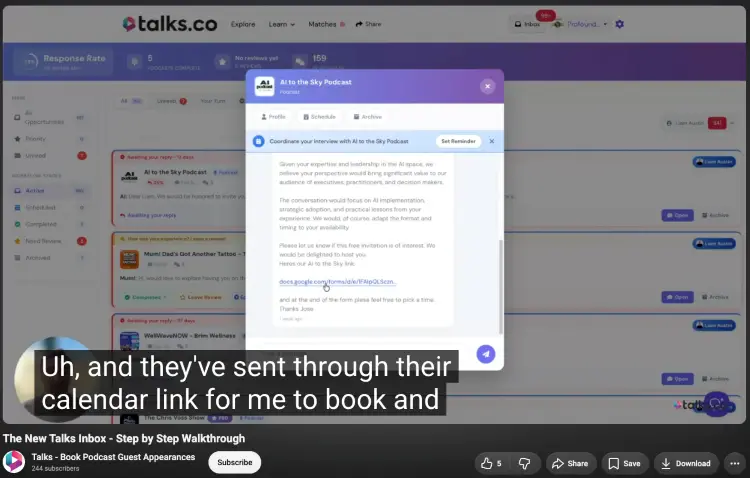
- Break big goals into clear stages: One Talks training walks people through a simple workflow: active conversations, scheduled interviews, completed recordings, reviews, then archive. Showing the whole process makes big goals feel achievable because people always know their next step.
- Coach with accountability: During the demo, I explain why response rates, completed interviews, and reviews matter because they’re visible authority signals. Giving people numbers they can improve makes coaching much more actionable than telling them to “network more.”
- Use real examples while you teach: Rather than talking about podcast outreach in theory, I opened a real inbox, scheduled an interview, left a review, and showed exactly what happens at every stage. Seeing the process removes uncertainty.
- Help people spot where they’re stuck: Sometimes the problem isn’t getting opportunities. It’s replying too slowly, forgetting to schedule interviews, or never following up afterward. Great coaching presentations help people identify the bottleneck before trying to fix everything else.
Presentation skills for workshop hosting
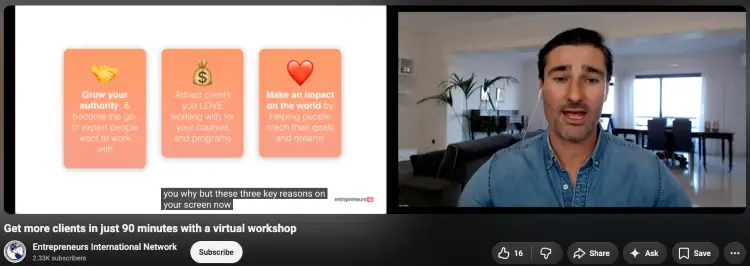
You don’t need 500 people in a virtual room to become a better presenter. Your first workshop might have 6 people. That’s plenty.
A presentation workshop helps you:
- Teach something you know inside and out: Pick one tactic, strategy, or framework that regularly gives clients an “aha” moment, then spend 90 minutes teaching only that.
- Get your first presentation under your belt: Hosting one workshop makes the second feel easier because you’ve already answered questions, handled awkward silences, and seen what people respond to.
- Spend more time filling the room than building slides: If you already know the topic, your biggest job is getting people to show up so you can practice with a real audience.
- Build confidence from real reactions: Seeing people nod, ask questions, and tell you one idea changed the way they think gives you far more confidence than rehearsing alone in front of a webcam.
Presentation Ideas for PowerPoint
A good PowerPoint should make your presentation easier to follow instead of compete for attention. The strongest decks guide people through your message with simple visuals, clear structure, and memorable examples instead of slide after slide of text.
Presentation ideas creative
Creative presentations don’t need flashy animations or complicated designs. A fresh angle or memorable visual often does a better job of keeping people engaged.
- Tell one story across the presentation: Instead of unrelated examples, follow one client, business, or case study from problem to result so every slide builds on the last.
- Open with a surprising statistic: Lead with a number that challenges assumptions, like how many podcast pitches never get a reply because the guest’s message isn’t clear enough.
- Use before-and-after slides: Show a messy sales page, speaker bio, or presentation deck first, then reveal the improved version and explain what changed.
- Turn frameworks into visuals: Replace text-heavy explanations with simple diagrams, timelines, or roadmaps that people can understand in seconds.
- Reveal information gradually: Instead of showing an entire slide at once, introduce one point at a time so your audience stays focused on what you’re explaining.
Presentation ideas for fun
A fun presentation doesn’t have to be full of jokes. Small moments of interaction and personality keep people engaged while making your message easier to remember.
- Run a quick audience poll: Ask something like, “Who’s spoken on a podcast before?” or “Who’s still using the same bio they wrote 5 years ago?” to get people involved from the start.
- Challenge common advice: Put a popular presentation tip on screen, then explain why it doesn’t always work in the real world using your own experience.
- Add a live demonstration: Show your audience how to complete a task in real time instead of describing it, like building a simple slide, improving a speaker bio, or giving feedback on a presentation opening.
- Invite audience participation: Ask someone to volunteer for a short role-play, answer a question, or share how they’d handle a scenario before discussing your approach.
- Finish with a practical challenge: Leave people with one action they can complete in the next 24 hours, like rewriting their opening slide, practicing a 2-minute introduction, or recording themselves delivering the first minute of their presentation.
(Here are the top podcast interview tips I’ve got on how to make presentations fun so you can show up relaxed and ready every single time.)
The Best Presentation You’ll Ever Give
Every great presenter starts in the same place: one presentation, one audience, one opportunity to improve.
The people who keep getting invited back are the ones who keep refining their presentation techniques, testing new ideas and presentation tools, and making every talk stronger than the last.
Ready for more people to hear your message?
Create your free Talks profile and connect with podcast hosts looking for guests in your niche. You’ll get a professional speaker profile, instant podcast matches, and automation tools that help you start more conversations without spending hours searching or pitching.
Join Talks today and book your next interview in as quick as 5 minutes.


