

Can you treat glossophobia with therapy, gradual exposure, breathing techniques, and regular speaking practice?
If you’ve ever had a great idea die in your throat the moment a room turns its attention to you, you know how frustrating public speaking anxiety can be.
I’ve spent years around speakers and experts, and I’ve seen how much visibility matters when you’re building a business or sharing what you know. The trouble is, fear can keep good people with their head down when they have something worth saying.
Glossophobia is the fear of public speaking, and it can cause physical symptoms, anxious thoughts, and avoidance.
Let’s look at what causes it, how to recognize it, and which glossophobia treatments can help you speak more comfortably.
What Is Glossophobia?
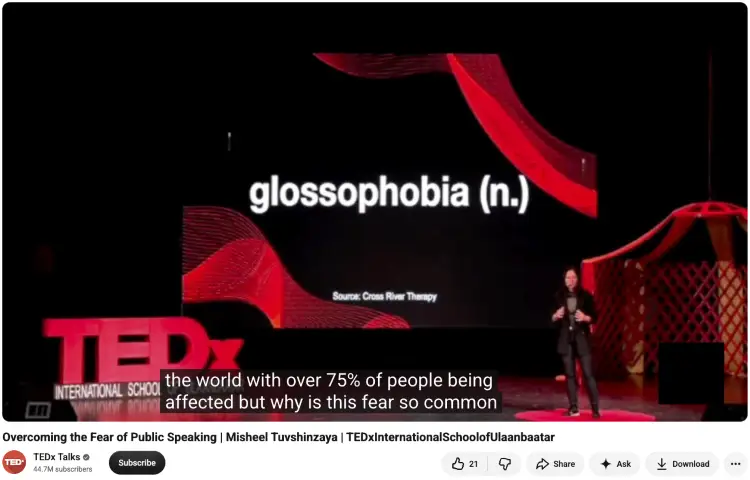
Glossophobia is a social anxiety disorder, also known as the fear of public speaking, which can make everyday public speaking situations like presenting a business proposal or speaking at a conference feel genuinely threatening for people with glossophobia.
You might know your material inside out, yet struggle to get the words out when people start watching and your negative thoughts eventually kick in.
For coaches, authors, and entrepreneurs, that fear of public speaking can affect sales presentations, podcast interviews, and opportunities to share their expertise in social situations.
Glossophobia meaning
Glossophobia comes from the Greek words glōssa (tongue) and phobos (fear). It describes an intense fear of speaking in front of others, which can range from nervousness before a presentation to anxiety that leads you to avoid speaking altogether, and our public speaking fear statistics show how common that is.
- Public speaking fear: Dreading a keynote at a business conference in Austin.
- Mild nervousness: Feeling jittery during the first minute of a team update, then settling in once you reach your first point.
- Avoidance: Turning down a workshop invitation because you fear speaking to 30 potential clients.
Symptoms of glossophobia
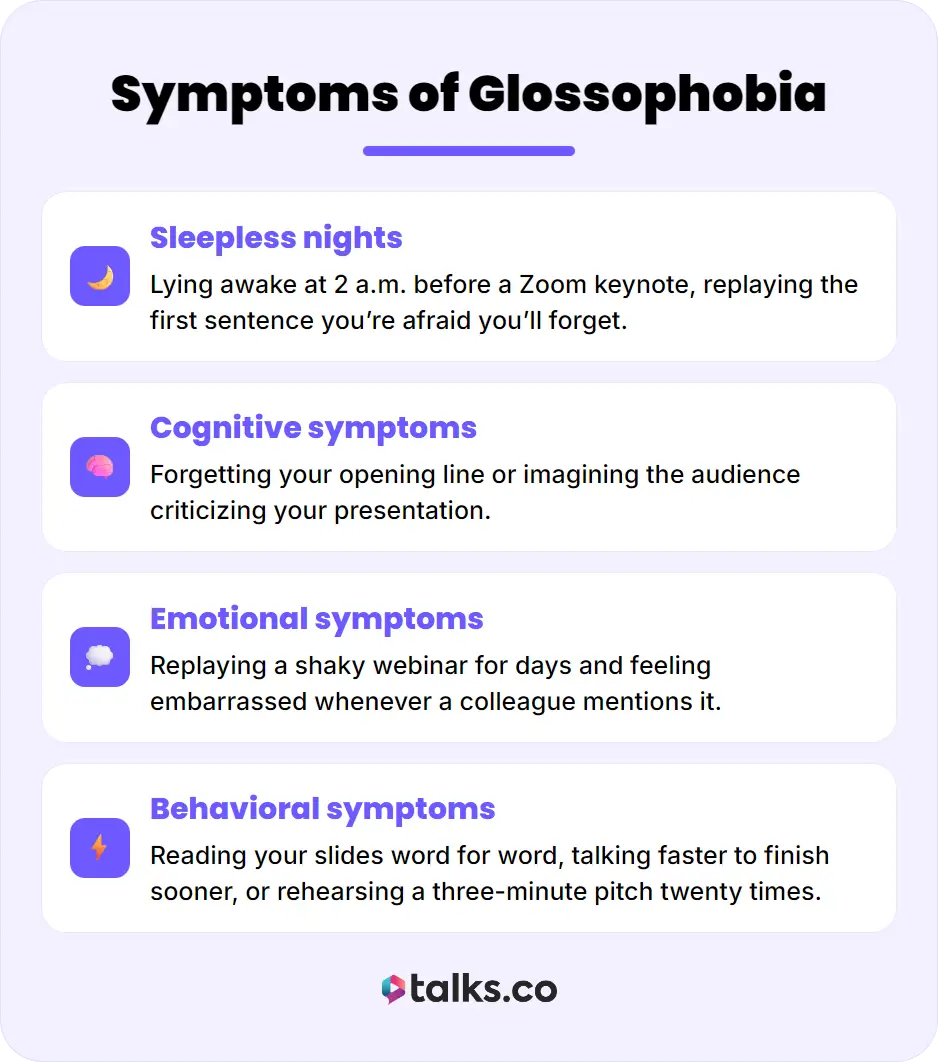
Glossophobia can affect your body, thoughts, and behavior before or during a speaking situation. You might experience several symptoms at once, especially when you’re called on unexpectedly during a team meeting or asked to pitch your coaching program.
- Sleepless nights: Lying awake at 2 a.m. before a Zoom keynote, replaying the first sentence you’re afraid you’ll forget.
- Cognitive symptoms: Forgetting your opening line or imagining the audience criticizing your presentation.
- Emotional symptoms: Replaying a shaky webinar for days and feeling embarrassed whenever a colleague mentions it.
- Behavioral symptoms: Reading your slides word for word, talking faster to finish sooner, or rehearsing a three-minute pitch twenty times.
Everyday public speaking nerves can feel similar, but glossophobia tends to be more intense and persistent.
Why Do People Develop Glossophobia?
Here are 10 common factors that can make public speaking feel threatening, especially when your career or business depends on getting your ideas across.
- Past embarrassment: Being laughed at during a school presentation or stumbling through a company meeting.
- Fear of judgment: Worrying that potential clients will question your expertise during a live webinar.
- Learned behavior: Growing up around people who avoid public speaking or treat mistakes as failures.
- Perfectionism: Believing every slide in your TEDx talk must be flawless and every sentence must sound rehearsed.
- Social anxiety: Experiencing intense fear when others might evaluate your performance, appearance, or knowledge.
- Lack of experience: Having little practice speaking to groups, making a conference presentation feel unfamiliar.
- Low self-esteem: Doubting your ability to explain your ideas during a business pitch.
- Social comparison: Watching a colleague deliver a smooth keynote at a chamber of commerce breakfast and assuming you could never sound that natural.
- Physical anxiety symptoms: Interpreting a racing heart or trembling hands as signs that you’ll lose control in front of an audience.
- High-stakes pressure: Feeling extra nervous when presenting a $5,000 coaching program to prospective clients or pitching investors for funding.
Top 10 Most common causes of glossophobia
Several factors can contribute to the negative emotional and physical symptoms of glossophobia, and more than one may affect the same person and how they build confidence.
Recognizing your triggers can help you identify which treatment approaches and speaking exercises may be useful for panic attacks you had from past experience.
- Genetics and temperament: Having a parent who also gets anxious in new situations can make your own stress response run hotter.
- Spotlight effect: Assuming everyone noticed your pause, when most listeners were thinking about their own to-do list.
- Negative feedback: Receiving harsh criticism after presenting a proposal to your manager.
- Speaking in a second language: Worrying about word choice and accent while presenting in English to a room of international attendees.
- Camera self-view: Staring at your own face in the corner of a Google Meet call and fixating on every expression.
- Unfamiliar format: Agreeing to a live panel when you’ve only ever presented from slides you control.
- Senior audience: Presenting to a CEO or a client’s board, where one raised eyebrow feels like a verdict.
- Audience size: Jumping from a six-person client call to a 300-seat conference hall.
- Stage environment: Bright spotlights and a lapel mic on a theater stage you’ve only seen in photos.
- Past panic episodes: Associating a previous episode of intense anxiety with speaking in front of a group.
Types of Glossophobia Treatments
Glossophobia treatments include professional interventions and practical techniques you can use to prepare for speaking engagements.
Therapy can help address persistent fear and avoidance, while regular practice can help you build experience and manage anxiety in specific situations.
Professional glossophobia treatments
These options can help when public speaking anxiety is persistent, difficult to manage, or affecting your career and everyday activities.
- Cognitive behavioral therapy (CBT): Identify unhelpful beliefs about making mistakes, being judged, or losing your audience’s attention, then practice replacing them with more realistic thoughts.
- Exposure therapy: Work through speaking situations in manageable steps, starting with a low-pressure exercise and gradually progressing to larger audiences.
- Virtual reality exposure therapy (VRET): Use simulated audiences and presentation environments to practice speaking in a controlled setting. A qualified therapist can help incorporate this approach into a treatment plan.
- Acceptance and commitment therapy (ACT): Develop ways to respond to anxious thoughts without automatically avoiding presentations, interviews, or other speaking opportunities.
- Medication for performance anxiety: A clinician may consider beta-blockers for certain people who experience physical symptoms such as a racing heart or trembling during specific performances. These medications aren’t suitable for everyone and require medical assessment.
- Medication for anxiety disorders: Anti-anxiety medications or antidepressants may be considered when a person has a diagnosed anxiety disorder or related symptoms that warrant treatment. A healthcare professional can explain the potential benefits, side effects, and risks.
Self-help strategies for glossophobia
These techniques can help you prepare for presentations, manage physical tension, and get more speaking experience. They may also complement professional treatment when anxiety is more persistent.
- Structured speech rehearsal: Practice your opening 30 seconds, main points, transitions, and closing aloud so you have a clear starting point when you take the stage.
- Deep breathing exercises: Breathe slowly and comfortably before a presentation to help manage physical tension. Avoid forcing deep breaths, which can make you feel lightheaded.
- Grounding techniques: Focus on your feet against the floor, the feeling of your hands resting on a table, or a few objects in the room to bring your attention back to the present.
- Visualization: Mentally rehearse beginning your talk, explaining your key points, and responding to audience questions.
- Anxiety reframing: Treat nervousness as a sign that your body is preparing for an important task. Remind yourself that feeling anxious doesn’t automatically mean you’ll perform poorly.
- Public speaking groups: Join a group such as Toastmasters International to practice regularly, receive feedback, and become more familiar with speaking to an audience.
- AI-assisted speaking practice: Use tools such as Yoodli to rehearse presentations or answers for podcast guesting and review feedback on areas such as pacing, filler words, and delivery. These tools support practice but don’t replace professional mental health treatment.
- Professional speaking coaching: Work with a speaking coach on presentation structure, vocal delivery, and audience engagement. A coach can help improve your speaking skills, while a licensed mental health professional can treat clinically significant anxiety.
When should you seek professional help?
Consider speaking with a mental health professional if fear of public speaking causes intense distress, leads you to turn down important opportunities, or affects your daily functioning.
A qualified clinician can help identify the underlying concerns and recommend an appropriate treatment plan.
How Is Glossophobia Treated?
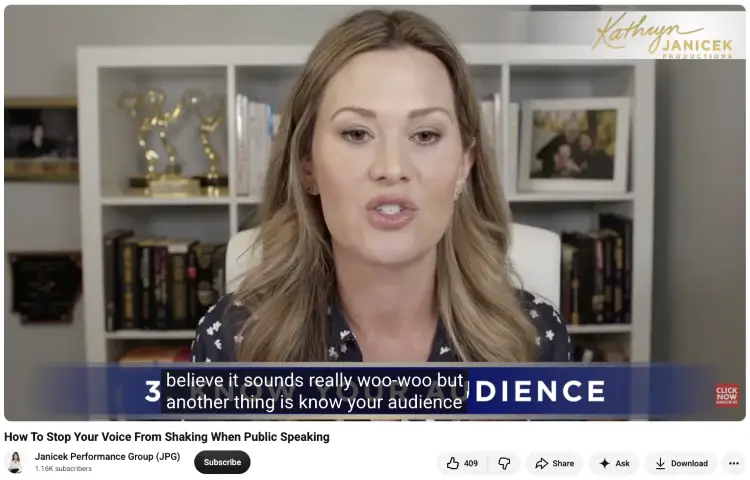
Overcoming glossophobia takes practice, and the right approach depends on how strongly public speaking anxiety affects you.
You can start treating glossophobia with small speaking exercises, build a repeatable preparation routine, and seek professional support if fear keeps you from important opportunities. For a step-by-step prep plan, see how to overcome fear of public speaking.
How to overcome glossophobia
Start with speaking situations that feel manageable, then gradually work toward the ones you find intimidating. The goal is to get more comfortable speaking while learning how to manage your anxiety.
- Start small: Practice explaining an idea for two minutes to a friend before presenting it to a larger group.
- Take an improv class: Spend eight Tuesday evenings in a beginner workshop at your local comedy theater, so a surprise question starts to feel like a game.
- Record yourself: Watch a three-minute practice clip with the sound off to check your posture, eye contact, and hand movements the way a new content creator reviews their own footage.
- Prepare for mistakes: Practice recovering from a forgotten line or a difficult audience question so a minor stumble doesn’t derail your entire presentation.
- Study a speaker you admire: Watch one favorite TEDx talk twice, once for the content and once for the pauses, or study how a good emcee warms up a room, and borrow one habit.
- Track your progress: After each public speaking opportunity, note what went well, what triggered anxiety, and what you’ll try differently next time.
- Prepare for Q&A: Write down the three toughest questions a client could ask and practice a 30-second answer to each.
How to cure glossophobia
There isn’t a guaranteed cure for glossophobia, but treatment and consistent practice can help reduce its impact.
If your fear is severe or causes you to avoid important activities, a mental health professional can help you identify the underlying anxiety and choose an appropriate treatment for managing glossophobia.
- Rule out other causes: Ask your doctor whether sleep loss, caffeine, or a medical condition could explain a racing heart, so you know exactly what you’re treating.
- Protect your sleep: Aim for a full night’s rest before a big talk, since a tired brain makes every nerve louder.
- Move your body: Take a brisk 20-minute walk the morning of your talk to burn off extra adrenaline.
- Cut back on caffeine and alcohol: Switch to one cup of coffee and skip the pre-talk drink you’d otherwise use as a crutch.
- Practice mindfulness: Do a ten-minute guided session on Insight Timer or Headspace each day for a few weeks before a big event.
- Try progressive muscle relaxation: Tense and release each muscle group from your toes to your shoulders, so your body learns what calm feels like.
Progress can look different for each person. You might still feel nervous before a keynote or podcast interview, but become better at delivering your message without letting that anxiety dictate your decisions.
Other strategies for overcoming glossophobia
Your preparation habits and speaking environment can also influence how you feel before taking the stage. These practical adjustments can make presentations easier to manage as you build experience.
- Focus on your audience: Think about the problem you’re helping listeners solve instead of monitoring every detail of your own performance.
- Use a simple outline: Organize your talk around a few key points so you can recover more easily if you lose your place.
- Arrive early: Get familiar with the room, test the microphone, and check your slides before the audience arrives.
- Open with a story: Lead with a 30-second client story, so your first words come from experience you already know by heart.
- Warm up your voice: Hum for 30 seconds and read one paragraph aloud in the car, so your first sentence sounds steady.
- Plant a friendly face: Ask a colleague to sit in the front row and nod, so your eyes have a calm place to rest.
- Aim for good enough: Decide on one clear takeaway for your listeners, and call the talk a success if they walk away with it.
- Eat light and sip water: Have a small snack two hours before, and keep a glass of water by the mic for a dry mouth.
If you’re building a coaching, consulting, or speaking business, these skills can help address your phobia while you communicate your expertise in client meetings, podcast interviews, workshops, and industry events.
Start with one speaking opportunity you can handle this week, then use that experience to prepare for the next time you need to overcome your fear and speak publicly.
For more effective ways to improve how you speak in public, browse our public speaking tips.
On the Other Side of Fear Is Your Voice
Glossophobia treatments can help you manage speaking anxiety, but progress comes from putting yourself out there and getting real practice. Every presentation, interview, and conversation gives you another chance to improve.
And if you’re building a business, podcast guesting can put your expertise in front of people who need to hear it. Talks matches you with relevant podcast hosts, so you can find interview opportunities without spending hours searching and pitching.
Create your free Talks Creator Profile and start connecting with hosts in your niche in as fast as 5 minutes!


