
Think about being on stage or behind the camera lens.
Spotlight on you, hundreds of people waiting for you to speak. You grip the mic, but your sweaty palms and drying throat keep your voice from coming out.
If you’ve experienced this, that’s a feeling 15 million members of the human population experience daily (myself included!).
But if you’re an entrepreneur or a professional, you also know that this anxiety shouldn’t just define you. Good thing you can get ahead of the curve by understanding the situation.
These 51 public speaking fear statistics cover the different ways people experience such anxieties and even their impact on careers and daily life.
I’ll also share best practices to help you become a better speaker.
Key Public Speaking Fear Facts (Quick Summary)
Here are the most important fear of public speaking statistics you need to know about and how they affect people globally.
- Prevalence: Around 75% of the general population has a fear of public speaking (also known as glossophobia) to some degree (National Institute of Mental Health, 2024).
- Daily impact: Approximately 15 million people deal with glossophobia symptoms every single day (Cross River Therapy, 2024).
- Top phobia: Public speaking is frequently cited as the number one fear, ranking higher than death or spiders (Supportive Care ABA, 2024).
- Career growth: The fear of public speaking can hinder a promotion to management positions by roughly 15% (Magnetics Speaking, 2024).
- Wage impact: Employees with public speaking anxiety may earn 10% less on average than their confident counterparts (Novoresume, 2024).
- Gender split: Women are slightly more likely to report being afraid of public speaking compared to men (National Institute of Mental Health, 2024).
- Preparation: About 90% of the anxiety felt before a presentation comes from a lack of proper preparation (Cross River Therapy, 2024).
- Treatment gap: Only 8% of individuals with public speaking fears seek professional help for their condition (Magnetics Speaking, 2024).
- Social anxiety: Nearly 90% of people with social anxiety disorder also suffer from glossophobia (National Library of Medicine, 2024).
- Youth impact: Public speaking anxiety often begins in adolescence and can affect academic performance significantly (Ambitions ABA, 2024).
What Is Glossophobia?
Glossophobia is the technical term used to describe an intense fear of public speaking that goes beyond simple nervousness.
It’s a specific type of social anxiety disorder that causes significant distress when an individual has to speak in public.
People with this condition often experience physical symptoms like:
- Sweating
- Shaking
- Racing heart before a presentation.
What is the public speaking anxiety scale?
The public speaking anxiety scale is a tool used to measure the level of anxiety a person experiences. This level of fear can range from mild to severe.
It helps professionals determine the severity of anxiety related to public speaking and the appropriate steps for improvement.
Fear of public speaking example
The fear of public speaking can be experienced by anyone. For instance:
- A business consultant freezes and goes blank during a podcast recording when asked to share their experience.
- An aspiring emcee feels nauseous, days before hosting an event.
- A life coach has difficulty breathing before delivering their talk at a virtual summit.
These show how public speaking anxiety can lead to avoidance behaviors that limit what you believe you can do.
That’s why it’s important to know the root cause of these struggles and learn how to move forward.
51 Public Speaking Fear Statistics
Everyone’s public speaking anxiety experience is different. But the first step of overcoming fear is to learn more about it.
If public speaking fear is something you’re struggling with, knowing public speaking anxiety statistics can be helpful.
Important glossophobia statistics
Understanding glossophobia helps you know how many individuals with public speaking challenges exist. Here are some common glossophobia and speaking statistics you should know:
- Common phobia: Glossophobia is considered a very common phobia, affecting the majority of the population (Supportive Care ABA, 2024).
- Population reach: Up to 75% of the total population experiences some degree of fear or anxiety regarding speeches (National Institute of Mental Health, 2024).
- Severe cases: About 5% to 10% of people suffer from severe glossophobia that disrupts daily life (Ambitions ABA, 2024).
- Daily struggle: Roughly 15 million people deal with glossophobia symptoms on a daily basis in the US (Cross River Therapy, 2024).
- Social link: Glossophobia is strongly linked to social anxiety disorder, appearing in 89% of cases (National Library of Medicine, 2024).
- Genetic factors: The fear of public speaking can be hereditary, meaning it runs in families (Ambitions ABA, 2024).
- Career avoidance: Approximately 20% of individuals with public speaking anxiety avoid careers that require presentations (Supportive Care ABA, 2024).
- Sleep loss: About 40% of people with this anxiety lose sleep before a public speaking opportunity (Supportive Care ABA, 2024).
- Student impact: Up to 15% of college students avoid classes that involve speaking in front of the room (Novoresume, 2024).
- Physical signs: Symptoms often include rapid heartbeat, sweating, and trembling hands (Ambitions ABA, 2024).
- Professional impact: Fear of public speaking affects 73% of business professionals (Supportive Care ABA, 2024).
- Self-esteem: Individuals with public speaking anxiety often struggle with lower self-confidence (Supportive Care ABA, 2024).
- Treatment rates: Only 8% of those with speaking fears seek professional help despite the negative impact (Magnetics Speaking, 2024).
- Onset age: This anxiety typically starts in childhood or adolescence (Total Care ABA, 2024).
- Judgment fear: Most individuals with public speaking fears worry intensely about being judged (Supportive Care ABA, 2024).
- Panic attacks: Severe glossophobia can lead to full panic attacks in some sufferers (Cross River Therapy, 2024).
Public speaking number one fear statistics
Many reports show that public speaking is a common cause of concern for a lot of people. People who experience fear of public speaking often lead to avoidance.
These public speaking statistics show the impact of public speaking anxiety:
- Top ranking: Public speaking is frequently ranked as the most common phobia in surveys (Crown Counseling, 2024).
- Death comparison: Public speaking anxiety is more prevalent than the fear of death for many people (Ambitions ABA, 2024).
- US adults: Over 40 million people in the US suffer from public speaking anxiety (Cross River Therapy, 2024).
- Employment: 30% of people have avoided a job due to their fear of public speaking (Novoresume, 2024).
- Promotions: 15% of people have passed up a promotion because it required speaking in front of others (Magnetics Speaking, 2024).
- Networking: One impact of public speaking fear is that it prevents your professional networking efforts (Ambitions ABA, 2024).
- Worry time: People spend weeks worrying before they have to speak in public (Novoresume, 2024).
- Imposter syndrome: People with public speaking anxiety report feeling like an imposter (Supportive Care ABA, 2024).
- Mistake fear: The fear of making mistakes is a primary driver of this anxiety (Ambitions ABA, 2024).
- Relief: 80% of people with public speaking anxiety may experience immense relief once the speech is over (Supportive Care ABA, 2024).
- Avoidance: Many people will go to great lengths to avoid speaking in public (Ambitions ABA, 2024).
- Skill gap: 90% of employers struggle to find staff with strong public speaking skills (Novoresume, 2024).
- Preparation: Lack of preparation accounts for 90% of the anxiety felt (Cross River Therapy, 2024).
- Language barrier: Anxiety is often higher when speaking in a second language (Ambitions ABA, 2024).
- Success rate: 95% of successful speakers have felt public speaking anxiety at some point (Ambitions ABA, 2024).
Fear of public speaking research
Current fear of public speaking research provides insight into demographics and treating anxiety disorders and phobias.
- Women’s anxiety: Research shows women are more likely to experience public speaking anxiety than men (National Institute of Mental Health, 2024).
- Men’s anxiety: About 37% of men admit they are afraid of public speaking (Cross River Therapy, 2024).
- Education level: People with higher education levels tend to have less fear of public speaking (Novoresume, 2024).
- Graduates: College graduates report lower rates of glossophobia compared to non-graduates (Crown Counseling, 2024).
- Therapy success: Cognitive-behavioral therapy is effective for treating anxiety disorders and phobias like this (Ambitions ABA, 2024).
- Exposure therapy: Gradual exposure significantly reduces public speaking anxiety over time (Ambitions ABA, 2024).
- Beta blockers: Some individuals use medication to manage physical symptoms of public speaking anxiety (Ambitions ABA, 2024).
- Virtual reality: VR training has helped 34% of users improve their public speaking skills (Novoresume, 2024).
- Professional help: Very few people seek professional help for this specific fear (Magnetics Speaking, 2024).
- Cost of fear: Treating anxiety disorders and phobias costs billions annually (Cross River Therapy, 2024).
How common is the fear of public speaking?
You might wonder, how many people fear public speaking? Public speaking anxiety is more common than you think. These public speaking statistics paint the big picture:
- High percentage: Roughly 75% of the population has a fear of speaking to an audience (Cross River Therapy, 2024).
- Total numbers: More than 200 million people in the US alone feel this fear (Ambitions ABA, 2024).
- Universal issue: It is a common fear that transcends cultures and borders (Total Care ABA, 2024).
- Mild to severe: The level of fear or anxiety varies from butterflies to panic attacks (Crown Counseling, 2024).
- Daily impact: Millions of people face anxiety related to public speaking every day (Novoresume, 2024).
This just shows how public speaking anxiety affects people of all ages and backgrounds.
Is public speaking the most common fear?
Is public speaking the most common fear compared to other phobias? The data suggests that speaking is a common phobia that tops the charts.
- Number one: Public speaking fear often ranks higher than heights or flying (Supportive Care ABA, 2024).
- Shyness: 90% of people report some shyness when speaking in public (Cross River Therapy, 2024).
- Education gap: Those with less education also felt that fear was a major barrier (Novoresume, 2024).
- Specific phobia: The fear of speaking is a distinct subtype of anxiety (National Institute of Mental Health, 2024).
- Anxiety stats: General anxiety statistics show social fears are widespread (Ambitions ABA, 2024).
Fear of Public Speaking and How to Overcome It
Conquering this fear opens doors to public speaking opportunities that can grow your career.
You can hop on a good podcast and reach new audiences. Maybe even try out being a speaker or a host on stage.
You don’t have to let public speaking anxiety control your professional life. With public speaking resources and expert help, you can conquer this fear and become your best self.
How to overcome fear in public speaking
There are practical ways to overcome the fear of public speaking and boost your visibility. When it comes to public speaking, remember that you can always take action.
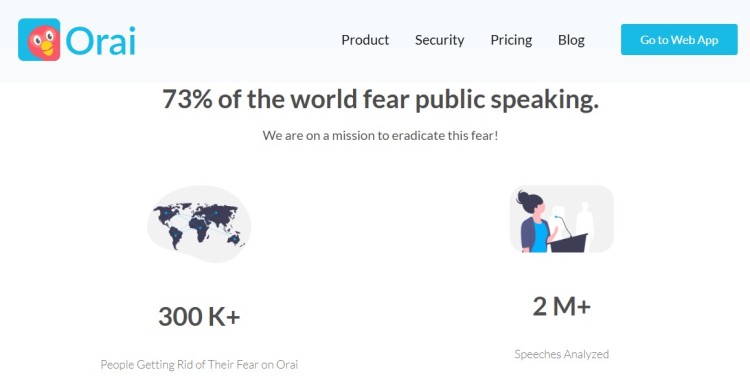
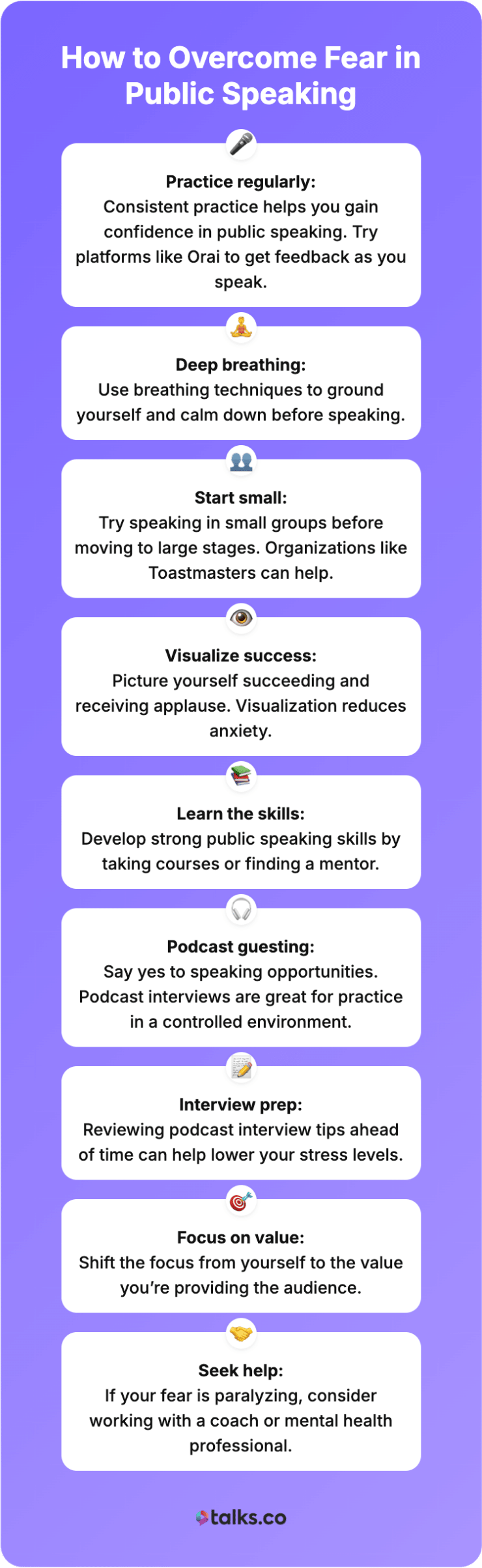
- Practice regularly: Consistent practice helps you gain confidence in public speaking. Try public speaking platforms like Orai to get feedback as you speak.
- Deep breathing: Use breathing techniques to ground yourself and calm down before speaking.
- Start small: Try speaking in small groups before moving to large stages. Organizations like Toastmasters help people scared about public speaking to overcome their fear.
- Visualize success: Imagine yourself succeeding in reducing anxiety about public speaking. Picture yourself standing proudly, with your audience clapping.
- Learn the skills: Develop strong public speaking skills by taking courses or looking for a mentor.
- Podcast guesting: Say yes to opportunities to speak in public. Learn how you can be a podcast guest and practice in a controlled environment.
- Interview prep: Reviewing podcast interview tips can lower your stress levels.
- Focus on value: Shift the focus from yourself to the value you provide to the audience.
- Seek help: People with public speaking anxiety seek professional help, especially if the fear is paralyzing.
If it makes you feel any better… I still get nervous myself. But! I feel more confident when I’m prepared, have practiced, and get more exposure over time.
How to avoid fear in public speaking

While you can’t fully avoid nerves, you can prevent public speaking anxiety from stopping you. Nothing beats preparation to boost your confidence.
- Prepare thoroughly: Know your material and go through it multiple times. You don’t have to memorize. Just get the feel for how it flows.
- Limit caffeine: Avoid stimulants that can increase your racing heart and fear of public speaking.
- Positive self-talk: Counteract the fear or anxiety with affirming thoughts.
- Accept nerves: Accept that public speaking anxiety is normal but manageable.
- Know the venue: Visit the space where you will be speaking in front of people.
- Check tech: Make sure your microphone and slides work to reduce anxiety when speaking in front.
- Engage early: Chat with attendees before speaking in front of others.
- Professional bio: Having a speaker bio ready makes sure you have a professional credential ready if anyone asks. It’s also a good reminder of everything you’ve accomplished.
- Website presence: A professional public speaker website boosts your credibility and confidence.
Speaking as someone who still feels nervous when speaking publicly, I feel better when I’m prepared. The more I practice, the more exposure I get, the better I perform.
Face Your Fears
The landscape of public speaking is shifting, and showing up is more important than ever for your business.
Ready to reach your full potential? Understanding these public speaking fear statistics is step one.
Step two is getting practice on trusted platforms, like Talks. Join the network and book podcast guestings.
Get as much experience as you need with Talks’ AI tools, so you get matches quickly and keep recording.
- Auto-Match: Find relevant shows based on your preferences.
- Auto-Message: Instantly reply with a personalized message when you connect.
Start Your Podcasting Journey and Create a FREE Talks Profile Now.