

My dad often used to tell me back when I was a striker, “If you don’t shoot, you don’t score,” and it still represents the whole life philosophy I live by.
Seven words, one picture, nothing left to explain.
Out of the 400+ guests I’ve interviewed in the last decade, the best speakers all always did the same thing which is come up with a vivid example ready and said it clearly.
That’s what great figure of speech examples and literary devices do for you.
Simile, metaphor, irony, and rhetorical questions are all below, so your next conversation, presentation, or podcast appearance gets quoted back to you.
So, do you want your words to stick?
Here are 108 types of figure of speech examples, with meanings, commonly used sentences, pictures, and poem excerpts, so every story, talk, and podcast answer you give is worth repeating.
What Is a Figure of Speech?
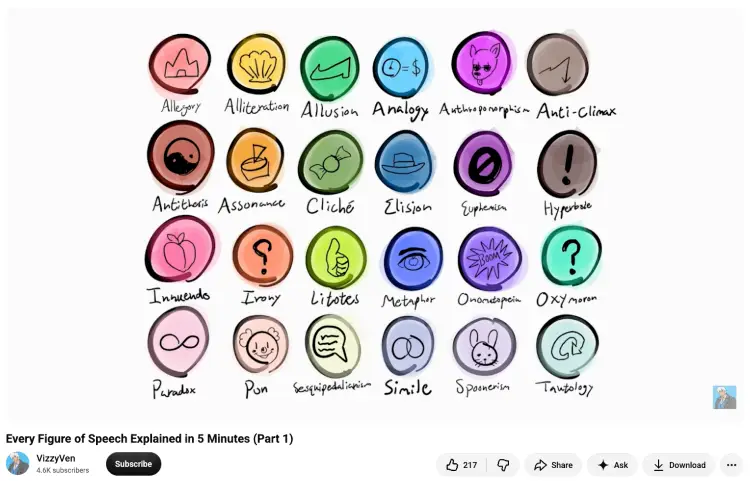
Have you heard a speaker say, “The room was electric,” and felt the energy before they explained a thing? That’s the power of a figure of speech: a word or phrase used creatively to make an idea more vivid, emotional, or memorable.
Think of a health coach describing a client’s progress as “climbing out of a hole” or a keynote speaker calling a tough year “a storm worth weathering.”
These expressions help audiences picture an experience, connect with a message, and remember the person who delivered it.
Figures of speech vs figurative language
Figurative language, also called figurative speech, covers expressions that go beyond literal meaning, while figures of speech are the specific techniques that create those effects.
Here’s how the two connect when you’re telling a story, coaching a client, or answering a podcast host’s question.
| Figurative language | Figures of speech | |
|---|---|---|
| What it means | Language that communicates ideas beyond their literal meaning. | Specific expressions or techniques, such as similes, metaphors, and hyperbole. |
| Example | “I’m carrying the weight of the world” conveys feeling overwhelmed. | “My Monday calendar is a circus” uses a metaphor to describe a chaotic schedule. |
| Where you’ll use it | Describing a client’s struggle as climbing out of a hole. | Comparing a product launch to a roller coaster to convey its ups and downs. |
| Why it helps | Gives your audience a feeling or image they can relate to. | Gives you a practical way to make a point vivid and memorable. |
Figure of Speech Examples and Meaning
These 108 figure of speech examples cover 25 common types, and every type gets a short definition and examples plus its meaning and a sentence you can borrow.
Skim for the types you already use, then steal the ones you don’t.
Simile, metaphor, and personification examples with meanings
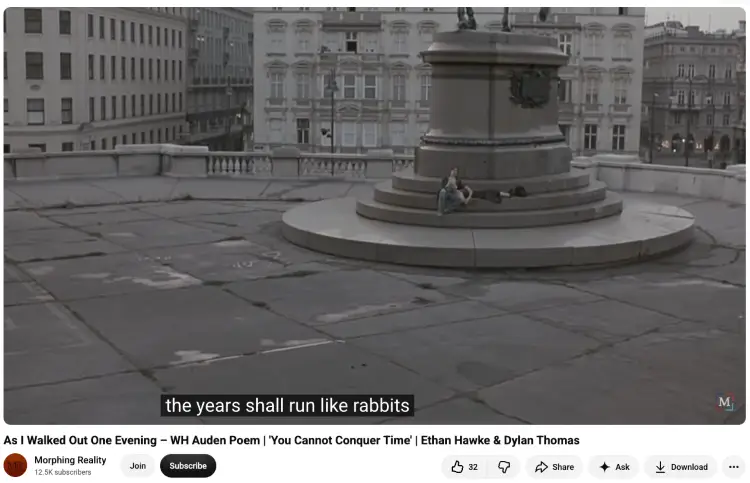
Simile, metaphor, and personification examples with meanings all work through a comparison between two ideas, and they’re the quickest way to make a complicated idea click in one sentence.
Simile examples
A simile is a comparison between two unlike things using “like” or “as,” so people can picture your point instantly.
- “Her pitch was as smooth as butter on warm toast”: It flowed with zero friction, so borrow it to praise a clean delivery.
- “Float like a butterfly and sting like a bee” (The Greatest, 1977): Move with grace, then hit hard, which works as a plan for any big answer.
- Galadriel’s dawn and sea comparison (The Fellowship of the Ring): Power can be beautiful and frightening at once, so use it when the stakes are high.
- Rabbit on Pooh, slower than day-old honey (The New Adventures of Winnie the Pooh): Painfully slow, so reach for it when something drags.
Metaphor examples
A metaphor says one thing is another thing, with no “like” or “as” to soften the comparison, and it’s a staple for every content creator who needs a caption or hook that sticks.
- “This quarter is a marathon, and we’re only at mile four”: The effort is long, so pace yourself.
- “Your inbox is a junk drawer”: It’s stuffed with things you never sorted, so use it to make a mess feel familiar.
- “No wasted shots”: In my coaching, every action is a shot on goal, so spend your energy only where it can score.
- “The magic pill offer”: An offer so valuable it feels like the cure for your audience’s problem.
Personification examples
Personification gives human qualities to objects, ideas, or animals. It’s a close cousin of apostrophe, where you speak straight to an absent person or object, like “Oh, deadline, give me a break.”
- “My laptop gave up the second the interview started”: It crashed at the worst possible moment.
- “The deadline breathed down my neck all week”: The time pressure never let up, so use it to make stress physical.
- “Opportunity knocked twice before I answered”: The chance came around again because I hesitated.
- “The silence in the room leaned in”: Everyone waited for the answer, which sets up a big reveal.
Analogy examples
An analogy explains an unfamiliar or abstract idea by showing how it works like a familiar one, usually across a sentence or two.
- “Building an email list is like planting an orchard”: It’s slow at first, then bears fruit for years, so early effort pays off.
- “A podcast intro is a handshake”: It’s firm, brief, and sets the tone, so the first seconds shape the whole impression.
- “Practicing impromptu answers is like warming up before a match”: Nobody notices the warm-up, but everybody notices when you skip it.
- “Writing a talk without an outline is like driving without a map”: You’ll move, but you won’t arrive, so give your effort a destination.
Allegory examples
An allegory, often used in literature, is a whole story, scene, or image where the characters and events stand for bigger ideas.
- George Orwell’s Animal Farm: A barnyard rebellion shows how power corrupts, with the animals standing in for real political figures.
- Plato’s cave: Prisoners mistake shadows for reality, so people can confuse what they see with what’s true.
- John Bunyan’s The Pilgrim’s Progress: A man’s walk to a distant city becomes a journey of faith, with each obstacle standing for a struggle in life.
- Aesop’s tortoise and the hare: The tortoise wins by never stopping, so steady effort outlasts flashy speed.
Hyperbole, oxymoron, and irony examples
Hyperbole, oxymoron, and irony examples show you how to grab attention by stretching the truth, pairing opposites, or hinting at the reverse of what you mean.
Here are six different types of figures built on contrast, with four examples each.
Hyperbole examples
Hyperbole exaggerates on purpose for emphasis, and nobody takes it literally.
- “My inbox holds more unread emails than a library holds books”: The pile is enormous.
- “The line for the keynote stretched to the next city”: The crowd was huge, so use it to set a scene fast.
- “I’ve rehearsed this intro so many times the walls could recite it”: I’ve practiced it a lot.
- “My to-do list is longer than a grocery receipt in December”: There’s far too much to do.
Understatement examples
Understatement plays down something big so it hits harder.
- “It was a decent turnout,” said the host in a sold-out arena: It was a massive success, and the calm tone is the joke.
- “Slight delay,” said the pilot after six hours on the runway: It was a serious delay.
- “We’ve had a few hiccups,” said the founder of the site that crashed all morning: It was a major problem.
- “The first launch had a few teething problems, like zero buyers”: It flopped, and the soft phrasing makes the failure easier to share.
Litotes examples
Litotes is a form of understatement that denies the opposite to make its point.
- “That answer wasn’t bad at all”: It was good, so use it for dry praise.
- “She’s no stranger to the stage”: She’s very experienced.
- “He’s not unfamiliar with a tough crowd”: He’s handled plenty of them.
- “It’s no small feat to speak for an hour without notes”: It’s hard and impressive.
Oxymoron examples
An oxymoron pairs two opposite words so the clash grabs attention.
- “Organized chaos”: Our summit week was busy, but a system kept it running.
- “Open secret”: Everyone knew about the offer, though nobody announced it.
- “Bittersweet”: Leaving the stage felt happy and sad together.
- “Jumbo shrimp”: Big and small in the same breath, which is the joke.
Paradox examples
A paradox is a statement that sounds contradictory until you think about it, then reveals a truth.
- “The more you give away for free, the more people want to pay you”: Free value builds trust, and trust sells.
- “Less is more”: Simplicity can beat excess.
- “You have to slow down to speed up”: Careful prep makes the real work faster.
- “The best way to sound confident is to admit what you don’t know”: Honesty builds credibility.
Irony examples
Irony highlights the gap between what’s expected and what happens, and it shows up as verbal, situational, or dramatic irony. Our guide to types of irony breaks them down.
- “Great timing,” she said when the mic cut out mid-sentence: She meant the opposite, which is verbal irony.
- “The fire station burned down”: The outcome is the reverse of what you’d expect, which is situational irony.
- The thriller where the audience sees the killer in the closet: The hero hums and makes tea while we know more than he does, which is dramatic irony.
- “The productivity coach missed her own deadline”: The expert fails at the thing she teaches, which is situational irony.
Alliteration, anaphora, and other rhetorical device examples
Alliteration, anaphora, and other rhetorical device examples give your spoken lines rhythm and repetition, the two things audiences remember longest.
These eight common figures of speech come with four examples each, and you can browse more in our rhetorical devices examples.
Alliteration examples
Alliteration is the repetition of the same starting sound in nearby words, which makes your lines easy to quote during podcast guesting.
- “Steady habits build strong speakers”: Consistent practice makes you better.
- “Same promise, packaged differently” (The Brand ID podcast): That’s how I described repackaging a sold-out event, so the offer stays put and only the presentation changes.
- “Dream big, dive deep, deliver daily”: Aim high, go deep, and show up every day.
- “The pitch was polished, personal, and punchy”: It was crafted with care.
Assonance examples
Assonance repeats vowel sounds inside nearby words.
- “Go slow and stay in the flow”: Keep a steady pace, and the long “o” makes it easy to remember.
- “Light the night with bright ideas”: Share vivid ideas.
- “She seemed to dream of green seas”: The repeated “ee” creates a drifting, calm mood.
- “Lean in, be keen, and speak with ease”: Speak with relaxed focus.
Consonance examples
Consonance repeats consonant sounds anywhere in nearby words, including the middle and the end.
- “The clock struck as the lock clicked”: The repeated “k” adds a tense, ticking feel.
- “Pitch, scratch, and stretch before you step on stage”: Warm up first.
- “Back and forth, track by track”: Slow, steady progress.
- “Little by little, the battle was settled”: Progress built up gradually.
Onomatopoeia examples
Onomatopoeia uses words that sound like the thing they name, and it’s a quick way to bring a story to life when you’re learning how to be a good podcast guest.
- “The microphone popped, buzzed, and died”: The sounds tell the story of a failure.
- “The confetti cannon went boom, and the crowd went whoa”: The sounds put your listener in the room.
- “The espresso machine hissed and gurgled behind us”: You can hear the noise.
- “Notifications pinged all through the recording”: Constant interruptions, told in one sound.
Anaphora examples
Anaphora repeats the same words at the start of back-to-back sentences or clauses, and it works well in podcast script templates for intros and outros.
- “We practice before the show. We practice during the show. We practice after the show”: Practice never stops.
- “Show up early. Show up prepared. Show up as yourself”: Each repeat stacks another habit onto the last.
- “They want more leads, they want more sales, they want more clients”: That’s how I describe my audience, and the repetition makes the need feel urgent.
- “Start before you’re ready. Start before it’s perfect. Start today”: Stop waiting for permission.
Antithesis examples
Antithesis puts opposite ideas side by side in a balanced structure.
- “Easy to start, hard to master”: Beginning is simple, and skill takes time.
- “Small steps, giant results”: Little actions add up.
- “Talk is cheap, but trust is expensive”: Words cost nothing, and credibility takes work.
- “Be bold in your ask and humble in your thanks”: Confidence and gratitude belong together.
Chiasmus examples
Chiasmus reverses the order of words in the second half of a sentence (A B, B A).
- “We shape our stories, and our stories shape us”: Each one changes the other.
- “When the going gets tough, the tough get going”: Resilient people take action.
- “Never let a fool kiss you or a kiss fool you”: Be careful who and what you trust.
- “Great speakers listen first, and great listeners speak better”: Listening and speaking feed each other.
Parallelism examples
Parallelism uses the same grammar for related ideas so they feel connected.
- Open with a story, build with a lesson, close with a call to action: A simple three-part talk structure, and it’s a favorite of any emcee who has to keep a room moving.
- “She came, she saw, she pitched”: She moved fast and made her case.
- “Clear in thought, calm in delivery, kind in tone”: A picture of a great speaker.
- “Good talks inform, inspire, and invite”: Three jobs every talk should do.
Idiom, pun, and metonymy examples in everyday sentences
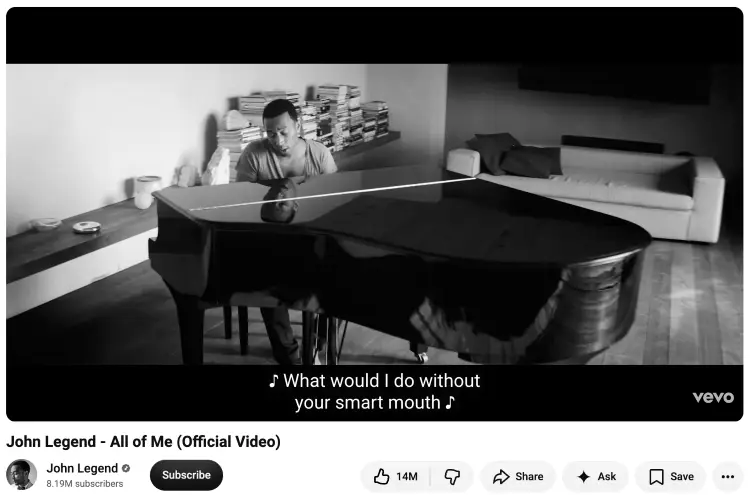
Idiom, pun, and metonymy examples in everyday sentences show up in almost every conversation you have, so spotting them helps you choose fresh phrases over worn-out ones.
Planning to start a podcast of your own? These are the phrases that keep the ball rolling.
Idiom examples
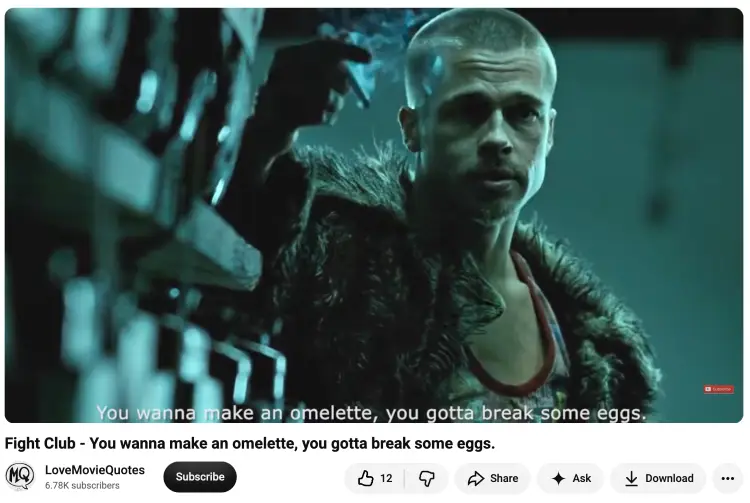
An idiom is a phrase whose meaning differs from the meaning of words inside it.
- “That presentation hit the nail on the head”: It was exactly right.
- “Break a leg before you go on stage”: Good luck.
- “Let’s stop beating around the bush and talk price”: Be direct.
- “The ripple effect”: That’s the most rewarding part of coaching business owners, because one leader’s change spreads to their team, their clients, and their family.
Proverb examples
A proverb is a short, traditional saying that gives advice or states a general truth.
- “Practice makes perfect”: Repetition builds skill.
- “Actions speak louder than words”: What you do matters more than what you say.
- “Don’t put all your eggs in one basket”: Spread your risk, like building an email list instead of relying on one platform.
- “Rome wasn’t built in a day”: Big results take time.
Pun examples
A pun plays on a word’s double meaning or similar sounds, usually for a laugh.
- “Being a podcast guest is a sound investment”: “Sound” means both audio and wise.
- “I’m writing a speech about elevators, and it has its ups and downs”: Elevators go up and down, and so does the speech.
- “The baseball coach and the podcast guest both stress about their pitch”: One throws it, the other sells it.
- “I’d tell a joke about podcasting, but it needs more time to air”: “Air” means both broadcast and breathe.
Metonymy examples
Metonymy swaps a thing for something closely linked to it.
- “Hollywood loves a comeback story”: The film industry does.
- “Wall Street reacted before lunch”: Investors did.
- “The suits approved the budget”: The executives did.
- “The pen is mightier than the sword”: Writing beats force.
Synecdoche examples
Synecdoche uses a part to stand for the whole, or the whole to stand for a part.
- “All hands on deck for launch day”: Every person needs to help.
- “She’s got new wheels”: She’s got a new car.
- “We need boots on the ground at the conference”: We need people there in person.
- “Give me a hand with the slides”: Help me with the slides.
Euphemism examples
A euphemism swaps a blunt word for a softer phrase.
- “We’re letting him go”: He’s being fired.
- “She passed away”: She died.
- “The budget is a little tight”: There isn’t much money.
- “This draft has room to grow”: It needs work.
Figure of speech examples sentences
Figure of speech examples with pictures help your brain hold the meaning, because you see the literal image and the figurative one side by side. Drop one into a slide or a social post, and your audience gets the point before you finish the sentence.
- Busy as a bee” (simile): A packed schedule becomes a tiny insect that never stops moving.
- “It’s raining cats and dogs” (idiom): It has nothing to do with animals, and it means the rain is pouring.
- “The sun smiled down on the crowd” (personification): A star gets a face, so a warm day feels welcoming.
- “My bag weighs a ton” (hyperbole): The truth stretches to show how heavy the load feels.
- “BEEP” (onomatopoeia): The word names the alarm clock by copying the sound it makes.
Figure of speech examples with pictures
Figure of speech examples with pictures make a comparison easier to remember, because you see the literal image and the figurative meaning at the same time. Check the frames below from the Smile and Learn video to see all three in action.
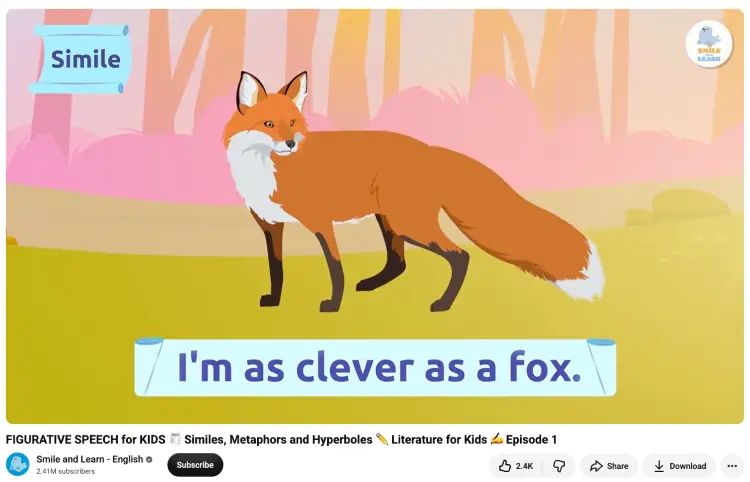
- “As clever as a fox” (simile): The fox stands in for sharp thinking, and the word “as” flags the comparison.
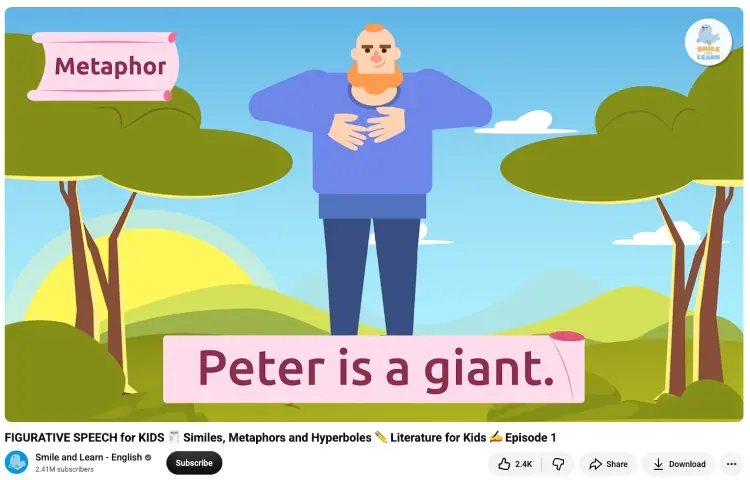
- “Peter is a giant” (metaphor): With the comparison words left out, Peter simply becomes a giant, which tells you he’s very tall.
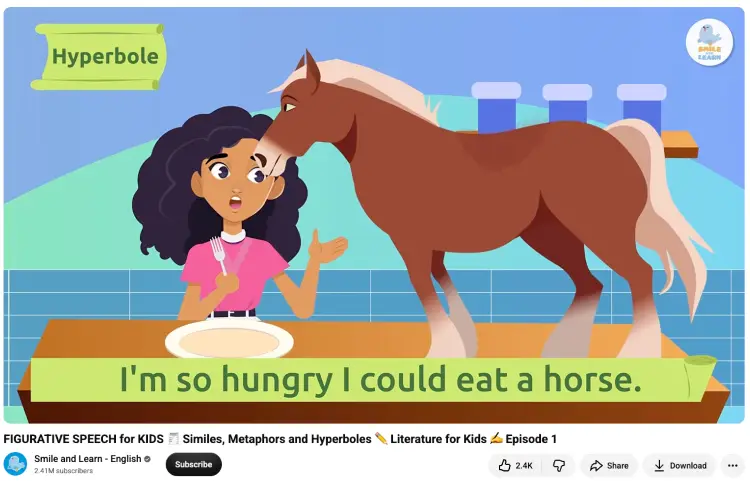
- “I’m so hungry I could eat a horse” (hyperbole): Nobody’s eating a horse, and the exaggeration shows how starving the speaker is.
Figure of speech examples in poem
Figure of speech examples in poem form show how poets pack a comparison, a sound pattern, or a twist into a few words, and these five public domain classics are worth borrowing from on stage.
- Robert Burns, “A Red, Red Rose” (simile): Burns compares love to a red, red rose, a fresh and fragile image that arrives in one beat. Borrow it by comparing a big idea to something everyone has held or seen.
- William Wordsworth, “I Wandered Lonely as a Cloud” (simile): The title is the simile, tying a person’s solitude to a drifting cloud so you feel the loneliness before anyone explains it. Borrow it by opening a story with a comparison in the first line.
- Emily Dickinson, “Hope” is the thing with feathers (metaphor): Dickinson turns hope into a small bird that keeps singing, which gives an abstract feeling a body. Borrow it by giving your own big idea something you can picture.
- Edgar Allan Poe, “The Bells” (onomatopoeia): Poe stacks bell sounds until the poem rings in your ear, with “tintinnabulation” as the famous example. Borrow it by letting your voice act out the sound you’re describing.
- William Shakespeare, As You Like It (extended metaphor): “All the world’s a stage” turns life into a performance, and it’s still one of the easiest metaphors to hand an audience. Borrow it by picking a setting everyone knows, then mapping your lesson onto it.
How to Use Figures of Speech to Enhance Everyday Conversations
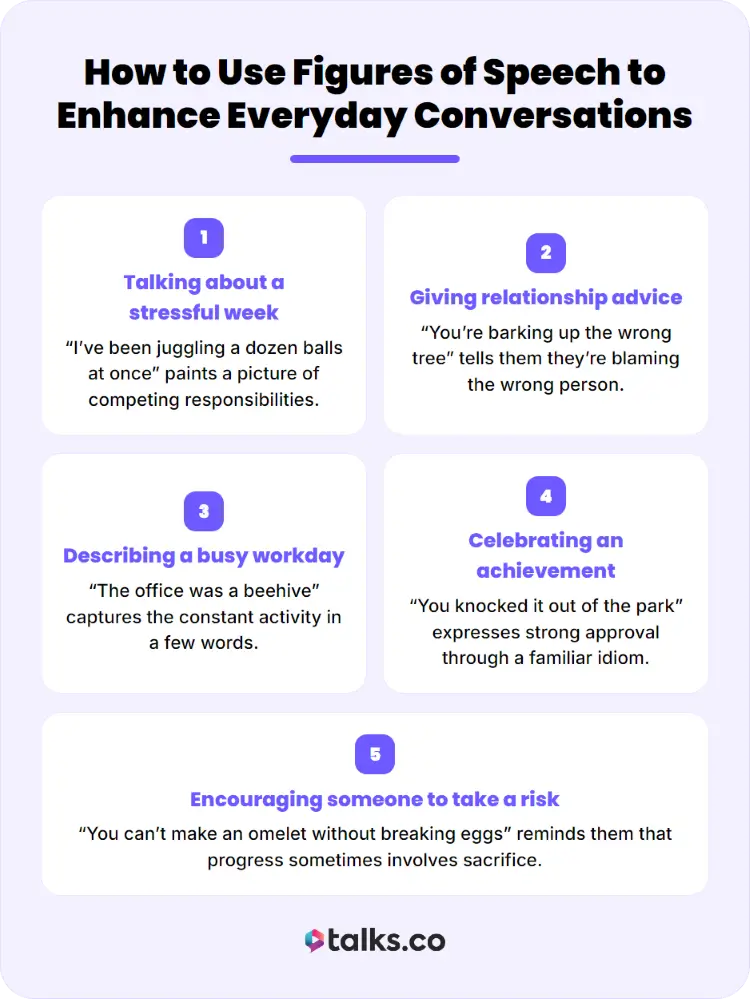
Figures of speech come in handy in all sorts of everyday conversations, from catching up with friends to explaining a work problem. Here are five situations where a well-chosen expression can make your point more memorable.
- Talking about a stressful week: “I’ve been juggling a dozen balls at once” paints a picture of competing responsibilities.
- Giving a friend relationship advice: “You’re barking up the wrong tree” tells them they’re blaming the wrong person.
- Describing a busy workday: “The office was a beehive” captures the constant activity in a few words.
- Celebrating someone’s achievement: “You knocked it out of the park” expresses strong approval through a familiar idiom.
- Encouraging someone to take a risk: “You can’t make an omelet without breaking eggs” reminds them that progress sometimes involves sacrifice.
Figure of Speech Examples With Answers
Test your understanding of figures of speech with these practice questions. Each example gives you a sentence to interpret, followed by the correct answer and a quick explanation.
- “Her smile was sunshine on a rainy day.” Which figure of speech is used?
Answer: Metaphor. The smile is compared to sunshine to show how it brightened someone’s mood. - “I’m so hungry I could eat a horse.” Which figure of speech is used?
Answer: Hyperbole. The exaggerated statement emphasizes extreme hunger. - “The old house groaned in the wind.” Which figure of speech is used?
Answer: Personification. The house is given a human action: groaning. - “He runs like the wind.” Which figure of speech is used?
Answer: Simile. The word “like” compares his speed to the wind. - “The silence was deafening.” Which figure of speech is used?
Answer: Oxymoron. The phrase combines silence with deafening sound to emphasize how intense the quiet felt.
Figure of speech interrogation examples
A rhetorical question asks something for emphasis or effect rather than to get a direct answer, and you’ll find more in our rhetorical question examples.
Identify the figure of speech in each example, then check your answer.
- “Who doesn’t want to be heard?” Answer: Rhetorical question. It implies that everyone wants their voice to matter.
- “Isn’t it time we did something about it?” Answer: Rhetorical question. It encourages action without asking for a literal reply.
- “How many times do I have to tell you?” Answer: Rhetorical question. It expresses frustration rather than asking for a number.
- “What’s a little hard work if it gets you closer to your goal?” Answer: Rhetorical question. It encourages the listener to see effort as worthwhile.
The Trick to Saying It Better
Now that you’ve seen how figure of speech examples make ideas memorable, put those words to work in front of a bigger audience.
Talks helps you connect with podcast hosts in your niche and get your expertise in front of listeners who could become your next clients, customers, or collaborators.
Join the growing Talks network right now to find relevant shows and pursue interview opportunities, with automated matching and messaging to help you make connections faster.
Create your free Talks profile and start connecting with podcast hosts.


