

You nailed the opening, had the room leaning in halfway through. Then the last 30 seconds arrived and you muttered “So, yeah, that’s it,” and the energy drained out of the room like someone clicked End Call on Zoom way too early.
A weak end of your speech can undercut the main point of an otherwise great speech. The right way to end your speech gives people a line to remember, a key point to share, or a reason to take action after you’ve left the stage with your final words and stopped making eye contact.
Knowing how to end a speech starts with one question: what do you want your audience to think, feel, or do next after hearing the end of your talk?
Your answer helps you choose a core message to close your speech that fits the occasion, from a clear call to action in a persuasive talk to an inspiring send-off at a graduation.
Below, you’ll find closing styles to end your speech, example lines that leave a lasting impression, and thank-you closing statement variations you can adapt for your next speech or presentation.
What Are Common Ways to End a Speech?
Most ways to close a speech fall into eight buckets. Whichever one you pick for the end of your presentation, aim it at what you’d want the room doing the second you finish your speech and walk off.
- Call to action: Pitched a free five-day Notion template to a room of freelancers? Send them to the QR code on your last slide before they reach the coffee station.
- Callback: Circle back to the burnt pot from your opening story about scorching your first batch of cold brew in a Brooklyn rental kitchen, so the whole talk closes like an impactful loop and your audience can feel your strong conclusion.
- Story: Finish on the moment a client’s first “yes” email hit her inbox, the one who went from zero podcast bookings to twelve in a single quarter, then stop talking.
- Quote: Steve Jobs’s “Stay hungry. Stay foolish.” from his 2005 Stanford commencement gives a talk about risk something people can repeat, especially when you tie it to your own point in one sentence.
- Challenge: Addressing a graduating class at Arizona State? Using your presentation skills, hand them a 30-day dare, like emailing one person they admire before the month ends.
- Summary: Say your three frameworks back in one breath, like “pitch, practice, publish,” so the back row leaves holding all three.
- Question: Close a motivational talk at a TEDx event with something like “What would you pitch this week if you knew the answer was yes?” and let the silence do the work.
- Joke: Poke fun at your own caffeine intake in the last line of a 7 a.m. breakfast talk at a Rotary Club in Tulsa, so people leave smiling instead of checking their watches.
- Vision: Paint the picture the way Martin Luther King Jr. did at the Lincoln Memorial in 1963, then shrink it to a Saturday morning with 200 volunteers at a Portland community garden, perfect for a neighborhood nonprofit talk.
- Thank-you: Thank the host by name, then leave your audience with the one place to find you or ask a question they might have, the way a guest on The Tim Ferriss Show would end a presentation.
What to say at the end of a speech (Do’s and don’ts)
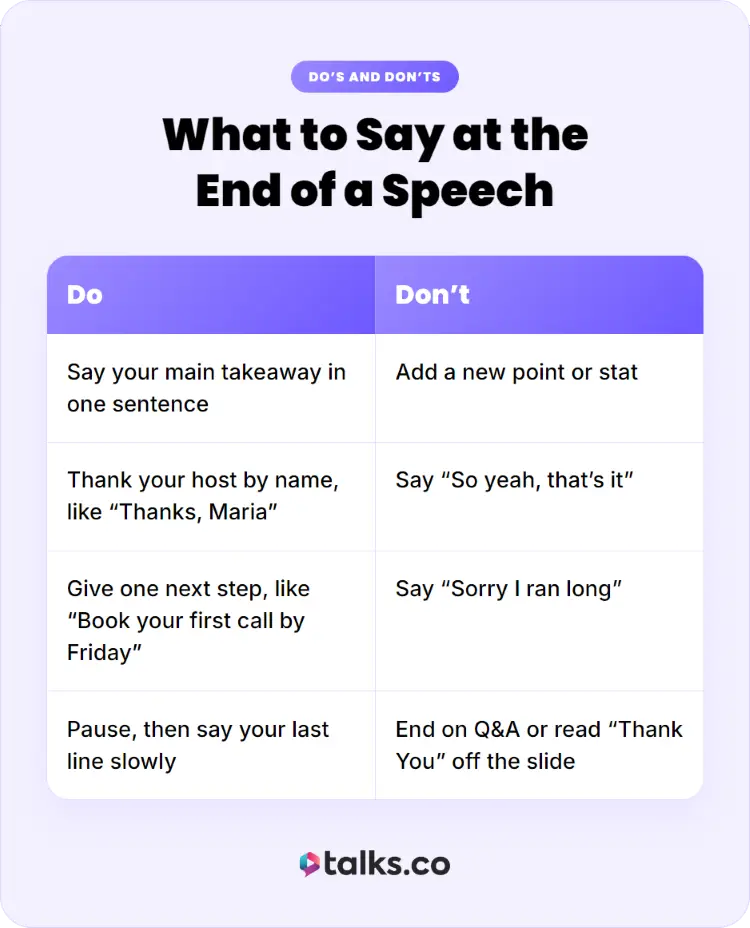
If you’re stuck on what to say at the end of a speech, a one-line takeaway and a quick thank-you will carry you off the stage.
| Do | Don’t |
|---|---|
| Say your main takeaway in one sentence | Add a new point or stat |
| Thank your host by name, like “Thanks, Maria” | Say “So yeah, that’s it” |
| Give one next step, like “Book your first call by Friday” | Say “Sorry I ran long” |
| Pause, then say your last line slowly | End on Q&A or read “Thank You” off the slide |
How to End a Speech With Impact
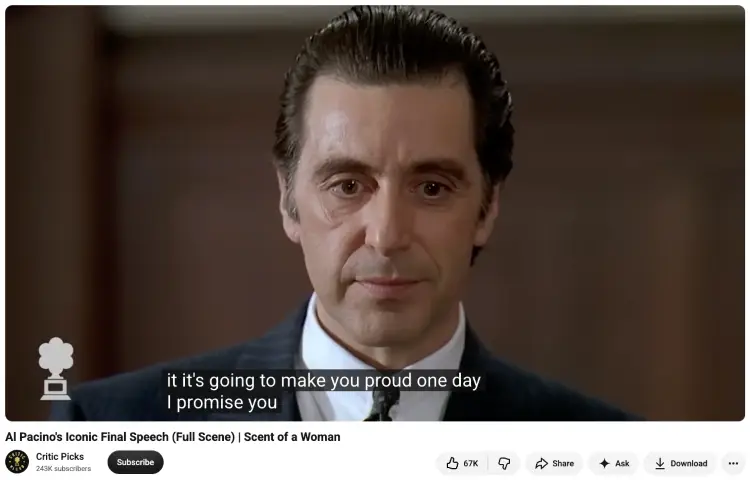
Whether you’re closing a pitch, a toast, or a keynote, the ending works best when it’s built to make your audience feel every part of your speech and resonate with your powerful conclusion. Each occasion below comes with a few ways to finish and a line to borrow.
How to end a persuasive speech
If you’re closing a pitch to a city council or a room of prospects, finish on the one action you want taken. Our guide to call to action speeches goes deeper on this one.
- Name the ask: Point to the QR code on your slide and say “Scan it before you reach the coffee table.”
- Repeat your best proof: Say the 40% churn drop from that Denver SaaS startup one more time as your final sentence.
- Borrow urgency: Patrick Henry’s 1775 “Give me liberty, or give me death!” shows how one line can carry an entire argument.
- Price the delay: Tell them what another three months of the old way will cost.
How to end an informative speech
Ending an informative speech on the one idea you want remembered, say how RSS feeds carry a podcast to Apple Podcasts and Spotify, keeps a dense talk from blurring together.
Browse a few informative speech examples to see how other speakers wrap up.
- Restate the one idea: Close a five-feature talk on the one that matters most, like “One feed, every app.”
- Hand over a resource: Point Podfest attendees in Orlando to a one-page cheat sheet by the exit.
- Return to your opening fact: Pick up “There are over four million podcasts” and tell them where a new voice fits.
- Leave a question open: Ask “What would you publish first if you had a feed tomorrow?”
How to end a motivational speech
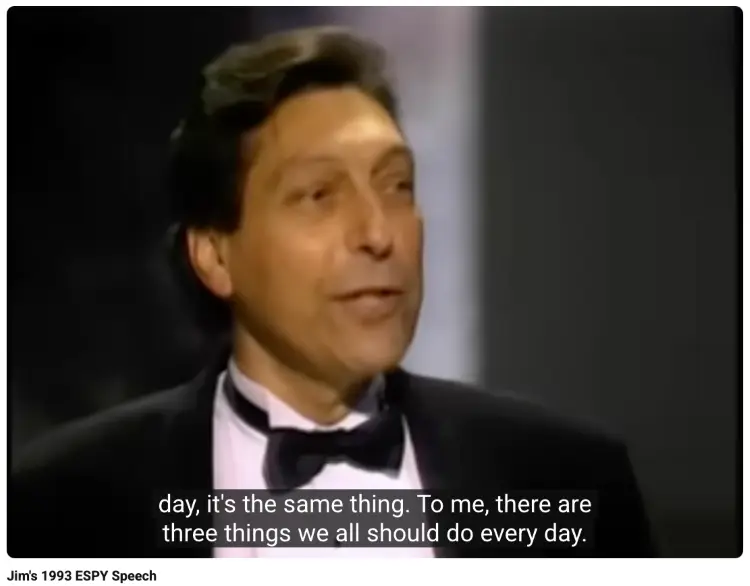
If you want your last line repeated long after you leave the stage, give the room a motto and a cause to join, the way Jim Valvano did at the 1993 ESPYs.
- Plant a rule of three early: Give your audience three simple habits in your first few minutes, like Valvano’s laugh, think, and be moved to tears, then circle back to all three in your close.
- Joke at your own expense first: Share a moment that went sideways, like Valvano shoving open a Rutgers locker room door that wouldn’t budge, so the room trusts you before the serious part.
- Attach a cause to your ask: Give people somewhere to put their energy and a motto to carry, like the Jimmy V Foundation’s “Don’t give up… don’t ever give up.”
How to end a graduation speech
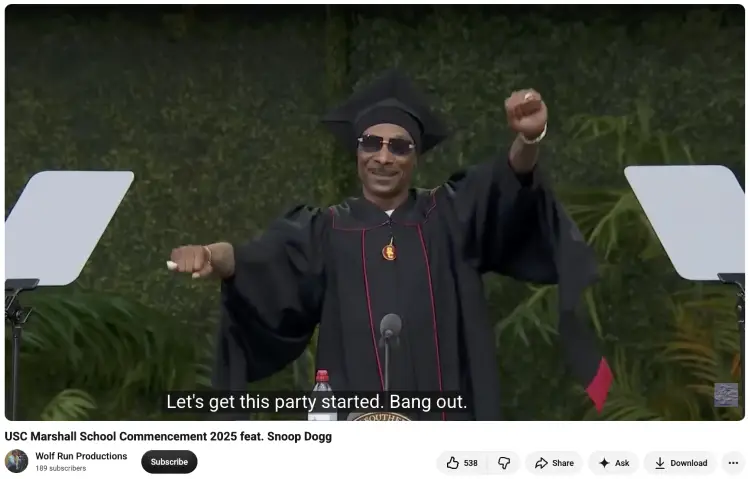
Handing your last line to the whole stadium can turn a graduation speech into a sing-along, which is what Snoop Dogg did at the 2025 USC Marshall School of Business commencement in the LA Coliseum.
- Open and close on the school chant: Bring in the chant early and again at the end, like Snoop’s “Fight on,” so thousands of graduates finish your last line for you.
- Hand them three words: Boil your advice down to three words families can repeat over dinner, like Snoop’s stay humble, stay hungry, stay true.
- Ask for a show of hands: Pick a milestone, like the first in the family to graduate, then send them off with “Be the first, but not the last.”
How to end a welcome speech
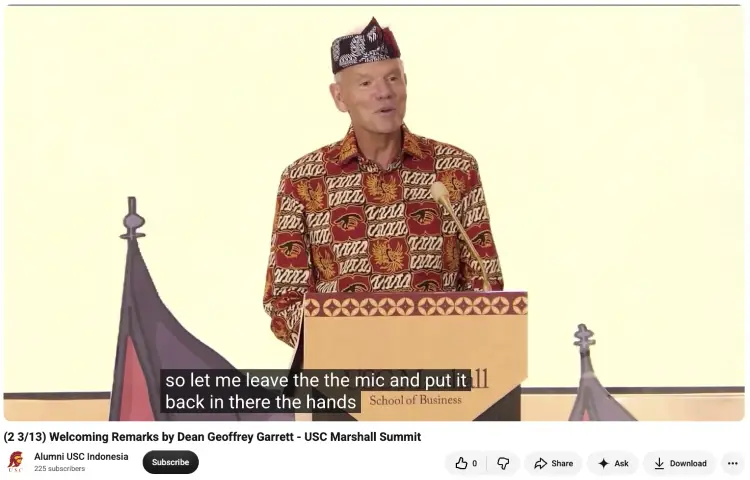
A welcome speech works best as a bridge to what comes next, which is how Dean Geoffrey Garrett wrapped his remarks at the USC Marshall Summit in Jakarta.
- Count your closing words: Tell the room how many points are left before you finish, like Garrett’s “three most important words” (congratulations, thank you, welcome), so everyone knows exactly when you’re wrapping up.
- Echo your opening line: Repeat the promise you opened with, like Garrett’s “balance of intellectual content and a fantastic party,” so your close feels like the other half of your first sentence.
- Tie off a running joke: Plant a small gag early and finish it on your last line, like Garrett’s three visits in 18 months ending on “one, two, three.”
- Hand the mic to the next voice: Pass the stage with a clear cue, like Garrett turning it over to “our most capable MC” as the party gets started.
Giving your own welcome speech? Our article on what an emcee does covers the role in detail to help you prep faster.
How to end a speech with thank you
A thank-you gives your speech its warmest exit, the way Samantha closed her wedding speech in Warwick, Queensland by thanking her parents one at a time and handing her bouquet to her mom. It also sticks with hosts when you’re building your podcast guesting reputation.
- Give each person their own line: Turn to one person at a time, like Samantha calling her dad “the first man I’ve ever loved” before she ever spoke to her mom.
- Name what they did for you: Say the specific thing, like Samantha crediting her mom with calming her nerves and helping with everything over the past year.
- Spot who hasn’t had a moment yet: Notice who got no spotlight, like Samantha pointing out that her dad had the first look, the aisle walk, and the father-daughter dance, then telling her mom “this is your moment.”
- Finish with a gesture: Pair your last words with something the room can see, like Samantha dedicating her bouquet to her mom and ending on “I love you Mom.”
How to end a speech writing
Writing the ending before anything else gives every other section of your script somewhere to go. It also gives you an anchor when you memorize your speech.
- Draft three endings: Write a call to action, a story, and a question, then read them aloud and pick the winner.
- Cut it to one breath: Trim a paragraph-long close to a line you can say without pausing.
- Highlight it in yellow: Mark the last line on your script so your eyes find it fast on stage.
- Test it over coffee: Read it to a friend, and if they can repeat it back an hour later, it’s ready.
How to Choose the Right Closing for Your Speech (Checklist)
Choose your closing by matching it to your goal, your audience, and the minutes left on the clock. Run through this checklist before you write your final paragraph, and skim our breakdown of types of speeches if you’re unsure which category yours belongs in.
☐ Pick one verb: Decide whether you want people to sign up, vote, donate, or simply remember, like a Kiwanis Club in Boise pledging $50 each to a scholarship fund.
☐ Size up the room: Founders at Web Summit in Lisbon respond to bold asks, and a 9 a.m. HOA meeting in Scottsdale warms up to a small, friendly one.
☐ Match the mood: A eulogy at a Catholic funeral Mass calls for a somber blessing, and a sales kickoff in Austin calls for a rally cry.
☐ Budget the last 45 seconds: Block out your closing time first, since Toastmasters timing lights flip to red when your slot ends, whether you’ve reached your final line or not.
☐ Test the tech: Run your last slide through the venue’s clicker and projector at sound check so the final image shows up when you need it.
☐ Choose from the ten closers: Take your verb and pick the matching style from the list above, like a callback for a story-driven talk or a question for a reflective one.
10 Common pitfalls when ending a speech
The most common pitfalls when ending a speech are the ones that blur your last line: stacked asks, fake finishes, rushed slides, and tech surprises. Browse our speech examples to hear how other speakers sidestep them.
- Stacking three asks: Pitching a newsletter, a webinar, and a Calendly link in your last 20 seconds leaves the room remembering none of them, so pick the one that matters most.
- Running a fake finish: Saying “in conclusion” and then talking for six more minutes sends the back row reaching for their phones.
- Quoting the wrong person: “Be the change you wish to see in the world” gets pinned on Gandhi constantly, so check Quote Investigator before it goes on your final slide.
- Joking at the wrong table: A caffeine joke fits a Rotary breakfast, and a gala honoring a late founder calls for something gentler.
- Rushing the last slide: When the red light flips on, zipping through your final three slides at double speed steals the moment your closing line needed.
- Reciting the agenda back: Walking through “first I covered, second I covered” sounds like meeting minutes, and one sentence of summary does the job.
- Hedging the ask: Saying “maybe check out my website sometime” gives people permission to forget, so try “Visit yourname.com/guide before Friday” with a date attached.
- Ending on a video clip: A closing video that buffers on the Wi-Fi at the Javits Center leaves you narrating a spinning wheel, so keep a spoken last line ready as backup.
- Reading the final line off your notes: Eyes on the lectern for your last sentence cut the connection you built over 20 minutes, so memorize those final 15 words cold.
- Walking off mid-applause: Scurrying to your seat the second you finish cuts short the applause that cements your close, so hold still with a smile for a two-count.
How to End a Speech Example Video
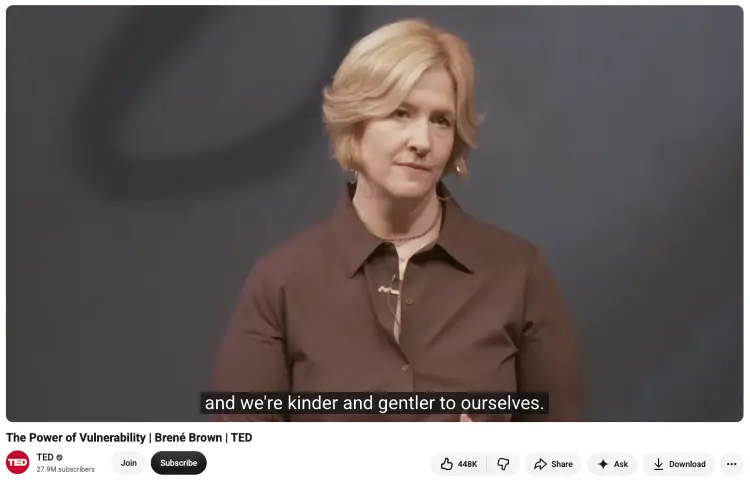
Brene Brown’s TEDxHouston talk, “The Power of Vulnerability,” is a strong model for a close that feels earned, because she builds every closing move into the final two minutes.
Watch it once for the ending, then borrow the moves below. A TEDx stage is also a good example of the kind of public speaking opportunity where a closing line gets clipped and shared.
- Signal the finish: Tell the room the end is coming, the way Brown does with “I’ll leave you with this,” so everyone sits up for the last stretch.
- Hand over a short list of moves: Give your audience three or four actions to take away, like Brown’s let yourself be seen, love with your whole heart, practice gratitude and joy, and believe you’re enough.
- Save the biggest idea for last: Put your strongest point at the end of the list and say so, as Brown does when she calls believing you’re enough “probably the most important.”
- Tie it back to your opening theme: Return to the thread you started with, like Brown circling from her research on worthiness to the idea of being enough.
- Show what’s in it for them: Describe the payoff your audience gets, such as Brown’s promise that people who believe they’re enough turn kinder and gentler to others and to themselves.
- Stop when you’re done: End with a short, plain exit line like Brown’s “That’s all I have,” with no recap and no extra thank-you chain.
When One Speech Closes, Another Stage Opens
Knowing how to end a speech starts with choices you make before you touch the mic. One action for your audience, one line you can say in a single breath, and a thank-you saved for last.
Rehearse that final sentence until it sounds like you, then bring it to a podcast audience itching to hear what you know best.
Hosts in your niche are filling guest slots, and Talks auto-matches you and messages them for you, so you can get booked while you sleep.
Other guests in your niche already have profiles live. Are you next?
Yes! Create My Free Talks Profile ASAP!


