

How do you memorize your speech quickly and still remember what to say when all eyes are on you?
When I played professional soccer, preparation was part of the job. You trained until the foundations felt natural, so you could focus on the game instead of thinking through every step.
Public speaking works much the same way. The more you practice recalling your words, the easier it becomes to memorize your speech for you to recite them when it counts.
If you’ve got a presentation tomorrow, an important pitch in an hour, or five minutes before your name gets called, specific techniques can help you remember your key points, learn your lines word for word, and handle longer speeches without memorizing every sentence.
Let’s look at how to memorize a speech using practical memorization methods that fit the time you’ve got.
What’s the Best Way to Memorize a Speech?
The best way to memorize a speech is to break it into short sections, connect each section to a key idea, and practice recalling it without looking at your notes for every part of your speech.
Say you’re preparing a 10-minute presentation for a business event in a week. Learn your opening, three main points, and closing separately, then practice linking them together while delivering your speech.
How long does it take to memorize a speech?
It depends on the speech’s length, complexity, and how much time you can dedicate to practice. A five-minute presentation about your coaching program will take less time to learn than a 45-minute keynote packed with research and stories.
- 2-5 minutes: Recall a short introduction or a handful of key points.
- 30-60 minutes: Learn the structure and main talking points of a 5-minute presentation.
- 3-5 hours: Memorize a 10 to 15-minute speech with detailed examples and transitions.
- 2-3 days: Rehearse a 30 to 45-minute keynote and strengthen recall across multiple practice sessions.
Can you memorize a speech in a day?
Yes, you can memorize a speech in a day. That’s enough time to learn your structure, rehearse each section, and test your memory.
If you’re presenting your six-step business coaching framework at a conference tomorrow, try this schedule:
- 8 am to 9 am: Divide your speech into sections and identify the key message in each.
- 12 pm to 1 pm: Practice each section from memory, checking your notes when you get stuck.
- 4 pm to 5 pm: Deliver the entire speech aloud while standing, as you would on stage.
- 8 pm to 8:30 pm: Review your opening, transitions, and closing, then get a full night’s sleep.
How to Memorize a Speech Easy
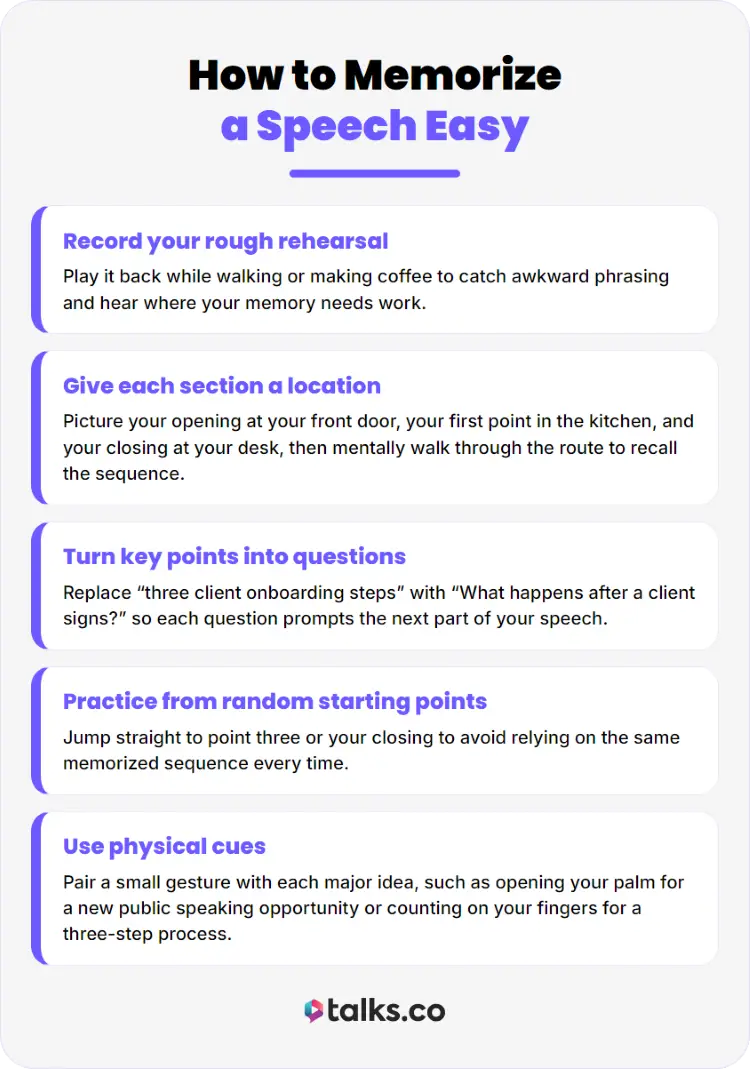
You can memorize a speech easily by repeating specific movements until they become familiar, and you can use a similar approach with your speech using this quick checklist.
- Record your rough rehearsal: Play it back while walking or making coffee to catch awkward phrasing and hear where your memory needs work.
- Give each section a location: Picture your opening at your front door, your first point in the kitchen, and your closing at your desk, then mentally walk through the route to recall the sequence.
- Turn key points into questions: Replace “three client onboarding steps” with “What happens after a client signs?” so each question prompts the next part of your speech.
- Practice from random starting points: Jump straight to point three or your closing to avoid relying on the same memorized sequence every time.
- Use physical cues: Pair a small gesture with each major idea, such as opening your palm for a new public speaking opportunity or counting on your fingers for a three-step process.
Easiest way to memorize a speech

For the simplest approach, boil your speech down to a handful of prompts and practice explaining each one aloud in your own words.
If you were preparing a short talk about growing a business through podcast interviews, this checklist would help you remember the message clearly.
- Write a five-word summary: Capture the central message in a short phrase you can recall instantly.
- Create a cue card with gaps: Write the first word of each major point, leaving your brain to retrieve the rest instead of reading a full script.
- Use the last line as a launchpad: Memorize how one section ends and the next begins, giving yourself a reliable starting point for every new idea.
- Explain it to an imaginary client: Pretend a business owner named Sarah is asking why podcast guesting helps her reach more customers, then answer as if you were chatting across a café table.
- Test yourself after a distraction: Spend two minutes doing something else, then deliver the main points from memory to check what you can actually recall.
- Keep a recovery phrase ready: Prepare a natural line such as “The key point to remember is…” to help you regroup if a sentence slips away.
How to Memorize a Speech Really Fast (Checklist)
Need to deliver a speech tomorrow, or have a room full of people waiting while you’re still working out your opening line? When I played professional soccer, repetition helped me react under pressure.
Speech practice works on the same principle: break your speech into manageable sections, recall each one from memory, and rehearse in the order you’ll deliver it.
☐ Start with the structure: Write down your opening, main points, supporting stories, and closing.
☐ Use keyword cues: Assign a memorable word or phrase to each section.
☐ Practice active recall: Say each section aloud without reading your notes, then check what you missed.
☐ Rehearse under realistic conditions: Stand up, use your slides, and practice with a timer.
☐ Review at intervals: Return to difficult sections after a short break to strengthen recall.
How to memorize a speech in one day
If you’re preparing a 10-minute talk about your six-step coaching framework for a conference presentation tomorrow, use the day to learn the structure, practice your key points, and rehearse the full delivery.https://talks.co/p/types-of-speeches
☐ 8 am to 9 am: Map the speech by dividing your talk into five or six sections and writing one sentence to summarize each.
☐ 12 pm to 1 pm: Practice recall by rehearsing each section aloud without notes, then checking the script for missed details.
☐ 4 pm to 5 pm: Run the full speech while standing, using your presentation slides and timing your delivery.
☐ 8 pm to 8:30 pm: Review weak spots by repeating difficult transitions, your opening, and your closing before getting a full night’s sleep.
How to memorize a speech in one night
Have you been asked to give a presentation at tomorrow morning’s business summit, and your notes are still sitting in Google Docs?
Focus on the main message and the order of your ideas first, then memorize exact wording where it matters, such as statistics, quotations, and your opening line.
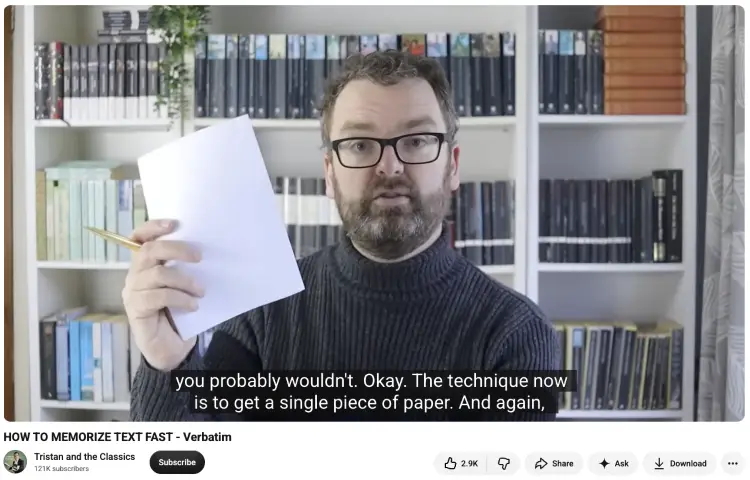
☐ First 15 minutes: Build a speech outline by reducing your script to 5-7 key points on one sheet of paper.|
☐ Next 30 minutes: Learn in chunks by practicing one section at a time and recalling it aloud before moving to the next.
☐ Next 30 minutes: Link the sections by rehearsing transitions so each point leads naturally into the next.
☐ Final 15 minutes: Test your recall by delivering the speech without notes, then revisiting any sections where you lose your place.
☐ Before bed: Review the opening and closing with one final rehearsal, then prioritize sleep so you’re rested for the presentation.
How to memorize a speech in an hour
Got 60 minutes before your presentation at a networking event? Use the time to lock in your main points, rehearse the transitions for your type of speech, and practice your opening and closing so you can deliver the message without constantly checking your notes.
☐ First 10 minutes: Read the script, identify the central message, and divide the speech into four to six sections.
☐ Next 15 minutes: Write a few keywords for each section, then practice explaining each point aloud from memory.
☐ Next 20 minutes: Rehearse the full speech twice, checking your notes between attempts to catch missing details.
☐ Next 10 minutes: Practice your opening, transitions, and closing, especially any statistics or key phrases you need to get right.
☐ Final 5 minutes: Review your keyword prompts, take a breath, and picture the first few sentences you’ll say.
How to memorize a speech in 30 minutes
With half an hour before your talk at a local business meetup, concentrate on the speech’s structure and the lines people need to remember.
If you’re presenting a new client onboarding program, learn the problem it solves, your three main steps, and the result clients can expect.
☐ First 5 minutes: Reduce the speech to three to five key points and write them on one page.
☐ Next 10 minutes: Practice each point aloud using keywords as prompts, then check your script for anything important you missed.
☐ Next 10 minutes: Deliver the speech from memory twice, working on the sections where you lose your place.
☐ Final 5 minutes: Repeat your opening and closing, then mentally walk through the key points in order.
How to memorize a speech in 5 minutes
If an emcee at a Perth conference suddenly asks you to introduce a speaker, five minutes can help you prepare a short, coherent response.
Focus on the main message and a clear sequence of ideas, using exact wording only for essential details such as the speaker’s name, job title, or a quotation.
☐ Minute 1: Identify your purpose and choose three key points to cover.
☐ Minute 2: Arrange the points in a logical order and choose one keyword for each.
☐ Minutes 3 and 4: Say the speech aloud twice using your keywords as prompts.
☐ Minute 5: Check names, numbers, and essential facts, then rehearse your opening sentence and final line.
Talks Tip: Five minutes is enough to organize and rehearse a short introduction or a few talking points. A longer, word-for-word speech will need more preparation, so prioritize remembering the sequence and meaning of your ideas.
Additional Tips On How to Memorize a Speech

Small changes to how you rehearse can make your speech easier to recall when it counts. Try these techniques to strengthen your memory, recover your place if a line slips away, and be a better public speaker.
- Lock in your opening: Memorize your first sentence to give yourself a reliable starting point.
- Picture each key idea: Visualize a packed calendar when discussing consistent bookings.
- Rehearse in the room: Practice in the venue to get familiar with the space.
- Record a voice memo: Recite your speech the next day before listening back.
- Mark tricky spots: Flag statistics, names, and transitions for extra practice.
- Practice recovering: Skip to your next key point if a sentence slips away.
How to memorize a speech word for word
Exact wording takes focused repetition, especially for scripted keynotes, competition speeches, and wedding toasts. Work with short passages and speech examples first, then connect them until you can recite the full speech.
- Learn two sentences at a time: Recite each pair from memory before adding more.
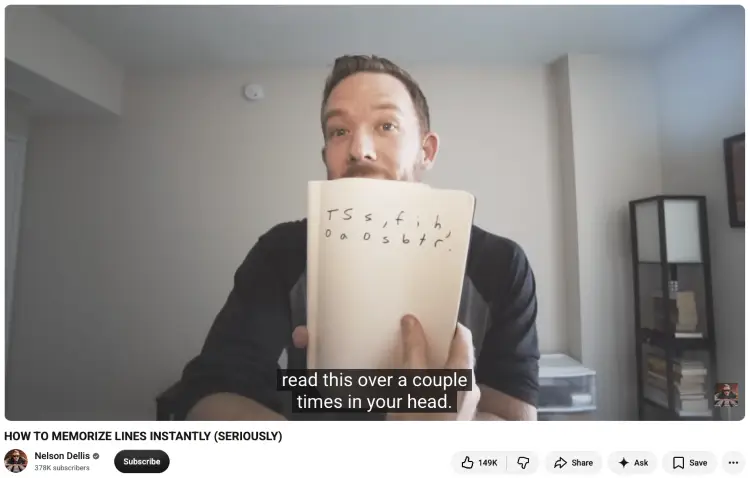
- Try the first-letter method: Use the first letter of each word as a prompt.
- Chain paragraphs together: Practice the last line of one paragraph with the first line of the next.
- Use punctuation cues: Match commas and periods to your pauses.
- Test missing words: Remove selected words from your script and fill in the gaps.
- Compare a recording: Check your recitation against the original to catch skipped words and swapped phrases.
How to memorize a long speech
A 30-minute keynote can contain stories, statistics, examples, and several major arguments. Give each section a distinct purpose, then practice moving between sections so you can find your place if you lose a line.
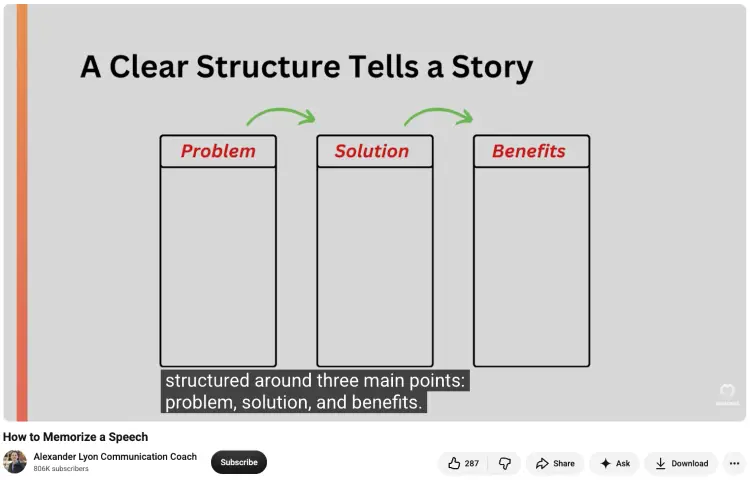
- Map the speech: Give each section a short heading, such as “the problem” or “the solution.”
- Create visual markers: Throw in a leaking bucket for a section about lost leads.
- Track your progress: Tick off sections you can recall without notes.
- Practice transitions: Rehearse the final 20 seconds of one section and the first 20 seconds of the next.
- Shuffle your rehearsal: Start from the middle to test each section independently.
- Space out reviews: Revisit difficult sections across several days.
- Prepare a recovery card: Keep section headings and key figures handy as discreet prompts.
Your Speech Is Just the Start
Learning how to memorize a speech gives you the freedom to focus on your message and the people listening.
And once you’ve put in the work to become a better speaker, why stop at the next presentation?
When I built Talks, I wanted to make it easier for experts to share their ideas through podcast interviews, too. You’ve already done the work to develop your message. Now, give it more places to be heard.
Create your free Talks creator profile to connect with podcast hosts in your niche and bring your expertise to new audiences.


