

37% of Americans listen to podcasts each month.
That’s it. One in three.
And if you’re posting your episodes on social media like everyone else (links, hashtags, praying for clicks), you’re leaving most of your potential audience scrolling past.
Now here’s the part that matters: the people who do listen? They’re not passive.
They spend over 6 hours a week tuning in, they trust hosts, and 80% take action on the recommendations they hear.
That’s attention you can’t buy. That’s influence you can’t fake.
Now, social media isn’t magic. It’s a tool. Used right, it can turn casual podcast listeners into loyal podcast fans. Used wrong, your podcast marketing strategy is just more noise in an endless feed.
The difference? Smart, shareable posts. Trend-driven collaborations. Podcast SEO and formats that actually get clicked.
Below are 28 real-world ways how to promote a podcast on social media, with effective social media examples and best practices you can copy, tweak, and make your own.
Stop hoping people will find you.
Show up, post smart, and grow the community around your podcast you deserve.
How to Promote Your Podcast On Social Media (Quick Summary)
Here’s the high-level playbook for effective social media promotion related to your podcast.
Each point maps to a specific outcome, so you can scan this, pick your focus, and execute strategies that’ll help you promote your podcast to listeners on social media without overthinking it.
- Best for setting direction: Define one clear outcome before posting.
- Best for platform fit: Focus on the channels your audience actually uses.
- Best for staying consistent: Plan episodes into multiple posts in advance.
- Best for organic sharing: Make clips, quotes, and visuals easy to share.
- Best for loyalty: Respond to comments, DMs, and tags daily.
- Best for improvement: Track performance and double down on winners.
- Best for Instagram reach: Post Reels that grab attention and share.
- Best for sound-off scrolling: Turn key moments into audiograms.
- Best for familiarity: Use Stories like a personal conversation.
- Best for tapping new audiences: Have guests promote your episodes.
- Best for profile clicks: Keep your Instagram bio clear and actionable.
- Best for real-time attention: Go Live with value, not self-promo.
- Best for long-form viewers: Upload full episodes for committed listeners.
- Best for discovery feeds: Cut Shorts to hook new viewers fast.
- Best for higher clicks: Write titles that humans actually read.
- Best for mobile viewers: Make thumbnails clear on small screens.
- Best for engagement: Ask precise, discussion-driving questions.
- Best for one-page viewing: Share YouTube episodes via your Talks profile.
- Best for search inside Spotify: Optimize title and description for discovery.
- Best for platform signals: Request follows and ratings naturally.
- Best for fewer drop-offs: Share direct episode links everywhere.
- Best for on-site listening: Embed episodes on your website or blog.
- Best for first-week traction: Encourage guests to share episodes early.
- Best for scroll performance: Make every post a mini-episode moment.
- Best for trend-driven reach: Clip trending moments for TikTok.
- Best for real community: Run Facebook groups and live discussions.
- Best for business audiences: Use LinkedIn posts and carousel slides.
- Best for long-tail discovery: Pin vertical audiograms and topic boards.
What Is a Podcast Social Media Strategy?
A podcast social media strategy is your plan to market your podcast using social platforms to get more listeners, not just clicks across social media platforms.
It’s about knowing which posts grab attention, which formats people actually interact with, and how to turn casual scrollers into listeners, superfans, and repeat sharers.
Done right, it turns your different platforms and different social channels into a consistent engine for successful podcast audience growth, engagement, and content ideas that practically run themselves.
10 Benefits of using social media for podcasts
Social media lets your podcast breathe outside the podcast website.
Each post can stir up curiosity, reveal what listeners care about, and create tiny moments that make people promote your show and press play again and again.
- Stretch a single episode further: A 30-second clip, a quote, or a quick take can keep one episode alive for weeks, showing up in feeds long after the release.
- See what actually lands: Reactions, comments, and saves tell you which topics stick and which fall flat without relying on hunches or experiments.
- Spin listener feedback into content: A question or comment from social media can become a full episode or bonus segment that your audience already wants.
- Turn posts into mini cliffhangers: Share just enough from an episode to make people curious, then drive them to listen to get the full story.
- Test ideas before recording: Drop a concept on social first and watch how your audience responds before committing it to a full episode.
- Tap into unexpected communities: Niche tags, shares, and collaborations with podcast networks can get your show in front of listeners you’d never reach on your own.
- Pinpoint emotional triggers: Likes, comments, and DMs reveal exactly what moments move your listeners. This is knowledge you can use again and again.
- Make trends work for you: A well-timed post about your podcast to social media tied to a relevant trend can drop your episode into conversations happening right now, naturally drawing attention.
- Build social proof without begging: Engagement shows new listeners that your show is active, relevant, and worth their time.
- Turn small effort into repeated exposure: One post can feed multiple platforms, stories, ads, or email campaigns, multiplying the reach of every single piece of content.
Best Social Media Platforms to Promote a Podcast
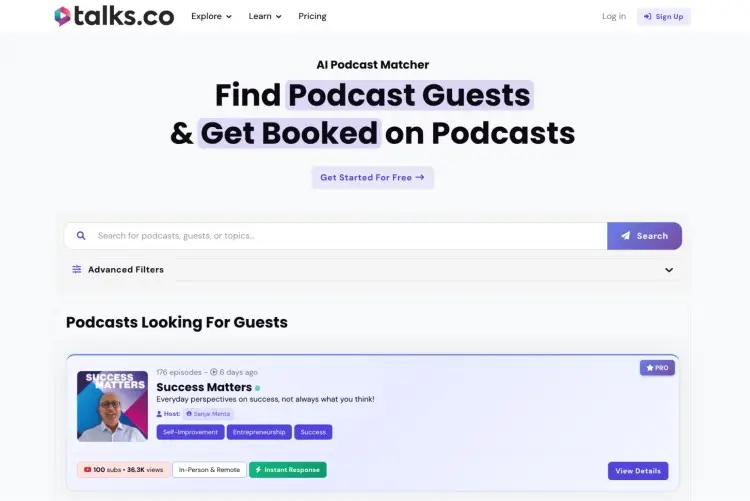
Not every social platform works the same. Some help people discover your show, others let you connect with listeners who stick around.
Focus on the best social media for effective podcast marketing to promote podcast episodes where your audience actually spends time and make your posts count.
- Talks: Your all-in-one creator profile is a living media kit. It stores your bio, episodes, and links in one place. Embed your podcasts from Spotify, YouTube, or other platforms to boost your podcast discovery stats and let hosts or guests see everything they need in seconds.
- Facebook: Best social media to promote community-building within Facebook Groups, Pages, and Live sessions. Easy to share links and interact with listeners, but organic reach is low without paid ads relevant to your podcast.
- Instagram: Platforms like Instagram are great for short, engaging clips. Use Reels, Stories, and stickers as ways to grow and boost your social media presence and interaction. Highly visual with strong engagement tools but lacks direct link-sharing in posts.
- YouTube: A top search engine where podcast content has long-term discoverability. Ideal for full episodes, clips, and Shorts. Requires video production and keyword optimization but offers great visibility.
- TikTok: Ideal for short, viral clips of your podcast to promote the episode. The algorithm helps new content reach a wider audience fast. High engagement potential but requires frequent, high-energy content.
- LinkedIn: This is one of my go-to platforms for promoting podcast episodes. I have 20,000+ followers on my profile and run a LinkedIn group where I share episodes and start conversations. If you have a business-focused audience, LinkedIn is a great place to grow your podcast.
- Spotify and podcast directories: Essential for actual listening, but limited in social engagement. Features like playlists and algorithm recommendations help boost visibility, but external promotion is needed for podcast growth.
Instead of trying to be everywhere, focus on one to two platforms where you can post social proof consistently and interact with your audience.
How to Promote a Podcast on Social Media
Posting randomly won’t grow your podcast. A solid podcast content distribution strategy is an effective way to promote your podcast and make sure your content reaches your target audience and keeps listeners engaged every time you record a podcast.
1. Set clear goals
Before you post anything ask yourself: what outcome matters most right now?
- More listeners and downloads
- Engagement on social platforms
- Email list growth
- Guest bookings or speaking opportunities
Setting a clear target helps you choose the right content and measure what’s working.
The Diary of a CEO podcast by Steven Bartlett was built with a clear discoverability goal using long-form YouTube content alongside audio platforms.
It’s now one of the most downloaded podcasts globally with 14.8 million YouTube subscribers and 1.2 trillion views across all his content.
2. Choose the right social media channel
Each platform serves a different purpose. Think about what your audience uses:
- Instagram: Great for Reels and audiograms; reminder to put your episode link in your bio or Stories.
- YouTube: Full episodes and Shorts can get discovered over time via search.
- TikTok: Short clips can introduce your show to new listeners fast.
- LinkedIn: Works well if your podcast is business or career‑focused.
- Spotify and other major podcast directories: These are where people actually listen. Social media brings them there.
Case in point: Call Her Daddy exploded by sharing relatable clips on TikTok and Instagram, which helped it grow into one of the world’s most‑listened‑to shows and land major deals with Spotify.
3. Plan content in advance
A social media calendar stops you from scrambling with your various social media posts. Build themes around each episode:
- 30‑second audio or video highlights
- Key quotes
- Behind‑the‑scenes photos or clips
- Polls, questions, or listener prompts
Planned content with the help of social media management tools keeps your brand consistent and gives you multiple touch points per episode.
4. Make your podcast shareable
Design for sharing. Think beyond links:
- Audiograms with captions that catch attention
- Quote cards from guests or key points
- Short video snippets that tease something juicy
Why it matters: TikTok clips that go viral don’t always translate into listens one‑to‑one — but they do bring eyeballs and curiosity back to your show, often leading to spikes in listens when you follow up with a direct episode CTA.
5. Engage with followers and subscribers daily
Posting isn’t enough. You have to be present.
- Answer comments
- Respond to DMs
- Tag guests when you share episode clips
Daily interaction turns one‑time viewers into regular listeners and repeat sharers.
6. Track the types of content what works
Use analytics to compare performance:
- Which clips get the most views?
- What posts drive clicks back to your episode link?
- Does engagement rise after a specific type of content?
Then shift your podcast content strategy accordingly. Podcasts that grow on social don’t guess; they measure and refine.
How to promote your podcast on Instagram
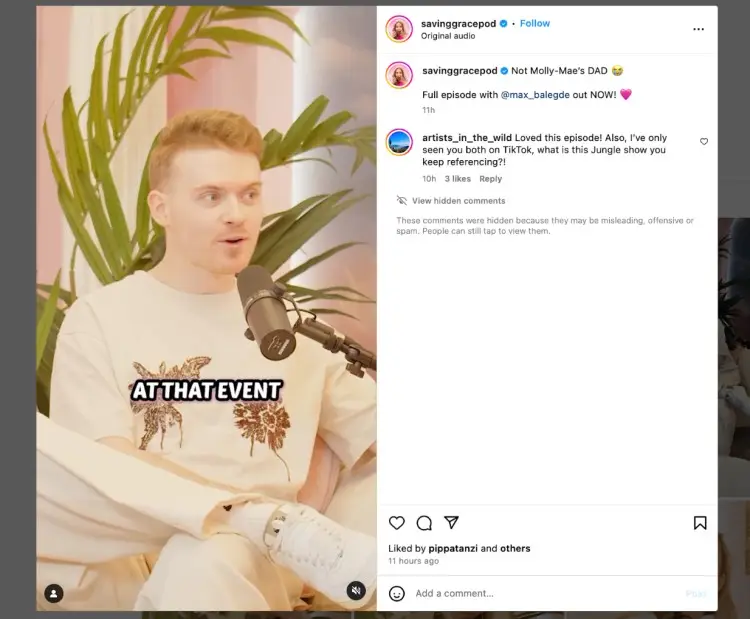
Instagram is where people go to feel something, laugh, argue, save a quote, or send a clip to their friends. Your job is to turn your podcast episodes into moments people want to stop scrolling for.
7. Post Reels that make people stop, watch, and share
Reels still get real reach without a huge following. They show up in Explore and stick around longer than static posts.
What to do:
- Clip 10-30 seconds of your best moment to repurpose podcast content
- Add bold captions so people understand it without sound
- Use a thumbnail that makes someone stop scrolling
8. Turn strong moments into audiograms
Most people scroll with sound off. An audiogram gives your clip a reason to exist on screen.
What to do:
- Pick a quote that can stand alone
- Add waveforms and captions so the listener doesn’t need sound
- Keep it branded and clean
Audio alone doesn’t cut it on Instagram. An audiogram turns sound into something people can watch, even if they’re in public.
9. Use Stories like you’re talking to one person
Stories are your daily contact with the audience who already wants to see you. They’re perfect for small, interactive moments.
What to post:
- Polls about good podcast topics
- Countdown to new episodes
- Short clips from behind the mic
- Reposts of listeners who share you
Big shows and small shows do this for the same reason: repetition builds familiarity.
When people see your face and your show every few days, clicking your episode stops feeling like a decision and starts feeling automatic.
10. Let your guests do some of the heavy lifting
Your guests already have an audience. When they post your episode, their people see it too.
What to do:
- Tag them in your Reels, Stories, and posts
- Send them a vertical clip they can drop into Stories
- Give them a caption they can copy and paste
When marketers and creators appear on big shows (like Marketing School or The GaryVee Audio Experience), they post clips and promo posts the moment the episode drops.
That simultaneous push spikes engagement and pulls new listeners in from both sides.
11. Make your Instagram bio useful and informative
If someone clicks your profile and gets confused, you’ve lost them.
Keep it simple:
- One clear line about who the show is for
- One reason to care
- One link that goes to your latest episode or your custom Talks Show Profile
Instead of sending people to a generic homepage, they point the link to the current episode or a tight episode list.
Fewer clicks = Less thinking = More plays.
12. Go Live when you’ve got something to say, not something to promote
Lives trigger notifications and put you in front of people now. They’re proof that your account is active and worth attention.
Best ways to use it:
- Post-episode reactions
- Quick guest Q&As
- Mini deep dives into a hot topic from the episode
Why it works: Instagram bumps Lives to the top of follower feeds. That’s free attention.
Many podcasters use Live chats to answer audience questions, then clip highlights as Reels that feed the rest of their strategy.
How to promote your podcast on YouTube
YouTube is the social media platform people go to when they’re already looking for answers, opinions, and long conversations.
If your episodes live there the right way, they don’t expire. They keep getting found weeks, months, even years later.
13. Upload full episodes for people who want the whole conversation
A large part of YouTube’s audience uses it like background TV for work, training, or commuting. Full episodes fit that habit.
What to set up:
- Clear titles that say what the conversation covers
- Chapters so viewers can jump to specific parts
- Descriptions that explain who the episode helps and why
Lex Fridman Podcast and Huberman Lab all publish full episodes on YouTube.
Many of their episodes pull steady views months later because people search for the guest or the topic, then stay for the full conversation.
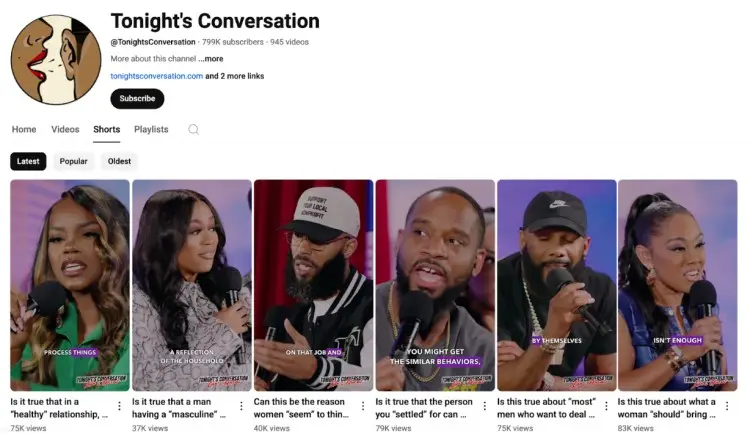
14. Cut Shorts that introduce the episode to new viewers
Shorts act as entry points. They show up in feeds where people have never heard of your show.
What usually works:
- 15 to 45 second moments with a clear point or story
- Subtitles and/or closed captions for phone viewing
- A clip that stands on its own without context
Channels for shows like Modern Wisdom and On Purpose with Jay Shetty post frequent Shorts taken from longer episodes.
Those clips often rack up views from people who never searched for the podcast, then send traffic to the full video.
15. Write titles that are human-first instead
Titles decide whether your video gets watched or ignored.
Keep them focused:
- One main idea
- Plain language
- A clear promise about what the viewer will get
Alex Hormozi’s channel uses direct, benefit-driven titles tied to business outcomes like “How to get SO rich you question the meaning of making money” that has 4.4 million views to date.
The videos rank for business topics and keep pulling in new viewers because the titles match what people already search for and care about.
16. Use thumbnails that stay readable on a phone
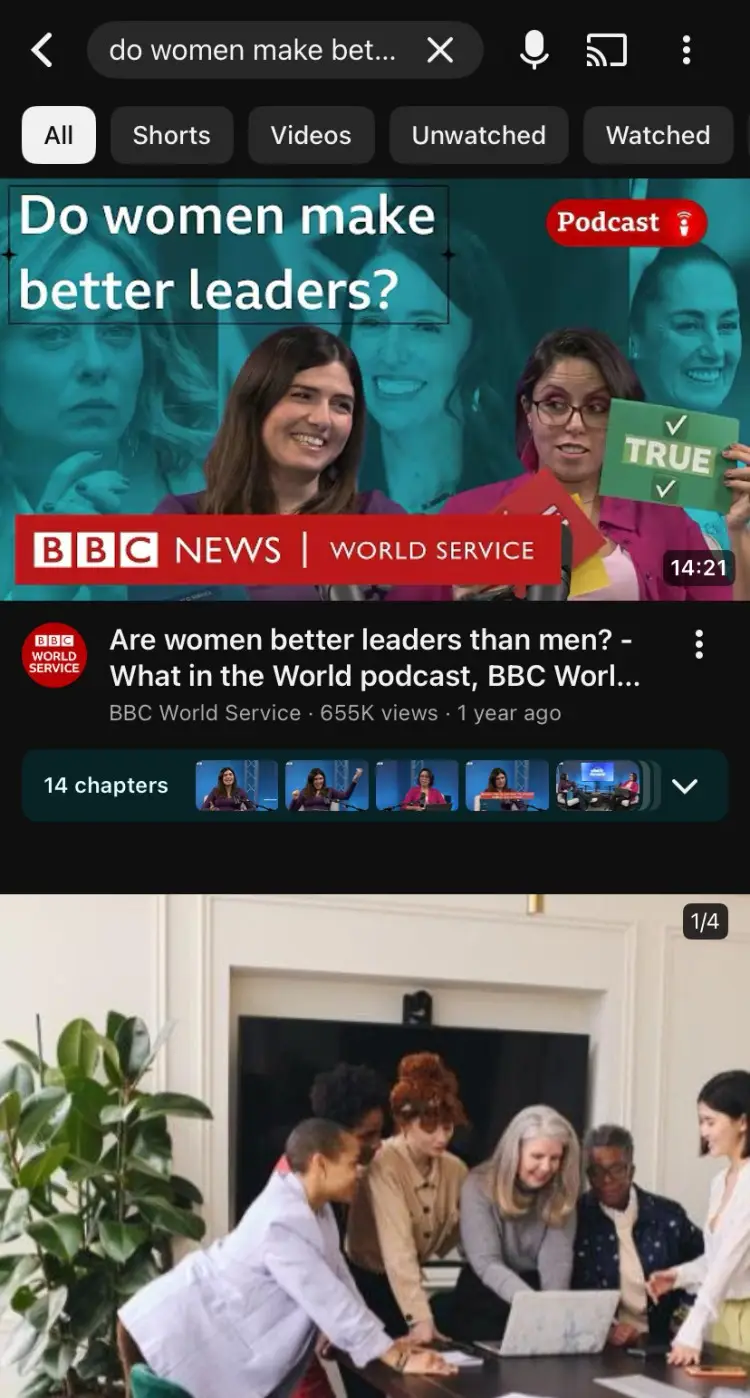
Most views start on mobile. If the thumbnail is unclear, the scroll keeps going.
What tends to perform better:
- One face or one strong visual
- High contrast
- Very little text, or none at all
Look at the thumbnail from BBC World Service’s What in the world podcast. They stay simple and recognizable. You can usually tell who the guest is and what the video is about in a split second.
17. Ask for comments in a specific way
Engagement pushes videos further in recommendations. Vague requests rarely get replies.
Try this instead:
- Ask about a point the guest made
- Ask which part people agreed or disagreed with
- Ask what topic they want next
Something you’ll commonly see while learning how to become a content creator are business and creator podcasts with active comment sections who often turn the episode topic into a question.
That keeps the discussion going and signals to YouTube that people stay and interact.
18. Share your YouTube episodes through your Talks profile
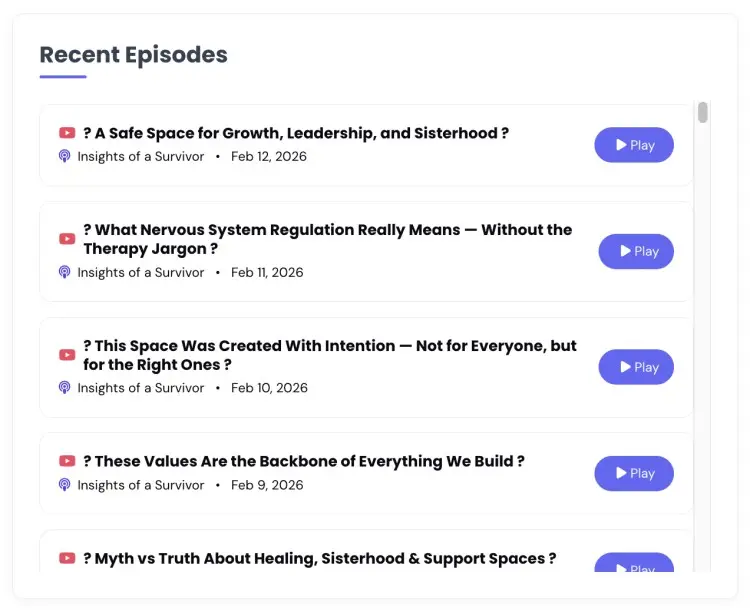
If you already publish on YouTube, you don’t need to send people a stack of links, folders, or PDFs just to share your podcast content.
A Show Profile on Talks works like a live speaker one-sheet and media kit in one place, and it lets you embed your videos so people can watch right there.
The podcast Insights of a Survivor uses its show profile to present everything a guest or collaborator needs in one podcast page:
- The show’s positioning and audience
- Guest expectations and topics
- Recent episodes people can play immediately
- Clear calls to apply or get in touch
Instead of asking guests to click through multiple platforms, the profile does the sorting for them. They can scan the show, watch or listen to different moments from your podcast, and understand everything in a few minutes.refresh your p
How to promote your podcast on Spotify
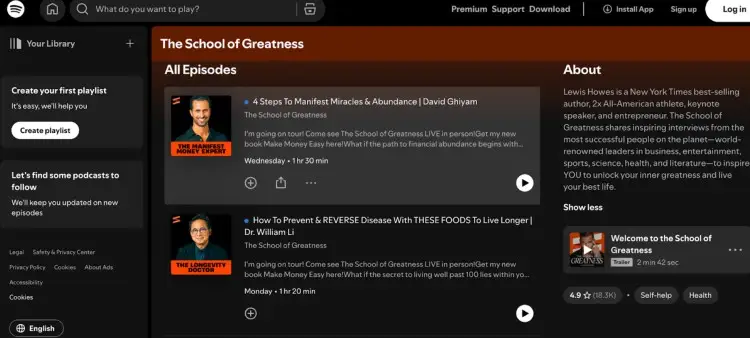
Spotify is where people actually listen to podcasts, making it a key platform for promotion.
While it doesn’t function like traditional social media, there are tons of ways to improve your podcast’s visibility and attract more listeners.
19. Optimize your podcast title and description
Your title and description decide whether your show shows up when someone searches.
What to tighten up:
- Say what the show is about in plain language
- Include the topics and audience you serve
- Keep it readable, not stuffed with keywords for the sake of SEO
Big shows like The Joe Rogan Experience keep their positioning clear and topic-led, which helps episodes surface when people search for guests or themes.
20. Ask for follows and ratings in a natural way
Followers and ratings act like signals that your show’s worth sticking with.
Where to do it:
- At the end of episodes
- In your episode descriptions
- In your email or social posts when a new episode drops
More engagement gives Spotify more reason to recommend your show to people who already listen to similar topics which means more free podcast advertising for you.
21. Share direct episode links everywhere you already post
Make it easy for someone to press play in one tap.
Good places to drop links:
- Your newsletter
- Your website
- LinkedIn, X, or Instagram bios
- Guest follow-up messages
Fewer clicks between interest and listening usually means more actual listens.
22. Embed episodes on your site or blog
Some people prefer to listen without leaving the page they’re on.
Where this helps:
- Show notes pages
- Blog posts that reference an episode
- Guest pages or resource pages
What this does: It turns your site into a listening spot, not just a signpost to somewhere else.
23. Ask guests to share their episode with their audience
Your guest already has people who trust them. That’s built-in distribution.
Make it easy for them:
- Send them the Spotify link
- Give them a short caption they can copy
- Share a clip they can post alongside the link
Even a few guest shares can send a steady stream of new listeners to an episode, especially in the first week.
How to Market a Podcast on Social Media
Every platform has a sweet spot when it comes to the type of content that gives you the results you need. And each platform has its own language, so here’s how to play it right.
24. Make every post feel like a mini-episode
Podcasts on Instagram live in the scroll, the double-taps, and the DMs. The goal? Make every post feel like a mini episode.
- Reels with bite-sized hooks: Clip 15-30 seconds of the funniest, juiciest, or most relatable part of your episode.
- Stories as micro-conversations: Polls, countdowns, and Q&As create small interactions that add up.
- Guest takeovers: Give your guest access to your Stories for a day to show their perspective.
Let’s pretend you’re the host of The Sleepy CEO podcast. You post 20-second Reels of your guest confessing their worst work-from-home mishaps and their struggle deciding whether the Blue Yeti’s worth it after adding to their desk setup or not.
That clip alone can make your followers screenshot, tag friends, and the episodes spike by 15% in streams over a week.
25. Turn trending moments into viral content on TikTok
Short, punchy, and scroll-stopping. That’s TikTok. It’s all about curiosity and entertainment.
- Snip the wildest moment: Pick one moment that sparks a “wait, what?” reaction.
- Add captions and context: Even without audio, viewers should get the joke or insight.
- Trend tie-ins: Use popular audio clips or formats to boost discoverability.
Imagine a podcast called Healthy-ish Snacks that posts clips of a guest describing a midnight cookie disaster, sets it to a trending audio, and within two days it racks up 300k views.
Curious viewers click through to listen to the full episode.
26. Build engaged communities with Facebook groups and live chats
Facebook still works great if you treat it like a clubhouse for your niche audience.
- Groups for community: Share episode highlights, ask for opinions, and start threads that invite stories, not just likes.
- Live discussions: Run short post-episode chats or quick guest follow-ups that give people a reason to show up in real time.
- Pin content: Keep your strongest episode or your “start here” post at the top so new members know where to begin.
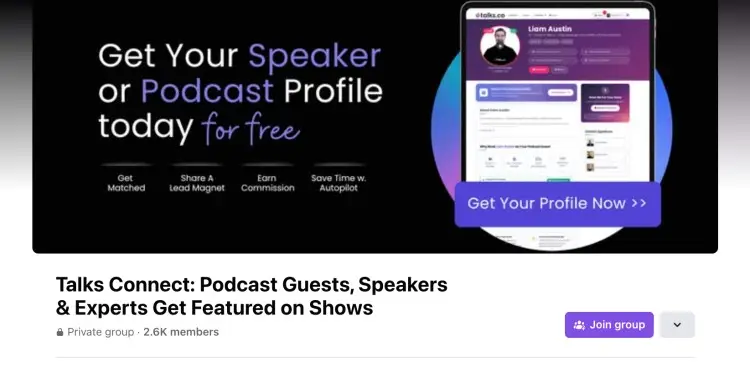
Talks Connect is a private group run by us where hosts and guests actually talk to each other, not just drop links and disappear.
The group uses clear posting formats like #FindaGuest and #BeaGuest, which turns the feed into ongoing conversations.
That structure makes it easy for shows to surface opportunities to find podcast guests, for guests to respond in comments, and for relationships to start without cold DMs or link spam.
27. Leverage LinkedIn posts and carousels to reach professional audiences
For business and creator podcasts, LinkedIn works best when your episode shows up as ideas people can save, comment on, and forward to a teammate.
- Threaded posts: Break one episode into 3 to 5 sharp points and post them as a short sequence people can skim.
- Carousel slides: Turn one strong insight into a swipeable mini-story that stands on its own in the feed.
- Quote-led visuals: Pull a line that makes someone stop scrolling and build the post around it.
- Soft CTAs: Link the full interview at the end for readers who want the whole conversation.
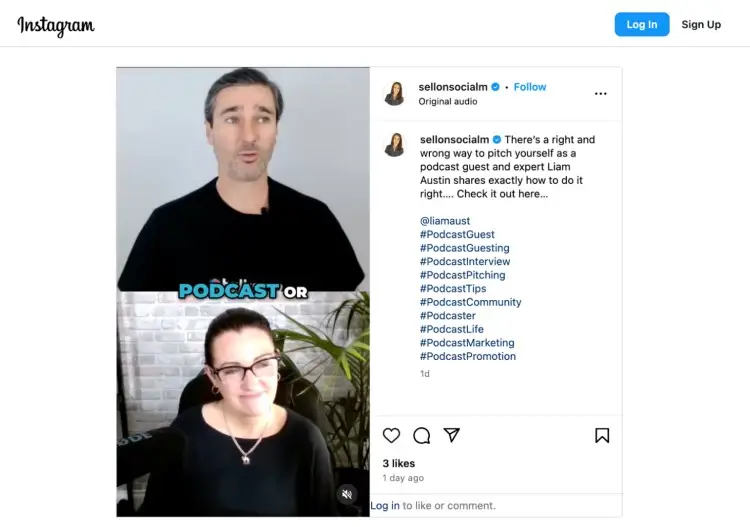
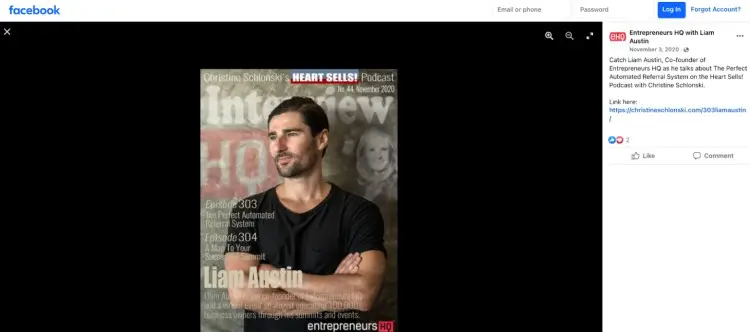
Liam Austin runs a weekly newsletter called The Visibility Playbook tied to Talks.co. Each issue leads with one sharp visibility idea, then points to podcast interviews as proof.
Insight first, context second.
That turns every issue into a quiet distribution channel for past and new podcast appearances without asking people to “go listen” up front.
28. Pin audiograms and topic boards to grow discoverability on Pinterest
Yes, podcasts belong here too if you treat pins as content gateways.
- Pin audiograms: Create vertical clips with captions and episode highlights.
- Topic boards: Organize pins by episode themes or guest expertise.
- SEO-friendly descriptions: Use keywords your ideal listener might search for.
You could start a podcast called Mindful Mornings and post a 30-second clip about a meditation tip from your latest guest.
Now imagine that pin gets saved 500 times in a week by users planning their morning routines, and they discover the full episode on Spotify.
How to Launch a Podcast on Social Media (Checklist)
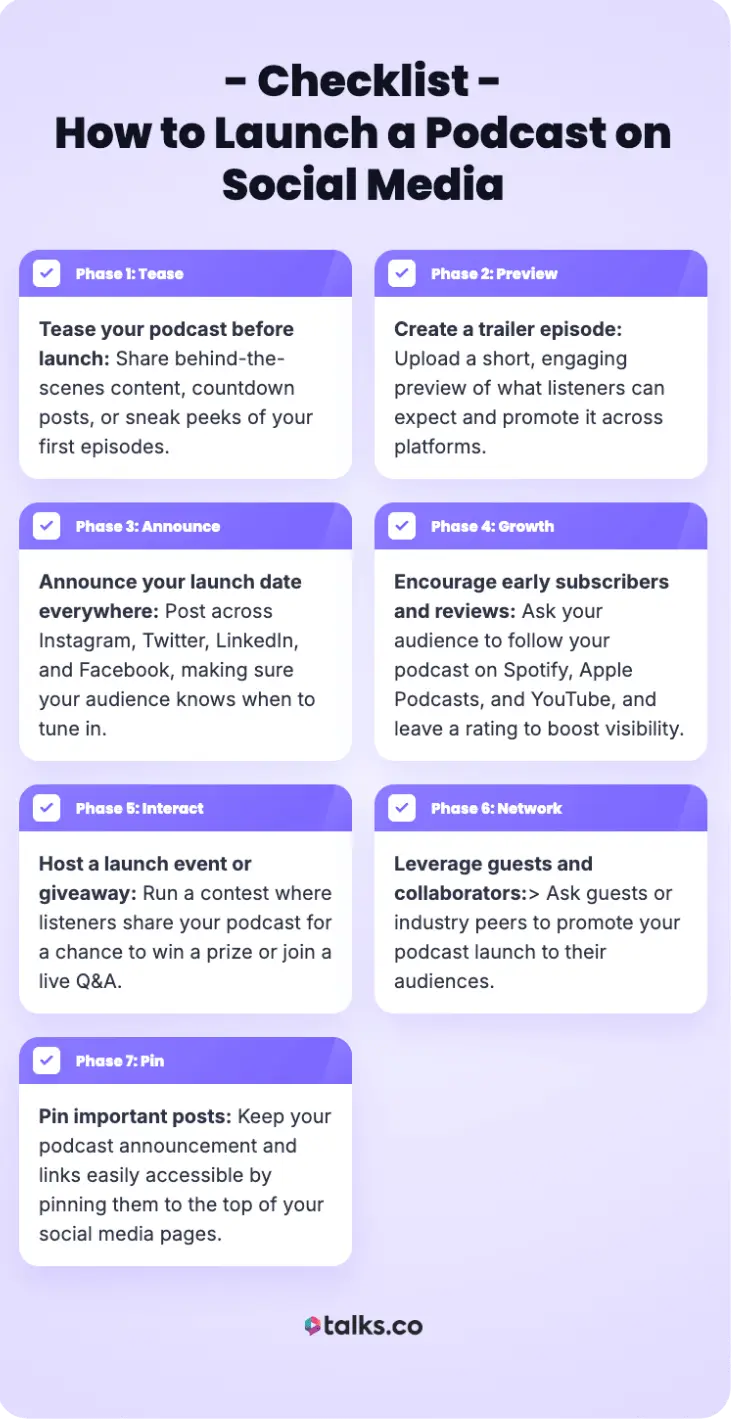
A strong social media launch can give your podcast the momentum it needs to attract listeners from day one. Instead of just announcing your first episode, build excitement and engagement leading up to the launch.
☐ Tease your podcast before launch: Share behind-the-scenes content, countdown posts, or sneak peeks of your first episodes.
☐ Create a trailer episode: Upload a short, engaging preview of what listeners can expect and promote it across platforms.
☐ Announce your launch date everywhere: Post across Instagram, Twitter, LinkedIn, and Facebook, making sure your audience knows when to tune in.
☐ Encourage early subscribers and reviews: Ask your audience to follow your podcast on Spotify, Apple Podcasts, and YouTube, and leave a rating to boost visibility.
☐ Host a launch event or giveaway: Run a contest where listeners share your podcast for a chance to win a prize or join a live Q&A.
☐ Leverage guests and collaborators: Ask guests or industry peers to promote your podcast launch to their audiences.
☐ Pin important posts: Keep your podcast announcement and links easily accessible by pinning them to the top of your social media pages.
A well-planned launch gets people excited, boosts early engagement, and helps your podcast gain traction right from the start.
How to build a social media following for podcast shows
Growing a following is less about viral moments and more about boring, repeatable actions done on a schedule. Think in daily, weekly, and monthly blocks so progress compounds instead of stalling.
- Post something every day: One clip, one quote, or one idea from an episode to stay visible and train the algorithm to expect you.
- Reply to comments and DMs daily: Turn drive-by listeners into real people by answering, reacting, and starting conversations.
- Engage on 10-20 relevant accounts daily: Leave thoughtful comments where your listeners already hang out so your profile gets discovered.
- Publish 3-5 strong pieces a week: Prioritize quality clips and posts that showcase the best of your content and make someone stop scrolling, not filler social media updates.
- Test one new format each week: Try a new hook style, caption style, or video format and keep what actually gets saves and shares when it comes to social media.
- Review your numbers once a week: Double down on posts that get replies, saves, and profile visits. Kill the rest.
- Collaborate at least once a month: Do a cross-post, a swap, or a mini-series with someone who already has your audience (and don’t forget your podcast guest release form).
- Refresh your profile monthly: Update your bio, pinned posts, and links on your social media feeds so new visitors instantly get what your show is about.
How to share your podcast on social media
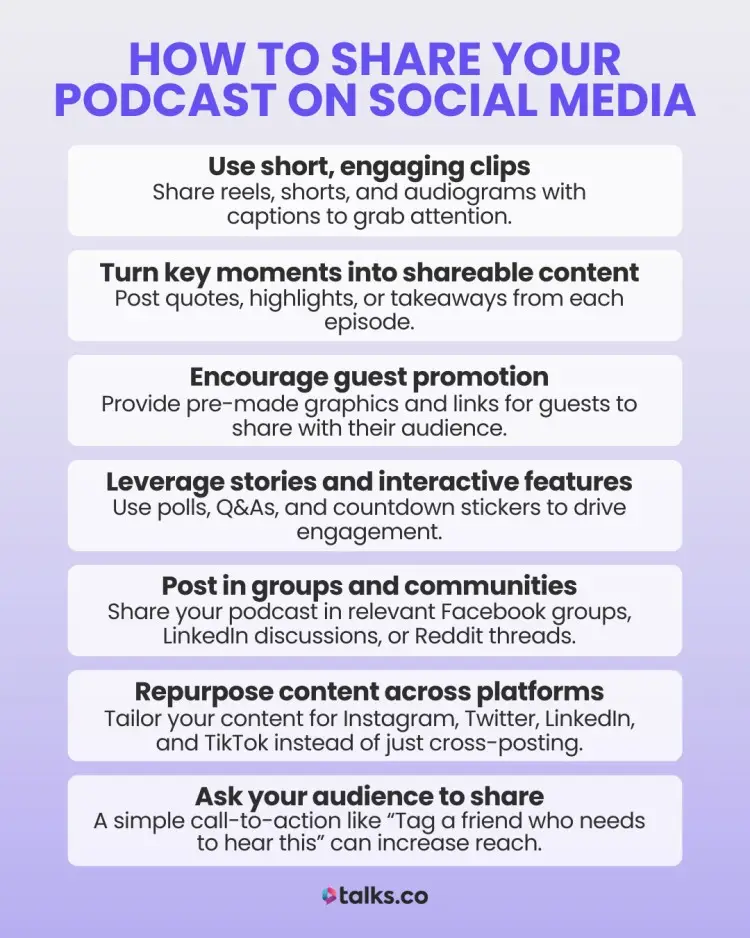
Make it easy for your audience to discover, interact with, and spread the word about your podcast.
- Use short, engaging clips: Share Reels, Shorts, and audiograms with captions to grab attention.
- Turn key moments into shareable content: Post quotes, highlights, or takeaways from each episode.
- Encourage guest promotion: Provide pre-made graphics and links for guests to share with their audience.
- Leverage Stories and interactive features: Use polls, Q&As, and countdown stickers to drive engagement.
- Post in groups and communities: Share your podcast in relevant Facebook groups, LinkedIn discussions, or Reddit threads.
- Repurpose content across platforms: Tailor your content for Instagram, Twitter, LinkedIn, and TikTok instead of just cross-posting.
- Ask your audience to share: A simple call-to-action like “Tag a friend who needs to hear this” can increase reach.
The more interactive and engaging your content is, the more likely it is to be seen, shared, and drive new listeners to your podcast.
Do’s and don’ts of promoting your podcast via social media
Good promotion builds trust and curiosity. Bad promotion trains people to scroll past you. These keep you on the right side of that line.
Do:
- Do lead with the idea, not the link: Make the post valuable on its own before asking for the click.
- Do keep your message consistent: Your show should stand for a few clear topics, not a different identity every week.
- Do show your face and voice: People follow people, not logos or waveforms.
- Do write captions like you talk: Clear, simple, and human beats clever or corporate every time.
- Do give context in every post: Assume someone is seeing you for the first time and help them understand why they should care.
Don’ts:
- Don’t only post when an episode drops: That trains your account to be ignored most of the time.
- Don’t turn every post into a sales pitch: If everything is “go listen,” nothing feels worth listening to.
- Don’t chase every trend: If it doesn’t fit your show or your audience, it just adds noise.
- Don’t argue with your audience in public: You’re building a room people want to stay in, not a comment section battlefield.
- Don’t ignore what actually gets responses: Your audience is already telling you what works. Pay attention and adjust.
Spread the Word Where It Matters
If your promotion is just links and polite announcements, you’re training people to ignore you.
Attention doesn’t come from being present. It comes from knowing exactly how to promote a podcast on social media and being unmissable.
From showing up where your audience already scrolls, saying something they feel in their chest, and giving them a reason to stop, save, and share.
You can keep playing the slow game (a.k.a. posting into the void and hoping the algorithm feels generous).
Or you can put your show in front of other people’s audiences and let borrowed trust do the heavy lifting.
If you want your name circulating in your niche instead of collecting dust, start getting in the rooms that already have listeners.
Create your free Talks Creator profile and start landing guest spots on shows your audience already loves.
More ears. More leverage. Less begging for attention.


