

You’ve recorded the perfect episode, edited out the “ums,” and polished the audio until it shines. But now you’re staring at a download count that isn’t moving as fast as you’d like.
Sucks, right?
I hate to break it to you, but even the most groundbreaking podcast episode can get lost in the noise if no one knows it exists.
That’s where a rock-solid podcast social media strategy comes in. Being present and engaging on social media can turn your show from a hidden gem into a must-listen for your target audience.
From content plans to asset formats and video podcast promotion, I’ll walk you through everything you need to create content, prepare your social media marketing strategy, and engage with your audience better.
What’s a Podcast Social Media Strategy?
A podcast social media strategy is the specific, intentional system you use across social platforms that tells you what to post, where to post it, when to show up, and how to talk about your show so the right people stop mid-scroll and think, “Wait, this is exactly what I’ve been looking for.”
Without it, you’re just shouting into the void and hoping the algorithm has mercy on your social media promotion and marketing efforts every time you share your podcast.
What is a social media strategy?
A social media strategy is a documented plan that answers five things:
- Who you’re trying to reach: Not “women who like true crime” but “women in their 30s who commute, follow Amanda Knox, and have strong opinions about wrongful conviction cases.”
- Which platforms they actually live on: Hint, it’s probably not all of them.
- What content moves them from casual scroller to someone who hits follow and turns on notifications.
- How often you show up on podcast apps and social networks so you stay top of mind without burning out new and existing podcast listeners.
- What success looks like in real numbers, not “podcast growth,” or “create a community around your podcast,” which means nothing and measures nothing.
Is a podcast a social media platform?
Technically, no. It’s a media format that lives on Apple or Spotify. But social media is where the relationship starts and your podcast is where it deepens.
Someone sees your clip on Reels > listens to a full episode > trusts you > tells a friend.
That loop is your actual growth engine.
Podcast on social media and its effects on visibility
Posting your episode link and calling it a day will keep you stuck at 47 plays forever. Here’s what actually happens when you show up with intention:
- You get discovered: A 60-second TikTok clip finds your next 500 listeners faster than any Spotify search ever will.
- You build a sustaining community: Passive listeners become weekly regulars who tag their friends when downloads dip.
- You become the go-to name in your niche: Consistent social media channel presence moves you from “a podcast about X” to the podcast about X.
- You give sponsors a reason to say yes: An engaged audience that replies, shares, and buys closes deals a download number alone never will.
- You attract collaborations and speaking opportunities: Podcast swaps, brand partnerships, and stage invitations go to the hosts who are visible. Full stop.
How to Make a Social Media Strategy for Podcasts
You have the expertise, the mic, and the episodes to prove it.
The part that most coaches, consultants, and speakers skip when you want to grow your podcast (and then wonder why their show isn’t growing) is the strategy that sits behind every post, every clip, and every platform decision.
A podcast without a social media strategy is a really well-produced secret. Here are all my proven strategies to fix that.
1. Define your goals
Vague podcast marketing strategies and goals produce vague results.
Before you post any social media content and promote your podcast on social media pages, decide what success looks like and attach a real number to it:
- Growing your audience: 500 new podcast followers in 90 days across Apple and Spotify.
- Boosting visibility: 3 inbound speaking or guesting inquiries per month driven by social content.
- Building a pipeline: 10 discovery calls booked per month from listeners who found you through your clips.
- Attracting sponsors: 1,000 downloads per episode within 6 months.
Pick one primary goal per quarter. Chasing all four at once waters everything down.
2. Identify your ideal listener
Your ideal listener is not “entrepreneurs” or “people who want to grow”. So get uncomfortably specific about you you want to market your podcast to:
- Job and frustration: A 38-year-old consultant who feels invisible in their industry despite years of expertise.
- Listening habits: Consuming podcasts on their morning run, meaning your episodes need to hold attention without visual aids.
- Search behavior: Googling “how to get booked on podcast shows to build authority” at 11pm.
That specificity tells you what platforms they’re on, what content hooks them, and what problem your podcast solves.
3. Choose the right platforms
Showing up everywhere at once is the fastest route to burning out and producing mediocre content across five platforms. Pick two social media accounts to start.
One for discovery, one for community:
- TikTok and Instagram Reels (discovery): Where new listeners find you through the algorithm pushing your content to non-followers.
- Instagram and Facebook Groups (community): Where existing listeners engage, build relationships, and recruit their friends.
- LinkedIn (both): Non-negotiable for coaches, consultants, and speakers with a professional or B2B audience who want to book or find podcast guests.
4. Develop your content pillars
Content pillars are the three to five recurring themes your social content lives inside, so you’re never starting from a blank page:
- Episode insights: The single most counterintuitive takeaway from each episode posted as standalone content.
- Client transformation stories: Real outcomes from your work tied back to the podcast’s core themes.
- Hot takes: Your unfiltered opinion on something happening in your niche right now.
- Behind the scenes: The unglamorous reality of running a podcast that makes followers feel like insiders.
Every piece of content maps to a pillar. If it doesn’t fit, it doesn’t get posted. Adjust your strategy as needed.
5. Commit to a consistent posting schedule
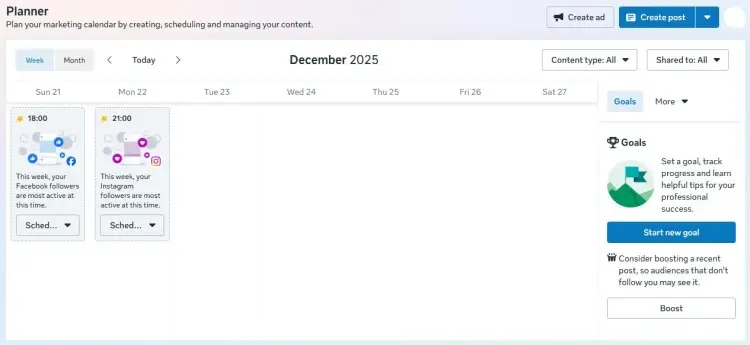
Three intentional posts a week outperform seven rushed ones every single time. A sustainable schedule for a podcaster who also runs a business:
- 3x short-form video clips: TikTok or Reels pulling the most surprising 60 seconds from each episode.
- 2x static posts or carousels: Instagram or LinkedIn breaking one episode concept into five swipeable steps.
- 1x longer-form post or thread: LinkedIn or X expanding the episode’s core argument from a single hook.
Set one non-negotiable batch day per week and produce everything in one sitting.
6. Craft branded visuals
Your visuals are the first impression before anyone hears your voice and inconsistency signals amateur hour before a word is read:
- Episode cover graphics: A locked Canva template where you swap only the title and guest name each week.
- Audiogram templates: A pre-built waveform animation over your brand colors in 60-second and 30-second versions.
- Quote graphic templates: Same background, font, and logo placement every time. Swap only the quote text.
- Short video bumper: A two- to three-second branded intro added to every Reel and TikTok in post-production.
7. Engage with your community
Posting and ghosting kills reach, kills relationships, and kills the algorithm’s willingness to distribute your content:
- Respond to every comment within the first hour: Early engagement signals the algorithm to push the post further to non-followers.
- Reply to DMs within 24 hours: An ignored DM is a potential listener, client, or collaborator you just lost.
- Leave three to five comments daily on the most popular podcasts your ideal listener follows: Two to three sentences that add a real perspective, never “great post!”
For coaches and consultants, your comment section is a sales tool and every response is a micro-audition.
8. Track what’s working
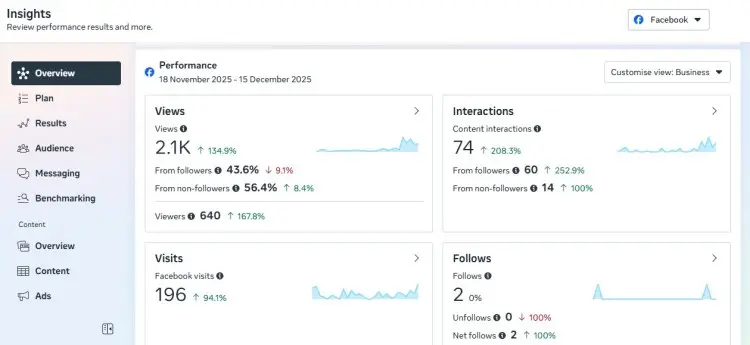
Check your analytics every two weeks instead of daily checks that produce panic-driven decisions based on data too fresh to mean anything:
- Profile visits: Are people curious enough to click through after seeing your post?
- Link clicks: Are they following through to actually listen to the episode?
- Saves and shares: Are they finding it valuable enough to keep or send to someone else?
Follower count is a pretty metric, but these three tell you whether your strategy is actually working.
Free 30-Day Podcast Social Media Plan You Can Copy and Use
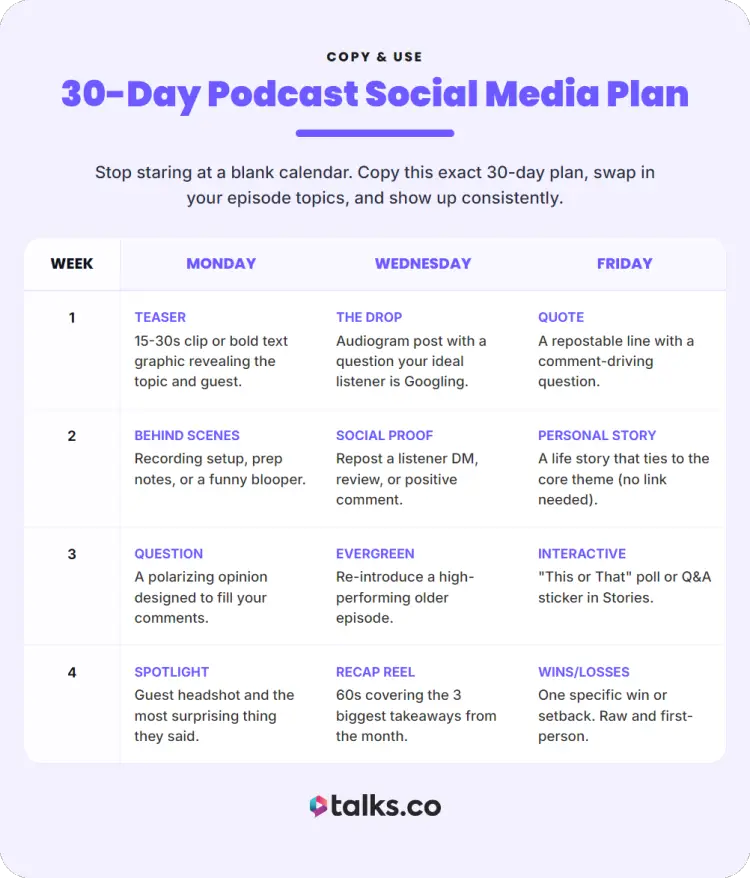
Stop staring at a blank content calendar every Monday morning. Copy this exact 30-day plan, swap in your episode topics, and show up consistently without burning out:
| Week | Monday | Wednesday | Friday |
|---|---|---|---|
| 1 | Episode teaser: 15-30 second clip or bold text graphic revealing the episode topic and guest name | Episode drop: Audiogram post with a caption that opens with a direct question your ideal listener is already Googling | Quote graphic: The single most repostable line from the episode with a question in the caption to drive comments |
| 2 | Behind the scenes: Recording setup, pre-interview prep notes, or a blooper that didn’t make the final cut | Social proof: Repost the episode link alongside a real listener DM, review, or comment reaction | Personal story: A specific story from your own life that ties directly to the episode’s core theme, no link needed |
| 3 | Niche question: One polarizing opinion related to your episode topic designed to fill your comment section | Evergreen episode: A high-performing older episode reintroduced to followers who missed it the first time | Interactive Story: A “This or That” poll, fill-in-the-blank, or Q&A sticker tied to your podcast’s core topic |
| 4 | Guest spotlight: Guest headshot, credentials, and the single most surprising thing they said in the episode | Episode recap Reel: 60 seconds covering the three biggest takeaways from your most downloaded episode this month | Wins or struggles: One specific win or setback tied to your podcast topic, raw, first-person |
How often should you post media content?
Truth is, there’s no magic number, but consistency beats frequency. Start with a pace you can sustain and increase it as you get comfortable with your content calendar.
Most podcasters choose between publishing weekly, bi-weekly, or monthly. A few who already have a bank of pre-recorded episodes post daily.
If you can only manage three high-quality posts a week, that’s better than seven low-quality ones.
How to Promote a Podcast on Social Media
Every platform has its own rules, its own audience, and its own content format that wins. Here’s how to show up on each one with intention:
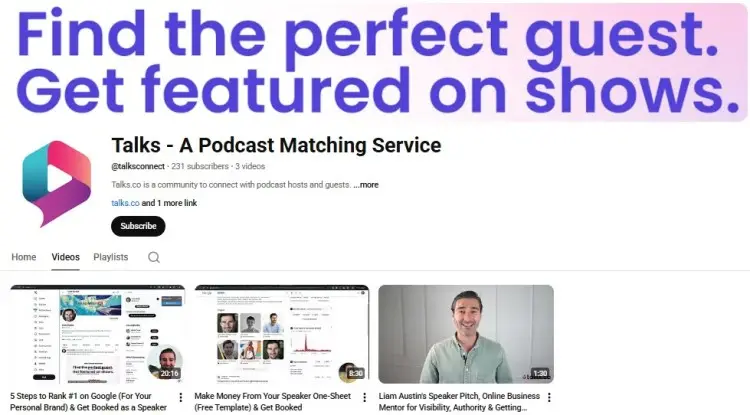
How to promote a podcast on Talks
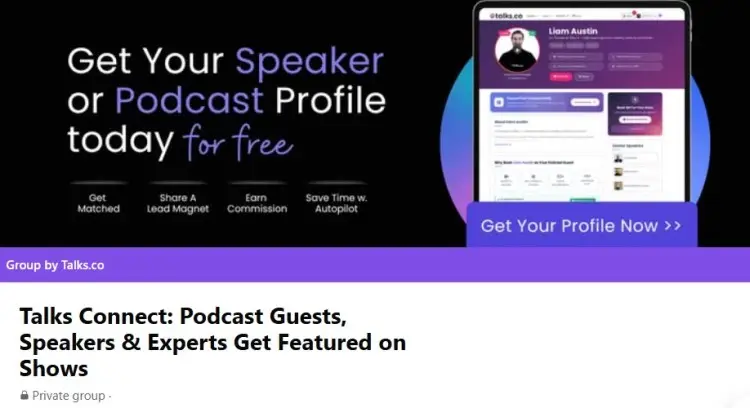
Talks is a free two-sided marketplace that matches podcast hosts with the right guests and coaches, consultants, and speakers with the right shows.
No cold pitching, manual searching, or paid wall to get started.
- As a guest: Create a free profile, set your topic expertise, and get AI-powered match suggestions from shows whose audience already wants what you teach.
- As a host: Search verified guest profiles filtered by niche, topic, and audience size so every booking is the right fit from the start.
- Auto-match: When a host shows interest in your profile and meets your criteria, Talks automatically connects you without you lifting a finger.
- Auto-message: The moment you match with someone, Talks sends them a customized message from you. Drop your calendar link in and let bookings land on autopilot.
- Free speaker page: Talks builds you a public profile that auto-updates with every new guest appearance, ranks on Google and AI search results, and puts you in front of new audiences 24/7.
- It’s forever free to start: Unlike most competitors that are paid-only, Talks lets you try the platform before upgrading.
How to do a social media strategy for Facebook
Facebook rewards community over content, making it the strongest platform for turning listeners into a loyal group:
- Create a dedicated podcast Facebook Group: Post episode discussion questions, early-access clips, and behind-the-scenes content exclusively for members.
- Share episodes in niche Facebook Groups: Find groups where your ideal listener already hangs out and contribute value before dropping links.
- Use Facebook Live: Host a live Q&A tied to each new episode to drive real-time engagement and notify your existing followers automatically.
How to create a podcast social media marketing strategy for Instagram
Instagram is where your podcast becomes a visual brand and where the right content format can turn a non-follower into a listener in under 60 seconds:
- Post Reels first: A 60-90 second clip of your sharpest episode moment gets pushed to non-followers by the algorithm more aggressively than any other format on the platform.
- Use Stories for community: Run weekly polls, Q&As, and behind-the-scenes sequences that make existing followers feel like insiders.
- Carousels for value: Break one episode concept into five swipeable slides with a bold opening that works as a standalone scroll-stopper.
How to promote a podcast on TikTok
TikTok is the highest-reach discovery platform for podcasters right now so even just one clip can reach 50,000 non-followers in 48 hours with zero paid promotion:
- Hook in the first three words: Your caption and opening frame need to stop the scroll before a single second of audio plays.
- Post your most counterintuitive take: Clips that challenge a common belief in your niche consistently outperform polished, produced content.
- Post three times a week minimum: TikTok’s algorithm rewards posting frequency more aggressively than any other platform.
How to promote a podcast on LinkedIn
LinkedIn is non-negotiable for coaches, consultants, and speakers with a B2B or professional audience and it rewards depth over virality:
- Lead with a one-sentence hook: Open every post with a single line that makes your ideal listener stop scrolling, then expand into the episode’s core argument in short paragraphs.
- Share key episode takeaways as native posts: LinkedIn suppresses external links, so post the insight first and drop the episode link in the comments.
- Engage in the first 30 minutes: Responding to every comment immediately after posting is what signals LinkedIn to push your content further into the feed.
Podcast Social Media Marketing Software, Tools, and Resources
The right tools cut your content production time in half and keep your strategy running even on your busiest weeks:
- Talks: Match with the right podcasts as a guest, get booked on shows your ideal listener already trusts, and grow your audience without cold pitching into the void.
- Opus Clip: Auto-generates your best short-form clips from a full episode in minutes using AI.
- Headliner: Turns any audio segment into a branded audiogram ready to post in under five minutes.
- Canva: Build locked episode cover, quote graphic, and carousel templates your whole team can use.
- Buffer or Later: Schedule a full week of cross-platform content in one batch session.
- Spotify for Podcasters: Track episode performance and listener demographics directly inside your hosting dashboard.
Podcast for social media marketing (Checklist)
Want to make your podcast social strategy more effective and easier to manage? Here’s everything you can do to plan, stay consistent, and maximize your reach:
☐ Batch schedule your posts in advance: Use Buffer, Later, or Hootsuite to schedule an entire week of content in one sitting so posting never falls through the cracks when life gets busy.
☐ Cross-promote with your guests: Send every guest a ready-to-post graphic and caption the day the episode drops so sharing your episode requires zero effort on their end.
☐ Get booked as a guest on other podcasts: Showing up on other shows puts you directly in front of an audience that already listens to podcasts and trusts the host recommending you.
☐ Use internal resources to go deeper: Our guides on podcast marketing and podcast advertising cover the bigger picture, and our podcast script templates guide will sharpen your workflow.
Top-performing podcast social media posts examples you can study
To keep your feed interesting, you need to mix up your podcast content. Here are a few formats to try:
- Video clips: Alexandra Breck posted a raw, straight-to-camera debrief with zero editing and hit 57.8K views. Pull 60-90 seconds of your most unfiltered take and post it exactly like that.
- Audiograms: The Diary of a CEO opened with a direct question, listed every topic, and closed with a DM call-to-action. It got 98.2K likes because the caption did as much work as the clip.
- Quote graphics: Tony Robbins posted one sentence over branded visuals with zero context and stopped thousands mid-scroll. Find your most repostable line and let it breathe.
- Behind the scenes: The prep, the tech setup, the bloopers? This builds parasocial connection faster than any polished graphic because it puts your audience in the room with you.
Make Your Move
Creating a podcast social media strategy is just one of the strategic moves you can make to grow visibility.
If you’re all about finding new audiences, consider guesting on other shows yourself and expanding through cross-promotion.
I say that as if it’s the easiest thing to do, because it is. Especially with tools like Talks.
You don’t have to prepare a whole pitch or message hundreds of shows before you book an opportunity. Talks makes it simple and quick with AI tools and advanced search features that help you match with relevant shows.
Deborah matched with 10 shows that are right on the money for her. Brian already booked 12 guest spots in a month.
Take the first step by creating your FREE Talks profile.
Yes! I Want to Start Matching and Become a Podcast Guest


