

Have you ever heard someone say something that made you stop and think, “Wait… that’s a really good question”?
That’s the power of a rhetorical question.
A simple question can pull people into a conversation, make them challenge their own thinking as you make your point, and keep your message stuck in their head like a song they can’t shake off.
Personally, my go-to rhetorical question is: “What would you do if you knew you couldn’t fail?”
I love it because it gets people to pause and look at their goals from a completely different perspective.
You’ll find different types of rhetorical question examples from speeches, books, ads, podcasts, and more in this guide, along with how to write your own and use them to make your talks, content, and casual conversations more engaging for fellow speakers and the audience.
What Is A Rhetorical Question?
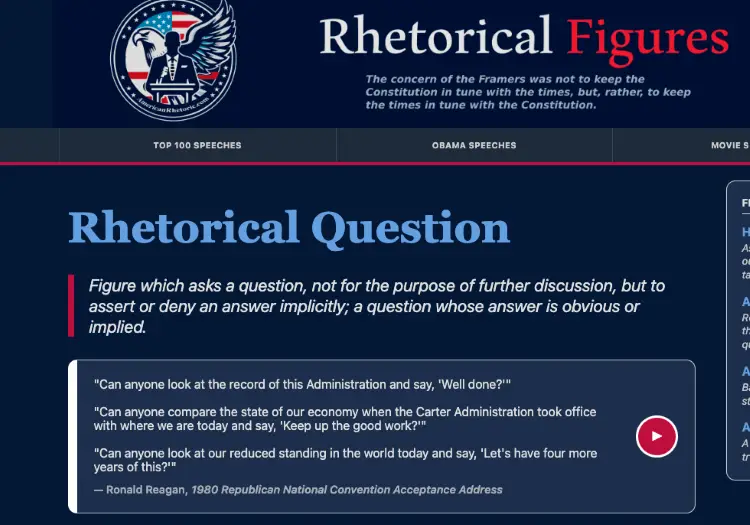
A rhetorical question is a question where the speaker already knows the answer or doesn’t expect one to be spoken out loud.
For example: “How many opportunities have you missed because you were afraid to start?”
The purpose of rhetorical questions isn’t to hear someone say “a few.” The question encourages self-reflection and gets the listener thinking about their own experiences.
Does a rhetorical question require an answer?
Usually, no. A rhetorical question is designed to make people think rather than respond.
The answer is often obvious, implied, or personal to the listener. For example, asking “Do you really want to spend another year stuck in the same place?” encourages someone to reflect on their own choices.
The question creates the pause. The thought that follows is what makes it impactful.
What Is a Good Example of a Rhetorical Question?
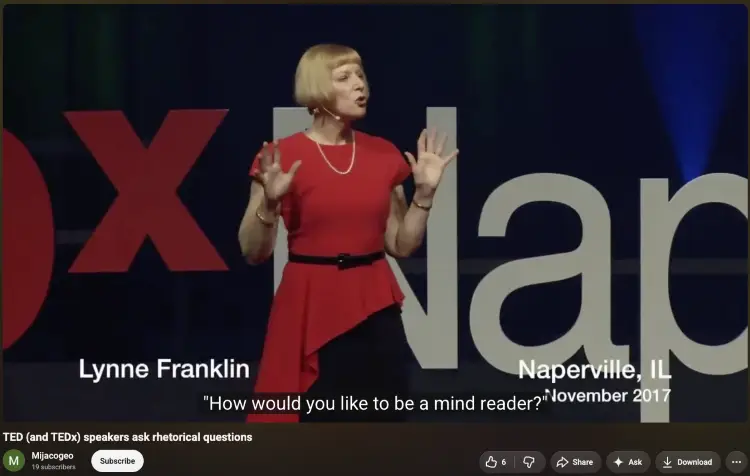
A good rhetorical question connects to a feeling, problem, or idea the audience already understands.
For example: “If you don’t believe in yourself, who will?”
The speaker isn’t asking for a literal answer. The question encourages the listener to reflect on confidence and personal responsibility.
The strongest rhetorical questions feel natural, make listeners curious, and help the audience connect with the message.
Rhetorical question example sentence
Here are a few rhetorical question examples you might hear in everyday conversations, speeches, and content:
- “Are you really going to let fear decide your future?”
- “What’s the point of having a dream if you never take action?”
- “Who doesn’t want more freedom over their time?”
Each question creates a moment for the audience to think about their own situation.
Types of rhetorical questions
Rhetorical questions can be used in different ways depending on the message you want to create:
- Reflective questions: Encourage someone to think about their experiences or choices.
- Persuasive questions: Challenge beliefs and guide someone toward a specific idea.
- Emotional questions: Create a stronger connection by bringing out feelings.
- Leading questions: Encourage the audience to consider a particular answer or viewpoint.
Choosing the right type helps your question create more impact.
Rhetorical Question Examples In Different Formats
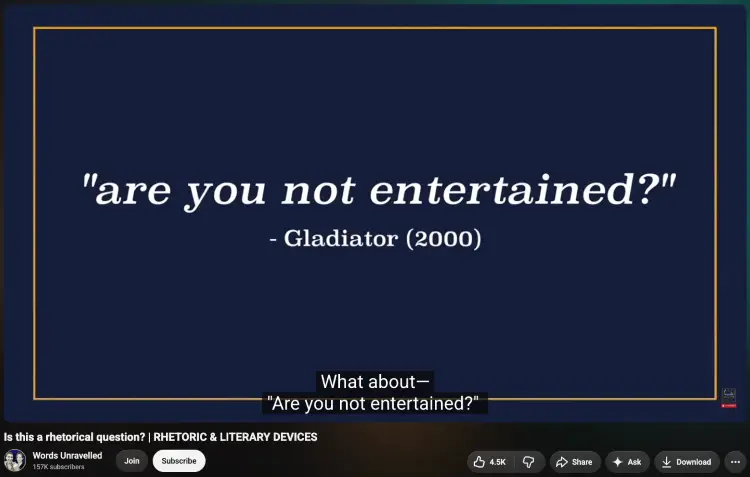
The same technique can sound completely different depending on where you use it. A question that works in a keynote probably won’t land the same way in an ad, and a line from Shakespeare won’t sound natural in your podcast.
Borrow the structure, not the wording. That’s where the magic is.
Rhetorical question literary device examples
Writers have been using rhetorical questions for centuries because they pull readers into the story instead of keeping them on the outside looking in.
Here are a few examples I’d happily steal inspiration from.
- “Who doesn’t want a second chance?”
- “What’s holding you back?”
- “If today isn’t the day, then when is?”
- “Can fear make your decisions forever?”
- “Who writes the story of your life?”
- “Would success feel the same without failure?”
- “How much potential is still sitting unused?”
- “Why settle for average?”
- “What happens when nobody speaks up?”
- “How many chances do we get?”
- “Can one decision change everything?”
- “What would you choose if failure wasn’t an option?”
Most of these work because they leave the audience with nowhere to hide. You naturally answer them in your own head, and that’s exactly the point.
Rhetorical question attention getter examples
If I’m opening a presentation, I want people thinking within the first 10 seconds.
A popular podcast question is one of the easiest ways to make that happen.
- “What if you’ve been solving the wrong problem?”
- “What’s one decision that changed your life?”
- “Would your future self thank you for what you’re doing today?”
- “How many hours did you lose last week?”
- “Are you waiting for permission?”
- “What’s the best advice you’ve ignored?”
- “How different could your life look a year from now?”
- “What’s stopping you from starting today?”
- “Have you been making this harder than it needs to be?”
- “What would happen if you actually committed?”
- “Are you giving yourself enough credit?”
- “What story do you keep telling yourself?”
Don’t ask one just because you can. Ask one because you genuinely want people thinking before you make your next point.
Rhetorical question hook examples
Personally, I love opening with a question because it feels like you’re inviting people into a conversation instead of talking at them.
Try these as inspiration.
- “What if everything you’ve heard about success is wrong?”
- “Why do smart people keep making the same mistake?”
- “What if one conversation could change your career?”
- “Have you ever wondered why some people always seem to get opportunities?”
- “What’s the biggest mistake almost everyone makes?”
- “Who says you have to do it the usual way?”
- “What would happen if you stopped waiting?”
- “How different would your business look in 12 months?”
- “Have you been asking the wrong question all along?”
- “Ready to see this differently?”
- “What’s the worst that could happen?”
- “What are you waiting for?”
Examples of rhetorical question in literature
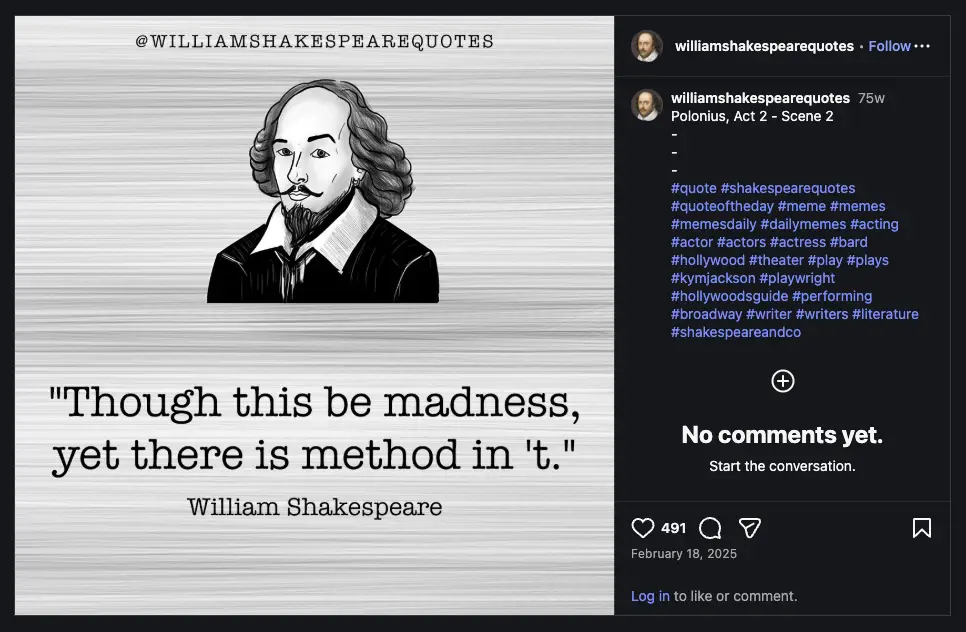
Some of the most memorable lines in literature aren’t statements. They’re interview questions or hypophora. The authors already know the answer, but they ask anyway because it pulls readers into the moment and gives the words more weight.
- “If you prick us, do we not bleed?” From The Merchant of Venice by William Shakespeare.
- “What’s in a name?” From Romeo and Juliet by William Shakespeare.
- “Is this a dagger which I see before me?” From Macbeth by William Shakespeare.
- “What would an ocean be without a monster lurking in the dark?” From Life of Pi by Yann Martel.
- “When will you be satisfied?” From Martin Luther King Jr.’s I Have a Dream speech.
- “Can we forge against these enemies a grand and global alliance?” From John F. Kennedy’s inaugural address.
- “How many roads must a man walk down, before you call him a man?” From Bob Dylan’s song Blowin’ in the Wind.
- “Who, if I cried out, would hear me among the angelic orders?” From Rainer Maria Rilke’s Duino Elegies.
- “What is to be done?” From Nikolai Chernyshevsky’s novel What Is to Be Done? (1863), a foundational work in Russian literature.
- “What is the answer to the ultimate question of life, the universe, and everything?” From Douglas Adams’ The Hitchhiker’s Guide to the Galaxy.
- “Who am I to judge?” From Pope Francis, widely cited in contemporary religious and ethical discourse.
- “Is that all there is?” From Peggy Lee’s song Is That All There Is?, a modern cultural work often referenced in literature and performance for its existential tone.
If you write stories, speeches, or content, notice what these questions have in common. They invite the audience to think for themselves instead of spelling everything out.
Rhetorical question poem examples
Poets and writers use rhetorical questions to make readers slow down and sit with an idea without expecting answers. A single question can carry more emotion to emphasize ideas and make a point than an entire paragraph or obvious answer ever could.
- “Do I dare disturb the universe?” From The Love Song of J. Alfred Prufrock by T. S. Eliot.
- “How should I presume?” From The Love Song of J. Alfred Prufrock by T. S. Eliot.
- “What happens to a dream deferred?” From Harlem by Langston Hughes.
- “If Winter comes, can Spring be far behind?” From Ode to the West Wind by Percy Bysshe Shelley.
- “Shall I compare thee to a summer’s day?” From Shakespeare’s Sonnet 18.
- “What are days for?” From Days by Philip Larkin.
- “Who has seen the wind?” From Who Has Seen the Wind? by Christina Rossetti.
- “What lips my lips have kissed, and where, and why?” From What Lips My Lips Have Kissed by Edna St. Vincent Millay.
- “What is the grass?” From Song of Myself by Walt Whitman.
- “Who made the world?” From Messenger by Mary Oliver.
- “Tell me, what is it you plan to do with your one wild and precious life?” From The Summer Day by Mary Oliver.
- “Who are you, reader?” A style of rhetorical question often used in modern poetry to create a direct connection.
One thing I love about poetry is that the question often lingers longer than the answer. That’s a good reminder for speakers too.
Rhetorical question examples in speeches
Great speakers know that a well-timed question wakes people up. Instead of telling an audience what to think, they invite people to arrive at the idea themselves.
- “Ask not what your country can do for you. Ask what you can do for your country.” John F. Kennedy.
- “When will you be satisfied?” Martin Luther King Jr., I Have a Dream.
- “If not us, who? If not now, when?” Commonly used in public speaking and leadership speeches.
- “Are we to be a nation that accepts the cruelty of tearing children from their parents?” Barack Obama.
- “Can we forge against these enemies a grand and global alliance?” John F. Kennedy.
- “Will we act, or will we not?” A classic call-to-action used in persuasive speeches.
- “What kind of future do we want to leave behind?” A common rhetorical question in environmental speeches.
- “How long can we ignore this problem?” Frequently used in advocacy and awareness campaigns.
- “What are we waiting for?” A timeless motivational question.
- “Who among us hasn’t faced failure?” Builds instant connection with an audience.
- “How many more lives have to change before we act?” Often used in charitable and humanitarian speeches.
- “What story will people tell about us?” A strong closing question that encourages reflection.
The next time you’re writing a presentation, look for a place where a statement could become a question. You’ll often find it lands with a lot more impact because your audience starts answering it before you’ve even moved on.
Rhetorical question examples in advertising
Advertising has one job: grab your attention before you scroll, skip, or change the channel. A good rhetorical question does that in seconds because your brain automatically starts answering it.
- “Got Milk?” California Milk Processor Board.
- “Can you hear me now?” Verizon.
- “Wouldn’t you rather have a Buick?” Buick.
- “Have you driven a Ford lately?” Ford.
- “Isn’t it time for a real vacation?” A common travel advertising headline.
- “What’s in your wallet?” Capital One.
- “How do you spell relief?” Rolaids.
- “What would you do for a Klondike Bar?” Klondike.
- “Why pay more?” A classic retail advertising question.
- “Ready for a better night’s sleep?” A common mattress industry headline.
- “Who says healthy food has to be boring?” Frequently used in food and nutrition marketing.
- “What are you waiting for?” A timeless call to action used across countless campaigns.
The best ads don’t always lead with a feature. They lead with a question that gets you involved before they ever mention the product.
Rhetorical question examples in persuasive writing
Persuasive writing works best when readers feel like they’ve reached the conclusion themselves. That’s why rhetorical questions show up everywhere from opinion pieces to sales pages and presentations.
- “Why keep doing something that isn’t working?”
- “What do you have to lose?”
- “Wouldn’t you rather solve the problem once instead of dealing with it every day?”
- “How much longer are you willing to wait?”
- “If you don’t make the change now, when will you?”
- “Who doesn’t want more time with their family?”
- “What’s stopping you from taking the first step?”
- “Would your future self thank you for this decision?”
- “How many chances are you willing to let pass you by?”
- “What could your life look like a year from now?”
- “Are your actions matching your goals?”
- “Why settle for less when you know you’re capable of more?”
One thing I’d encourage you to notice is that none of these questions feel pushy. They simply invite people to pause for a second and think.
Once someone starts answering your question in their own head, you’ve got their attention, and that’s a much better place to start than trying to convince them with a long list of facts.
How To Write A Rhetorical Question (Checklist)
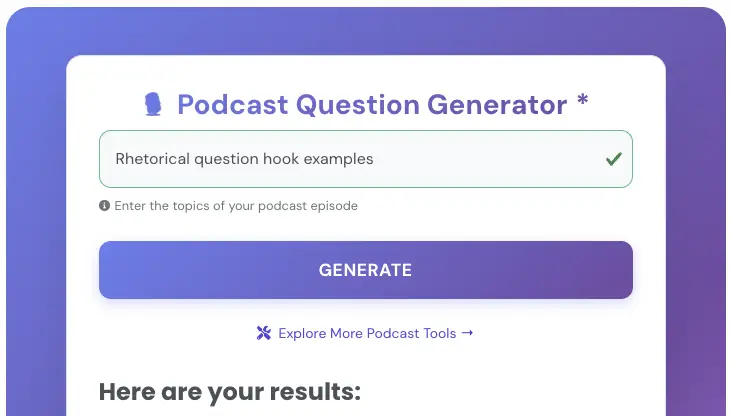
Writing a great rhetorical question is easier than most people think. Start with an idea your audience already cares about then turn it into a question that gets them thinking instead of searching for an answer.
☐ Start with the topic: Pick one idea, problem, or belief you want people to think about.
☐ Know your goal: Decide if you want to make them curious, challenge a long-standing belief, create a visceral emotional reaction, or introduce a new point.
☐ Think about your audience: Ask something they’ll instantly relate to or have an opinion on.
☐ Keep it short: One clear sentence usually has more impact than a long question.
☐ Make it thought-provoking: Leave space for reflection instead of stating the obvious.
☐ Avoid yes-or-no questions: Aim for questions that make people pause, even if the answer feels obvious.
☐ Read it out loud: If it sounds awkward in conversation, rewrite it.
☐ Use a question generator: If you’re stuck, enter your topic into the Talks Question Generator to generate rhetorical questions, hooks, and conversation starters you can customize for your own speeches, podcasts, presentations, and content.
How to use rhetorical questions effectively
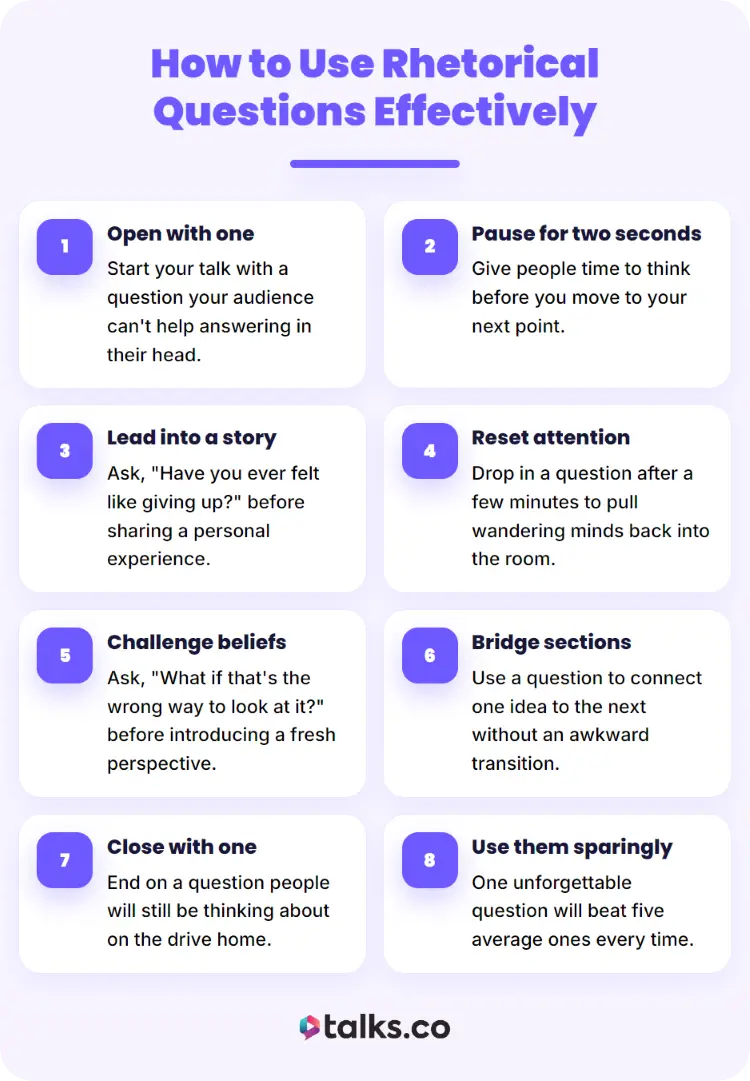
A great rhetorical question deserves a great moment. Here’s where I use them most often.
- Open with one: Start your talk with a question your audience can’t help answering in their head.
- Pause for two seconds: Give people time to think before you move to your next point.
- Lead into a story: Ask, “Have you ever felt like giving up?” before sharing a personal experience.
- Reset attention: Drop in a question after a few minutes to pull wandering minds back into the room.
- Challenge beliefs: Ask, “What if that’s the wrong way to look at it?” before introducing a fresh perspective.
- Bridge sections: Use a question to connect one idea to the next without an awkward transition.
- Close with one: End on a question people will still be thinking about on the drive home.
- Use them sparingly: One unforgettable question will beat five average ones every time.
Full guide on how to do a podcast interview plus 10+ years of podcast interview tips and free podcast script templates are available any time to help you stay ready.
One Question That Keeps Everyone Awake at Night
Great speakers leave audiences with a thought they can’t shake, that’s why the strongest rhetorical question examples stay with people long after the room empties.
Pick a question that creates curiosity, earns attention, and naturally leads people toward your message.
Ready to put those ideas in front of bigger audiences?
Create your free Talks profile today and start connecting with podcast hosts in your niche. Thousands of interview opportunities are already out there.
The next “yes” could come from a conversation you haven’t started yet.
Yes! I Want My Free Talks Profile Now!


