

People decide how they feel about you before you’ve finished saying hello.
A raised eyebrow paired with a locked jaw and arms folded across your chest. Eyes darting toward the door while someone’s talking. Tiny signals, big consequences.
You might be confident, experienced, and genuinely interested in the person across from you and yet somehow your relaxed posture can still tell a completely different story and make you seem unapproachable.
That matters when you’re pitching an idea, meeting a potential client, answering interview questions, or stepping onto a stage. Your non-verbal type of body language carries the message. Your body movements can reinforce it or undermine it without you even knowing it.
On the upside, positive body gestures are learnable.
Once you know what to look for, you can start using any of these examples of positive body language deliberately and feel more confident in the room.
What Is Positive Body Language?
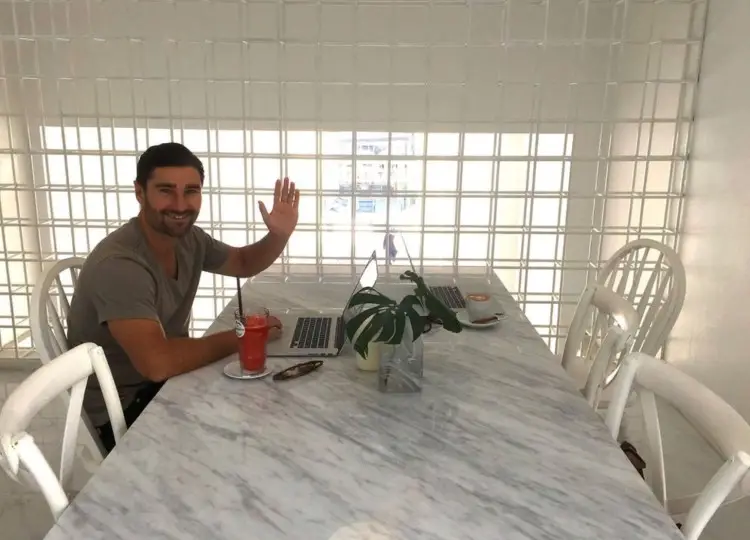
Imagine Maya is pitching her new $3,000 leadership coaching program to a founder at a coffee shop in Sydney. She knows her offer inside out, but spends the meeting hunched over her laptop, checking her phone, and folding her arms whenever the founder pushes back.
Now think about James doing the same pitch with his shoulders relaxed, phone away, hands visible, steady eye contact, and a slight lean forward when the founder speaks.
Same offer. Same words. Completely different experience.
That’s the power of positive body language. Small physical signals can influence how confident, trustworthy, interested, and approachable you appear long before someone decides what they think of you.
Positive body language vs negative body language
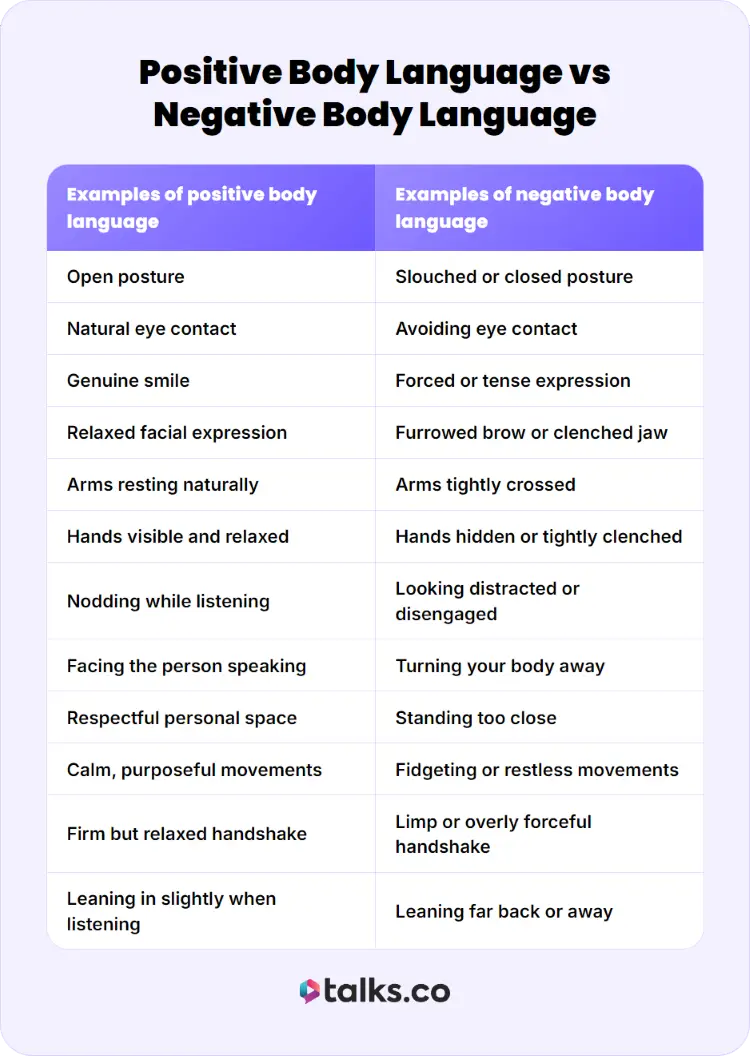
The difference between using positive and negative body language often comes down to the nonverbal communication skills your body decides to use beneath the words and gestures to emphasize your points.
| Examples of positive body language | Examples of negative body language |
|---|---|
| Open posture | Slouched or closed posture |
| Natural eye contact | Avoiding eye contact |
| Genuine smile | Forced or tense expression |
| Relaxed facial expression | Furrowed brow or clenched jaw |
| Arms resting naturally | Arms tightly crossed |
| Hands visible and relaxed | Hands hidden or tightly clenched |
| Nodding while listening | Looking distracted or disengaged |
| Facing the person speaking | Turning your body away |
| Respectful personal space | Standing too close |
| Calm, purposeful movements | Fidgeting or restless movements |
| Firm but relaxed handshake | Limp or overly forceful handshake |
| Leaning in slightly when listening | Leaning far back or away |
What Does Positive Body Language Look Like?

Positive body language shows up in the small physical signals people pick up during a conversation.
Think about answering questions on a Talks podcast, presenting your new coaching program on Zoom, or meeting a potential client in a completely new professional setting.
Your posture, facial expression, eye contact, gestures, and movements all send information alongside your words. When those signals communicate openness and confidence, people are more likely to feel comfortable engaging with you.
What actions are considered positive body language?
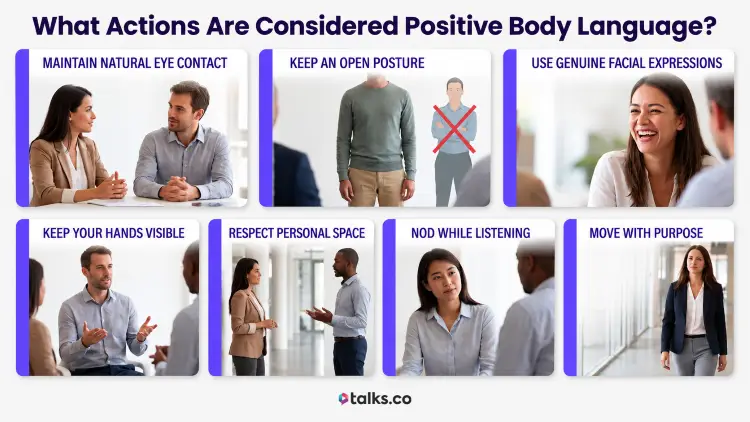
Small physical choices can change the energy of an interaction and professional relationships. Focus on using positive body language for more effective communication:
- Maintain natural eye contact: Look at the person speaking, then break eye contact naturally.
- Keep an open posture: Relax your shoulders and avoid having crossed arms to avoid signaling impatience.
- Use genuine facial expressions: Let your face respond to the conversation instead of staying frozen.
- Keep your hands visible: Use relaxed, purposeful gestures when explaining your $2,000 coaching offer.
- Respect personal space: Give someone room during an in-person pitch.
- Nod while listening: Show a guest on your podcast that you’re following their answer.
- Move with purpose: Walk onto a conference stage calmly instead of rushing to the lectern.
Positive Body Gestures Examples
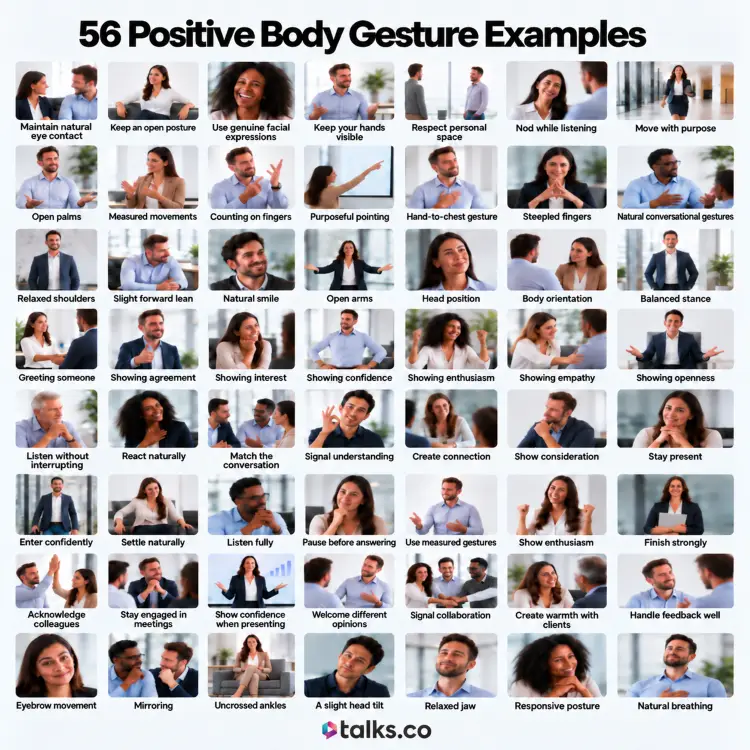
The best positive body gestures feel natural because they match what you’re saying.
A speaker answering a question at a Melbourne conference, a coach recording a Talks interview, and an entrepreneur meeting a potential client might use completely different gestures, but the goal is the same: help your body reinforce your message.
Positive hand gestures and posture examples
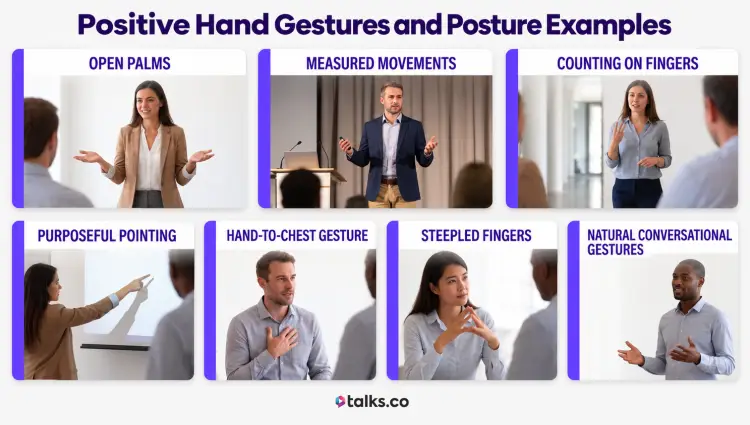
Your hands can make an explanation easier to follow, especially when you’re speaking on camera or in front of a room. Try these and their hand gesture meanings:
- Open palms: Show your palms when welcoming questions or explaining your coaching process.
- Measured movements: Use controlled gestures to emphasize a key point during a keynote while maintaining eye contact and open body language.
- Counting on fingers: Use your fingers to tap while counting when walking through three steps in your workshop.
- Purposeful pointing: Point toward a slide, screen, or physical object when directing attention where eye contact may help you succeed in making your point.
- Hand-to-chest gesture: Briefly touching your chest can add sincerity when sharing a personal story.
- Steepled fingers: Lightly bringing fingertips together can communicate thoughtfulness during a serious conversation.
- Natural conversational gestures: With an open and relaxed posture, let your hands move naturally to enhance your communication and body language signals instead of keeping them rigid at your sides or partnering that with a lack of eye contact.
Positive body language in pictures
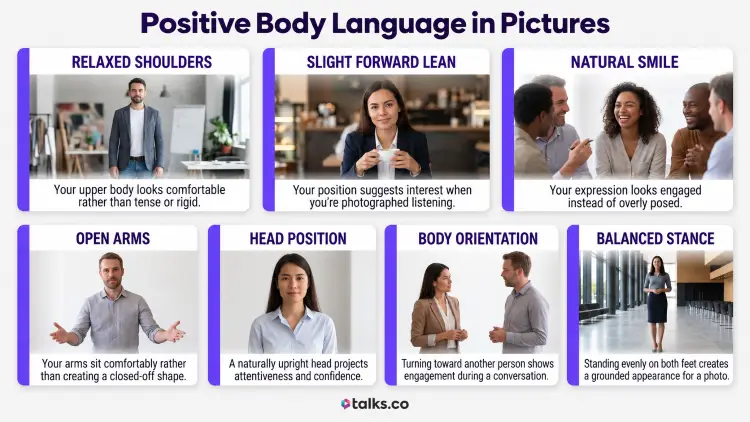
Photos freeze a single moment, so look for signals that suggest openness and confidence. These details can completely change how a professional headshot, speaker photo, or LinkedIn profile comes across.
- Relaxed shoulders: Your upper body looks comfortable rather than tense or rigid.
- Slight forward lean: Your position suggests interest when you’re photographed listening to someone.
- Natural smile: Your expression looks engaged instead of overly posed.
- Open arms: Your arms sit comfortably rather than creating a closed-off shape.
- Head position: A naturally upright head can project attentiveness and confidence.
- Body orientation: Turning toward another person shows engagement during a conversation.
- Balanced stance: Standing evenly on both feet creates a grounded appearance for a conference photo.
Positive body language examples
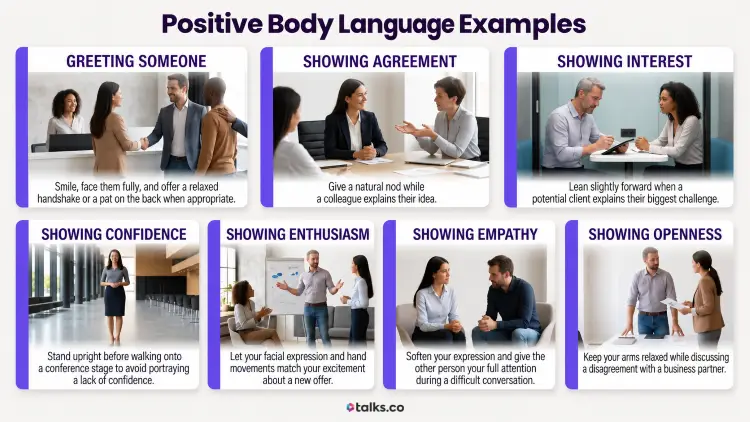
The right gesture depends on what you’re trying to communicate. These examples show how small physical choices can make you appear more engaged, confident, and approachable in everyday interactions.
- Greeting someone: Smile, face them fully, and offer a relaxed handshake or a pat on the back when appropriate.
- Showing agreement: Give a natural nod while a colleague explains their idea.
- Showing interest: Lean slightly forward when a potential client explains their biggest challenge.
- Showing confidence: Stand upright before walking onto a conference stage to avoid portraying a lack of confidence.
- Showing enthusiasm: Let your facial expression and hand movements match your excitement about a new offer.
- Showing empathy: Soften your expression and give the other person your full attention during a difficult conversation.
- Showing openness: Keep your arms relaxed while discussing a disagreement with a business partner.
Positive body language in communication
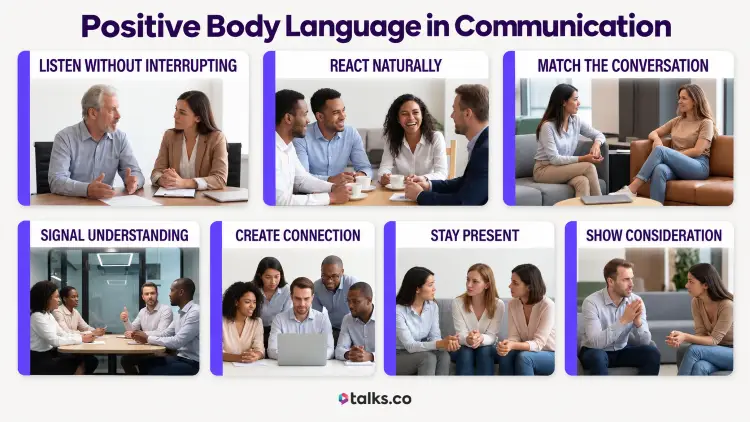
Your body can reinforce the message you’re delivering and enhance your non-verbal communication skills.
During a coaching session, podcast conversation, or networking event, use physical cues that make it easier for people to feel heard and understood through positive expression in the form of body language.
- Listen without interrupting: Stay physically engaged while the other person finishes their thought.
- React naturally: Let your face respond to surprising, funny, or thoughtful comments.
- Match the conversation: Use calmer movements during serious discussions and more animated gestures when sharing exciting news.
- Signal understanding: Give small nods when someone explains a complicated problem.
- Create connection: Turn your torso toward the person instead of speaking while facing your laptop.
- Show consideration: Good body language is essential so pause your movements when someone is sharing something personal.
- Stay present: Put your phone away during a coffee meeting with a potential client.
Positive body language for interviews
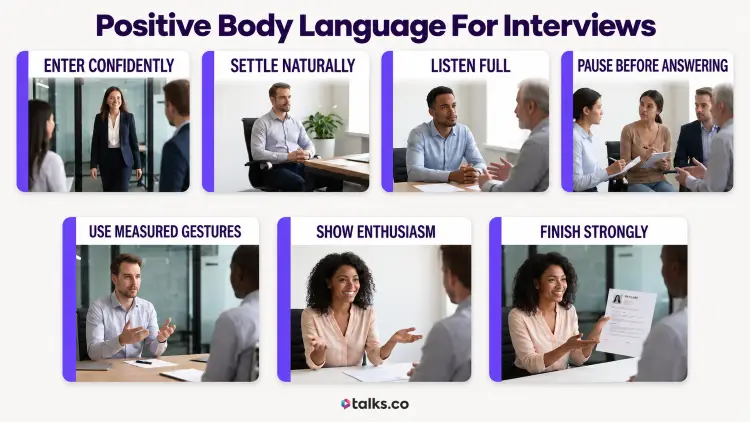
An interview gives people plenty of opportunities to read your nonverbal cues. From the first handshake to your final answer, small adjustments can help you come across as prepared to do an interview, comfortable, and engaged for every public speaking opportunity.
- Enter confidently: Walk into the room at a steady pace and greet the interviewer warmly.
- Settle naturally: Sit upright without gripping the chair or constantly adjusting your position.
- Listen fully: Keep your attention on the interviewer while they finish each question.
- Pause before answering: Take a moment to collect your thoughts instead of rushing into your response.
- Use measured gestures: Let your hands emphasize important points without becoming distracting.
- Show enthusiasm: Eye contact shows confidence so pair it with a smile when discussing a project, achievement, or role you’re genuinely excited about.
- Finish strongly: Positive body language helps so make sure you thank the interviewer with a warm expression and confident goodbye.
Examples of positive body language for workplace scenarios
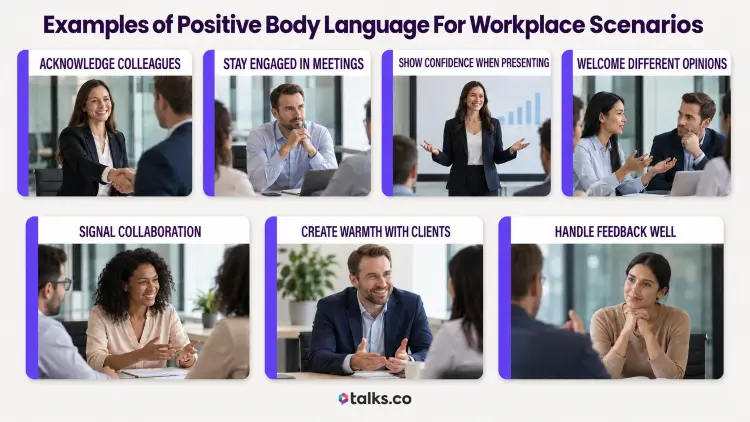
Understanding body language in the workplace can shape how colleagues, clients, and leaders experience you.
Use these positive body language tips to help you during meetings, presentations, one-on-one conversations, and those slightly awkward moments around the office coffee machine.
- Acknowledge colleagues: Adapt your body language to give off positive impressions so look up from your screen and smile when someone approaches your desk.
- Stay engaged in meetings: Face the speaker instead of typing through their entire presentation.
- Show confidence when presenting: Stand comfortably and let your gestures support the point you’re making.
- Welcome different opinions: Keep your expression relaxed when a teammate challenges your idea.
- Signal collaboration: Turn toward a colleague when working through a problem together.
- Create warmth with clients: Greet a new client with an open expression before discussing their project.
- Handle feedback well: Stay relaxed and attentive when your manager discusses changes to your work.
Subtle signs of positive body language
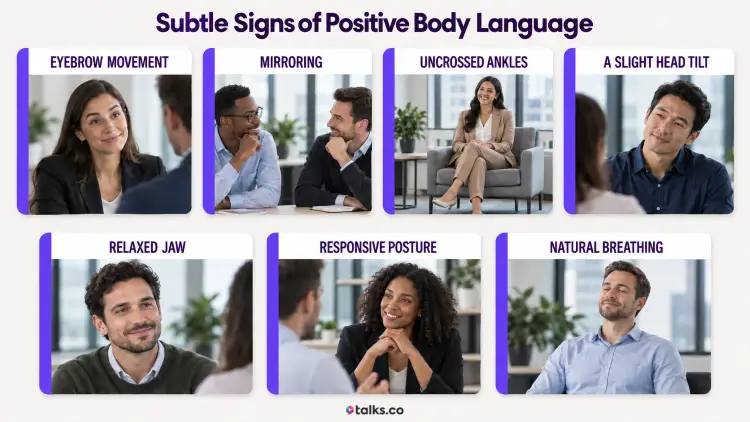
Some of the strongest examples of body language signals are easy to miss because they happen almost automatically. Pay attention to these less obvious cues during a conversation:
- Eyebrow movement: A brief lift can signal recognition or interest when someone makes an unexpected point.
- Mirroring: Naturally matching someone’s posture can create a sense of connection.
- Uncrossed ankles: A relaxed lower body can suggest comfort during a long conversation.
- A slight head tilt: Tilting your head while listening can communicate curiosity and attention.
- Relaxed jaw: Releasing tension in your jaw can make your overall expression appear more approachable.
- Responsive posture: Shifting slightly toward an interesting point can show genuine engagement.
- Natural breathing: Slower, steadier breathing can help you look calmer before answering a difficult question.
10 Tips to Start Improving Your Body Language
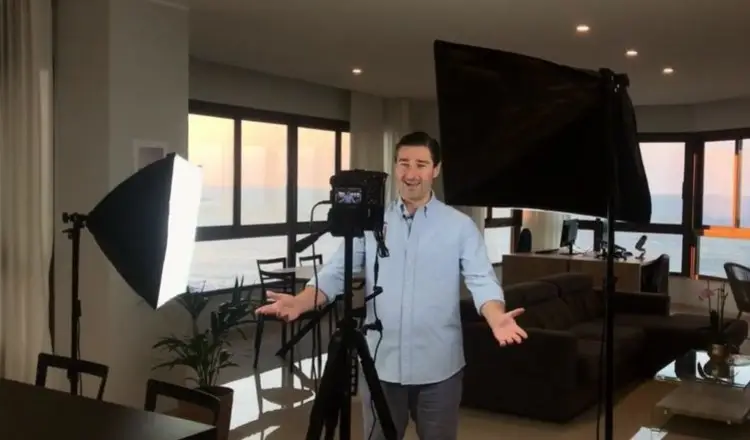
Start with a few body language habits you can practice in real situations. Before your next recording, Zoom workshop, or keynote, focus on these public speaking tips:
- Record your public speaking body language: Watch a practice presentation and notice what your hands, shoulders, and face do when you speak.
- Practice under pressure: Rehearse answering difficult questions while keeping your posture relaxed to become a confident speaker in public.
- Review your calls: Look for habits you weren’t aware of during client conversations.
- Make one adjustment: Pick one habit to improve before your next presentation.
- Ask for feedback: Get specific input from a coach, colleague, or trusted person.
- Do slow down: Give yourself an extra second before responding so nervous movements don’t take over.
- Do practice your entrances: Rehearse how you walk into a room, greet someone, and settle into your seat before an important meeting.
- Do use a mirror: Practice your introduction while watching your facial expressions, posture, and hand movements in real time.
- Do check your setup: Position your webcam at eye level and make sure your posture still looks natural on screen.
- Do practice listening: Have a friend ask you questions and focus entirely on showing that you’re engaged while they speak.
5 Cultural considerations for positive body language
The same gesture can carry very different meanings across cultures. Before speaking in Stockholm, Dubai, or another unfamiliar market, avoid these mistakes:
- Don’t assume your norms are universal: Research local expectations before an international event.
- Don’t force eye contact: Some cultures place different expectations on direct eye contact.
- Don’t invade personal space: Follow the other person’s cues instead of assuming your usual distance works everywhere.
- Don’t rely on familiar gestures: A thumbs-up or other everyday signal can mean something different abroad and their language may consider those negative body language cues instead.
- Don’t copy customs blindly: Ask your local host about positive body language examples and practical tips to help you when you’re unsure about appropriate behavior.
Let Your Body Do the Talking

You can walk into a podcast interview with the perfect answers and still look checked out. You can have a brilliant offer and come across as nervous. You can know your stuff and accidentally communicate the opposite.
That’s why positive body gestures matter. People are reading you before they’ve decided to listen.
So practice the smile. Fix the posture. Put the phone down. Then put yourself where the right people can find you.
Create your free Talks profile and start connecting with podcast hosts who want experts like you on their shows.


