

Podcasts are everywhere. In your pockets, on social media, and even in your daily searches.
With every kind of person who listens to podcasts demanding shows about every topic under the sun, more and more experts are starting their own successful podcast.
But podcasting isn’t just for novel personalities. They’re also for businesses that have something to say and are willing to form genuine connections with their audience.
Are you one of them?
This guide will show you the benefits of podcasting for business and how it impacts visibility and authority.
Let’s look into why podcasting has become such a big deal and help you decide if this is the right path for your brand.
What Is Podcasting and How Is It Useful?
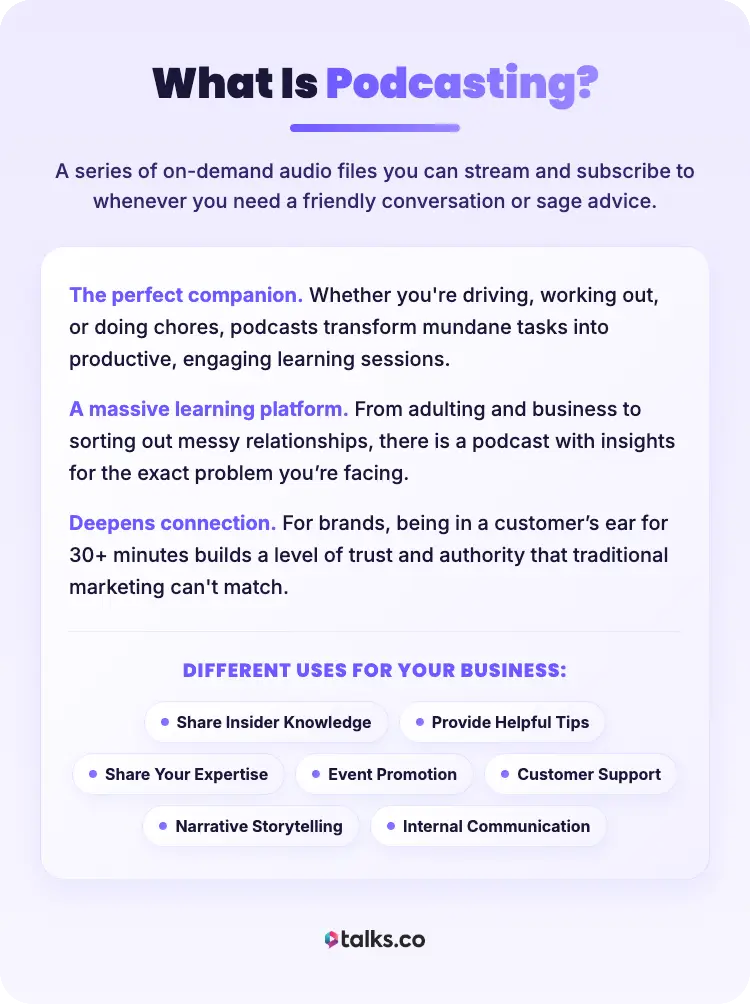
A podcast is a series of on-demand audio files that listeners can subscribe to and stream whenever they want. Think of it as having friendly conversations and sage advice in your ears whenever you need it.
Podcasting is useful because it:
- Acts as the perfect companion: You can listen to content while driving, working out, or doing chores around the house. They make these mundane tasks extra fun and productive.
- Serves as a learning platform: Adulting, starting your own business, or sorting out a messy relationship? There’s a podcast out there with insights for the exact problem you’re dealing with.
- Deepens connection: For brands, podcasting offers a way to be in your customer’s ear for 30 minutes or more. The extended time leads to higher trust, engagement, and eventually, sales.
What are the different uses of podcasts?
Podcasting is more than just sitting in front of a mic, talking. If you use it well, it can be the key to achieving your business goals. Here are some of the most common uses of a podcast:
- Share insider knowledge: You can give your audience a behind-the-scenes look at your industry. This sneak peek builds trust and shows them how valuable your show is.
- Provide helpful tips: Positioning your show as a resource helps your audience solve specific problems. They’ll see you as the go-to expert when they face a challenge.
- Share your expertise: A podcast episode is the perfect place to showcase your unique methodology or perspective. It proves you know your stuff.
- Event promotion: You can use your platform to build hype and drive attendance to webinars or live events.
- Customer support: Answering frequently asked questions on air can save your support team time. Think of it as an evergreen resource that audiences can refer to any time.
- Narrative storytelling: Be seen as relatable by telling stories about your brand history or client success.
- Internal communication: Large companies use private feeds to keep employees updated. It is more engaging than a long email.
Why Start a Podcast?
The power of starting a podcast lies in its ability to cut through the noise of modern marketing. It’s not just another task you add to your to-do list. It’s a proven way of reaching engaged audiences that are probably already looking for someone like you.
Here are the key reasons why you should start a podcast today:
- Low barrier to entry: You don’t need expensive equipment to get started. You likely already have everything you need (e.g., a smartphone to record, a laptop to edit).
- Build your brand: A show gives your business a voice and a personality. It differentiates you from competitors who are only seen as a storefront people buy from.
- Connect with customers: Podcasting allows you to have a two-way conversation with your market. You can invite them to participate or record answers to their questions.
- SEO benefits: Optimized show notes and transcripts help you rank in search engines. This drives organic traffic to your site.
- Long-lasting assets: Podcast content lives forever and can be discovered years later. You can always bring them back when they’re relevant or repurpose them as clips or log articles.
- Global reach: You can reach podcast listeners in countries you never thought possible. The distribution is worldwide.
If you’re unsure where to begin, you can learn how to start a podcast with this simple guide. You can also use this podcast name generator to help you brainstorm.
16 Benefits of Podcasting for Business
Podcasting is a growing industry, and for good reason. You can genuinely connect with listeners and impact their daily lives.
Beyond that, it’s no longer just a hobby. More and more podcasters are treating their shows as proper media channels, giving them the professional finish to thrive and monetize.
Still not convinced about starting one of your own? Check out the top 16 benefits of podcasting for your business and for listeners in general.
1. Podcasting for business leads to brand awareness
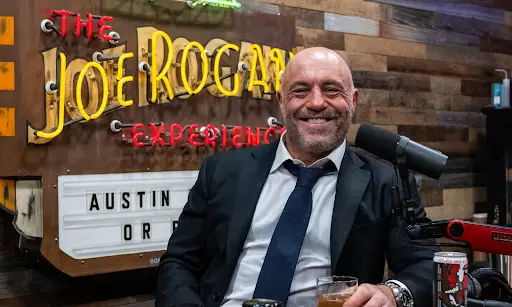
Podcasts help to build brand awareness by keeping your name in their ears on a daily or weekly basis. An example of the big impact podcasting has is the empire Joe Rogan built with the Joe Rogan Experience:
- Massive follower count: JRE has about 14.5 million followers on Spotify and 7 million subscribers on YouTube.
- Global audience: He has listeners worldwide in 190 countries, including the US, UK, Canada, and Australia.
Because of his reach, Joe Rogan’s name has been attached to podcasting. You can’t mention podcast shows and not think of him.
2. You’re seen as a thought leader
Podcasts can help you build a reputation that attracts high-paying clients who want to work with the best. When you host a business podcast, you automatically position yourself as an authority in your niche.
With authority comes opportunities:
- Sell more naturally: You get a platform for you to demonstrate your knowledge without being salesy.
- Affect purchase intent: 54% of podcast listeners are more likely to consider buying from a brand they heard about on a show (Edison Research).
3. Reaching new audiences is one of the benefits of podcast hosting
You can reach new audiences that other traditional and digital channels won’t.
- Be present anywhere: Your podcast episodes can appear everywhere: search engines, social media, or your own professional website.
- Podcast ads are more effective: 60% of heavy podcast listeners don’t trust TV ads, but entertain podcast ads they hear (YouGov, 2025). This is a big deal if you want to attract sponsors or become a sponsor yourself.
Since you’re providing organic content, people will see the value of your show and seek you out.
4. Launch a podcast to humanize your company

Podcasts are great for humanizing your company and showing the people behind the logo. You can connect with customers on a deeper level than any other medium allows.
- Forge deep connections: Turn casual listeners into raving fans who keep coming back.
- Build personal trust: Listeners feel like they know you personally after hearing your voice for hours, so they’re likely to trust your product or service.
Mel Robbins uses this approach, talking about motivation and change through her show, making her more approachable as a life coach.
5. You can build a community around your podcast
Podcast fans are incredibly loyal and dedicated to their favorite shows. By launching a podcast for your business, you tap into this engaged demographic.
- Build a community around your business: You can keep doing what you love through listener support, merch sales, and membership packages.
- Loyalty inspires action: BombBomb’s podcast got top ranks after 250 episodes, with 80% of listeners trusting host recommendations and 51% acting on ads (Backlinko).
6. Networking is one of the advantages of podcast hosting
Podcasting gives you access to industry leaders who’d typically ignore your emails.
- Meet new people: Build relationships that lead to partnerships or referrals.
- Offer value first: When you invite someone to be a guest, you are giving them exposure and a platform.
- Borrow credibility: Being associated with high-profile guests rubs off on your podcast brand.
Platforms like Talks makes connecting with other influencers and experts easier. When you sign up, you’re immediately visible and open to messages.
7. Podcast guesting has a lot of mutual benefits
Just by inviting a podcast guest, you’re opening a loaded door of opportunities:
- Broaden perspectives: Interviews give listeners multiple viewpoints on a topic that matters to them.
- Boost your status: The right guest can elevate your credibility and expand your reach.
- Grow your audience: Fans of your guests can become interested in you and your show.
You can also use Talks as a podcast matching platform to find experts and personalities in your niche. Once you see someone who’s a fit for your podcast, you can book them directly within the site.
8. Have a platform for cross-promotion
The podcasting industry is built on collaboration and cross-promotion.
- Bring on guests: Record with an expert and ask them to share the episode they’re on with their audience.
- Work with other podcast hosts: Hop onto another show as a guest yourself. Meet new listeners and share your expertise to make a good impression.
9. Appreciate the importance of podcasting for lead generation
Your show can become a lead generation machine that drives qualified prospects to your funnel. This works because:
- Listeners already trust you: They’ve spent time with you and respect your expertise before ever entering your funnel.
- Warmer leads: Listeners who come from podcasts are often further along than cold traffic.
- Natural calls to action: You can invite listeners to take the next step at the end of every episode without it feeling forced.
10. One of the benefits of starting a podcast is having a content waterfall
One podcast episode can be turned into dozens of other assets (e.g., multiple blog posts and reels). This makes your content marketing efforts much more efficient.
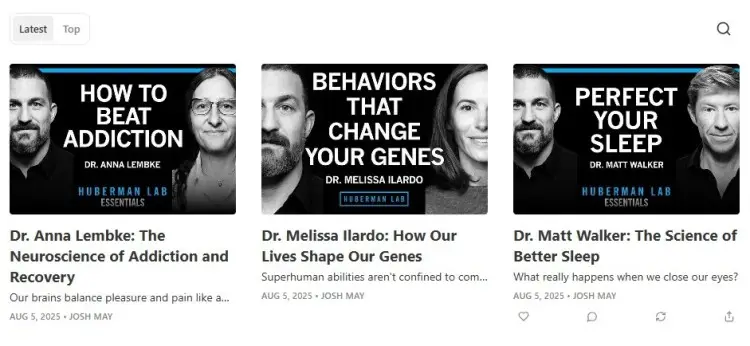
- Feed your ecosystem: Your podcast content powers your newsletter or website, a strategy that the Andrew Huberman Podcast uses to drive organic traffic.
- Always have something fresh: Gary Vaynerchuk turns his long-form episodes into clips, quotes, articles, and social media posts for consistent engagement.
11. There are also benefits of vodcasting
Video podcasts are already the norm. With added visual elements, you also get extra perks:
- Publish on YouTube: Get in front of the second-largest search engine in the world.
- Cater to visual learners: Reach people who prefer to watch rather than just listen.
- Repurpose for short-form: Turn your videos into highly shareable TikTok clips and Instagram Reels.
12. Vodcasting builds trust

Seeing your face and reactions makes you more trustworthy. It makes the conversation feel more real and tangible.
Some popular video podcasts that managed to do this are:
- Lex Fridman Podcast: Leads tech discussions, gaining loyalty from AI and science enthusiasts.
- Rotten Mango: Lends true crime and humor, securing millions of subscribers through Stephanie Soo’s relatable storytelling.
- On Purpose with Jay Shetty: Ranks high in self-help, giving life lessons through interviews with global guests.
13. Podcast benefits for students include accessible learning
One of the main purposes of podcasts is to inform. With more educational content on audio, students treat shows as their study tool.
- Flexible learning styles: Accommodates different needs and preferences across your audience.
- Accessible education: Covers academic subjects and specific skills in an easy-to-consume format.
- Learn on the go: Students can study while commuting, exercising, or doing chores.
- Self-paced exploration: Students can revisit complex topics as many times as they need.
If you offer tutoring or coaching, you can reach your target audience by launching an educational show.
15. It encourages critical thinking
Teachers are incorporating podcasts into their curriculum to engage students. This influences students to actively listen and form their own thoughts.
- Active listening skills: Students learn to absorb information critically rather than passively consuming content.
- Independent thinking: Exposure to different viewpoints pushes students to form and defend their own opinions.
- Classroom engagement: Podcast-based discussions give students a reason to show up prepared and contribute meaningfully.
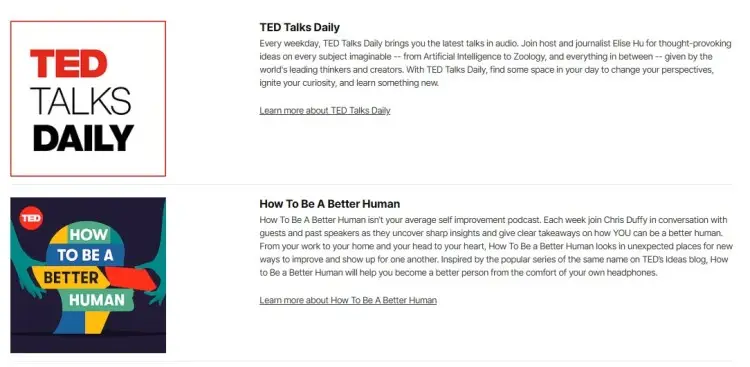
A good example of an educational podcast is TED Podcasts. It covers a range of topics, like science, history, and literature, that can spark the curiosity of young learners.
14. Podcasts give students a voice
Many educators encourage students to create a podcast of their own. This helps them find their voice and have a platform for sharing ideas.
- Creative expression: Students develop communication skills by scripting, recording, and editing their own episodes.
- Real audience experience: Publishing for an actual audience teaches students accountability and confidence.
- Peer learning: Student-led shows create space for peers to learn from each other in a format they actually enjoy
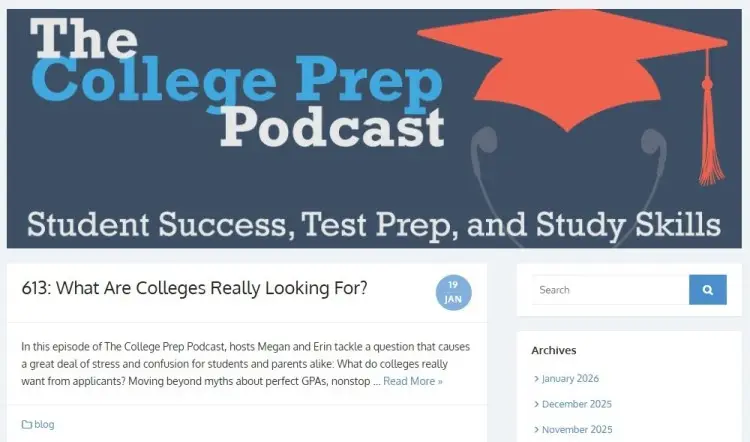
For example, the College Prep Podcast is a student-led effort to help fellow students with their studies. Hosts Megan and Edward give creative insights to get into university.
16. The benefits of podcasting in education extend to skill development
Podcasts are also a great means to learn new skills, which would pay off in the business world.
- Communication skills: You practice both your speaking and listening skills, which is a must-have for any business owner.
- Management skills: Producing a show develops your planning and problem-solving skills.
- Technical skills: To produce a show, you need to learn how to use editing tools and analyze analytics data. Once you’ve mastered how to do that, you can apply it when marketing your brand.
Advantages and Disadvantages of Podcast Hosting
Is podcasting really the right marketing strategy to invest in? Here are the pros and cons of podcasting and how it compares to other marketing channels:
| Aspect | Advantage | Disadvantage |
|---|---|---|
| Costs | Lower cost per lead compared to ads and traditional marketing. | Takes consistent efforts before you start seeing results. Ad results are immediately visible during the campaign, but end with it. |
| Engagement | Highly dedicated community that comes back for new releases. | Social ads work better to get the word out quickly (but retention is lower). |
| Reach | Your reach multiplies organically when you have an established audience. | Discoverability is tough in crowded podcast hosting platforms. |
The verdict: Podcasting values consistency. If you pursue it diligently, you can definitely see a return on investment.
Is Podcasting Worth It?
Yes, podcasting is worth it for business owners who’re in it for the long game.
- Podcasts help you shift towards authentic, relationship-based marketing.
- It establishes a direct line of communication with your market.
If you want to test the waters first, get booked on podcasts in your niche as a guest. This validates that the audience is there and hungry for content.
Is podcasting profitable?
Yes, with the right strategies, you can monetize your show:
- Have your own products and services to sell? Share your shop links in the show notes. Produce podcast-specific merch if you can.
- Small audience, not enough to land deals? Start with affiliate marketing and earn through commissions.
- Built a large following, eager for recos? Get sponsors and include podcast ads in your episodes.
As a podcast guest, you can also look into getting paid. It’s not standard practice, but it’s worth bringing up if you’re invited by another host.
Is podcasting a business?
It certainly can be. You can learn how to turn your podcast into a business and diversify your income stream.
- Memberships: Offer subscription tiers to access premium content.
- Professional services: For listeners who want to work more closely with you, lead them to your one-on-one or group coaching programs.
- Listener support: Ask for one-time donations through Buy Me a Coffee or Ko-fi.
A Gift that Keeps Giving
A podcast doesn’t start and end with you. Once you launch your show, the benefits of podcasting for business keep showing up long after you hit record.
The episode you publish today can build trust, generate leads, and open doors six months from now. That’s the nature of audio content done right.
Melissa set up her Talks profile and found matches the same week. Andrea, Sanjai, and James have already recorded their first interviews.
The only difference between them and you right now is that they started.
Sign up for a free Talks Creators Profile and find your first podcast match today.


