

Public speaking rarely falls apart because you lack ideas.
It falls apart because pressure hijacks your delivery.
Your heart speeds up. Your breathing changes. The words that sounded clear in your head come out rushed or scattered. You leave the stage knowing you could have done better.
Confidence isn’t something you switch on. It’s built through preparation, structure, and repetition.
The right resources help you organize your thoughts, control your pacing, sharpen your storytelling, and handle attention without shrinking under it.
This guide breaks down 12 of the best resources for public speaking available right now, from training platforms to practical tools you can use immediately to enhance how you present yourself.
If you want your message to land the way it deserves to, start here.
Best Resources for Public Speaking (Quick Snapshot)
If you want the fast answer, start here. These are the strongest public speaking resources right now, each leading in its category.
- Best for in-depth guides, visibility, and getting booked: Talks
- Best for live practice and feedback: Toastmasters International
- Best for storytelling and TED-style talks: TED Talks: The Official TED Guide to Public Speaking
- Best for slide design and presentation visuals: Presentation Zen
- Best for VR-based practice: VirtualSpeech
- Best for quick, actionable video tips: Communication Coach Alexander Lyon
- Best for timeless techniques and exercises: The Art of Public Speaking by Dale Carnegie
- Best for structured, step-by-step learning: MindTools public speaking resources
- Best for AI-powered speech coaching: Orai app
- Best for free educational materials: Public Speaking (The Public Speaking Project)
- Best for private AI roleplay practice: Yoodli AI
- Best for gamified live coaching: Ultraspeaking
What Is the Purpose of Public Speaking?
Public speaking is verbally delivering information, ideas, or messages to a live audience. But it’s more than just talking. It’s about effective communication and sharing something that can be helpful to others.
The purposes of public speaking include:
- Sharing valuable knowledge or information
- Influencing opinions and motivating action
- Inspiring change and encouraging growth
- Building authority and trust in your field
- Connecting with people on a meaningful level
- Promoting products, ideas, or personal brands
- Facilitating learning and fostering discussion
Why is public speaking important?
Good public speaking skills open doors that words on paper alone cannot. Here’s why it matters:
- Builds credibility: Good public speakers are often perceived as experts in their field. Whenever you talk, people want to listen.
- Boosts confidence: When you have good communication skills, you can become more assertive in your professional and personal life.
- Expands your network: Getting in front of many stages connects you with more people.
- Increases income: You can earn from booking speaking gigs and podcast interviews, while gaining potential clients from events you attend.
- Lands you leadership roles: You can get opportunities to climb higher positions and have greater influence.
What to do for public speaking from preparation to delivery
If you’re going to become a public speaker, you need to understand what happens before, during, and after you step on stage.
- Know what you’re talking about: Research and understand your topic deeply.
- Structure your speech: Organize your message logically with clear points.
- Develop your public speaking skills: Practice multiple times. Learn how to manage your voice, volume, and body language.
- Hook your audiences: Develop engaging stories that resonate emotionally.
- Prepare for audience interactions: Know how to build rapport and answer possible questions asked by listeners.
- Research: Expand your knowledge base and keep reading about public speaking, like statistics and trends.
12 Top Resources for Public Speaking
Want to get into a career in public speaking, but not sure how? To get started or improve your skills, dive into these diverse resources. There’s a resource for different levels and learning styles.
Here are 12 top resources to improve your public speaking skills:
1. Talks
If you speak for a living, the Talks Podcast Journal contains hundreds of articles on podcasting and public speaking. If visibility is your top priority, explore this blog and learn how to:
- Turn attention into profit
- Build a business from your speaking passions
- Get booked on podcasts and stages where you best fit
The best part? If you get inspired by a good read, you can start your podcasting career immediately. Just create a free Talks Creator profile and get matched in five minutes.
2. Toastmasters International
If you want hands-on practice and real-life experience, Toastmasters International is unmatched.
It’s a community-driven club network where members deliver prepared and impromptu speeches regularly. You get feedback, leadership opportunities, and a structured way to improve.
Many clubs meet weekly or biweekly worldwide. It’s affordable and perfect for those serious about improving their public speaking skills through real practice.
3. TED Talks: The Official TED Guide to Public Speaking
This book is full of secrets and best practices from top TED speakers. Chris Anderson reveals what makes talks captivating and shows you how to craft and deliver memorable presentations.
It highlights storytelling, managing nerves, and clarifying your central idea. Reading it equips you to master the art of emotionally connecting with your audience and making an impact.
4. Presentation Zen by Garr Reynolds
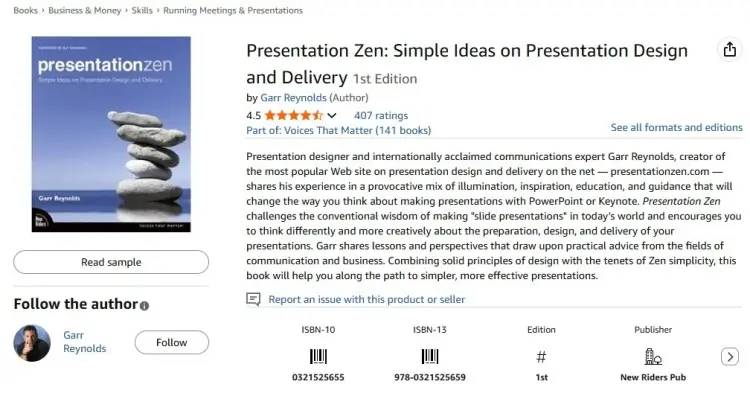
Great slides elevate a speech, and Presentation Zen deep dives into how slide design affects delivery. Instead of cluttered, text-heavy decks, Reynolds promotes simplicity, clarity, and strong visuals that support your narrative.
If your presentation relies on presentation slides, this is a great resource to visually engage your audience.
5. VirtualSpeech app
VirtualSpeech uses virtual reality and simulation environments so you can practice public speaking as if on a real stage or in a meeting room. It’s one of the best apps for beating anxiety and tracking your progress with instant feedback on pace, filler words, and eye contact.
Try this if you want an AI-powered solution for practicing when no live audience is available.
6. Communication Coach Alexander Lyon (YouTube channel)
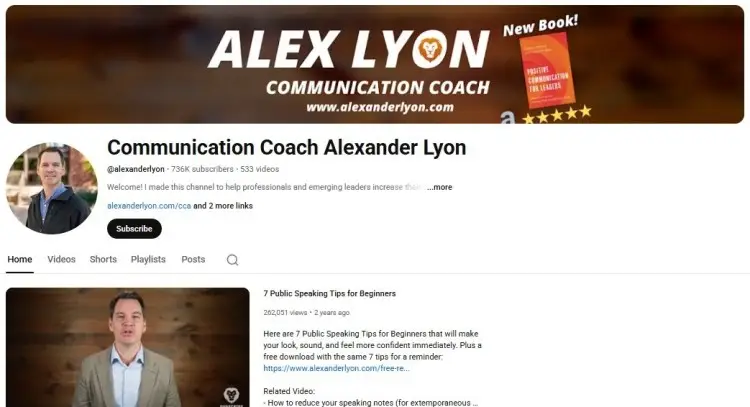
Alexander Lyon offers free, digestible videos focused on practical public speaking tips for voice, body language, and structure. He has content to improve your communication skills one step at a time.
It’s perfect for busy coaches or entrepreneurs who need quick, actionable guidance without enrolling in a course.
7. The Art of Public Speaking by Dale Carnegie
The Art of Public Speaking teaches you timeless techniques for overcoming anxiety and connecting with listeners. The book also includes practical exercises you can implement immediately in your speaking practice.
Some of the topics covered are preparation strategies, audience analysis, and persuasive techniques.
8. MindTools public speaking resources
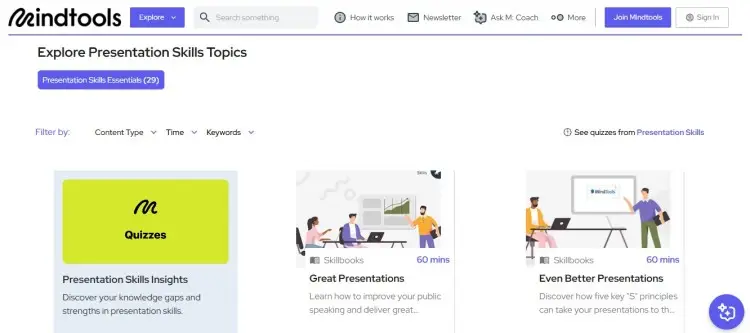
MindTools offers articles, assessments, frameworks, and templates to help you prepare and deliver speeches confidently.
The platform is subscription-based but well worth it for those who want a structured, step-by-step approach to learning.
9. Orai app
Orai serves as your personal AI coach for presentation skills. The app analyzes your speaking in real-time and tracks filler words, pacing, energy levels, and clarity metrics.
It gamifies practice to motivate you to refine your skills daily. With progress tracking and personalized insights, Orai helps you improve faster than traditional methods.
10. Public Speaking (The Public Speaking Project)
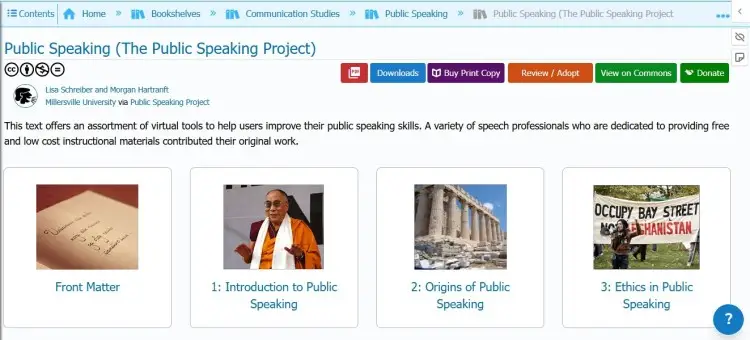
Public Speaking (The Public Speaking Project) offers free educational materials created by speech professionals. This collaborative effort provides textbooks, videos, and teaching materials at no cost.
The free platform includes a virtual classroom with structured lessons and an e-book covering comprehensive speaking topics. It’s an excellent starting point for anyone beginning their public speaking journey.
11. Yoodli AI
Yoodli is an AI-powered speech coaching platform that provides private, judgment-free practice through roleplays and simulations.
You can use it for different scenarios like job interviews, presentations and and pitching.
12. Ultraspeaking
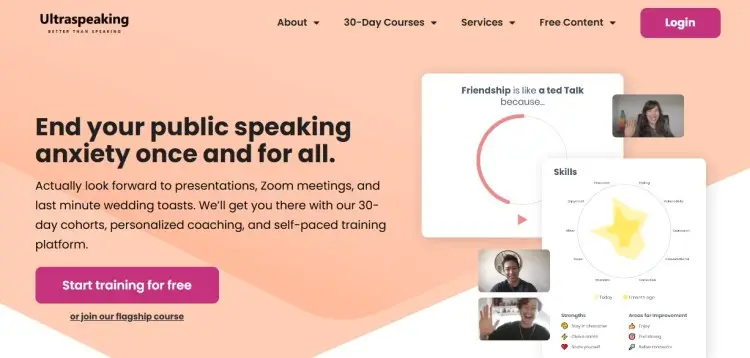
Ultraspeaking is an innovative platform founded by Tristan and Michael. It uses a gamified approach with speaking games and rapid practice sessions to accelerate learning.
The main highlight here is the live coaching sessions, 30-day intensive courses, mentorship and community support it provides.
How to Improve Public Speaking Skills
No one becomes a good public speaker overnight. Follow these steps to develop your speaking skills and deliver note-worthy presentations:
- Assess your current skills: Record yourself on video to notice your quirks and habits that need adjustment.
- Practice regularly: Invite colleagues to watch and ask for honest feedback. Learn how to become a good podcast guest and get comfortable with exposure.
- Learn from top speakers: Watch TED Talks, conference keynotes, and historical speeches, and analyze what makes them effective.
- Seek professional feedback: An expert eye, like a coach or mentor, helps you spot issues and opportunities you might miss.
- Read widely: Expand your vocabulary and knowledge. The more you know about diverse topics, the better you can communicate and craft compelling stories.
What are the techniques for public speaking?
Booked for a public speaking opportunity? Here are some techniques and tips you can apply to prepare for the big event:
- Understand your audience: Know who they are, their interests, knowledge level, and expectations.
- Define your objective: Be clear on the goal because this shapes your messaging.
- Structure your speech: Organize with a strong opening to grab attention, three to five well-developed main points, and a memorable conclusion with a call to action.
- Prepare visual aids carefully: Use slides sparingly with minimal text and engaging visuals. Visuals should add value, not distract and take it away.
- Get familiar with the venue and equipment: Visit the space early, test microphones, lighting, and any tech you’ll use to avoid surprises.
- Have notes ready: Use simple note cards or cue points rather than reading verbatim, so you can stay on track without sounding scripted.
- Time your speech: Make sure your presentation fits within your allotted time, respecting the schedule and pacing yourself.
What are the strategies for public speaking?
Beyond basic techniques, these are creative strategies you can apply during your talk:
- Use analogies: Connecting an abstract idea with a relatable image is a good way to explain to your audience.
- Develop a crisp elevator pitch: For every major idea in your presentation, explain it in 30 seconds clearly. From there, you can naturally expound on any topic.
- Create a signature gesture or catchphrase: This becomes your branding that makes you stand out from other speakers.
- Create mindmaps: Instead of traditional outlines, having a visual diagram helps you see connections more naturally.
- Practice your movement: Your hand gestures and physical posture affect your vocal power and energy levels. Walking around can help too, but don’t pace too fast.
- Tap into the power of pause: Strategic silence creates emphasis and gives audiences time to absorb important points. What you don’t say matters as much as what you do.
How to Make a Public Speaking Speech (Checklist)
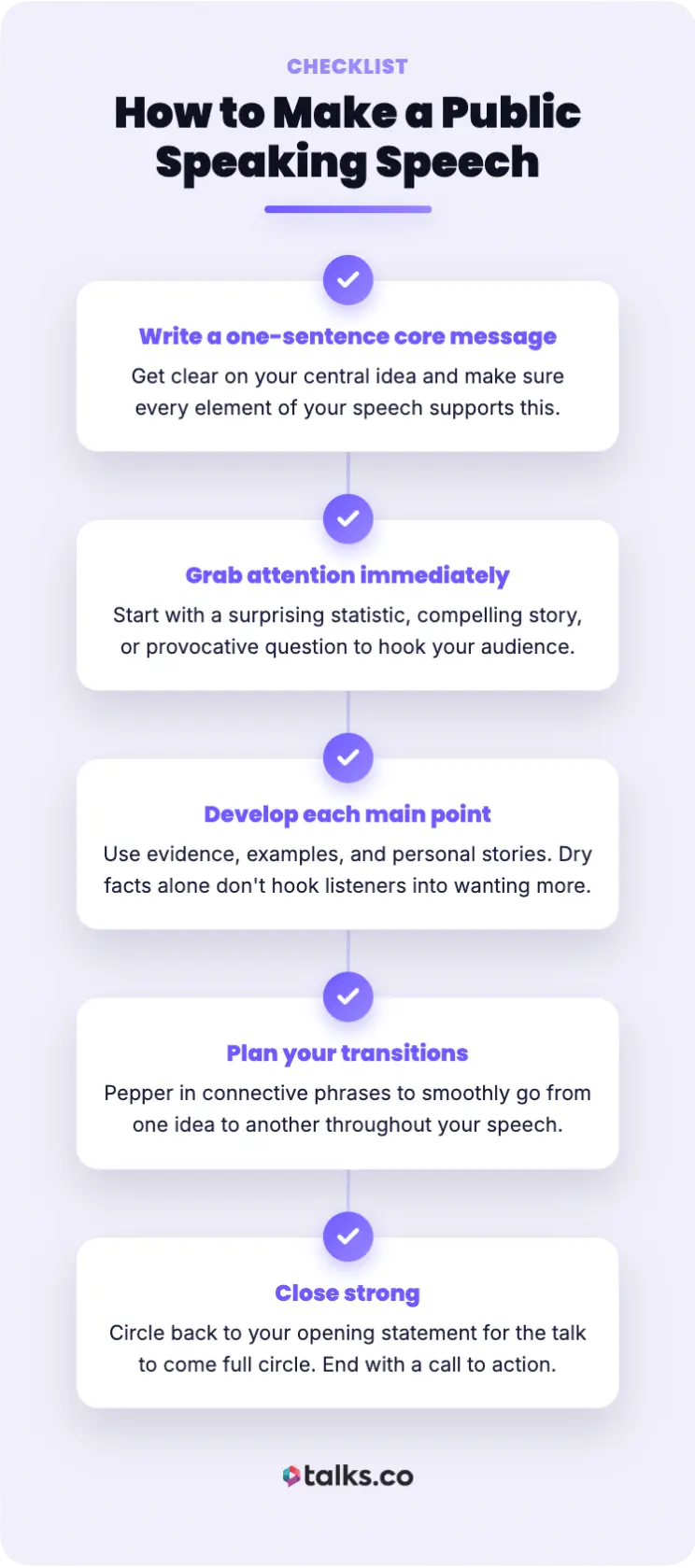
To create a public speech that wows audiences, you need to remember the following guides:
☐ Write a one-sentence core message: Get clear on your central idea and make sure every element of your speech supports this.
☐ Grab attention immediately: Start with a surprising statistic, compelling story, or provocative question.
☐ Develop each main point: Use evidence, examples, and personal stories. Dry facts alone don’t hook listeners into wanting more.
☐ Plan your transitions: Pepper in connective phrases to smoothly go from one idea to another.
☐ Close strong: Go back to your opening statement for everything to come full circle. End with a call to action to influence action.
Learn more about what to prepare for your speaking career to take flight. Check out these guides on speaking platforms and websites.
How to Help With Public Speaking Fears
Becoming a public speaker is not without challenges. When you’re starting out, it’s natural to get stage fright or anxiety about being in the spotlight.
Manage these issues with these tips:
- Reframe your anxiety as excitement: Because your body’s response is the same for both emotions, believing this can change your mental state.
- Do your preparation rituals: That could be walking around the venue an hour before, checking your blocking, and testing out your mic. Routines and familiarity reduce uncertainty and fear.
- Practice deep breathing exercises: Inhale for four counts, hold for seven, and exhale for eight to calm your nerves.
- Visualize yourself succeeding: See yourself speaking confidently, audiences nodding and smiling, and receiving enthusiastic applause.
- Focus on doing your best for your audience: When attention shifts from “How am I doing?” to “How can I help them?” anxiety decreases naturally.
- Prepare thoroughly: When you know you’ve done your best, you can trust your material and efforts.
Why is public speaking the most common fear?
Whether new or seasoned speakers, many professionals worry about:
- Forgetting about what comes next mid-speech
- Being judged or criticized by the audience
- Making mistakes or saying something wrong
- Boring the audience or failing to engage them
- Technical failures with equipment or video
- Physical symptoms like sweating, shaking, or blushing
If you’re experiencing any of these, know that you are not alone. Public speaking fear statistics show that many speakers struggle with this, too.
On the bright side, public speaking is a skill you can learn, which means there are ways to manage these fears, too.
What to take for public speaking anxiety
Various approaches help manage anxiety symptoms before and during presentations, like:
- Supplements like magnesium or L-theanine (always consult a doctor first).
- Herbal teas (e.g., chamomile, lavender).
- Breathing exercises to calm the nervous system.
- Regular exercise for long-term stress reduction.
- Adequate sleep before the event.
You can also avoid drinking excessive caffeine on the day of your engagement to decrease your fear of speaking in front of of people or the camera effectively.
All Life’s a Stage
The journey to becoming a great public speaker doesn’t end after delivering one good speech.
Continue to hone your skills and master your craft with the right resources for public speaking can help you master your craft.
If you need a platform to practice (and get noticed), try booking guest appearances on podcasts. Talks helps you secure those spots, without complicated processes and cold pitching.
Just sign up for your own Creators Profile and get matched to podcast shows you can hop on. It takes less than five minutes to set everything up.
More matches = more practice and relevant speaking gigs.
Create your free Talks Creator profile and start your public speaking career in as fast as 5 minutes.


