

You’ve spent enough time behind the scenes. It’s time to be seen.
A vodcast puts your message where it belongs: on screen, in front of the people who need to hear it most.
It’s your voice, your face, your story.
Real connection.
Real credibility.
If you’re a coach, speaker, or entrepreneur who’s tired of playing small, this is how you put yourself out there. You get to show up as yourself, build authority faster, and actually enjoy it.
Forget the idea that you need perfect lighting or a big budget to begin. You need a message worth sharing, a simple setup, and the guts to hit record.
By the end of this guide, you’ll know exactly how to create a vodcast that stands out, builds your brand, and helps you reach a wider audience who want what you offer.
What Is a Vodcast?
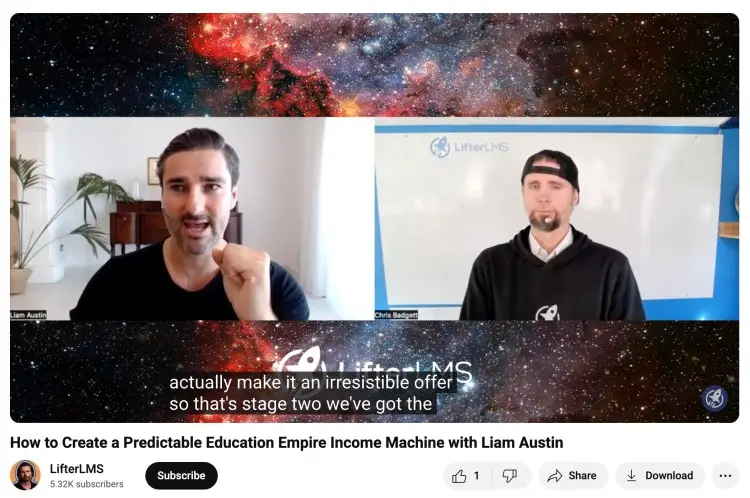
A vodcast is a video podcast. Each vodcast episode is part conversation, part performance.
Vodcasts are where your ideas get seen, not just heard. You’re showing up with your voice and your presence, giving your target audience a front-row seat to your message.
Here’s why it matters:
- People remember faces, not just voices when they watch content.
- Viewers get to see your energy, expressions, and confidence in action.
- Vodcasts incorporate visuals which keep people interested longer.
- Audio and video together build instant trust, especially for coaches, speakers, and entrepreneurs who sell expertise, not products.
Think of successful vodcast shows like Lewis Howes’ The School of Greatness or Steven Bartlett’s The Diary of a CEO.
They’re vodcasts that turn simple interviews into unpausable experiences because you’re not only listening to wisdom, you’re watching connection happen.
What is vodcast in multimedia?
In the multimedia world, a vodcast is the sweet spot between talk shows, YouTube series, and podcasts. It’s structured enough to feel professional but casual enough to keep people hooked.
Typical vodcast features:
- Episodic format with returning guests or themes.
- Video and audio recorded together, either live or edited.
- Podcast episodes are shared across multiple sites like YouTube, Spotify, Google Podcasts, or Apple Podcasts.
- Video version of a podcast with visual storytelling to grab attention and hold it.
A health coach might run a weekly podcast with video sharing client success stories, while a business strategist from a popular podcast could interview founders over Zoom.
The visual layer makes each successful podcast story personal and credible.
What is vodcast and podcast?
Both formats share one goal: connect with your audience through your voice.
The difference lies in how close that connection feels.
- Podcast: Audio-only. Great for busy listeners who tune in while driving, walking the dog, or working out.
- Vodcast: Adds that video element. Viewers see your tone, your body language, and your reactions during recording sessions. It’s personal, human, and harder to forget.
Smart creators record once and release both. For example:
- Host your vodcast on YouTube for visibility.
- Strip the audio and publish it as a podcast for convenience.
One conversation, two formats, double the reach.
Difference between podcast and vodcast
Podcasts and vodcasts might feel similar at first, but they hit your audience in very different ways. Knowing which format works for you can save a lot of wasted time and effort.
| Feature | Podcast | Vodcast |
|---|---|---|
| Format | High-quality audio only | Video + audio |
| Best for | People listening on the go, multitaskers | Visual learners, authority building, showing products or demos |
| Equipment needed | Microphone and audio software | Camera, microphone, lighting, video editing software |
| Engagement | Moderate; voice only | High; you show your face, gestures, and visual elements |
| Distribution | Apple Podcasts, Spotify, Amazon Music | YouTube, Spotify Video, LinkedIn, social clips |
| Content style | Conversational and informal | Structured, focused, teaching-first |
Both formats can grow your audience, but vodcasts let you combine teaching, storytelling, and visuals.
That’s how you grab attention, build trust, and make people remember you.
How to Make a Vodcast (Checklist)
If you can talk, teach, or interview, you can make vodcast content. The trick is to plan it right, sound sharp, and show up consistently.
Here’s exactly how I approach vodcasting and podcasting. The same process I’ve used across my own vodcast guest spots and shows since 2015.
1. Nail down your vodcast concept and audience
Your vodcast lives or dies by its idea. “Just talking about business” isn’t a concept; it’s background noise.
You need a sharp hook that speaks directly to a real person with a clear problem.
Try this:
- Audience: Online coaches or course creators who want more clients and brand awareness.
- Show idea: “The Predictable Income Show” as a short weekly interview with creators earning consistent income through online programs.
- Hook: Real strategies from people doing it right, not just concepts from people who aren’t.
We weren’t talking about content marketing in general. Mike Vardy and I were talking about converting leads into paying clients through virtual events.
That’s what made it valuable content.
If you’re a fitness coach, maybe your vodcast is The Fittest Founder Diaries, where you bring on trainers who scaled from one-on-one sessions to six-figure online programs.
Name your audience, define their struggle, and build every episode around solving it.
2. Plan your episodes and format
Once your concept’s set, you need structure. A plan makes your vodcast binge-worthy and predictable in a good way.
Start your vodcast plan with:
- Length: 20-30 minutes. Enough to teach, short enough to hold attention.
- Format: Solo episodes for tips, frameworks, or case studies. Guest interviews for authority building. Panel discussions for hot topics or debates.
- Recurring segments: Things like “3-Minute Strategy” for quick wins, “Hot Seat” where guests answer tough audience questions, and “Client Story of the Week.”
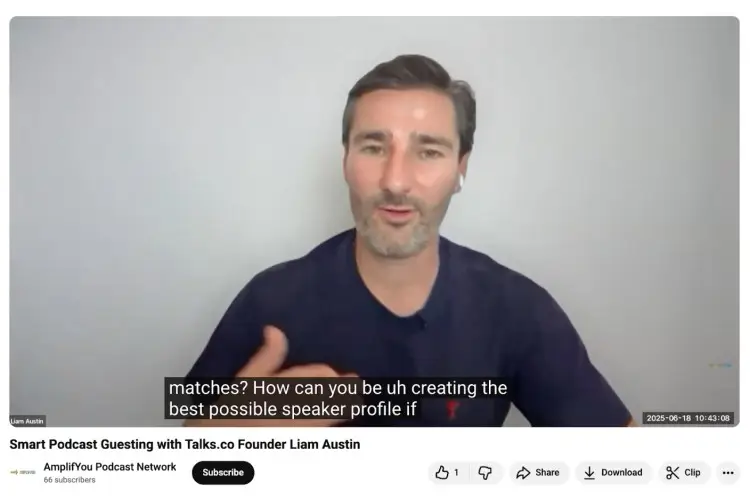
I planned my first batch of vodcast guest appearances this way lining up episodes like Smart Podcast Guesting and How to Start a Virtual Events Business.
That early prep made it easy to stay consistent and focused during my conversation with each podcast host.
3. Set up your equipment and podcast recording space
You don’t need a film studio to create your video podcast, but your video and audio quality need to look and sound like you care.
At minimum:
- Podcasting video camera: Logitech Brio (under $200) or Sony ZV-E10 are both good camera options that’ll give you that crisp, cinematic look.
- Microphone: Shure MV7 for clean vocals; pair it with a boom arm to stay consistent.
- Lighting: Ring light in front, one softbox to the side for balance.
- Backdrop: Keep it intentional with a bookshelf, awards, or a simple branded banner.
Record in a soft room (no echo). Curtains, rugs, or bookshelves help. I usually record in a simple, well-lit space with a branded backdrop. Nothing fancy, but it looks sharp on camera.
If you’re going for a clean remote video podcast setup, use Riverside, StreamYard, or SquadCast. All handle HD video and audio with minimal dropouts.
4. Record your very first vodcast
Before recording your vodcast, test everything. Your lighting, angles, sound, and internet speed. A dry run before your podcast recording sessions saves hours in editing.
Tips that separate rookies from the veterans:
- Look into the lens, not at yourself. That’s where your audience connects.
- Keep energy high. Your tone and posture matter more on video.
- Smile when you speak, even during serious topics.
- Keep water handy. It’s easy to forget mid-recording.
Your first episode won’t be perfect, and that’s fine. I’ve stumbled on intros, mispronounced names, and had cars honking mid-recording.
What matters is hitting publish and improving with every take.
5. Edit video and audio
Editing turns your raw content into a professional vodcast. Clean it up, tighten it, and add your brand touch with the help of recording and editing software.
My usual workflow for successful vodcasts and podcasts:
- Import your video into Descript or CapCut to remove filler words.
- Balance your audio. It boosts mids, removes background hum.
- Add branded elements to the lower-thirds with your guest’s name, an intro clip, and outro CTA.
- Cut teaser clips for YouTube Shorts, TikTok, and Reels. 15-30 seconds each.
If you’re building a brand, consistent editing style is part of your visual identity. Every episode should look like it’s from the same creator. Same font, logo, and tone.
6. Publish and distribute your vodcast
Where you post matters as much as what you post. Don’t just post and hope. Publish with purpose.
Here’s what I recommend:
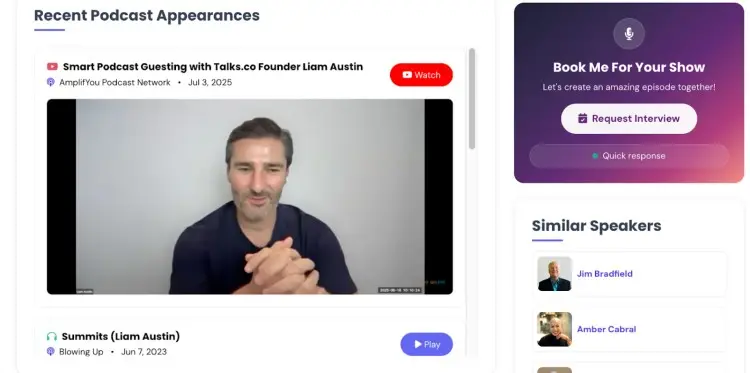
- Main platforms: YouTube, Spotify Video, and your Talks Creator profile.
- Audio-only: Push it to Apple Podcasts, Spotify, and Amazon Music.
- Clips and promos: Post short highlight content on social media like LinkedIn, Instagram, and YouTube Shorts.
When I appeared on an episode of The Bold Badass Business Show, we both shared snippets of the interview across our audiences.
That one conversation turned into a week’s worth of visibility.
If you want to save time, tools like Repurpose.io can auto-slice your vodcast into short clips. That’s how you stay visible between episodes.
7. Promote, monitor, and improve
Your vodcast isn’t done when it’s uploaded. It’s the start of the feedback loop.
Keep an eye on:
- Watch time. Are viewers sticking around?
- Click-through rate. Are your thumbnails working?
- Engagement. Comments, likes, and shares.
Then tweak what’s not working:
- Test new titles.
- Update thumbnails.
- Double down on topics that get the most response.
After recording How to Create a Predictable Education Empire, I saw that short clips on “income consistency” outperformed everything else. So I made more of that kind of content.
Same message, different angles.
11 Types of Vodcast
Not every vodcast needs to look the same.
The type you pick changes how people experience your content, how they remember you, and how fast you build authority and monetize your content.
Here’s the lineup for all types of podcasts:
- Conversational: Real chats that make viewers feel like they’re in the room.
- Interview: Guests with big ideas or stories that teach and inspire.
- Narrative: Story-driven episodes that hook viewers from start to finish.
- Solo: Just you breaking down lessons or insights straight to the camera.
- Educational: Step-by-step guides or tutorials people can use immediately.
- Repurposed content: Turn blogs, webinars, or workshops into video episodes.
- Theatrical: Scripted, staged, cinematic shows that entertain while teaching.
- Interview-focused: Deep dives with leaders or clients for actionable takeaways.
- Monologue: Short, punchy episodes dropping lessons or bold opinions.
- Narrative storytelling: Cinematic episodes with plot and characters for engagement.
- Scripted: Fully mapped-out episodes, polished and tight.
Pick the content that your audience likes and pulls the best out of you. Mix them up if you want. The goal: keep people watching, learning, and coming back for more.
How Does a Podcast Work?
A podcast is audio-only. People listen while commuting, working out, or just grinding away at their day.
Here’s how it usually works:
- Recording: Microphone and software like Audacity, GarageBand, or Adobe Audition.
- Distribution: Apple Podcasts, Spotify, Amazon Music, or niche video podcast platforms.
- Format: Solo shows, interviews, or panels. Similar to vodcasts, just no visuals.
For example, I’ve been on shows like:
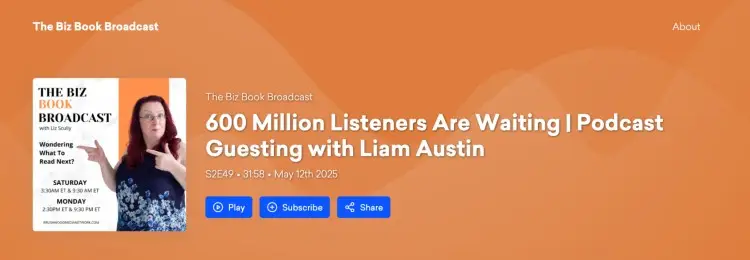
- 600 Million Listeners Are Waiting to teach predictable online sales.
- Generating Predictable Online Sales breaking down strategies for course creators.
These are audio-first shows where the audience tunes in for the insights, not the visuals.
Need extra help? Here’s your full guide on how to record a podcast.
Podcast vs vodcast setup
The setup makes all the difference between your podcast equipment for video and a podcast. Podcasts are simple; vodcast are a production.
Podcast setup:
- Mic: USB or XLR, like Blue Yeti or Rode PodMic.
- Quiet space: Curtains, rugs, or soft surfaces to cut echo.
- Software: Audacity, GarageBand, or Riverside for remote interviews.
Vodcast setup:
- Camera: Logitech Brio or Sony ZV-E10 for crisp video.
- Lighting: Ring light in front, softbox on the side.
- Mic: Same as podcast, clear audio is non-negotiable.
- Background: Clean, branded, distraction-free.
- Software: Riverside or StreamYard, plus slides or graphics if needed.
- Framing and visuals: Gestures, lower-thirds, overlays to keep people engaged.
Vodcast vs vlog
Vlogs are personal, diary-style videos. Vodcasts are structured shows with a clear topic and audience in mind.
Key differences:
- Vlog: Casual, flexible, often ad-hoc like travel or daily life updates.
- Vodcast: Consistent format, teaching-first, audience-focused. Always has a clear lesson and actionable insights.
Both can grow your audience, but a vodcast builds authority faster and gives your message more weight.
Why Choose Vodcasts Over Podcasts?
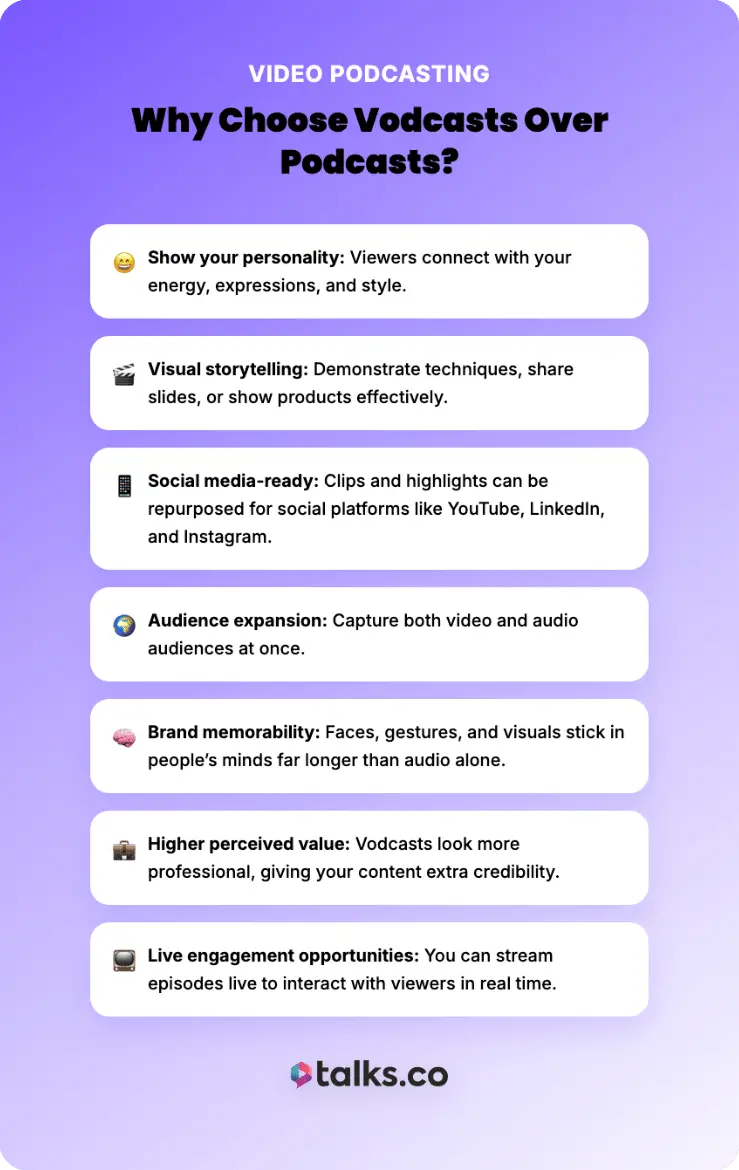
Vodcast or podcast? Both can grow your audience, but vodcasts give you more control over how people see and remember you.
Here are the exact benefits of vodcasting to prove why it’s your next best move:
- Show your personality: Viewers connect with your energy, expressions, and style.
- Visual storytelling: Demonstrate techniques, share slides, or show products effectively.
- Social media-ready: Clips and highlights can be repurposed for social media platforms and video platforms like YouTube, LinkedIn, and Instagram.
- Audience expansion: Capture both video and audio audiences at once.
- Brand memorability: Faces, gestures, and visuals stick in people’s minds far longer than audio alone.
- Higher perceived value: Vodcasts look more professional, giving your content extra credibility.
- Live engagement opportunities: You can stream episodes live to interact with viewers in real time.
Check out how to start a video podcast for an extra drizzle of insider tips.
Vodcast Website Examples
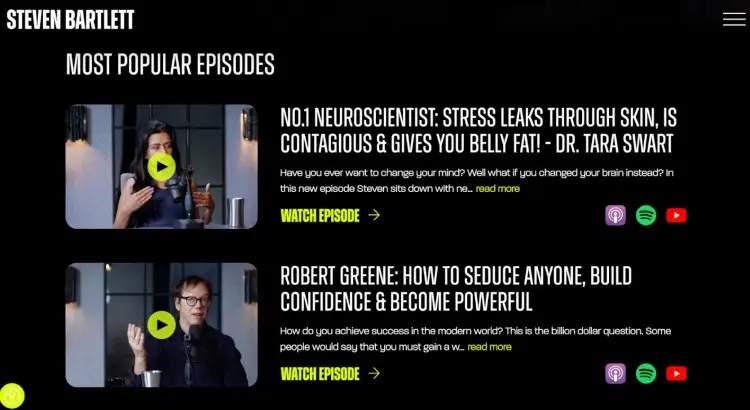
A great vodcast deserves a home that looks sharp, is easy to navigate, and puts your episodes front and center. Here are some sites doing it right:
- Lex Fridman Podcast: Clean, minimal design with video podcasts easy to scan and watch.
- Do A Creative: Bold visuals and seamless navigation make episodes engaging for first-time visitors.
- Steve-O Podcast: Focuses on video content and social sharing to expand reach.
- The Jack Doyle Podcast: Sports-focused layout with clear video episodes and archives.
- TED Talks: Structured for search, discovery, and binge-watching; highlights top and related episodes.
Example of a vodcast website (all-in-one platform)
Here’s where it gets fun: If you check out my Talks Creator profile, you’ll see just how simple you can make your own vodcast website.
Upload your vodcast once, share one link, and just like that, people can watch every single episode you’ve added.
- One link does it all: Share your Talks profile and viewers get your full vodcast library instantly.
- Host, guest, or show profile: Works whether you’re promoting yourself, your show, or a guest episode.
- High-quality setup: HD video and audio, clean layout, clear episode topics. Looks legit, builds authority for vodcasters.
- Lead-ready: CTAs, templates, and audience stats right on your profile.
- No juggling platforms: Forget uploading to five different sites. One place, total control.
Basically, this is the lazy genius way to get your vodcast seen everywhere without losing your mind.
7 Tips for Vodcasting Like a Pro
Want your vodcast to leave an impression and keep people coming back? These are the moves that make your episodes pop:
- Batch around trends: Plan episodes that ride current topics your audience cares about.
- Borrow your guest’s audience: Invite creators whose followers match your ideal listener.
- Story around problems: Frame episodes around what your audience struggles with today.
- Repurpose smartly: Turn highlights into mini-guides, posts, or email content.
- Experiment platforms: Post clips to emerging channels to find untapped viewers.
- Hook with next steps: Tease future episodes to boost retention.
- Track and tweak: Use analytics to refine hooks, topics, and formats.
Stop Hiding Behind the Mic
Most creators overthink their first vodcast. Lighting, mics, editing. Then forget the part that actually matters: getting seen.
Talks makes that easy.
Your free profile doubles as a living speaker page that updates every time you appear on a show. It ranks high on Google and AI, so people can actually find you.
The best part? You’ll get matched with hosts automatically. That means no cold pitching and absolutely zero email tennis.
If you’ve got something worth saying, Talks helps you say it louder.
Create your FREE Talks Creator profile here.


