

The difference between a speaker and the speaker? Their ability to persuade.
If you can’t change minds, if you can’t capture attention, every speaking gig will feel like shouting to the void.
So if you want people to actually hear what you’re saying, spice up your speeches and podcast guest appearance with rhetorical techniques.
These 17 real-world ethos pathos logos examples have you covered across speeches, ads, movies, essays, and everyday life.
Start using them on your next key note or interview, so you can establish authority and jumpstart your career.
Ethos Pathos Logos Meaning and Examples
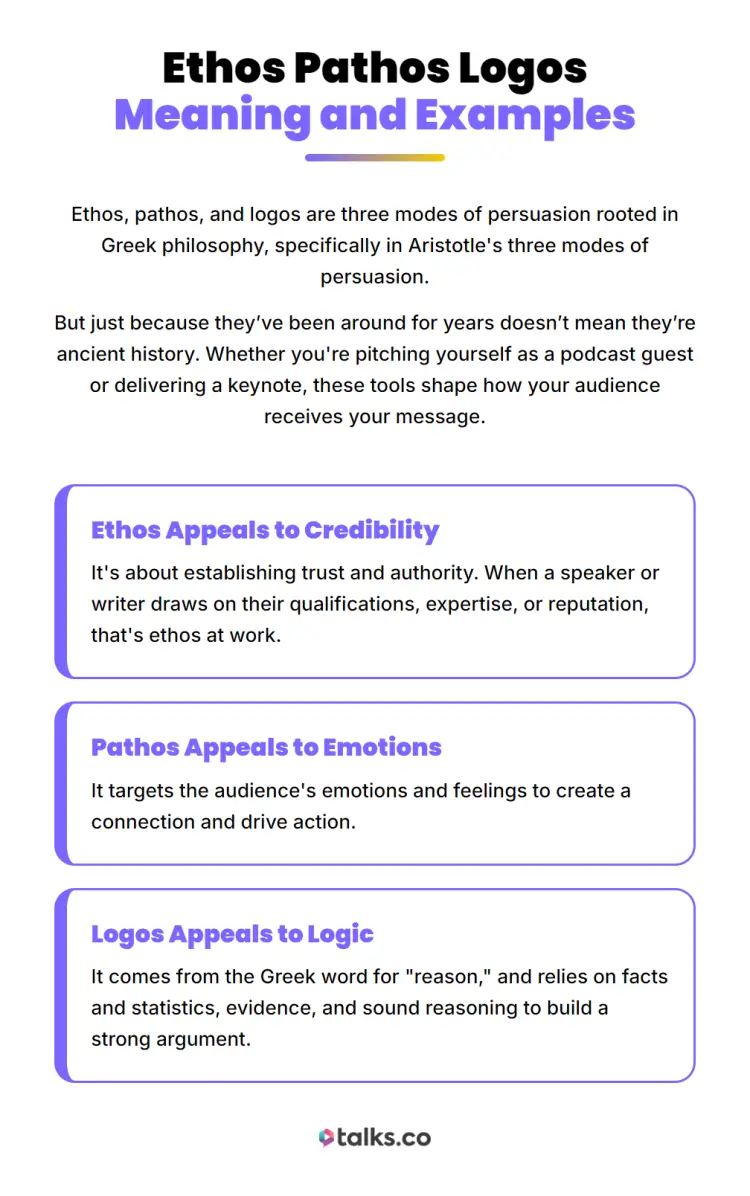
Ethos, pathos, and logos are three modes of persuasion rooted in Greek philosophy, specifically in Aristotle’s three modes of persuasion.
But just because they’ve been around for years doesn’t mean they’re ancient history. Whether you’re pitching yourself as a podcast guest or delivering a keynote, these tools shape how your audience receives your message.
Ethos vs pathos vs logos
These three rhetorical tools have different types of persuasive appeal. Together, they form the rhetorical triangle, which maps the relationship between the speaker or writer, the audience, and the message.
Here’s a quick breakdown:
- Ethos appeals to credibility. It’s about establishing trust and authority. When a speaker or writer draws on their qualifications, expertise, or reputation, that’s ethos at work.
- Pathos appeals to emotions. It targets the audience’s emotions and feelings to create a connection and drive action.
- Logos appeals to logic and reason. It comes from the Greek word for “reason,” and relies on facts and statistics, evidence, and sound reasoning to build a strong argument.
Ethos pathos logos definition literature
These aren’t just tools for speeches and ads. In literature, ethos, pathos, and logos work as rhetorical devices that authors use to draw readers in, build trust, and make their narratives more compelling.
- Charles Dickens used pathos masterfully in Oliver Twist, depicting heartbreaking conditions to evoke outrage and empathy in readers.
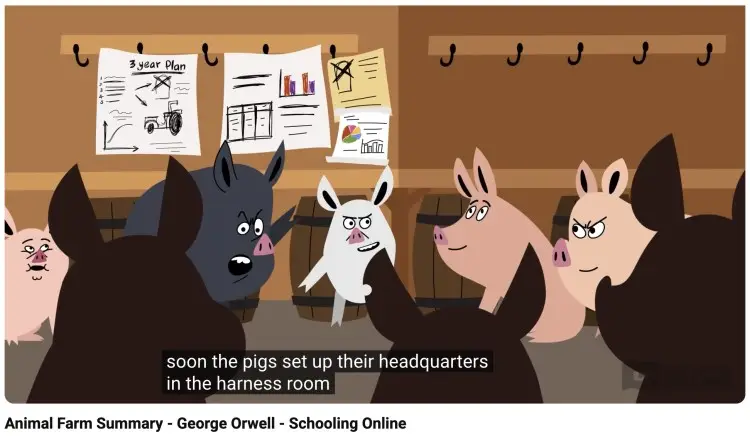
- George Orwell leaned on ethos in Animal Farm through characters who established authority to persuade other animals.
- Works like The Federalist Papers heavily use logos. It used logic and reason backed by historical evidence to construct a logical argument for a new form of government.
When you understand how these devices function in literature, you start to see them everywhere, including in your own podcast scripts and public speaking opportunities.
17 Ethos Pathos Logos Examples Sentences
If you’re serious about podcasting or want to establish serious authority through speaking, you need to know the best way to communicate your message.
Not just through a fancy hook. Nor with a fleeting soundbite.
You need something to make them stay through a whole episode or speech. And then, come back for more.
That’s what these 17 ethos, pathos, and logos examples are for. Read through them, then ask yourself: Which ones can you borrow for your next podcast script or speaking appearance?
Ethos pathos logos simple examples
Single sentences can pack a serious punch when you use the right appeal. Here are three quick examples that podcasters can drop into their intros or pitches:
- Ethos: “With over a decade of experience helping entrepreneurs scale their businesses, I know firsthand what it takes to go from invisible to influential.”
- Pathos: “Every day you stay silent about your expertise is another day someone who needs your help can’t find you.”
- Logos: “Studies show that podcast guests who appear on three or more shows per month see a 40% increase in website traffic within 90 days.”
Ethos pathos logos paragraph examples

You can use these modes of persuasion as longer paragraphs when you create a speaker bio, scripts, and case studies. Here are some examples from my own Talks profile and blogs:
- Ethos: “Liam Austin is the co-founder of Talks.co and Entrepreneurs HQ, an online business veteran having made his first sale online in 2001. After educating over 100,000 entrepreneurs to start and grow an online business, Liam is now focused on helping entrepreneurs spread their message through digital media.”
- Pathos: “Do you have a dream podcast interview? Think about it: one mic in front of you and another held by your ideal guest. Just five minutes in and they’re already spilling stories. The conversation is good. Vibes are *chef’s kiss*. It’s one exclusive scoop after the other.”
- Logos: “Most podcasts get between 30 and 150 downloads per episode in their first 30 days. That’s the real-world baseline for the average show. So yes, listener count matters. But only in context.”
Ethos pathos logos speech examples
Great speeches weave all three modes of persuasion together. Here’s how each can appear as a powerful line in a speech:
- Ethos: “As someone who’s coached over 500 speakers across six continents, I want to share what actually moves audiences. Not just what sounds good in theory.”
- Pathos: “Think about the mentor who changed your life. Now ask yourself: Are you being that person for someone else?”
- Logos: “According to a recent Nielsen report, 80% of podcast listeners complete most or all of an episode. That’s attention span you simply won’t find on social media.”
Ethos pathos logos examples in speeches
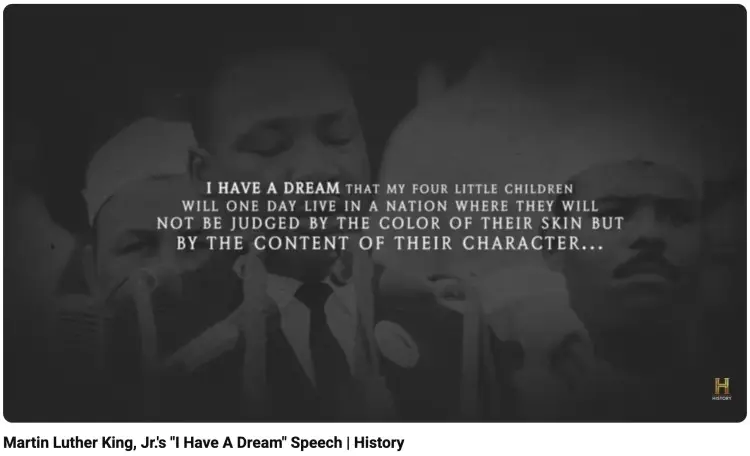
Real-world speeches are rhetorical techniques in practice. Here’s how each appeal shows up in famous examples:
- Ethos: Martin Luther King Jr.’s “I Have a Dream” speech is a textbook case of strong ethos. His reputation as a civil rights leader and his references to the Bible and the Constitution gave him enormous credibility and authority with his audience.
- Pathos: King’s “Letter from Birmingham Jail” describes the pain of explaining to his young daughter why she can’t go to the public amusement park, evoking raw emotions in the audience to rally the country behind a unified response.
- Logos: UK Prime Minister Boris Johnson used clear logos when explaining during the COVID-19 pandemic. Data-driven reasoning helped him make his case.
Persuasive speech ethos pathos logos examples
You can use these persuasive tools to convince your audience to take action. Here’s an example of an environmental advocate using them for a speech:
- Ethos: A renowned climate scientist opens with their credentials, published research, and institutional affiliations, giving the audience reason to trust what follows.
- Pathos: They share footage and first-person stories from communities already displaced by rising sea levels, tapping into the audience’s emotions to drive urgency.
- Logos: They then present charts showing a 1.2°C rise in global average temperature over the last century, drawing on peer-reviewed data to build a logical argument no one can dismiss.
This speech structure works no matter what topic you discuss, because it clearly supports your position.
Ethos pathos logos argument examples
Arguments, whether in a debate, a pitch meeting, or a podcast, rely on these three rhetorical tools. Here’s how each one shows up:
- Ethos: “I’ve built three companies from zero to seven figures. I’m not speaking from theory. I’m speaking from experience. You can trust the framework I’m sharing with you.”
- Pathos: “We’ve all watched talented people give up on their dreams because they couldn’t get their message in front of the right people. That’s not a talent problem. That’s a visibility problem.”
- Logos: “Our platform data shows that speakers who get booked on podcasts consistently see measurable brand growth within 60 days of their first appearance.”
Ethos pathos logos essay examples
When you want to write an essay or blog post for your website, each appeal shows up in a specific way:
- Ethos: Cite credible, peer-reviewed academic sources and demonstrate your familiarity with the field. Use your own data if you want to prove your impact.
- Pathos: Tell a personal anecdote or share a vivid description of a real person affected by an issue, inviting readers to feel genuine empathy.
- Logos: Use evidence from research studies (data, cause-and-effect relationships, historical examples) to form the backbone of your logical argument.
Ethos pathos logos article examples
Articles, especially those written by coaches, consultants, and entrepreneurs, need to establish credibility, spark emotion, and back claims with data. Here’s how to do it:
- Ethos: “As a consultant who has worked with brands like Nike, Google, and dozens of high-growth startups, I can tell you the one thing every successful brand has in common: a story that resonates.”
- Pathos: “Every week, I talk to brilliant professionals who are the best-kept secret in their industry. They’re exhausted, undervalued, and wondering why their expertise isn’t translating into opportunity.”
- Logos: “HubSpot reports that businesses that maintain a consistent content strategy generate 67% more leads per month than those that don’t. Visibility isn’t optional. It’s a growth lever.”
Ethos pathos logos examples in literature

Literature uses all three elements with intention and craft. Here are examples of ethos, pathos, and logos drawn from well-known works:
- Ethos: In Animal Farm, the pig Napoleon uses ethos to get power, consistently positioning himself as the most capable and trustworthy leader, even as his actions contradict his words.
- Pathos: Charles Dickens’s Oliver Twist opens with a gut-punch of pathos. It paints a picture of a starving orphan, freezing cold, begging for more food. Readers are emotionally invested before the end of the first chapter.
- Logos: Sherlock Holmes is the ultimate poster boy for logos. His method of deduction uses logic to solve cases step by step.
Ethos pathos logos examples in advertising
Rhetorical appeals are everywhere in advertising. Here are three clear examples:
- Ethos: Laughing Man Coffee, co-founded by Hugh Jackman, uses his celebrity credibility alongside a story about ethically sourced Colombian coffee. The brand doesn’t just sell coffee. It banks on trust.
- Pathos: P&G’s “Thank You, Mom” campaign doesn’t mention a single product feature. Instead, it shows emotional mother-child moments tied to the Olympics. It resulted in millions of global views and sales.
- Logos: The Flex Tape infomercial features CEO Phil Swift demonstrating the product live, cutting a boat in half, repairing it, and sailing it.
Ethos pathos logos examples in commercials
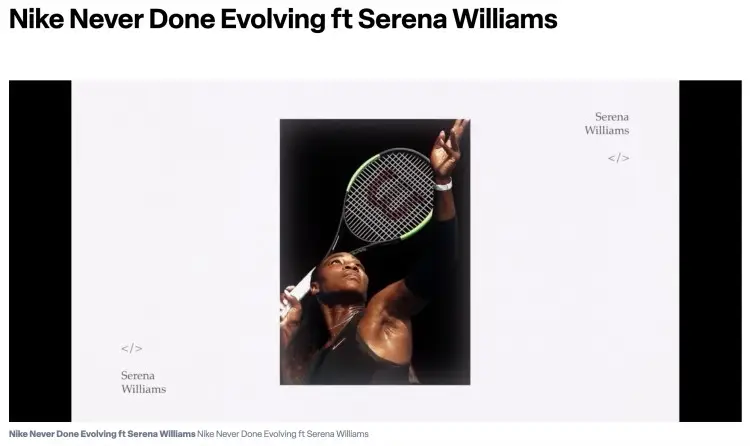
TV and online commercials often pack all three appeals into 30 seconds or less:
- Ethos: Nike’s long-running athlete endorsement campaigns work because they borrow the credibility and authority of elite performers. When Serena Williams wears Nike, the brand inherits her credibility.
- Pathos: The famous John Lewis Christmas ads in the UK tell emotionally resonant stories about love, family, and nostalgia that bring viewers to tears before a product is even shown.
- Logos: OxiClean commercials with Billy Mays used live demonstrations showing the product removing different stains on different surfaces. The logic was simple: Watch it work, then buy it.
Ethos pathos logos poster examples
Use these three appeals when you create a poster for your event or podcast appearance. Here’s what you can do:
- Ethos: Signal your credibility with a professional photo or action shot that shows your expertise at work.
- Pathos: Include pictures of you helping your clients and their reactions to you.
- Logos: Add testimonials or facts and figures to demonstrate your success. This proves to audiences why listening to you is beneficial.
Ethos pathos logos visual examples
Visuals communicate rhetorical appeals without a single word.
- Ethos: A speaker’s website bio page with professional headshots, media logos (“As seen in Forbes, Inc., etc.”), and a list of certifications signals credibility and authority.
- Pathos: A nonprofit’s homepage banner showing a community rebuilding after a natural disaster, smiling despite loss, immediately taps into feelings of empathy and hope.
- Logos: An infographic breaking down how podcast advertising generates a higher ROI than display ads, complete with charts and percentage comparisons, is very convincing.
Ethos pathos logos examples pictures
Still images have rhetorical weight. Here’s how each appeal works as photographs:
- Ethos: A photo of an expert being interviewed on a major TV network, with the network’s logo visible in the background. You don’t need to know who they are. Context fills in the blanks.
- Pathos: A black-and-white photo of a soldier returning home to embrace their child. No caption needed. The impact goes straight to the heart.
- Logos: A product photo with measurements, percentages, and timelines clearly displayed. It gives data that customers need to make a quick decision.
Examples of ethos pathos and logos in movies

You can also find ethos, pathos, and logos to drive the plot of films:
- Ethos: In The Wolf of Wall Street, Jordan Belfort demonstrates financial knowledge, wears the right clothes, and surrounds himself with symbols of success. His audience, both in the film and watching it, believes him because he looks credible.
- Pathos: In the Dog’s Journey, when Bailey’s owner finally recognizes him, it’s a heartwarming reunion that inspires love and true friendship.
- Logos: In Moneyball, Billy Beane prefers statistical analysis over gut instinct to build a baseball team.
Examples of ethos pathos and logos in everyday life
You don’t need a stage or a script to use these three modes of persuasion. They show up in ordinary conversations every day:
- Ethos: A friend comes to you for advice? You can use your experience to convince them. “I’ve been a financial advisor for 12 years. Here’s what I’d actually do with that money.”
- Pathos: Your partner has been working long hours. Nudge them to take care of themselves. “Think about how stressed you’ve been lately. Don’t you deserve a proper break?”
- Logos: When you compare two internet plans based on speed, price, and contract terms before signing up, you’re using logic and reason to make a decision.
Short examples of ethos pathos and logos
Need a quick reference? Here are short appeals you can drop into your podcast intros or speeches:
- Ethos: An X out of X statement, like “Four out of five dentists recommend this toothpaste,” is quick to point out an appeal to the masses.
- Pathos: “If you don’t act now, who will?” creates a sense of urgency and responsibility, tapping directly into the audience’s emotions.
- Logos: “Our supplement was tested in a double-blind study. 97% of participants reported improvement within 30 days.” A statement like this delivers claims immediately.
The most popular podcasts know how to use quick quips like these to hook listeners within the first minute.
Rhetorical Analysis of Ethos Pathos Logos Essay Example
A rhetorical analysis is the process of breaking down a piece of writing or speech to understand how it persuades, not just what it says. You examine the rhetorical appeals being used, why they work (or don’t), and how they serve the writer’s or speaker’s purpose.
For example, Brandon Everett’s Rhetorical Analysis Essay:
- Defines each appeal clearly.
- Shows how authors use them to earn audience approval.
- Walks through concrete examples from real texts.
That same framework works beautifully for podcasters and speakers who want to sharpen their scripts before going live.
If you want to do a rhetorical analysis of your own content, follow these steps:
- Read your script out loud: Note any sections where your own voice drops in energy. That usually means the appeal in that section isn’t working.
- Identify every credibility claim: Anywhere you reference your background, experience, or results, ask: Is it specific enough to build trust?
- Highlight emotional language: Look for moments designed to tap into emotions and feelings. Are they placed at the right points in your talk?
- Audit your evidence: Find every fact, stat, or case study. Check that none of them represent a fallacy, a misleading or unsupported claim.
- Check your balance: Does this script lean too heavily on one appeal? A talk that’s all data can feel cold. One that’s all emotion can feel manipulative.
You can find ready-to-use podcast script templates to help you structure your message before applying this analysis.
Ethos pathos logos examples PDF
If you prefer to have your reference guides printed out or saved for offline use, here are two downloadable PDFs worth bookmarking:
- Logos, Ethos, and Pathos (The Writing Center): A clear, academic breakdown of all three appeals with definitions, a comparison table, and real-world writing examples to show how each one functions in arguments.
- Introduction to Ethos, Pathos and Logos: A practical introduction guide with definitions, examples, and classroom-style exercises that walk you through identifying and applying each appeal in your own writing and speaking.
Check more specific examples of pathos and logos statements with these guides.
Ethos pathos logos examples worksheet
Before your next podcast appearance or speech, run your script through these self-assessment questions. You can copy and paste these if you’re creating a worksheet to evaluate your techniques.
Ethos assessment: Am I building credibility?
- Have I clearly communicated why I’m qualified to speak on this topic?
- Have I referenced specific experiences, achievements, or results that my audience can verify or relate to?
- Do my language, tone, and vocabulary reflect expertise without feeling inaccessible or overly formal?
- Would a first-time listener immediately understand why they should trust what I’m saying?
Pathos assessment: Am I connecting emotionally?
- Have I included at least one story, anecdote, or moment that evokes a genuine emotional response?
- Does my message connect to something my audience genuinely cares about, like their goals, fears, or values?
- Are my emotional appeals authentic and proportional, or do they feel forced or manipulative?
- Have I used vivid, concrete language that helps the audience picture and feel what I’m describing?
Logos assessment: Is my argument actually logical?
- Have I supported my key claims with evidence (e.g., data, facts and statistics, case studies, or expert references)?
- Does each point flow logically to the next, building toward a clear conclusion?
- Have I avoided any fallacy, a claim that sounds logical but doesn’t actually hold up under scrutiny?
- If someone challenged my main argument, could I back it up with solid or verifiable evidence?
Use these questions every time you prepare a new talk, episode, or pitch. Over time, they become second nature, and your content becomes noticeably more compelling.
If you’re looking for more rhetorical devices examples to expand your toolkit or want to study persuasive speech examples from top communicators, those resources are a great next step.
Start Using These Strategies Today
Ethos pathos logos examples aren’t just academic concepts. They’re the building blocks of every message that has ever moved someone to think, feel, or act differently.
Practice these rhetorical techniques in your next podcast interview. Get booked on shows with Talks to get started.
Talks modernized the way you get on podcasts. For expert guests like you, that means:
- You secure relevant interviews faster, thanks to smart AI suggestions.
- You avoid cold outreach and pitches because of warm mutual matching.
- You get actual results, with a workflow designed for quick replying and scheduling.
Just create a FREE Creators profile in five minutes to get started.
Register for a free Talks profile and start building your authority today!


